This emblematic design seems to have first appeared in the early 17C, and like many other images popular with the album painters its representation divides into two phases, before and after it appears in a print-book, in this case the Speculum Cornelianum (von der Heyden, Strasbourg 1618). I consider this volume to be the 2nd or expanded edition of the Pugillus Facetiarum, published exactly a decade earlier (von der Heyden, Strasbourg 1608). The make-up of that editio princeps is still uncertain, and indeed, no two copies may ever have been the same — in such a miscellany it is easy enough to substitute one plate for another — but in any case, I believe the present motif first appeared in the 1618 edition.
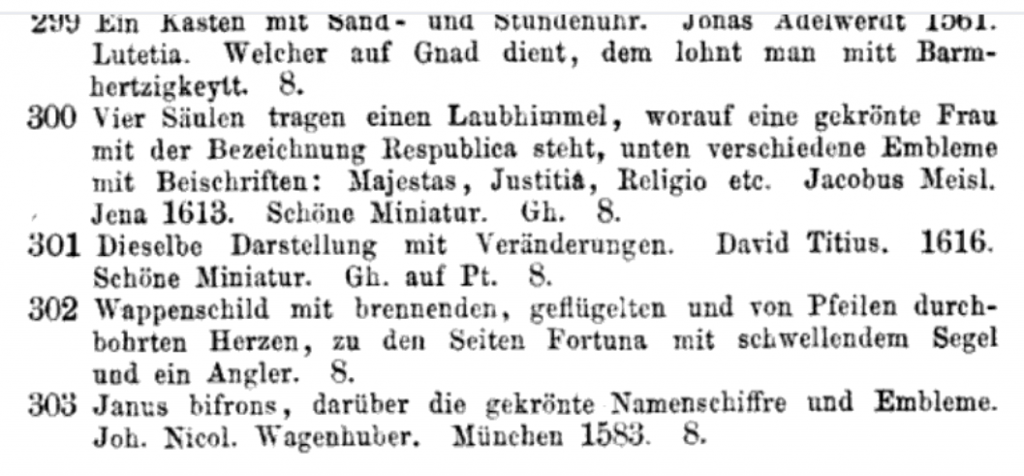
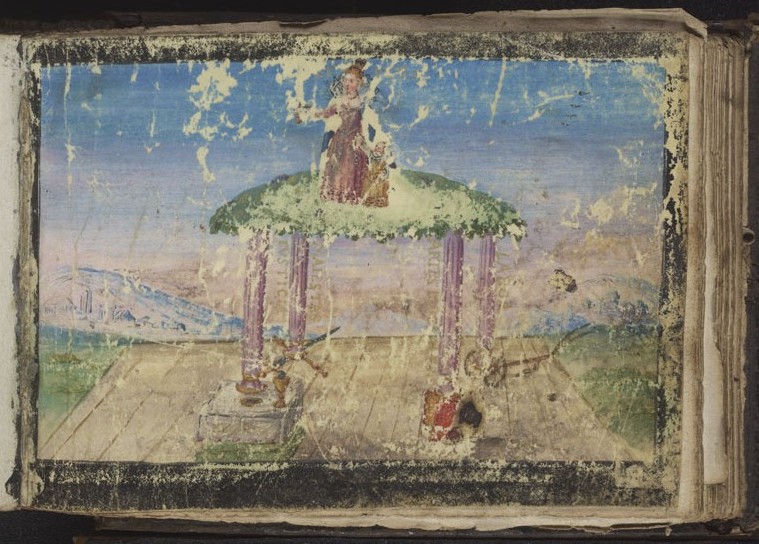
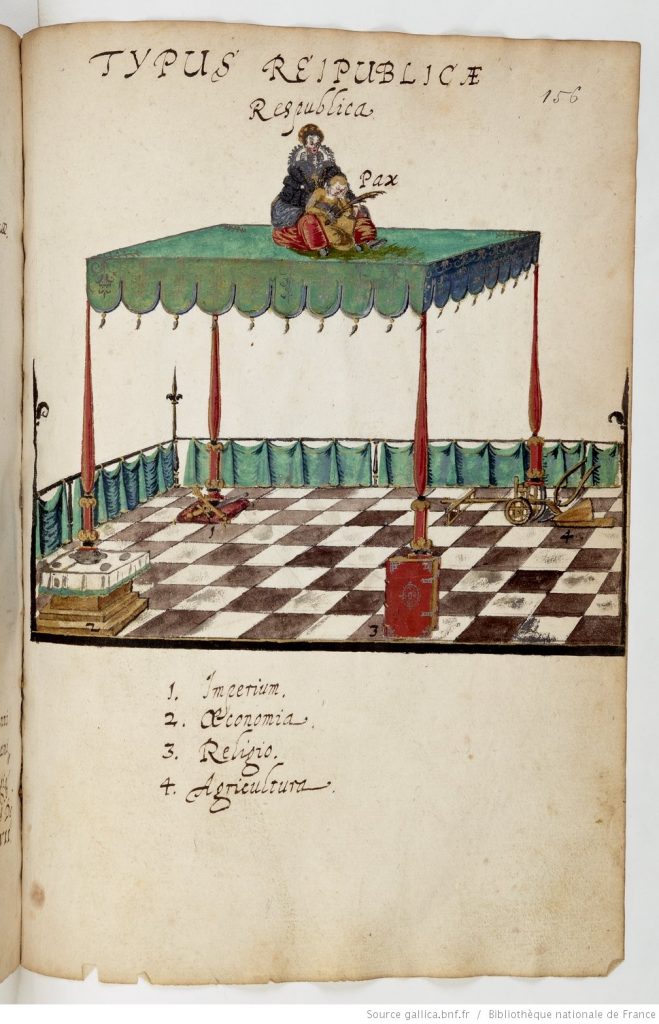
In 1864 the Leipzig auction firm Weigel put up for sale hundreds of orphaned album leaves from the du Rosey collection, each described succinctly: lots 300 and 301 [ABOVE] were clearly examples of our motif, dated 1613 and 1616 respectively. A crowned Respublica stood on a leafy canopy [Laubhimmel] supported by four pillars with various emblems below, 3 of which were Majesty, Justice and Religion. The other leaf is described as of the same representation but with some alterations. The emblems were doubtless of the sort that illustrate our motif in the Wider album (below), supporting the columns on which Respublica and her child (Pax?) rest, the sword & sceptre here — according to the titles of the verses on the adjacent page (see below) — representing Justitia, and the plough Agricultura.
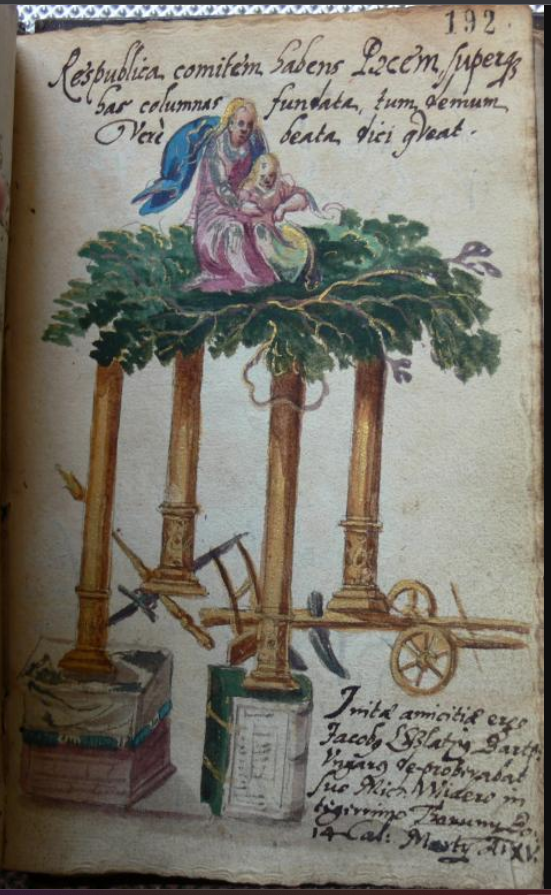
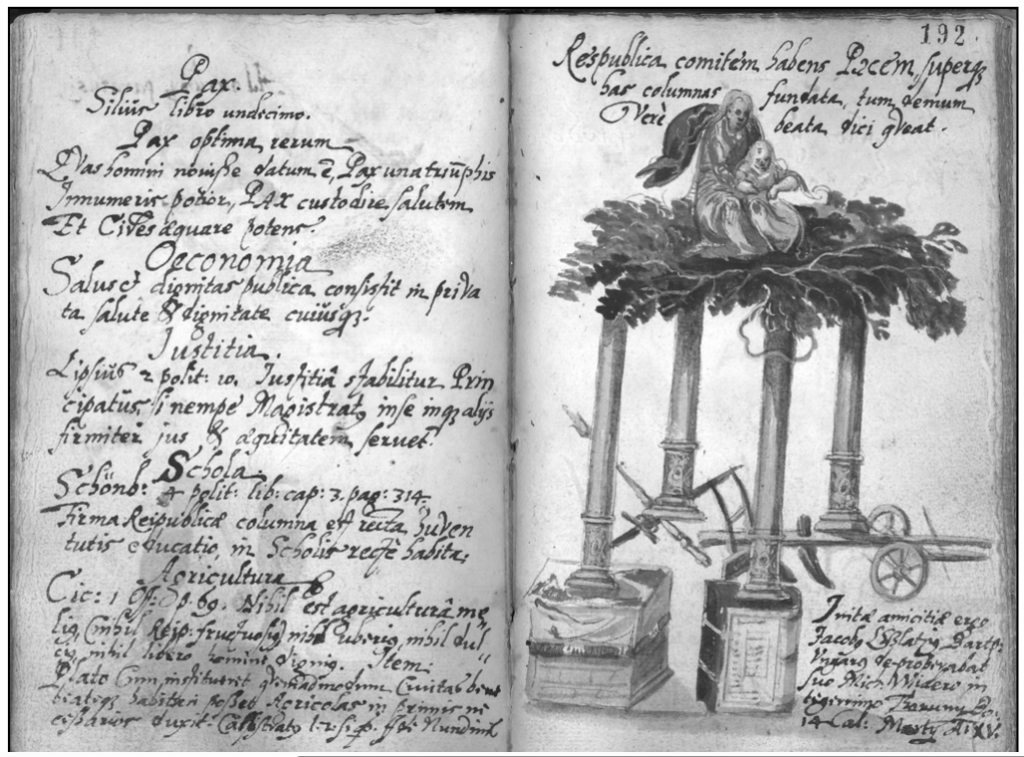
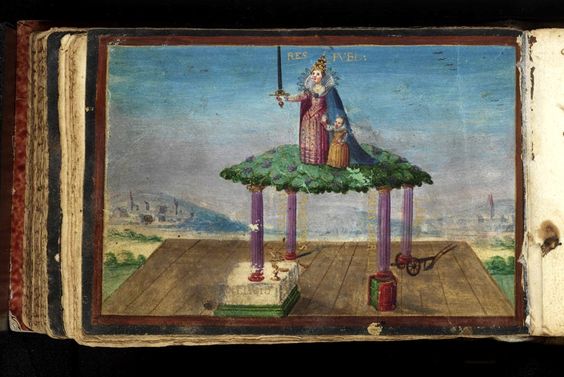
In the examples below, which clearly derive from the same model, the pillars which support the State rest on emblems representing — according to the gold lettering running vertically down the columns — LABOR (plough), ARTES LIBERALES (book), while the 3rd seems to be labelled both MAIESTAS (sceptre) & IUSTICIA (sword), and the fourth RELIGIO (chalice on altar).
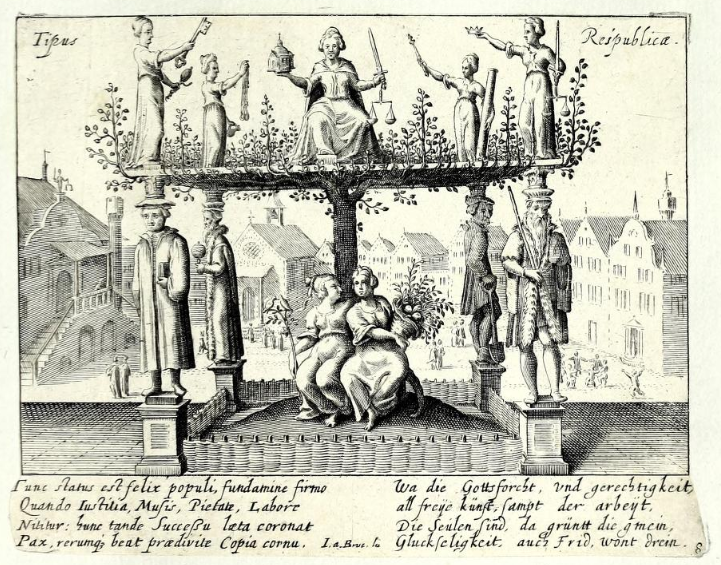
It is a slightly more elaborate version in which the columns are four men, and Respublica seated on her Laubhimmel is accompanied by four women Virtues, which appeared in the Speculum Cornelianum (Strasbourg 1618) with captioning verses signed by neo-Latin poet, Iacob a Bruck. Under the protective canopy within the fenced enclosure sit Peace, with her doves on an olive branch, and Abundance, with her cornucopia. The four men are identified in the Latin verse as Justice (sword), Labour (spade), Piety (cleric holding Bible) and the Muses (armillary sphere).
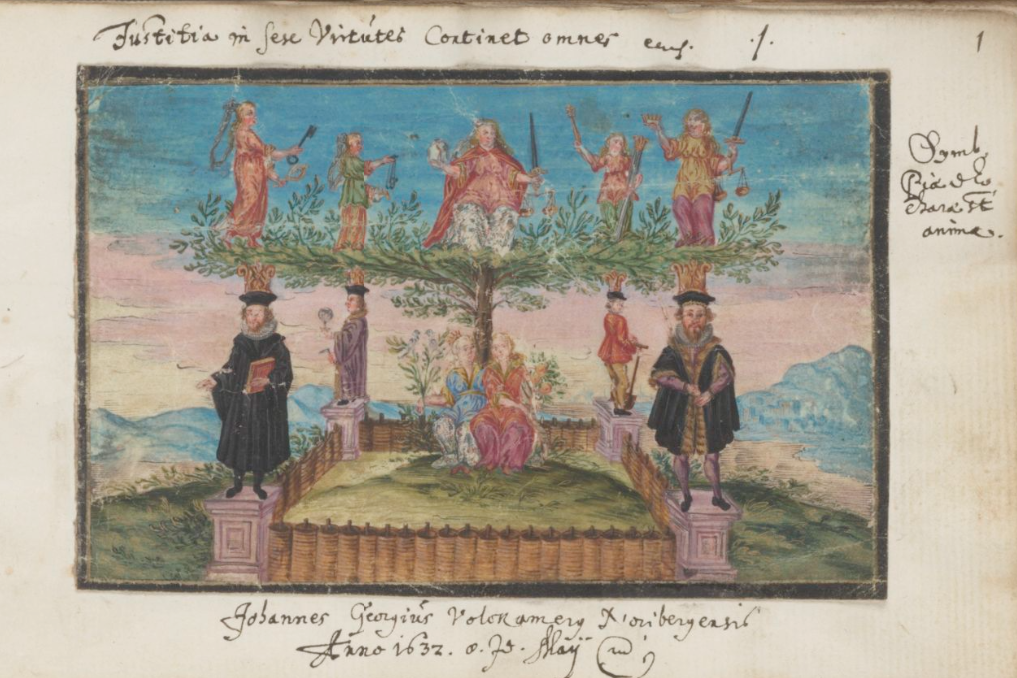
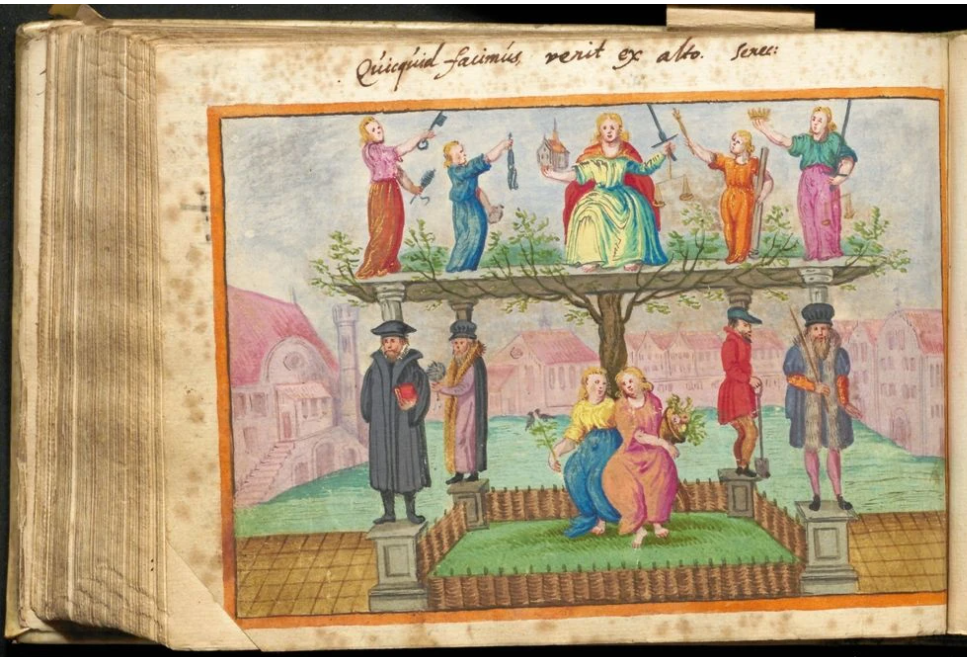
Another copy of the Speculum Cornelianum plate, an orphaned leaf, which copied both sets of captioning verses too, was described in the catalogue of the late 19C Firmin-Didot sale, and attributed to the painter Friedrich Brentel (d.1651)
Leave a Reply