The peregrinatio academica, given that it almost always brought students to Italy, was a precursor of the 18C Grand Tour, and if for the moment we can forget the inevitable attraction for these young men of the courtesans of Venice, famous throughout Europe, it introduced them to the monuments of Antiquity — and not just in Rome.
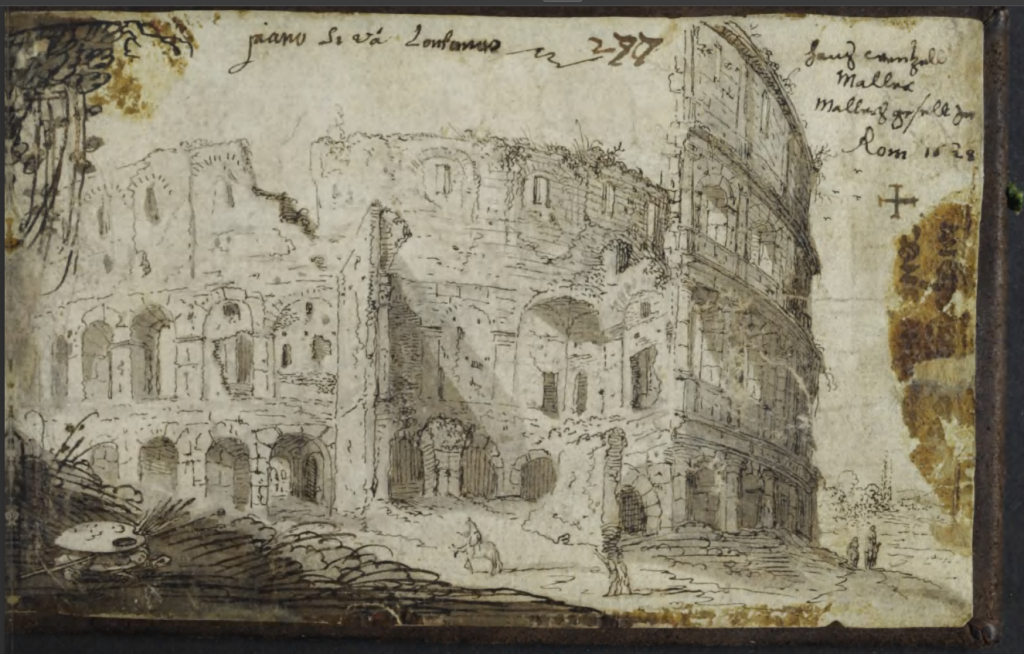
One of the two albums kept by the Viennese painter Samuel Peltz includes this drawing of the Colosseum dated 1628,
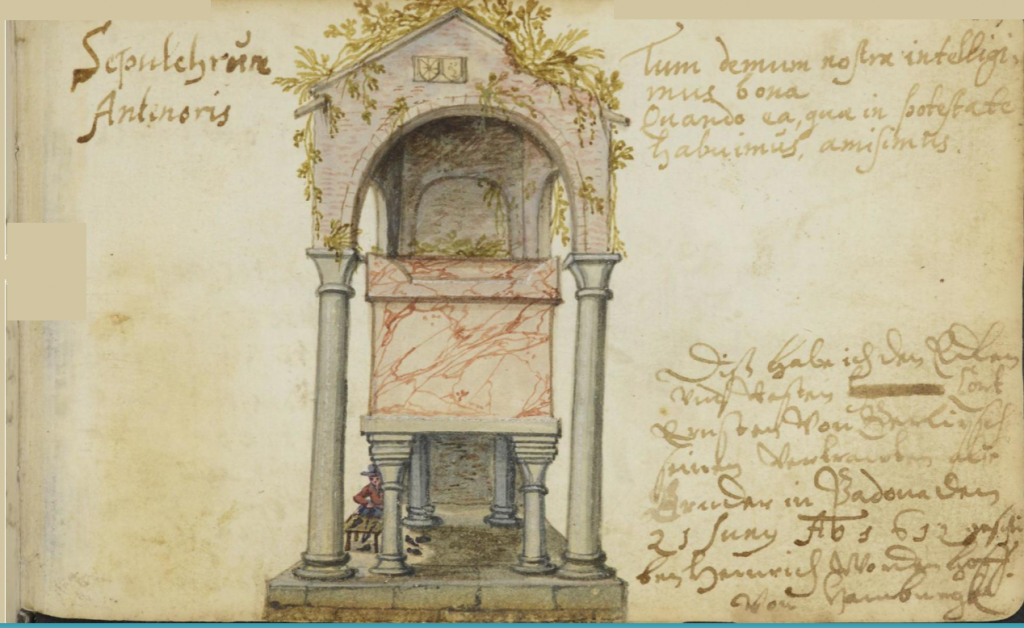
but the Berlepsch album features paintings of two medieval monuments in Padua — the late 13C Tomb of Antenor, legendary Trojan founder of the city (here dated 1612),
and Donatello’s quattrocento equestrian statue of the condottiero Erasmo da Narni (nicknamed Gattamelata), labelled Statua di Gatamelao [sic] Cap[ita]no g[ener]ale di Viniziani in terra ferma [statue of Gattamelata Captain General of the Venetians on dry land].
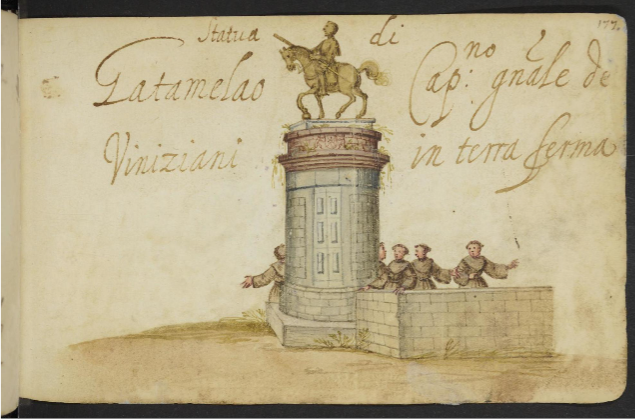
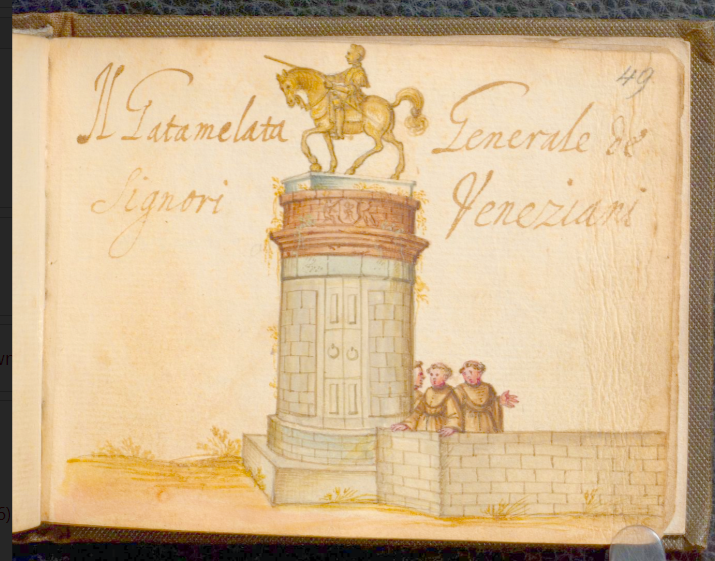
Both these monuments are found in other contemporary albums — the Gattamelata statue in the Taube album is so similar to the Berlepsch version that we may be sure they copy a common model.
An earlier image of the monument (which I have not seen) was painted on f.119r. of the album of Emmeran Riz von Grueb in 1585, and an engraving of it pasted into the album of Conrad Mithoff at some point between 1590 and 1617 [both these c/o RAA].
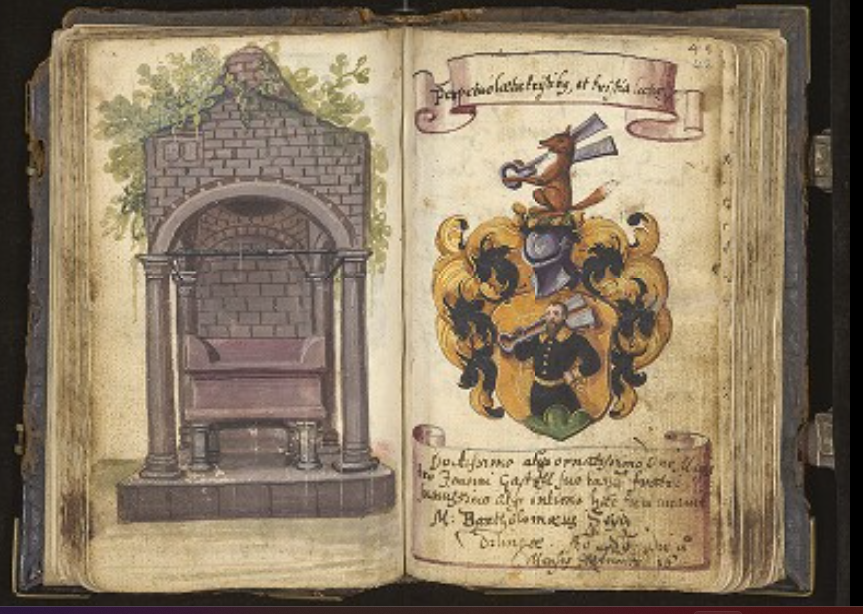
The little cobbler at Antenor’s tomb in the Berlepsch image is absent from that in the Gastel album:
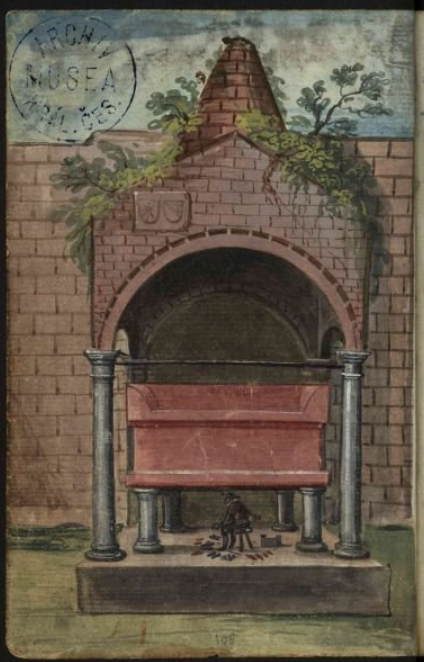
but present again in the Egger album image:
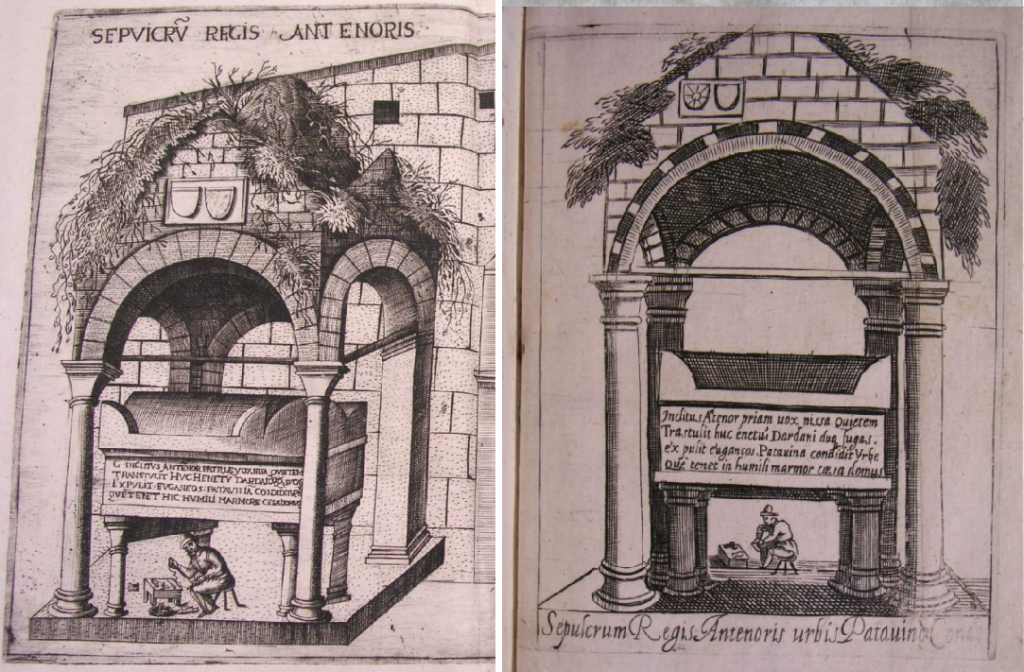
It seems likely that there is some relationship to these prints of the tomb issued in Padua by Pietro Bertelli in 1588 and 1596 in which the little cobbler also appears:
But Roman monuments outside Italy attracted attention too: The magnificent Pont du Gard aqueduct at Nîmes was painted in at least three albums, those of Renner (1609), Gruber (1602-12), and Rentsch (1615-47).
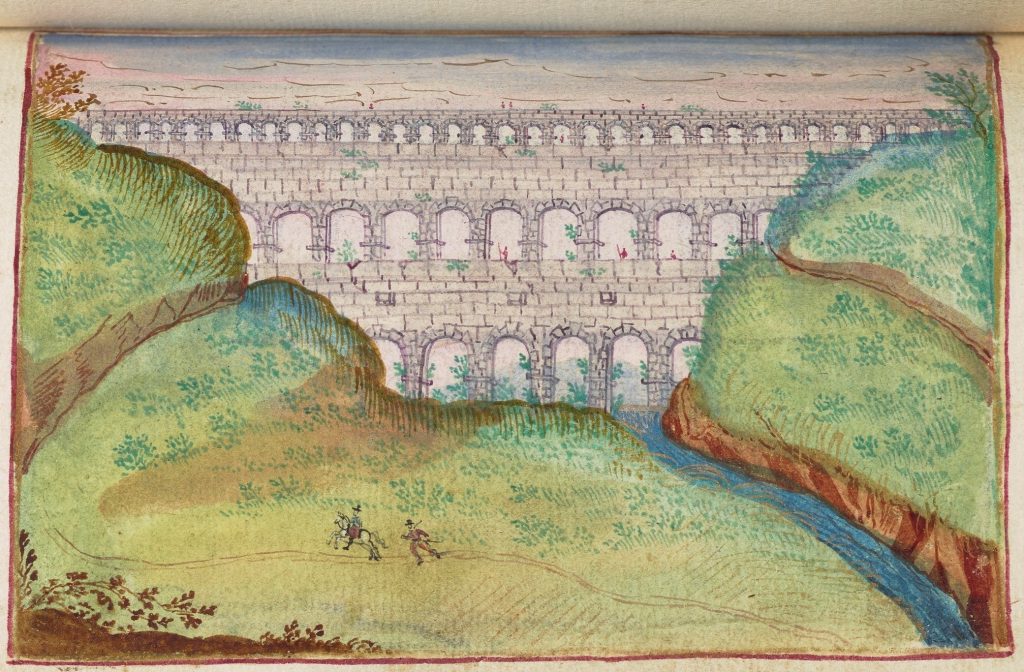
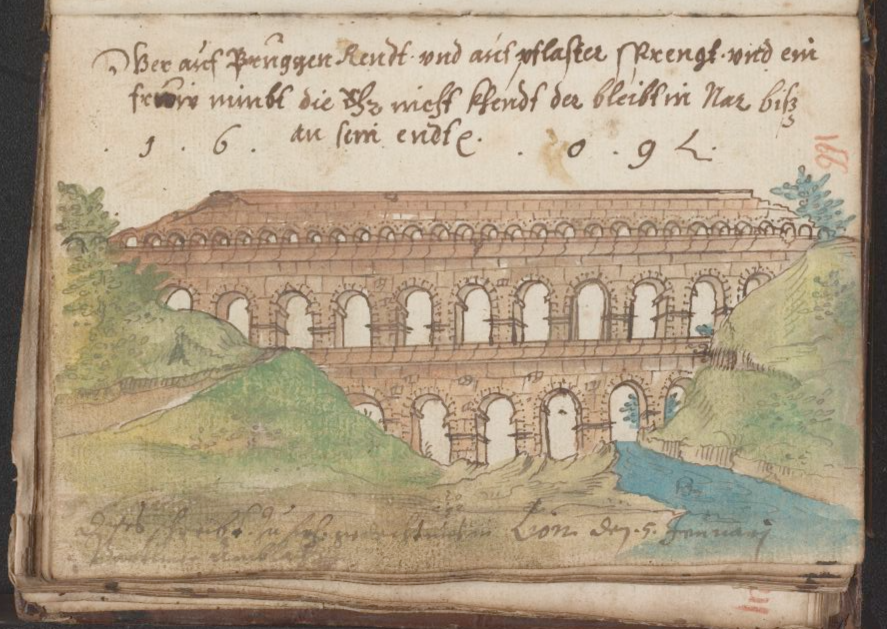
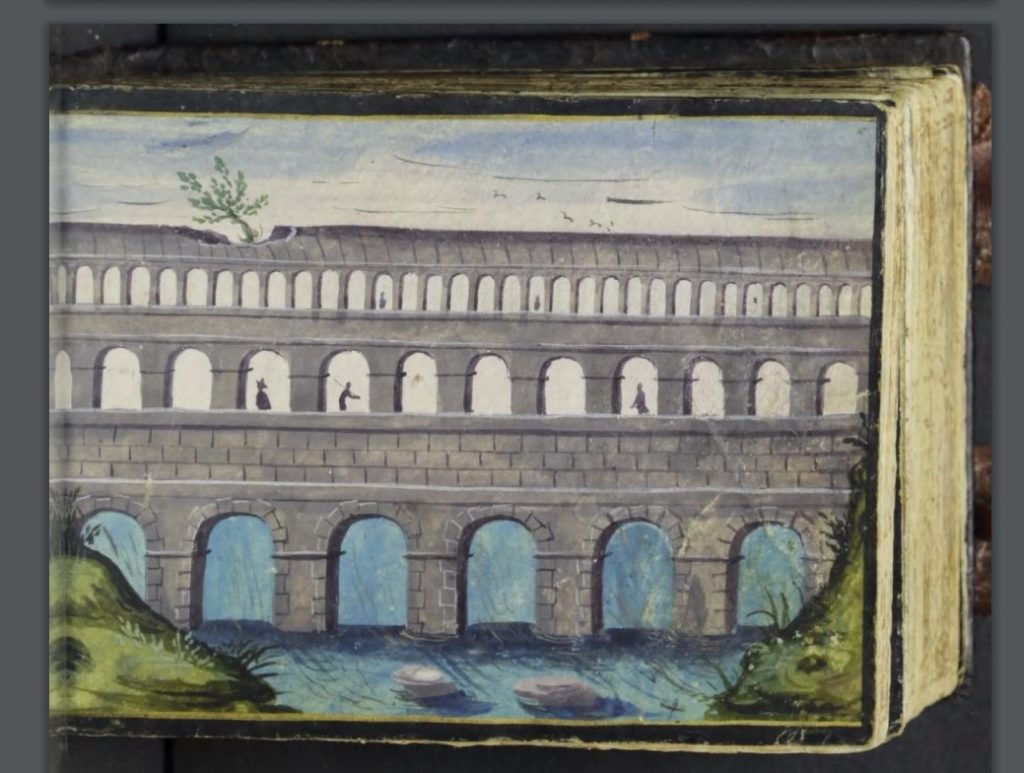
Thott 432, 8°, p.331
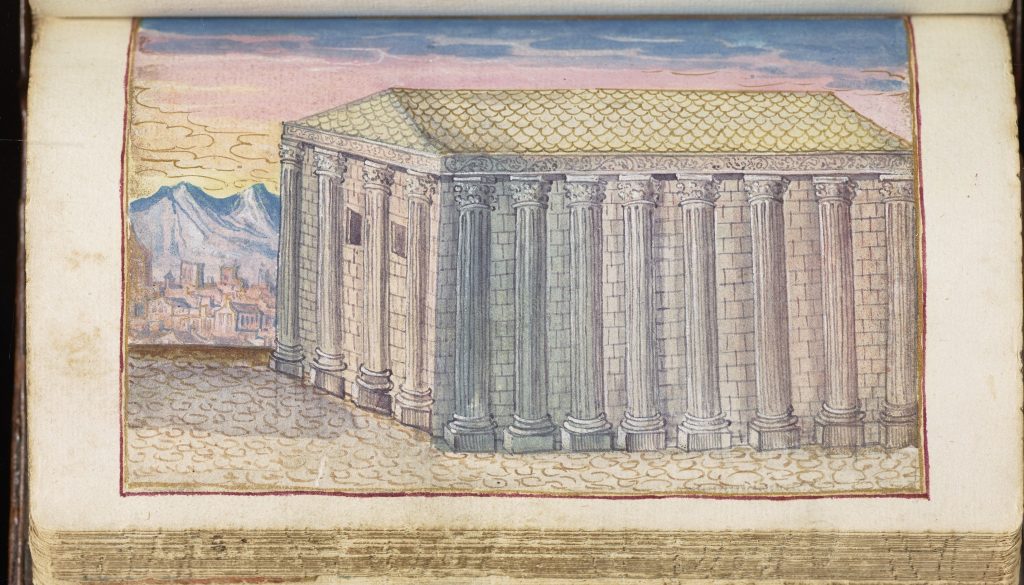
The Gruber album also includes an impressive full-page painting of the early Roman temple in Nîmes known as the Maison Carrée.
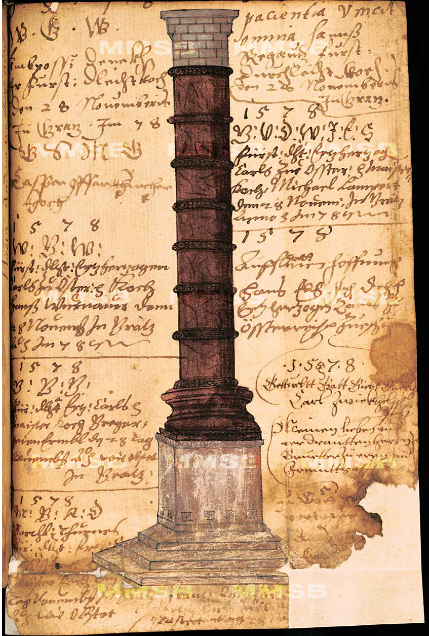
The celebrated Column of Constantine in the centre of Constantinople was painted in the Plan album in 1578 — its porphyry perhaps coloured a little too purple here —
and the Column of Arcadius in the same city, labelled, Collomna Historiata in Constantinopolis, was painted in the Prack von Asch album (dated entries 1587-1612).
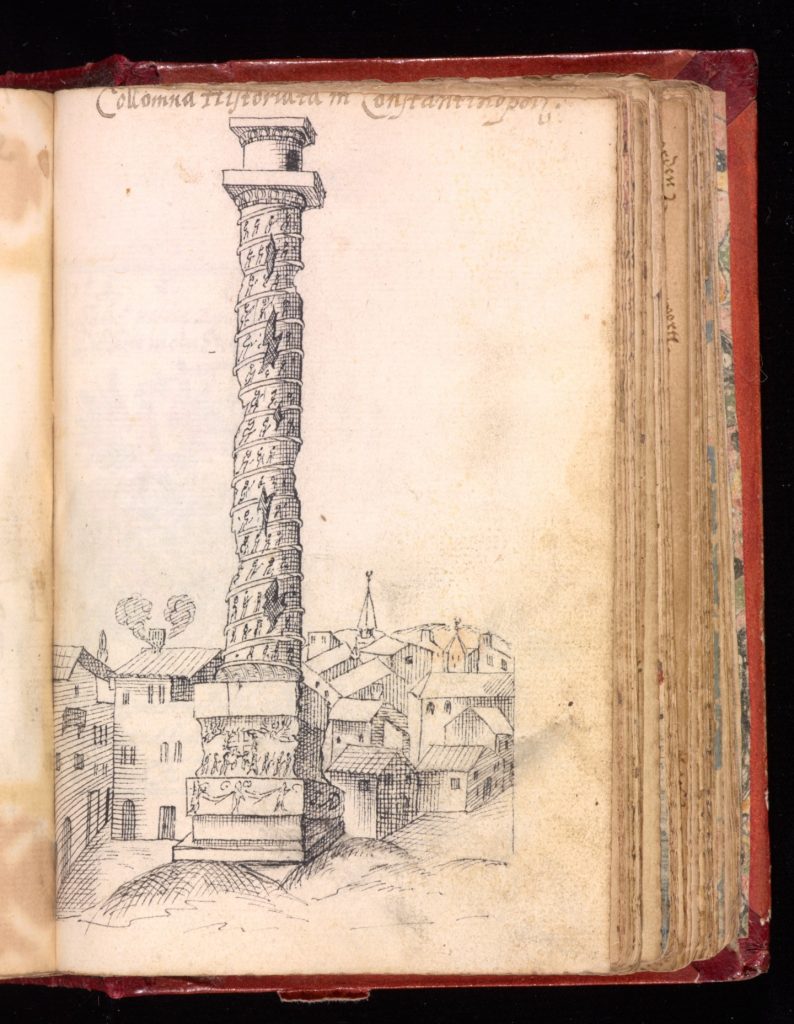
Though it is not an album amicorum, images of both columns made c.1574 are to be found in the Freshfield Album [Cambridge, Trinity College, ms. O.17.2] made by a German artist, evidence of the same contemporary enthusiasm.
‘Modern’ Monuments — Joan of Arc
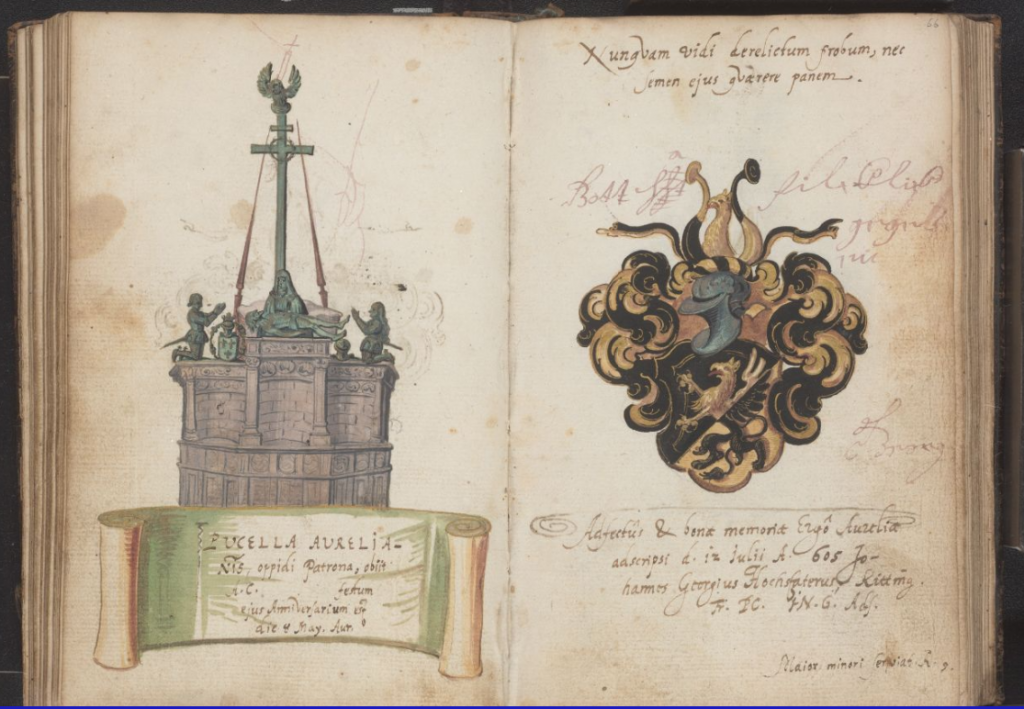
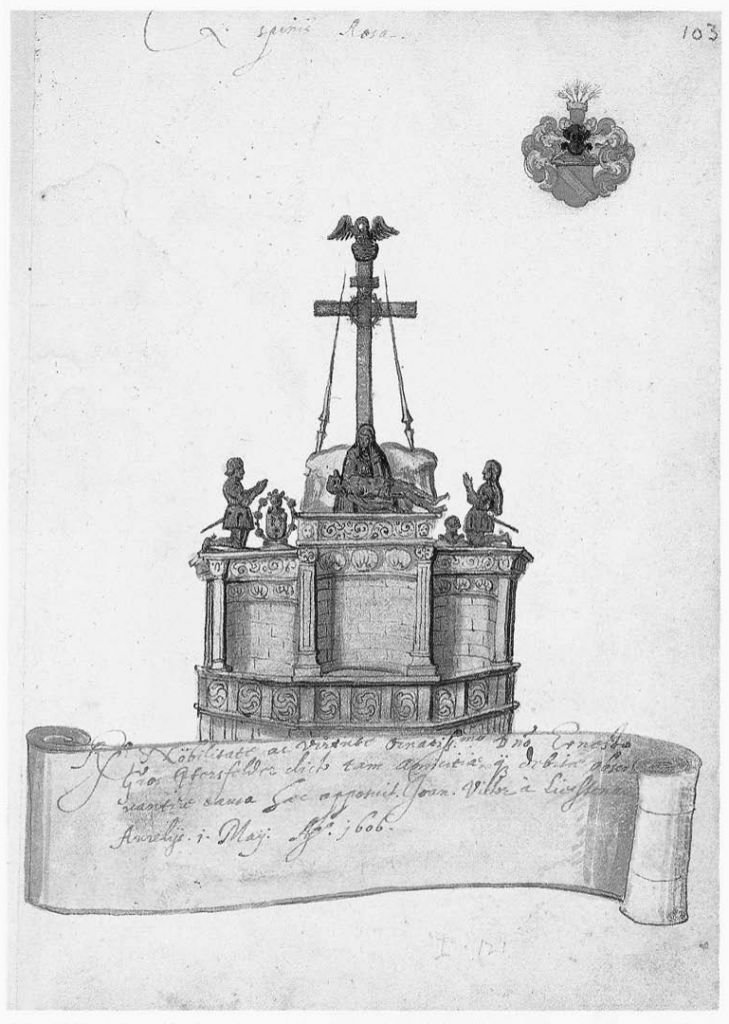
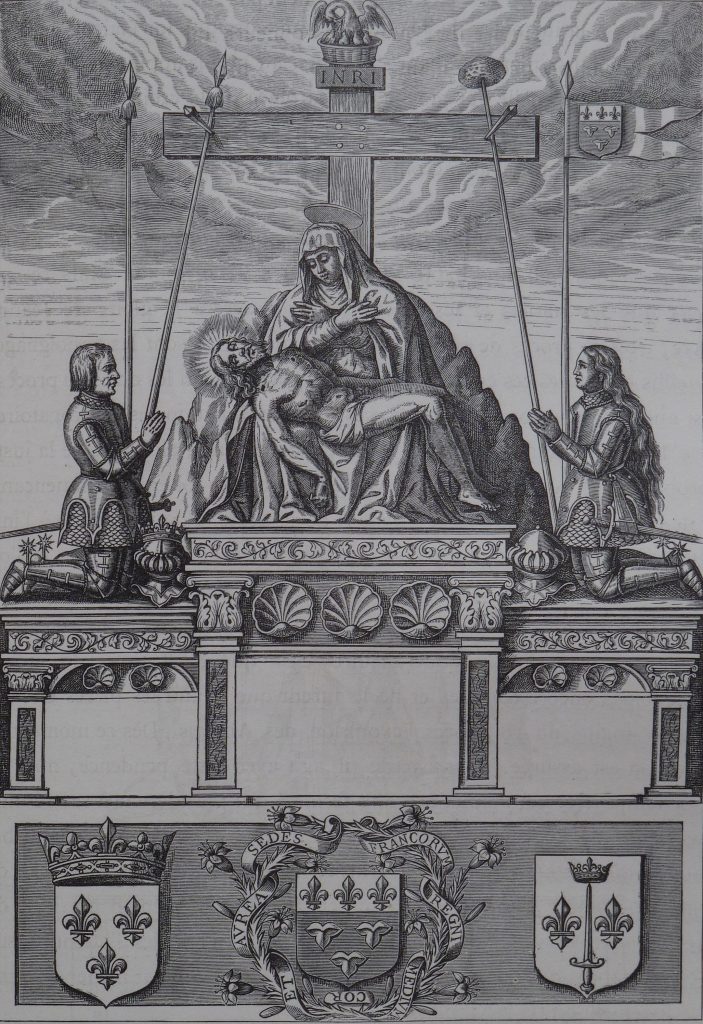
A more recent commemorative monument in Orleans attracted at least three album painters in the first decade of the seventeenth century. The original monument in honour of Joan of Arc erected in 1502 in that city was destroyed by the Huguenots and rebuilt in 1572 — this is the state in which the Lichthammer (1605), Gross von Trockau (1606) and Renner (1609) painters recorded it, shortly before the engraving by Leonard Gaultier (1613). The banderole label beneath the monument in the Lichthammer album (ABOVE) reads Pucella Aurelianis Oppidi Patrona obiit… [Virgin of Orleans Patron of the City, died …] and then a blank where the date of her death (1431) — evidently unknown to the painter — was to be filled in, though it never was.
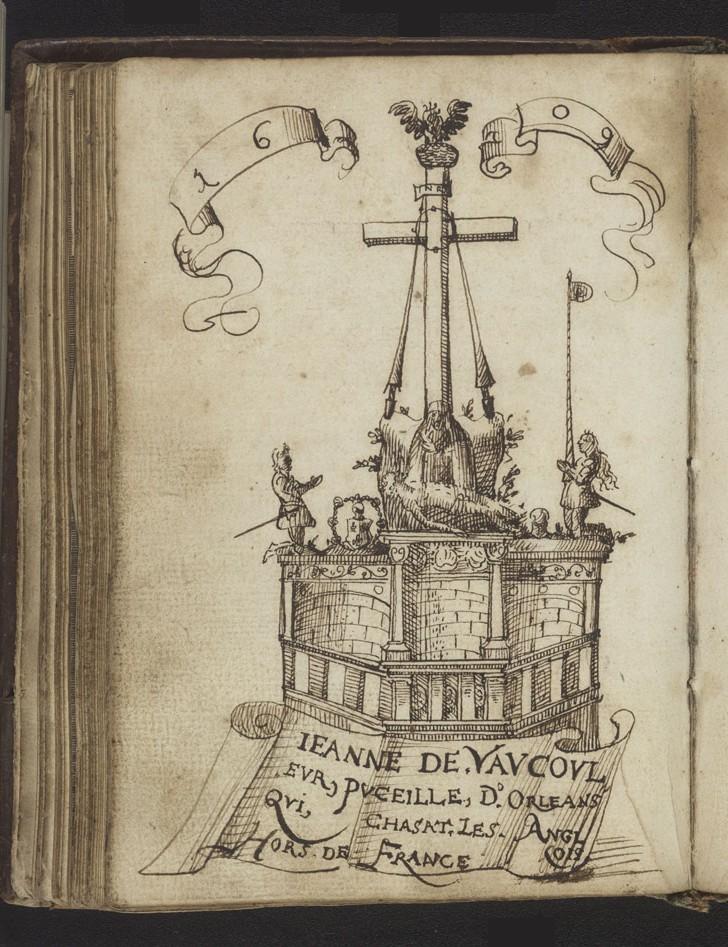
The Renner album label — in the vernacular — is rather more dramatic: Ieanne de Vavcovlevr, Pucelle, D’Orleans Qvi Chasat les Anglois Hors de France [Joan of Vaucouleur, Virgin, who Chased the English out of France]. (ABOVE)
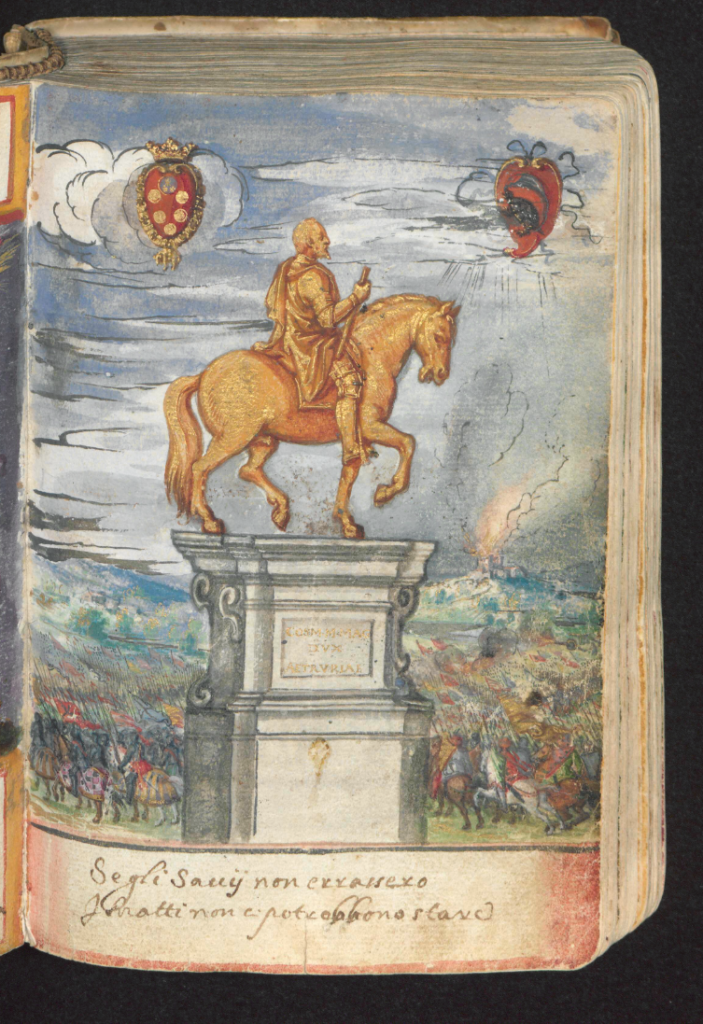
Cosimo di Medici
An equestrian statue of Cosimo was erected in the Piazza della Signoria in Florence in 1594 and subsequently painted in the album of Mattheus Miller:
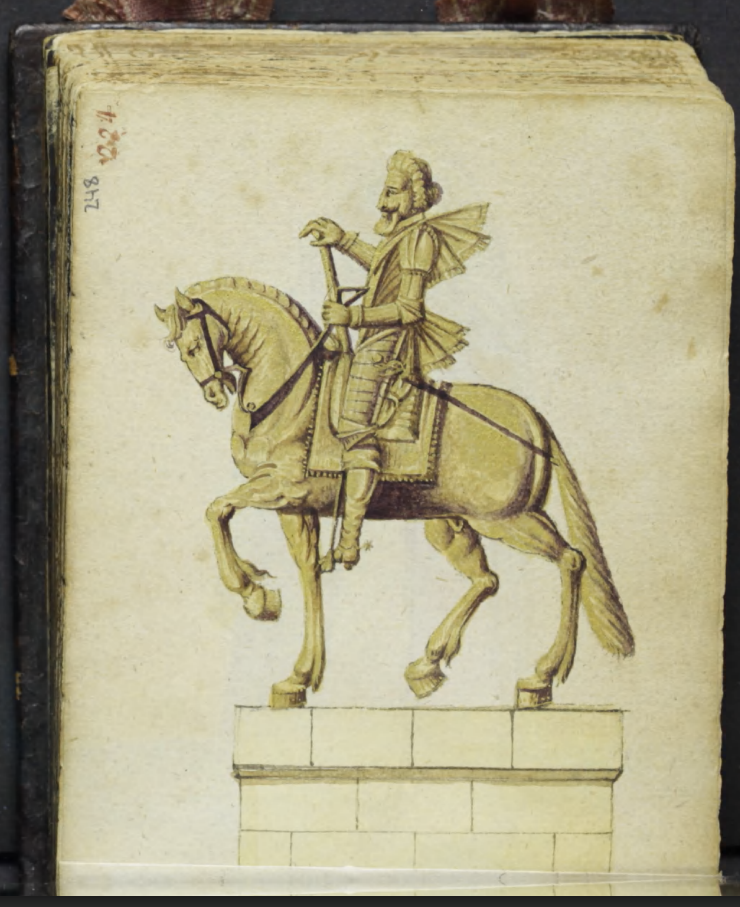
But who is this?
The ?king/prince in this equestrian statue, so carefully delineated in the Rentsch album (dated entries 1615-47), holds a baton like Cosimo (above) but otherwise differs from the Miller album painting — is he someone else entirely? Any offers, please, Readers?!
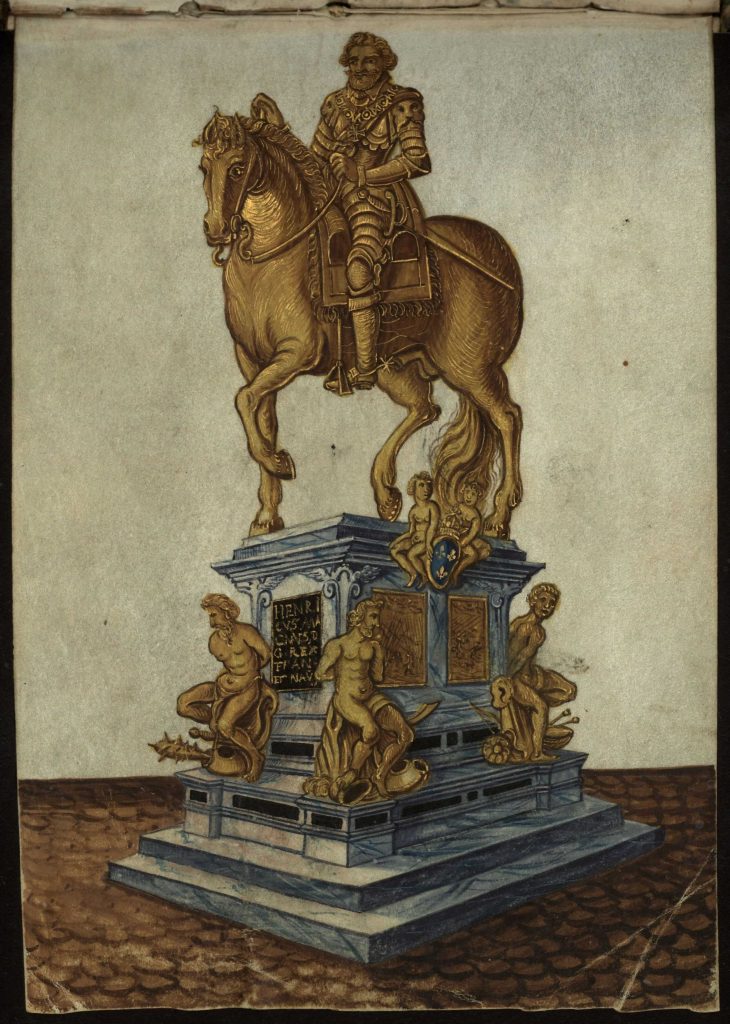
Henri IV
Mary of Medici, commissioned an equestrian statue of her murdered husband, King Henri IV to be erected on the Pont Neuf in Paris — it was completed in 1614. Five years later, on his trip across Europe, the Silesian nobleman, Herman of Salza, had a meticulous copy of the monument painted for his album:
Strasbourg Cathedral
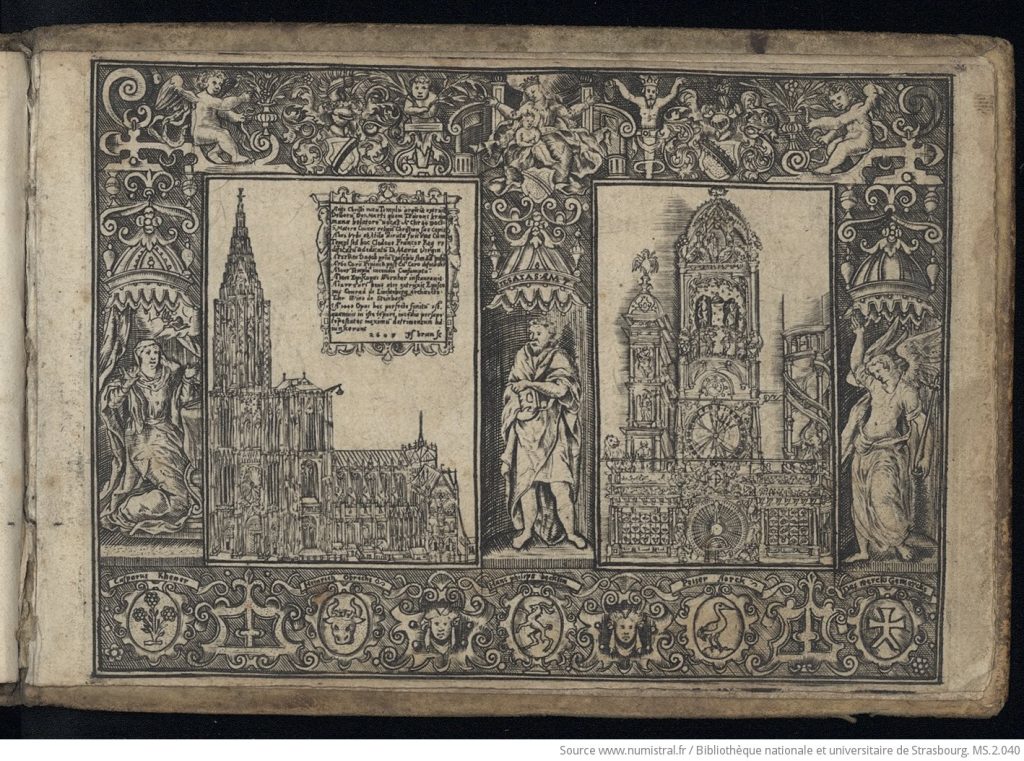
In the early 1630s meticulous drawings of Strasbourg Cathedral and its famous astronomical clock were added to the album of Michael Ast held in the Lund University Library, and Isac Brun’s engraved print of both made in 1607 was pasted into the album of Andreas Sotzinger (dated entries 1605-50)
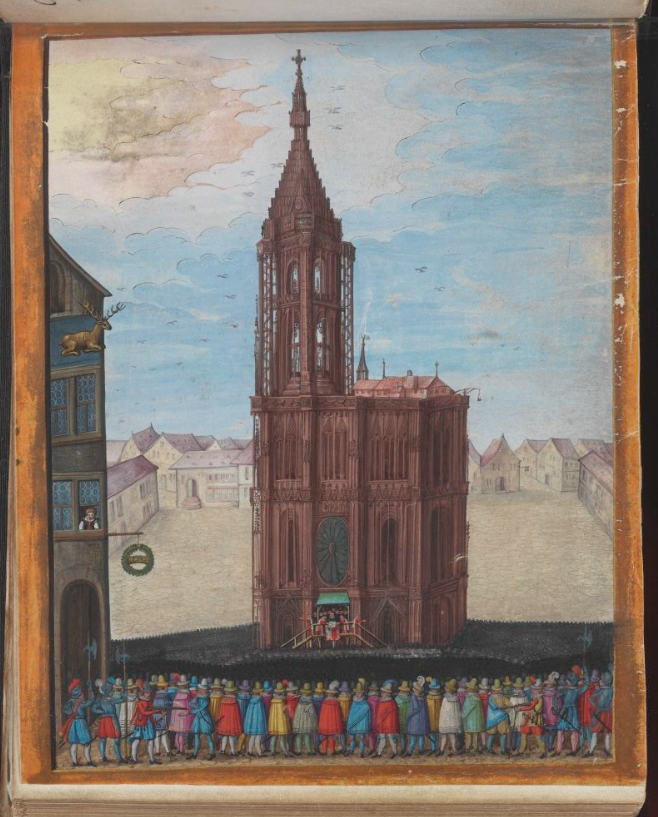
But the Cathedral alone had already appeared a decade earlier in the album of Anton Heinrich Graf von von Oldenburg-Delmenhorst:
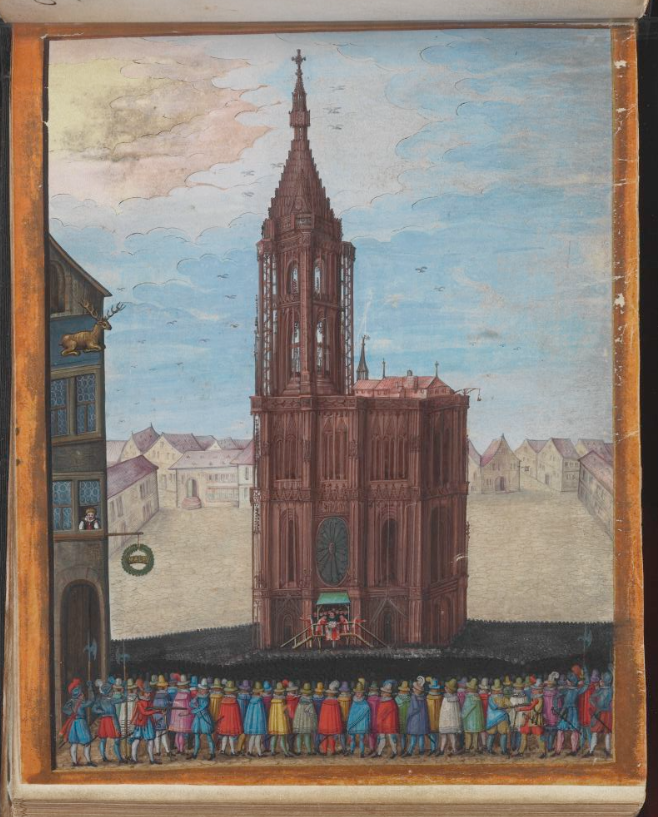
In this painted miniature the artist has included a fascinating and prominent detail just below the eaves on the corner of the building in the foreground — an apparently three-dimensional model of a stag, positioned so that its antlers project on both sides of the building:
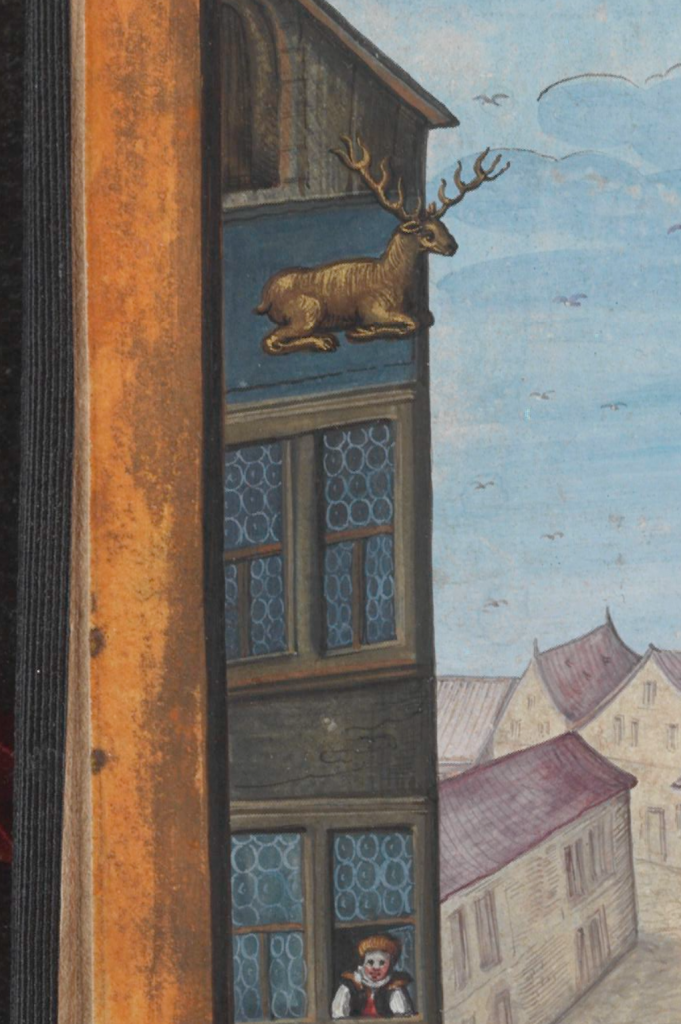
Precisely the same arrangement can still be seen today on the corner of the building in Sighisoara, Romania, the feature which gives it its name, indeed — Casa cu Cerb [house with the stag] — and there can be no doubt that in both cases the intention was apotropaic, to ward off evil.
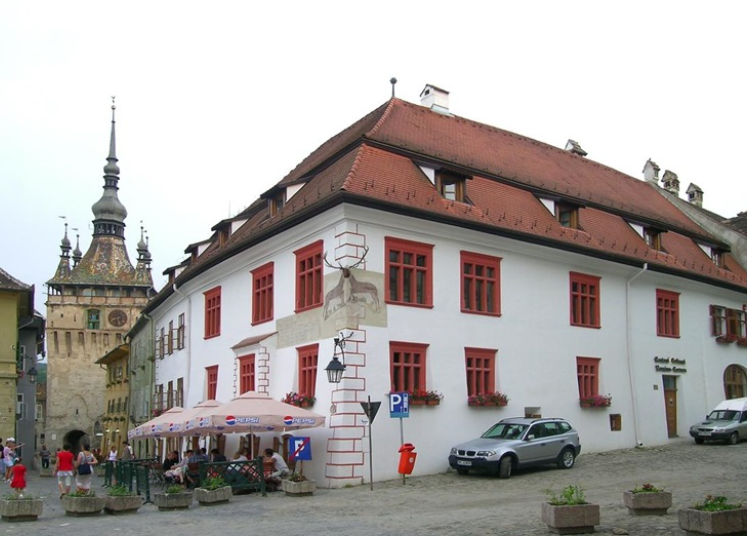
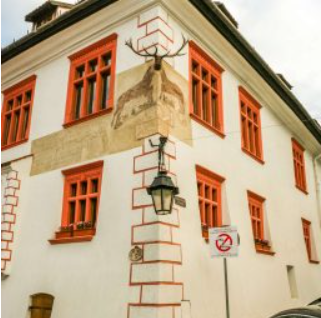
Yet another aspect of the importance of these albums lies in just such renditions of the everyday realia of past centuries.
Imagined Antiquity
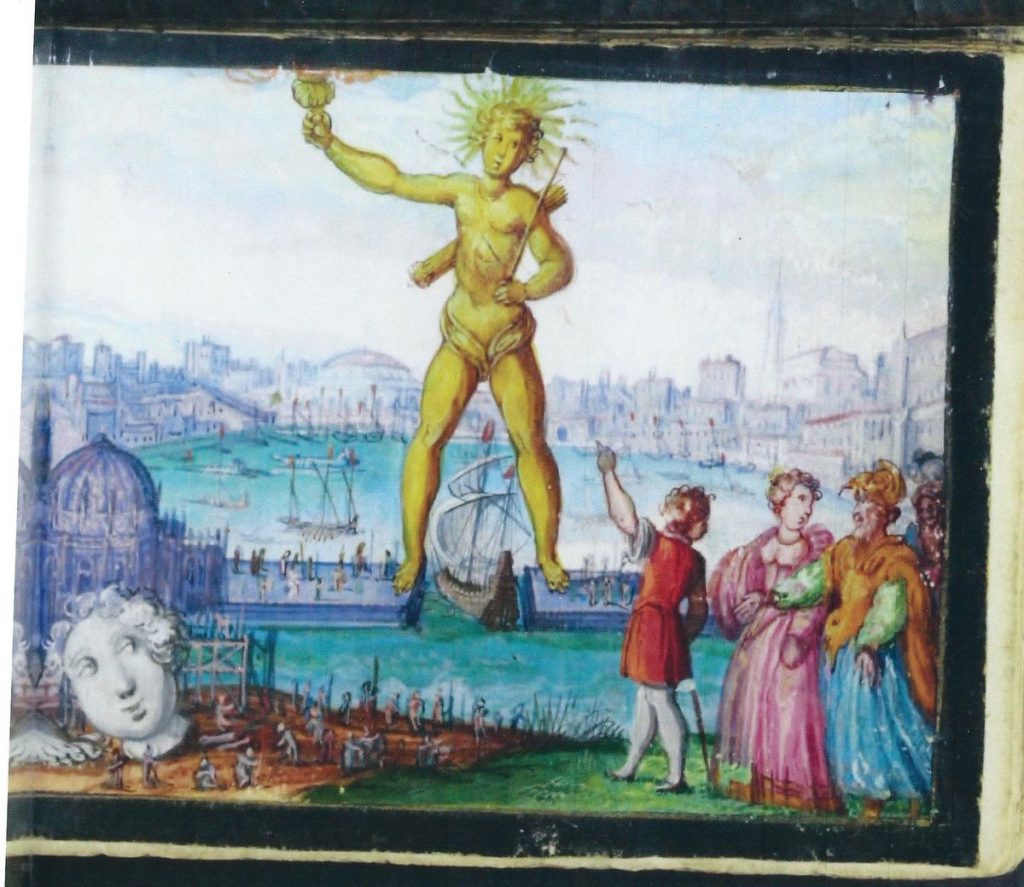
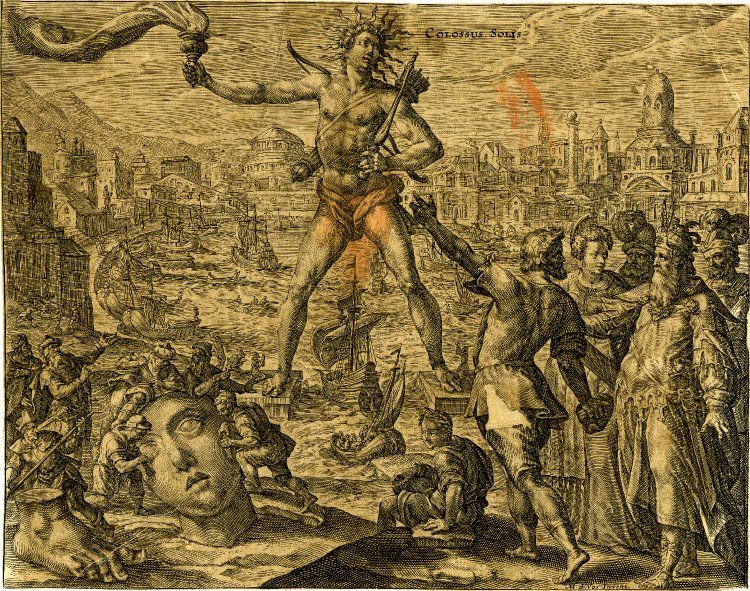
This miniature in the Rentsch album purports to show one of the Seven Wonders of the Ancient World, the Colossus of Rhodes, with the seemingly archaeological remains of it — head and foot — in the foreground, but the album painter has merely made a fairly free copy of an engraving by Crispijn de Passe
Leave a Reply