1. Wine is strong. 2. the King is stronger. 3. Woman is strongest. 4.Truth trumps all three!
The formula derives from I Esdras, chapter 3. It is first found in profusely-illustrated late medieval bibles that do not consider Esdras non-canonical. See Ilja Veldman, “Who Is the Strongest? The Riddle of Esdras in Netherlandish Art” in Simiolus 17 (1987), pp. 223-239, who shows that Dutch print series illustrate the motif from the 1570s onwards. Apparently this is ICONCLASS 71R142 — for what it’s worth!
I must admit that — as yet — I have not noticed a single example in the albums — but I live in hope! And, in any case – as I keep having to remind myself — this is my blog, and I can put what I jolly well please in it! Hurrah!
OK.. no point in re-inventing the wheel, so let’s let Professor Veldman set the scene! [from her essay referred to above]
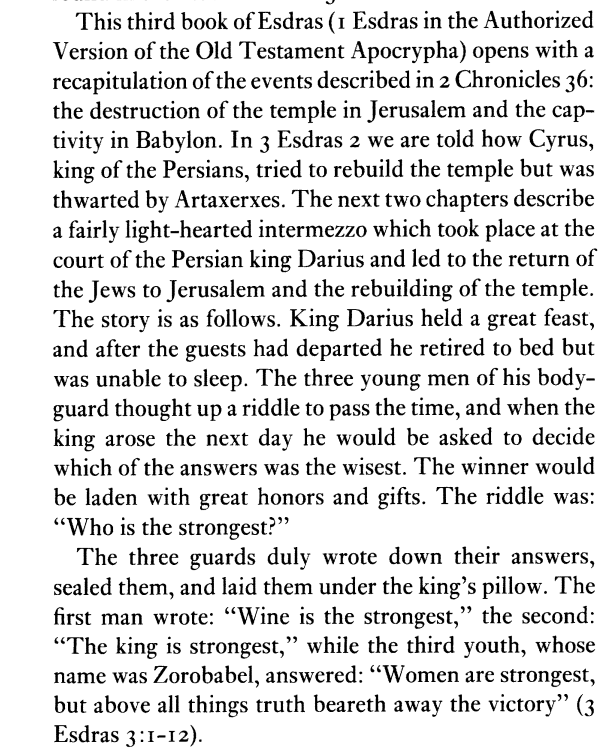
Right! Let’s go! I’ve happened upon a few examples antedating Prof. Veldman’s Duch prints, which begin in the 1570s, so let’s start at the beginning
In the early 14C Bible illuminated by Jean Jeannart
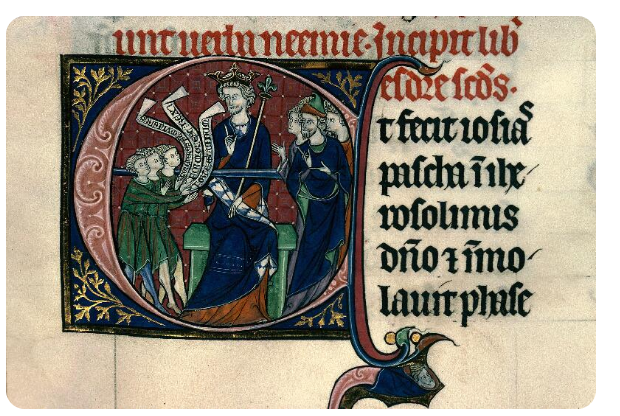
Darius sits on his throne and the three guards give their answers to the question “Who/What is the strongest?” Only the second banderole is clear to me, reading FORCIOR EST REX [the king is stronger].
The full text of the ‘riddle’ is cut into the stonework in the famous 15C chapel at Rosslyn — the only inscription in the chapel, apparently:
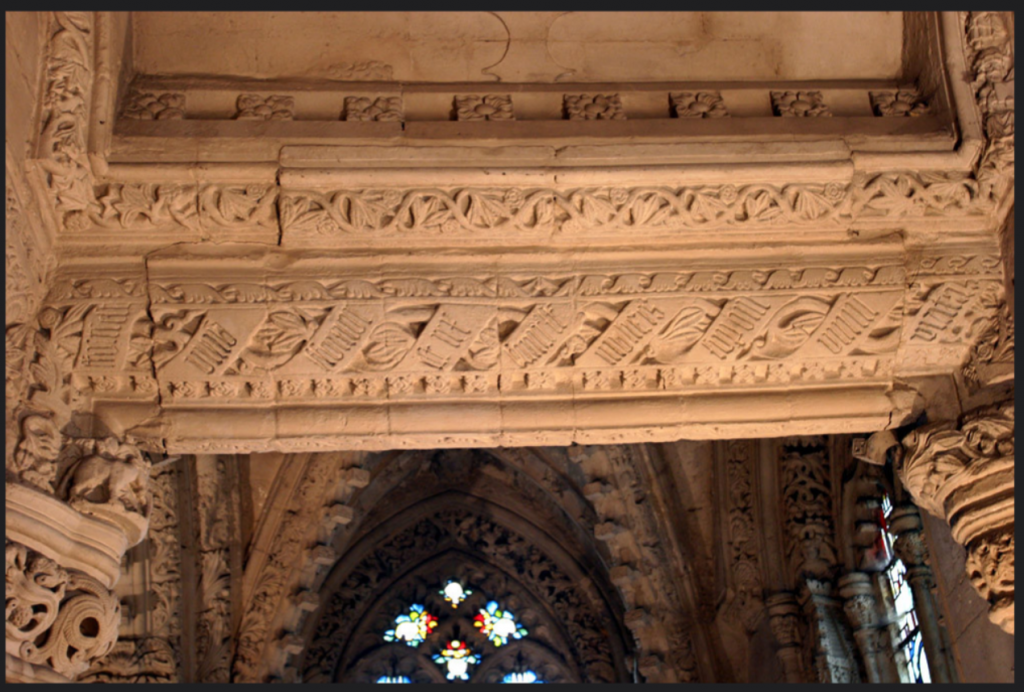
It reads,
forte est vinum Wine is strong
fortior est rex The King is stronger
fortiores sunt mulieres Women are stronger still
super omnia vincit veritas (but) Truth conguers them all.
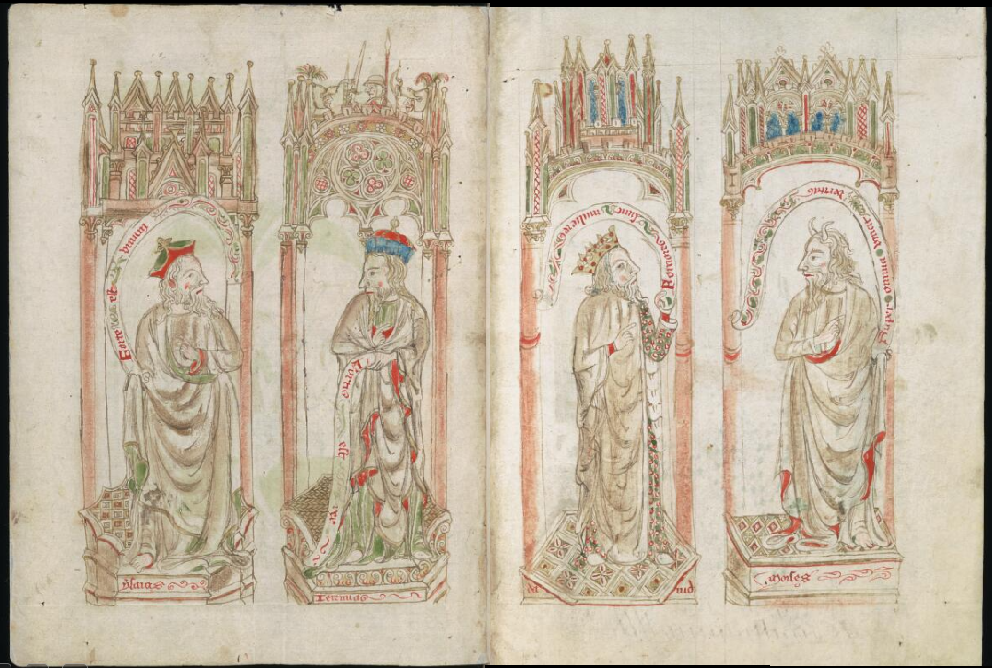
It is found too on banderoles held by three prophets and Moses, as drawn in an early 15C English manuscript:
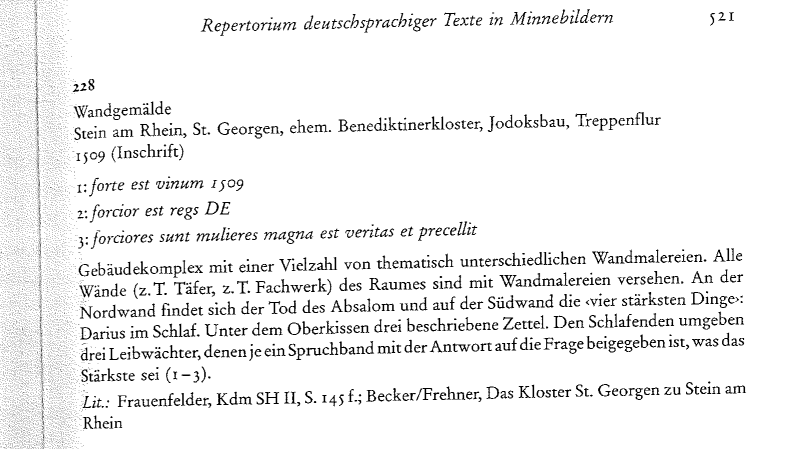
The incident is depicted in one of the murals in the Monastery at Stein-am-Rhein, painted in 1509, but as I have no image of it, I shall let Stephan Matter describe it:
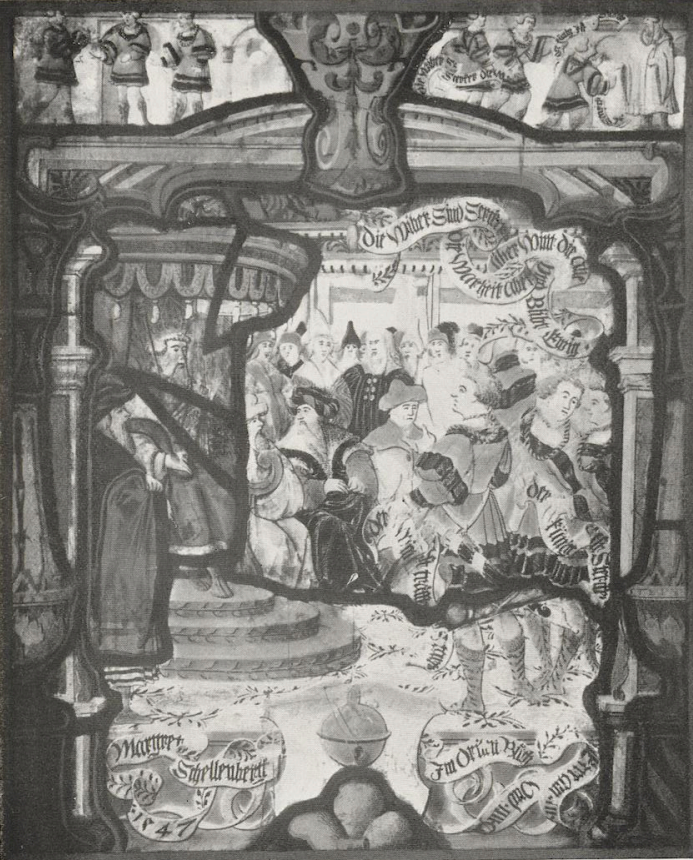
Next, what prompted me to put this little collection together — the moment it reached ‘critical mass’, as it were! This photo in an early 20C auction catalogue of a glass pane dated 1547 — a Wappenscheibe with the ‘canting’ arms of Schellenberg painted at the bottom of the pane in the form of the bell [Schelle] on the mountain [Berg]!
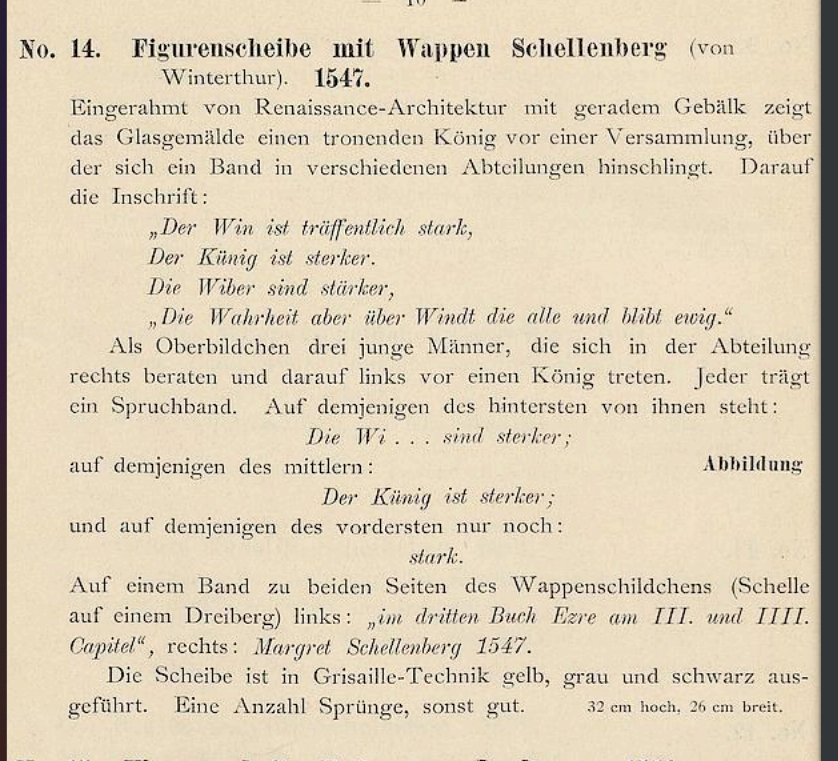
I attach the auctioneer’s description:
Where is it now, I wonder — if it still exists!
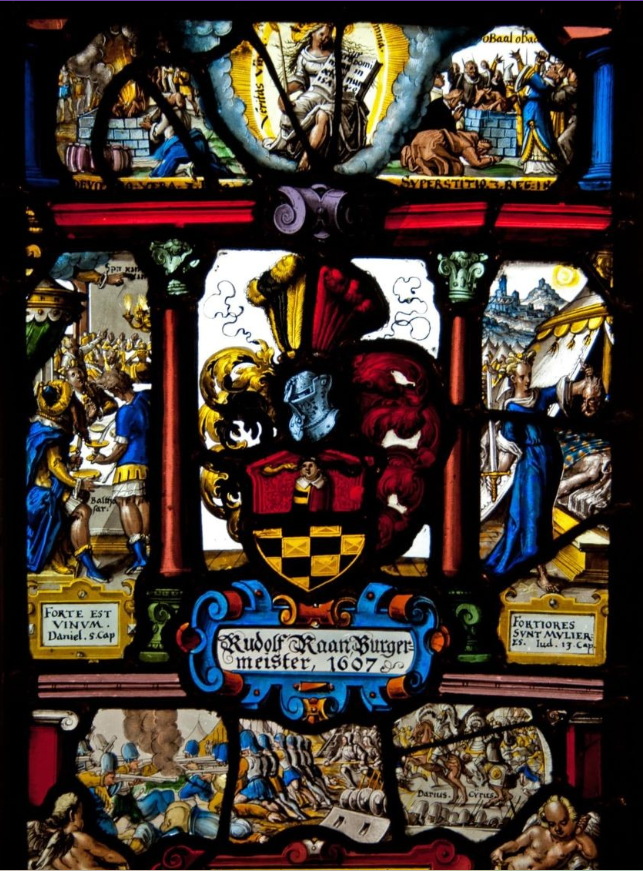
An example in glass which does still exist is preserved in the Historisches Museum in Thurgau, made in Zurich in 1607:
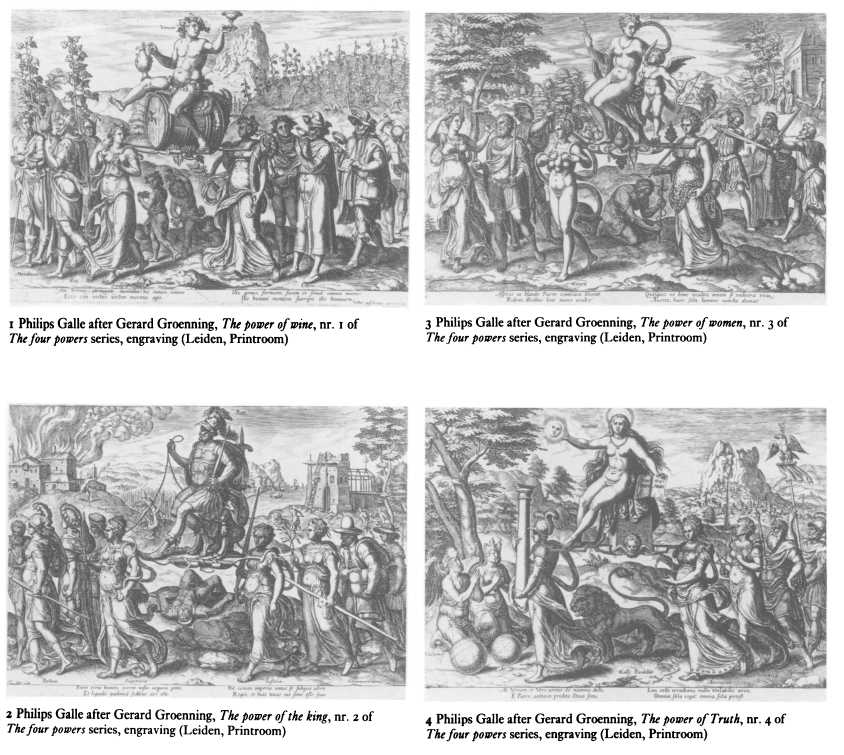
Ilja Veldman was able to reproduce several print-series of the motif, and from her article here I reproduce just the earliest set, published in Antwerp by Philips Galle in the 1570s:
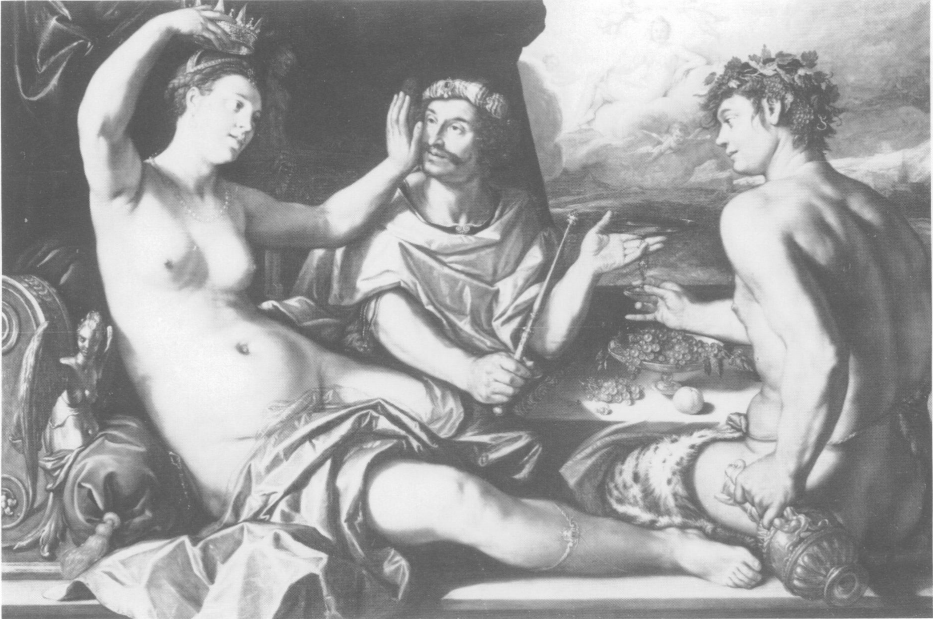
Lastly, Professor Veldman was also able to identify a painting in the MBA, Verviers, as an all-in-one representation of the motif painted by Hendrick Goltzius in 1614:
Leave a Reply