This monde renversé motif and proverbial idiom seems commoner in early Dutch in the form, paard in de wieg, and there are also several examples of its use as a house/shop-sign in the late 15C Netherlands. The assertion in Larwood & Hotten’s 19C History of Signboards that it was the sign of a brothel is based on a fanciful etymology not to be taken seriously.
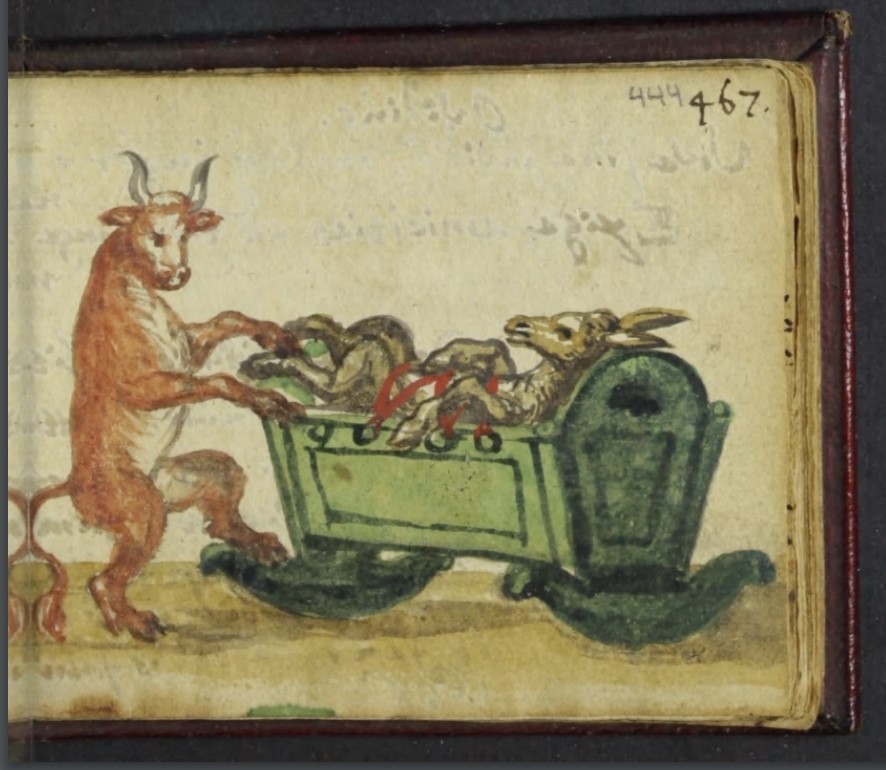
The reason I discuss the motif here is because of this miniature painted in the album of Austrian, Matthäus Schmoll, probably c.1635:
The motif is not common, but was certainly found as a house-sign in the Germanic area in the 15C. This extant example on the exterior of a house in Cesky-Krumlov in southern Bohemia (now in the Czech Republic) was probably painted in the 1470s:
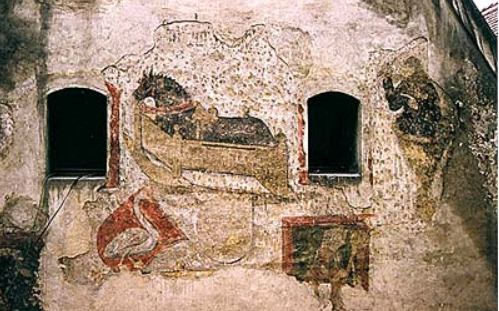
There are several records of premises called Pferd/Ross in der Wiege in Memmingen, Vienna, Konstanz, and Zurich (1453), for example.
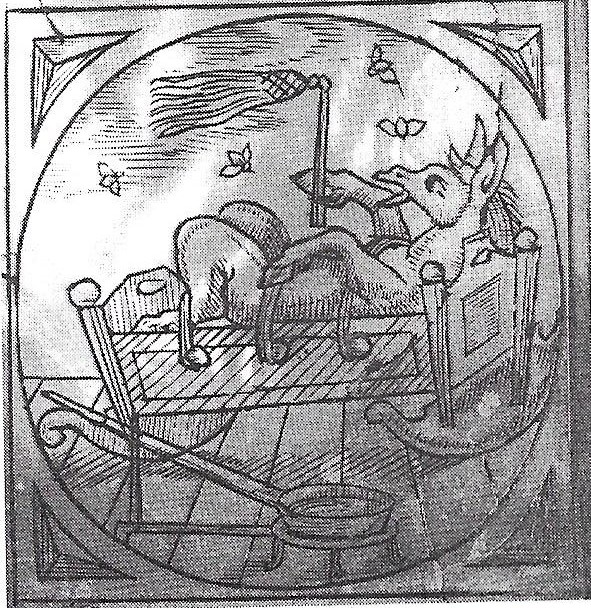
At the moment I cannot point to any 16C examples of the motif, but it occurs as one of the droleries engraved on the white squares of ‘Hainhofer’ gameboards made in Augsburg in the early 17C:
In England too it is found as the name of a London shop/tavern called The Colt & Cradle, as advertised on a trade token dated 1667, preserved in the Museum of London:
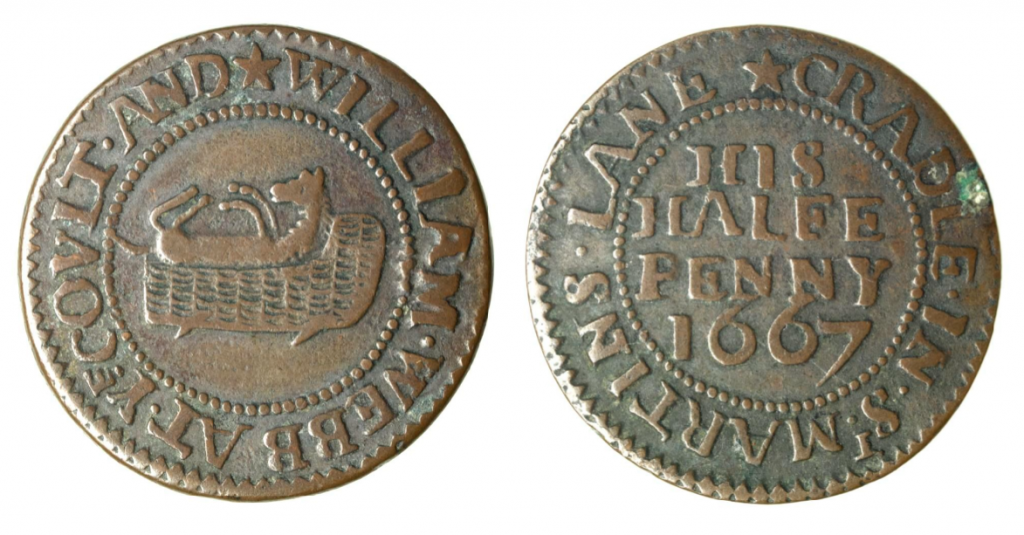
.
Leave a Reply