Of the numerous memento mori emblems in the albums this is surely the strangest. The sketch in the album of Jacob Freund is a particularly unlikely version:
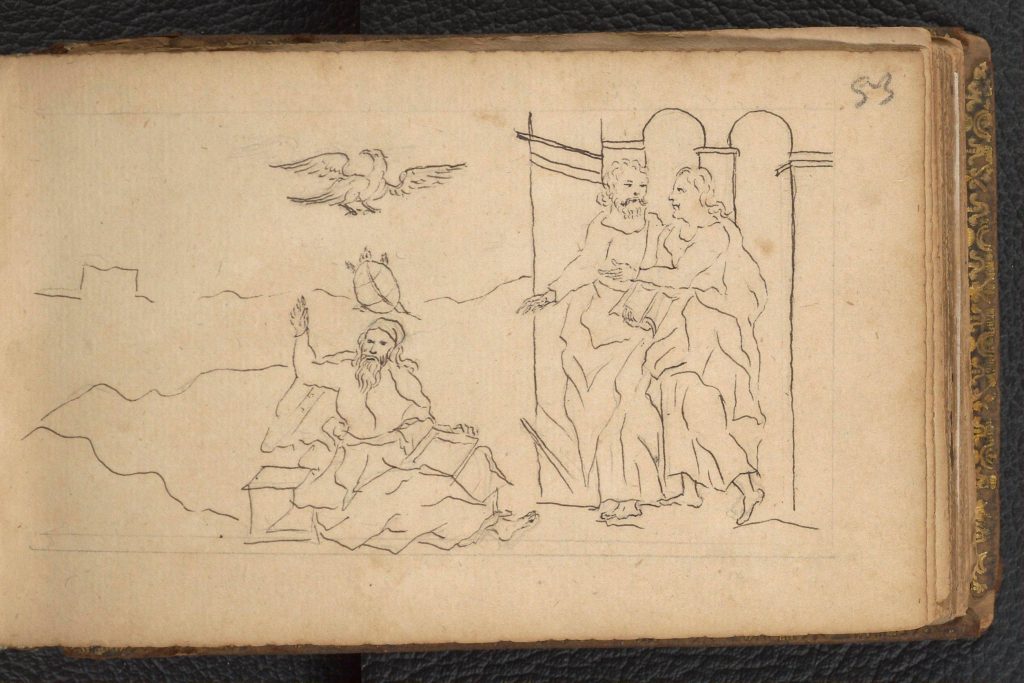
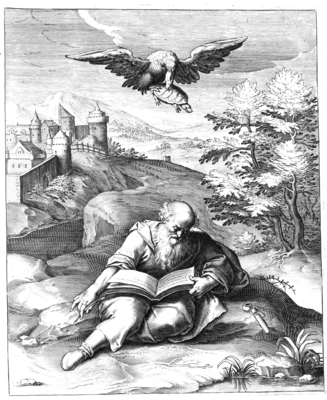
Two men in robes emerge from an arcade to witness an eagle dropping a tortoise on the head of a seated man who appears to be declaiming from a book on his lap. The artist was clearly copying the engraved illustration below from Dionysius Lebei-Batillii, Emblemata (Frankfurt 1596) with its even more unlikely city-centre setting — most other engravers do at least set the scene out in a rocky landscape where eagle tortoise-bombers are inherently more likely!
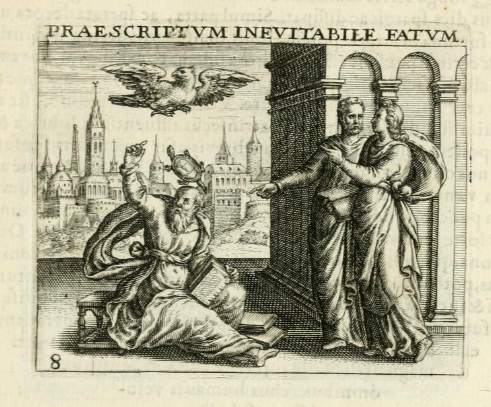
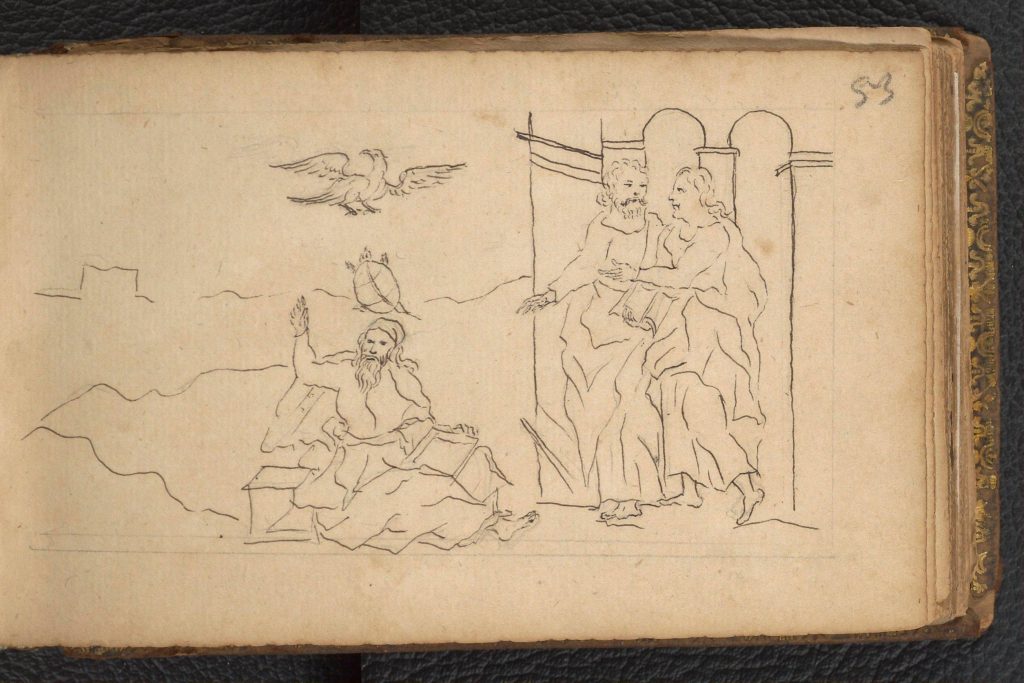
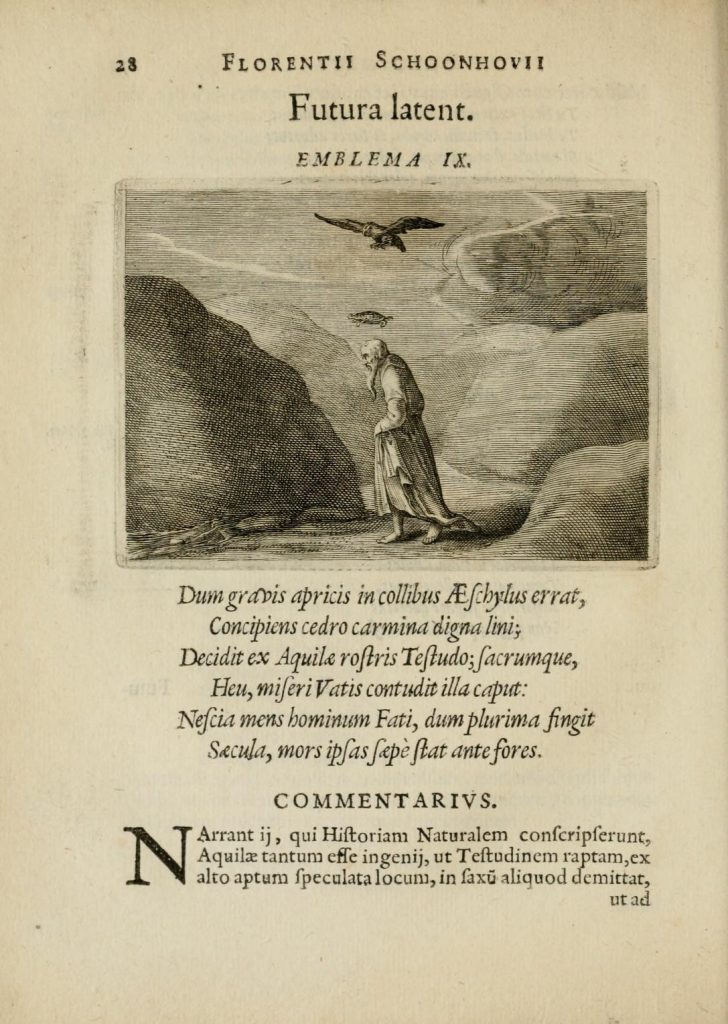
The moral is that there is no avoiding the decree of Fate, however unlikely that decree may sound — if Fate has decreed you will be killed by a tortoise dropped by an eagle mistaking your bald head for a rock, then you will die by an eagle dropping a tortoise on you, having mistaken your bald head for a rock.
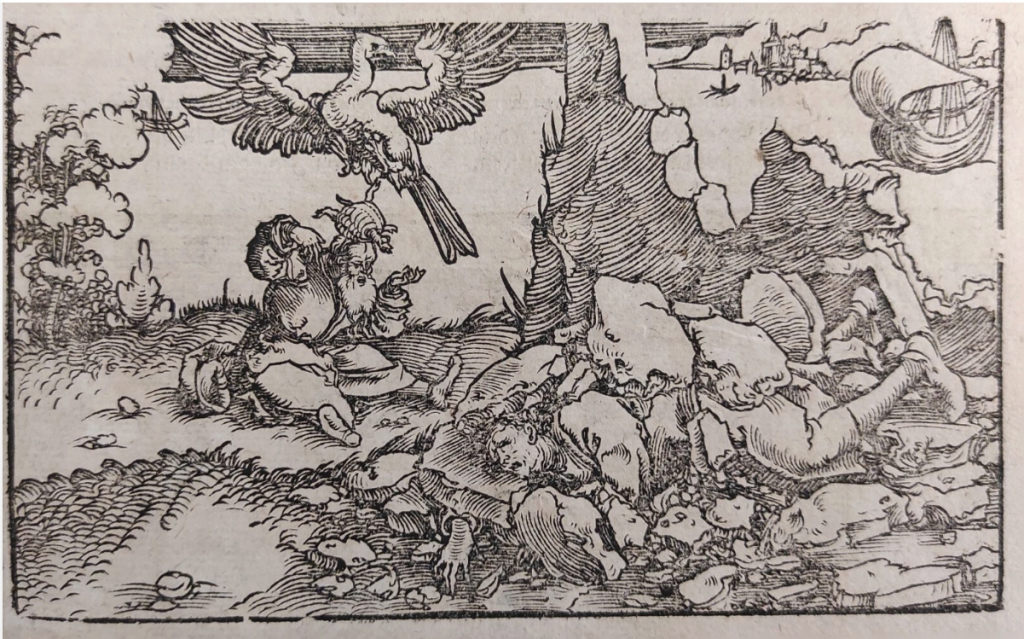
But the victim in this unlikely scenario is none other than the ancient Greek playwright, Aeschylus (c.525-c.455 B.C.), and the bizarre accident of Fate proved popular with emblematists and others.
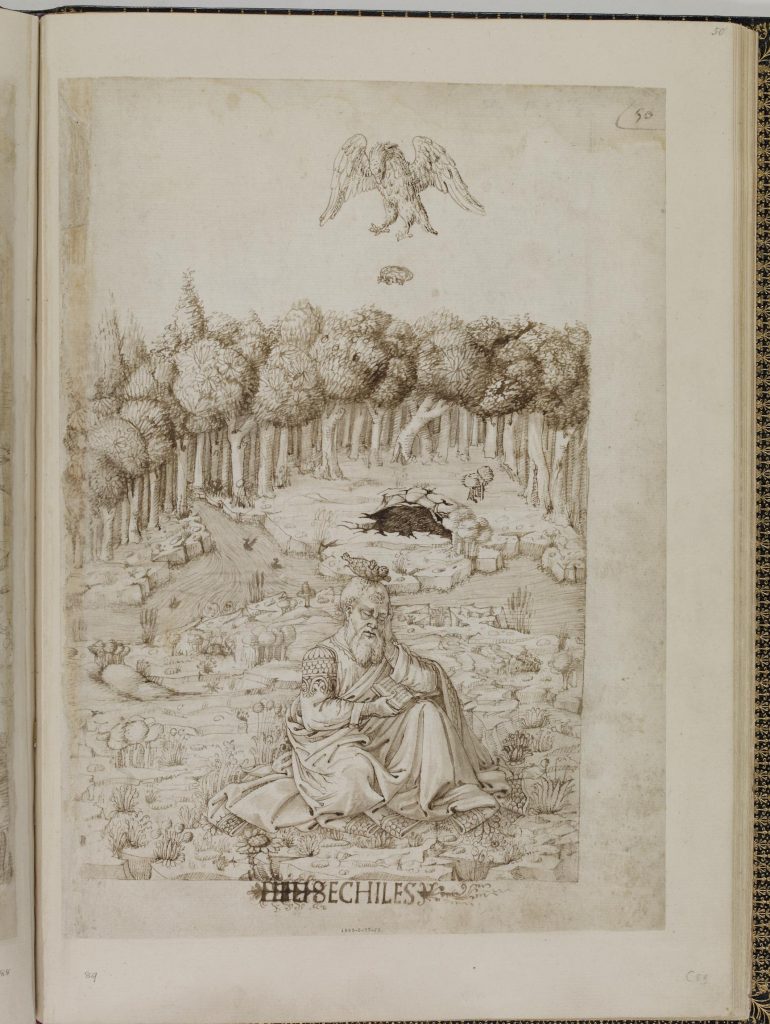
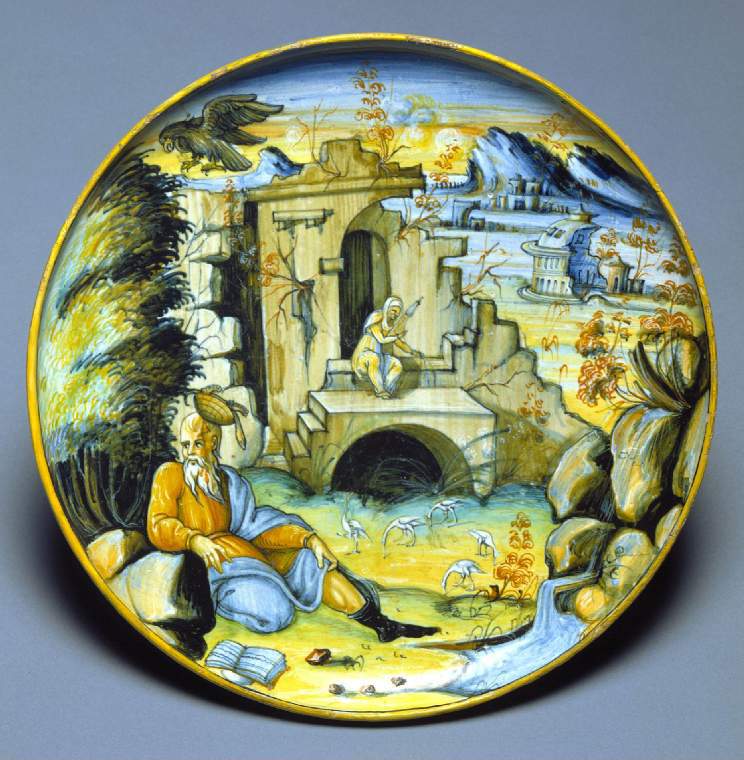
Too good to be just a book-illustration! Note, in the background, one of the three Fates — Atropos, presumably — the one who cuts the thread of the mortal’s life:
Leave a Reply