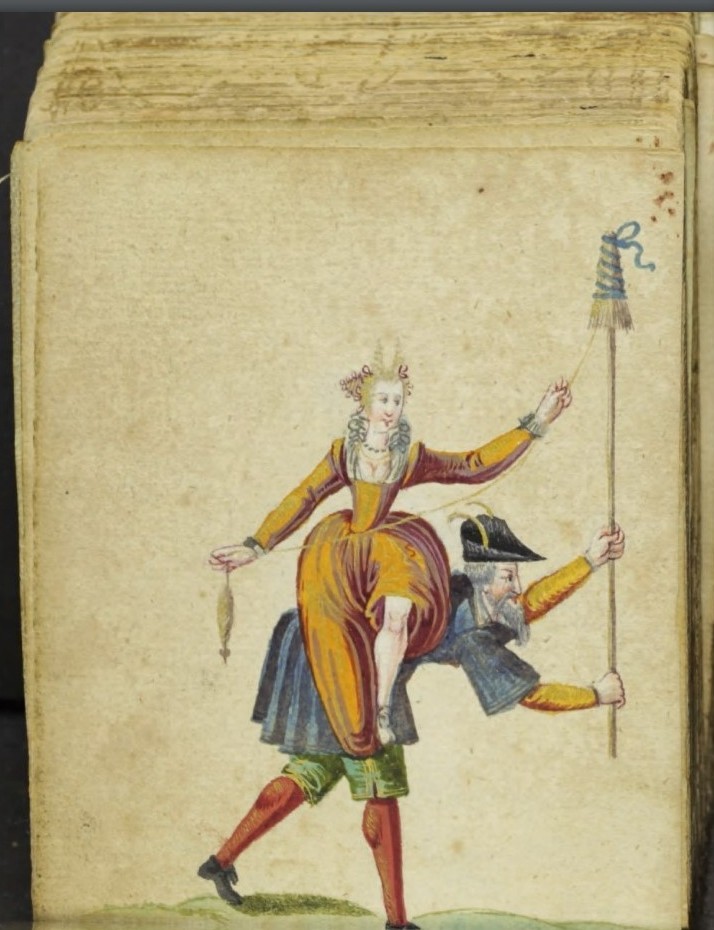
The old story — young wife makes fool of old husband (note fool’s cap), even effeminates him, as he is forced to participate in that quintessentially feminine occupation, spinning!
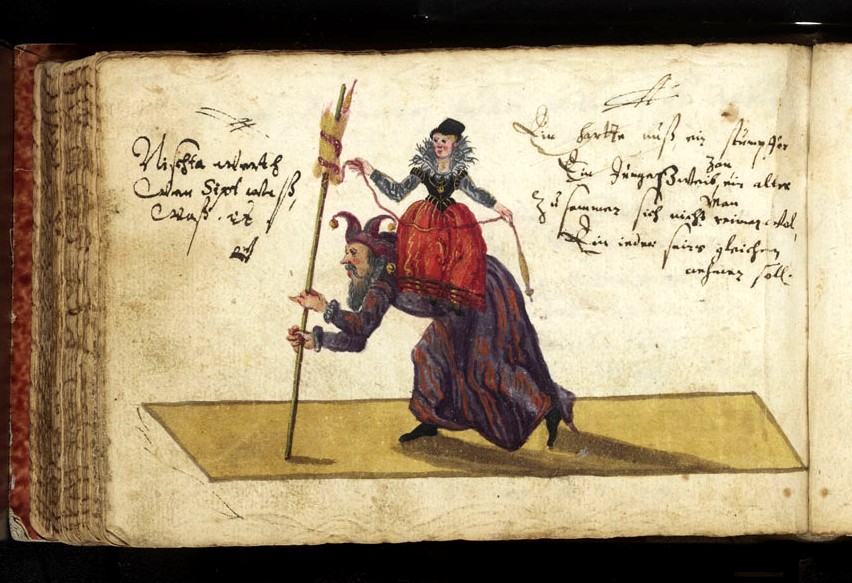
This miniature in the Lüdel album, painted c.1624 is accompanied by a traditional rhyme
Ejn harte nuß, ein stumpfer Zan, Ein jungeß Weib, ein alter Man, Zusammen sich nicht reimen wol, Ein jeder seines gleichen nehmen soll.
A hard nut, a tooth stump, a young woman, an old man, do not rhyme well together, each should take his equal.
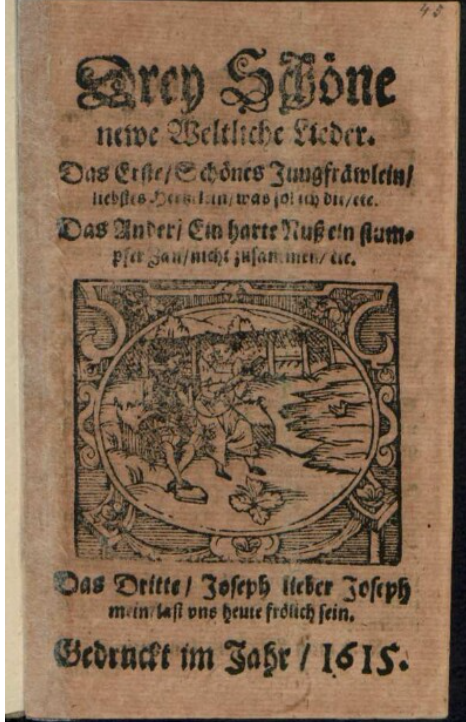
It is found in one of the verses of Johannes Mathesius (d.1565), but was doubtless already traditional, and is found in many printed works throughout the early modern period thereafter, being the title, for instance, of one of the Drey Schöne newe weltliche Lieder published in 1615, as advertised on the cover:
On this page in the Heidenreich album, painted in 1602, the Spruch is written to the left of the loving couple exemplifying the proper union of like ages.
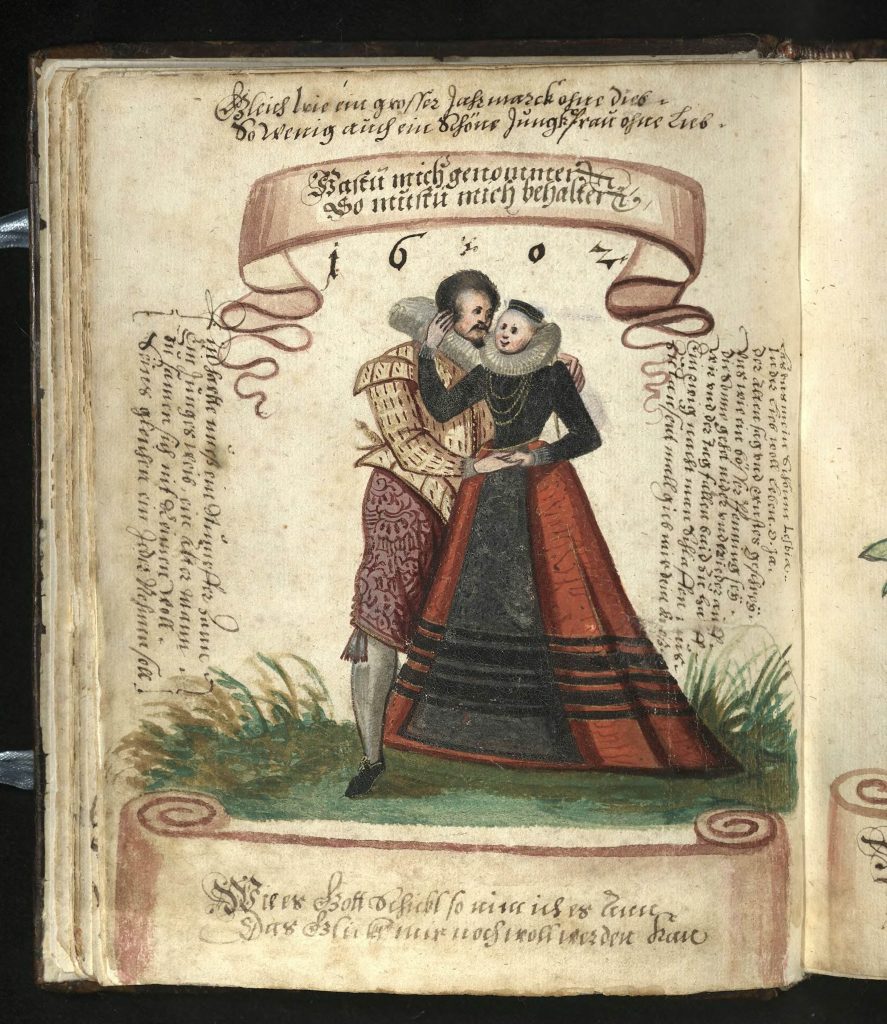
Opposite our Spruch, on the other side of the couple, is a German translation of Catullus 5, Vivamus mea Lesbia atque amemus, but the banderole above the couple contains the popular Hastu mich genommen / so mustu mich behalten [Having taken me, then you must keep me], and above that another well-attested proverb:
Gleich wie ein grosser Jahrmarck ohne dieb So wenig auch ein schöne Jungkfrau ohne Lieb There are as few great annual fairs without thieves as there are pretty girls without love(rs).
And finally, beneath the miniature:
Wie es Gott schickt so nim ich es Ann Das Gluck mir noch woll werden kann Whatever God sends I will accept it Happiness can still come my way.
The Lüdel album miniature we began with is found in other albums; in the Surauer album (below) it may be a lift-the-flap picture which has lost its flap — faint traces of damage, where the flap has come away, are discernible above the old man’s hat and across the wife’s bodice — such images we discussed at
https://albumamicorumear-e4qvahs764.live-website.com/lift-the-flap-pictures-klappbilder/
and SEE FURTHER BELOW
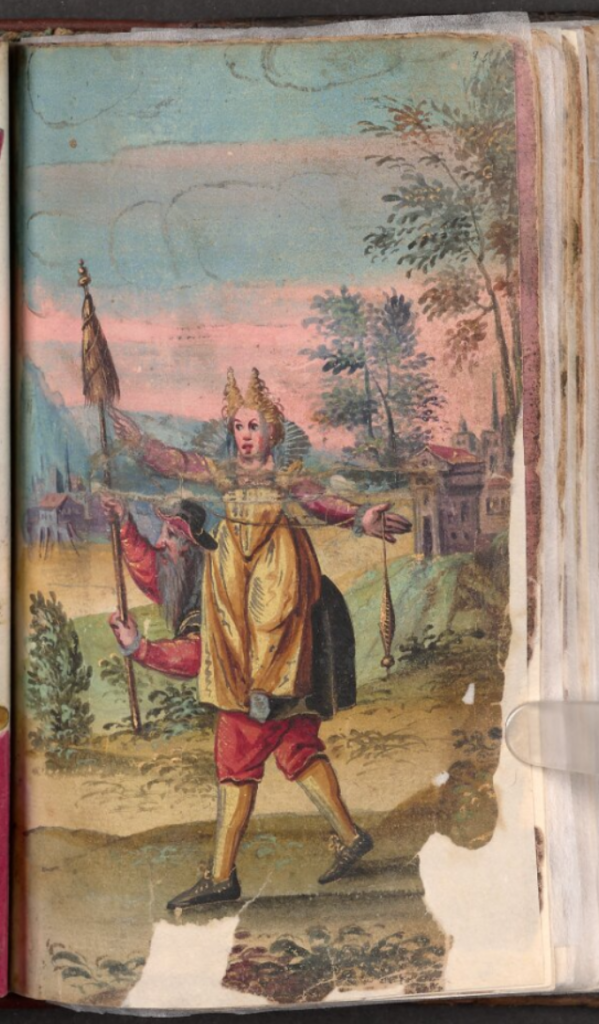
I 3-10, p.154
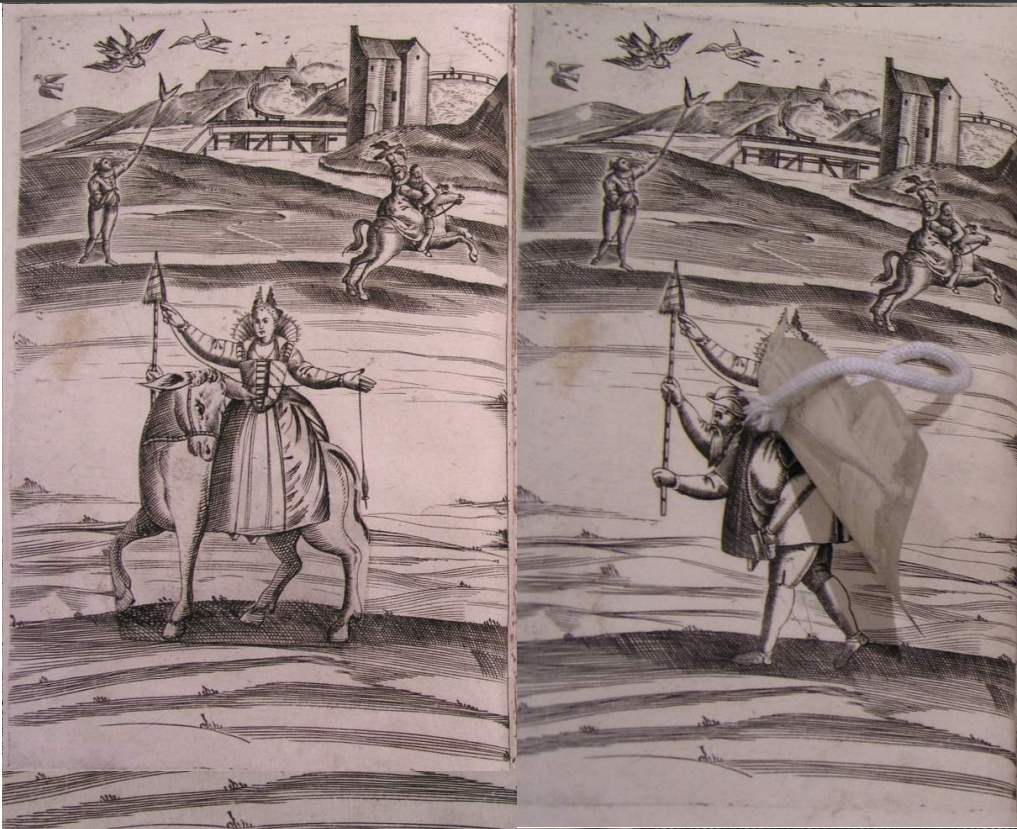
Another example — which would seem to pre-date the Italian engraving above — was apparently painted in the Rietheim album lost in the Louvre fire of 1871 :
Leave a Reply