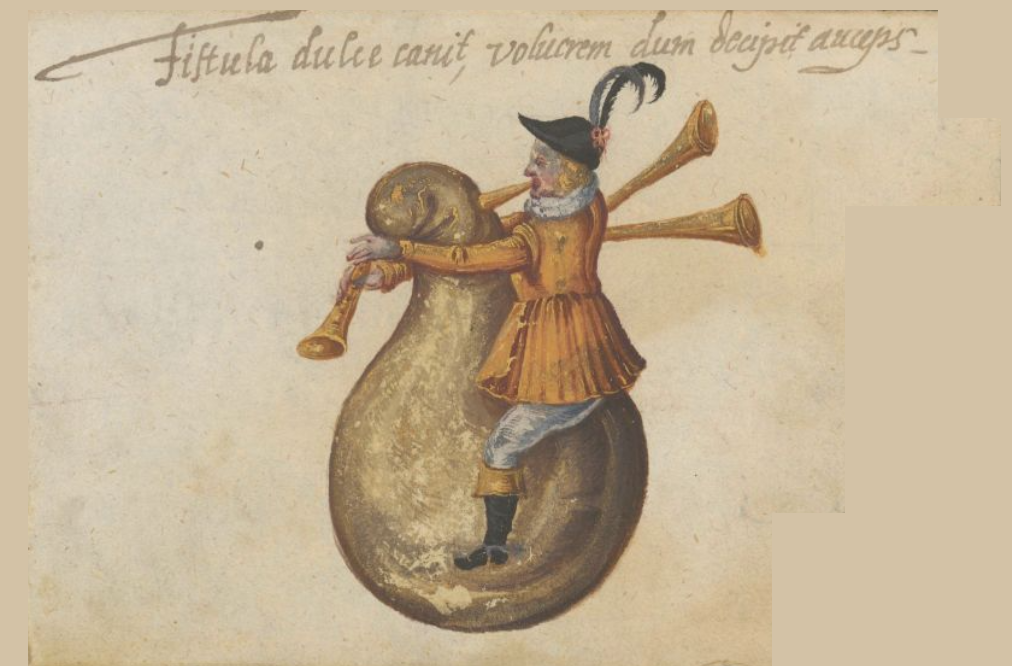
A surreal motif, which — famous for my gravitas — I only give house-room here, as today I found a second example.
The Huber album example painted in the 1620s is ironically captioned — the bagpipe is not usually considered to sound sweetly [dulce] — with a well-known line from one of the popular medieval Distichs of Cato:
Fistula dulce canit, volucrem dum decipit auceps [The pipe sings sweetly, while the fowler beguiles the bird]
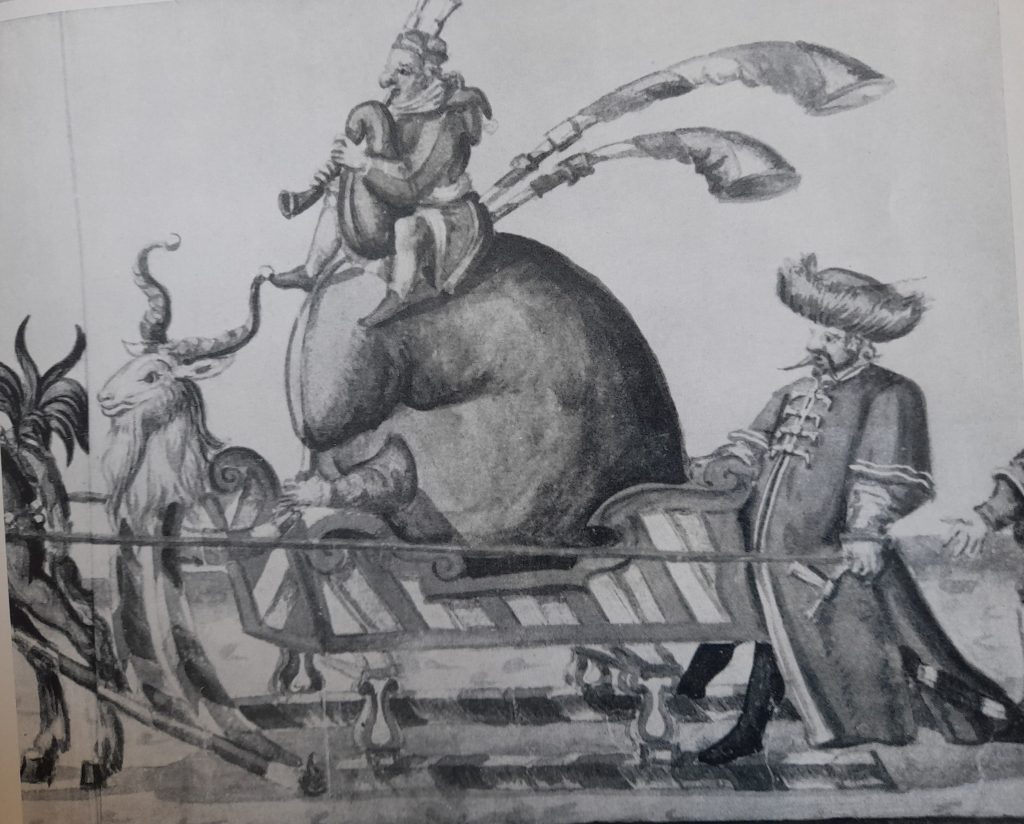
One of the Dresden sleigh pageants discussed in Friedrich Sieber’s invaluable Volk und Volkstümliche Motivik des Barocks (Berlin 1960) painted by Daniel Bretschneider in 1602 depicts the earliest instance of the motif known to me:
but there is another ‘free-standing’ example to be seen in the recently-digitised album of Georg von Olnhausen in Heidelberg UB:
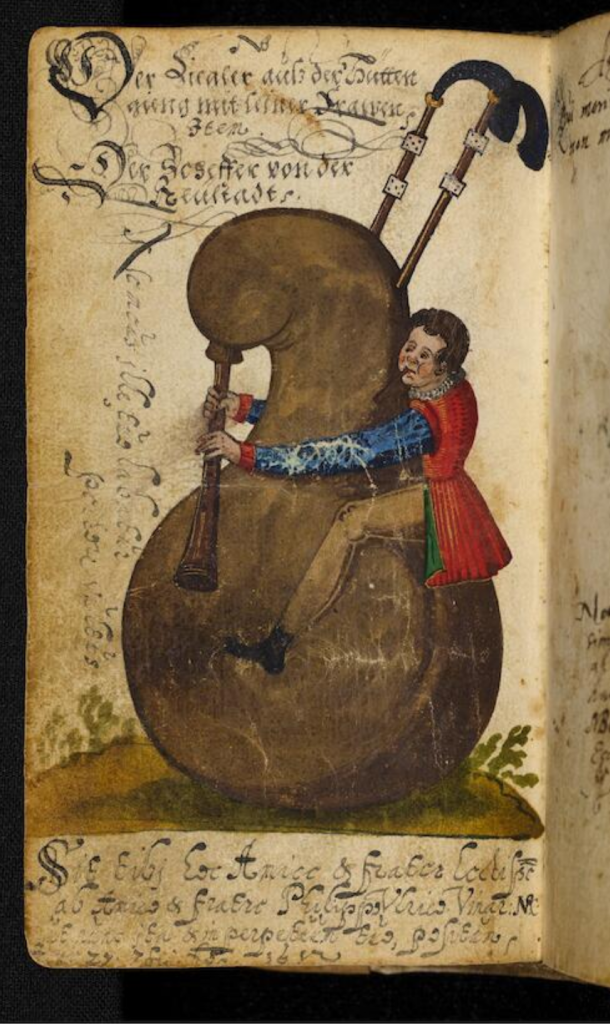
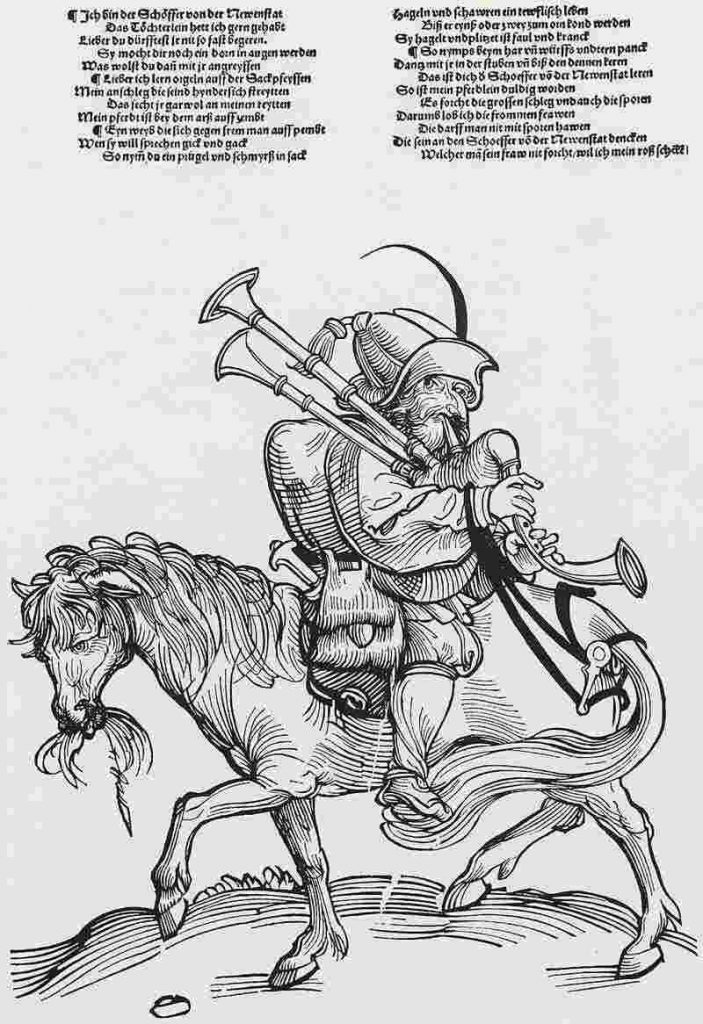
The second title above the miniature reads Der Scheffer von der Neustadt [the shepherd from Neustadt]. This same character playing the shepherd’s instrument par excellence, the bagpipe, is to be seen much earlier on a woodcut sheet by Barthel Beham issued c.1535 — only here he sits backwards on a horse which he has bridled by the tail!
The bagpipe has always been regarded as a somewhat comical music instrument, not least, on account of its phallic suggestiveness [for more on this particular aspect, see my essay in edd. Katie Bank and Eleanor Chan, Musicking the Visual, Visualising the Musical (Abingdon, 2026)]
These German images are not unique — I can point to two examples in 17C English print imagery in which it is a putto who rides on the bagpipe, like a toddler on a space-hopper! The earlier is a detail from Auditus in the set of Five Senses etched by Francis Cleyn and published in England in 1646:
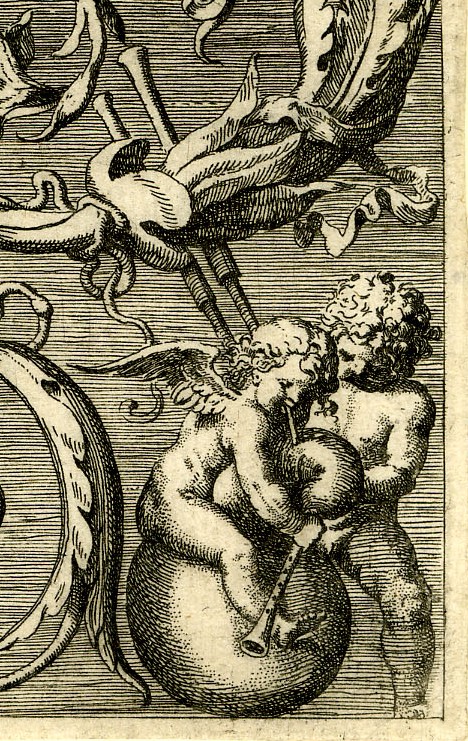
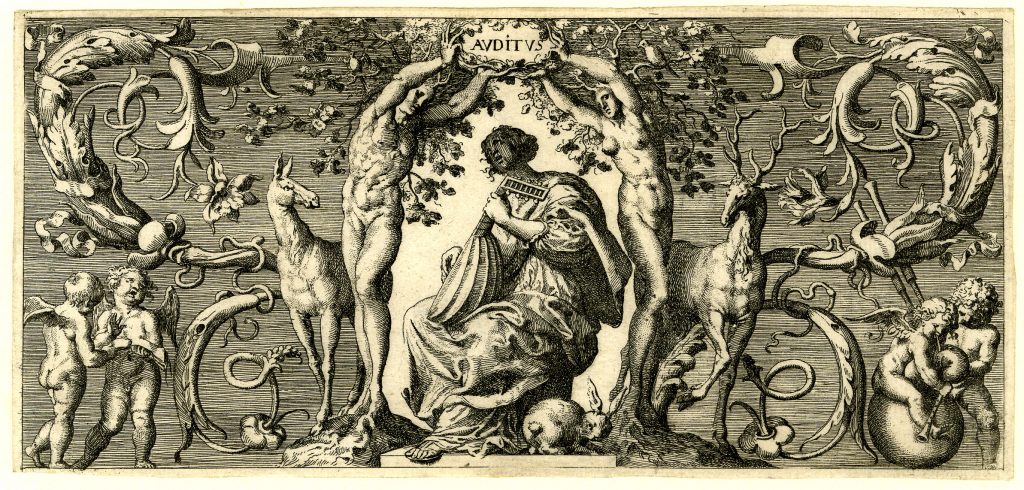
and some time in the final quarter of the century this detail was added to William Sherwin’s copy of Saftleven’s etching of Hearing, also from a set of The Five Senses:
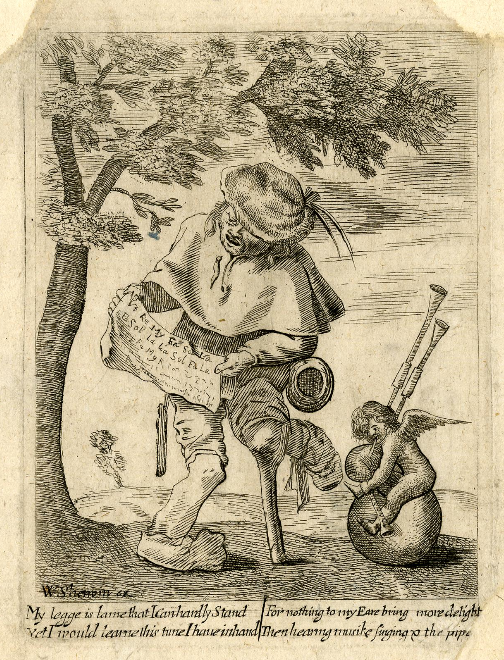
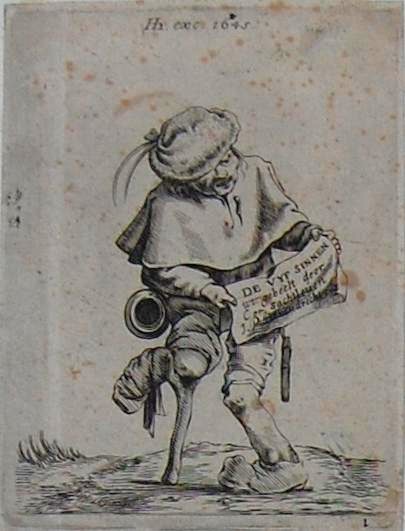
and there will, of course, be others I am unaware of.
Leave a Reply