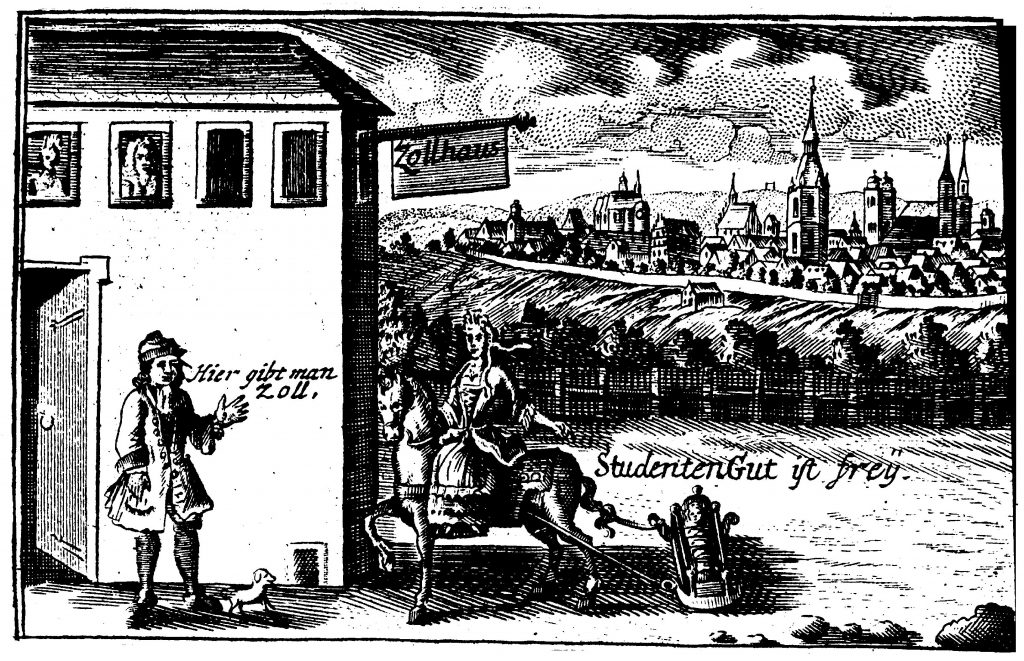
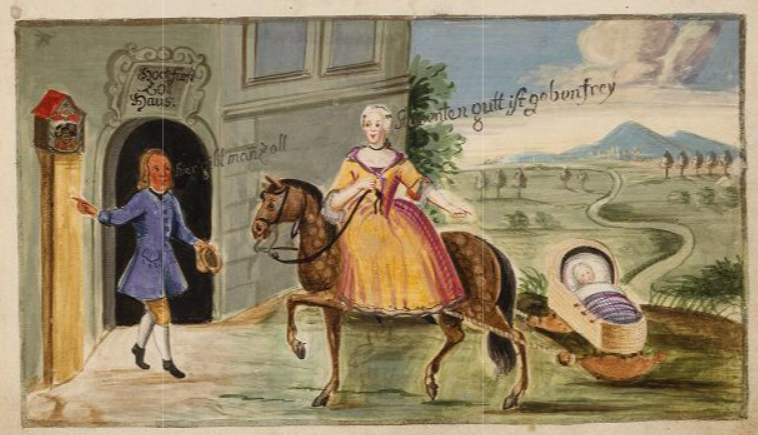
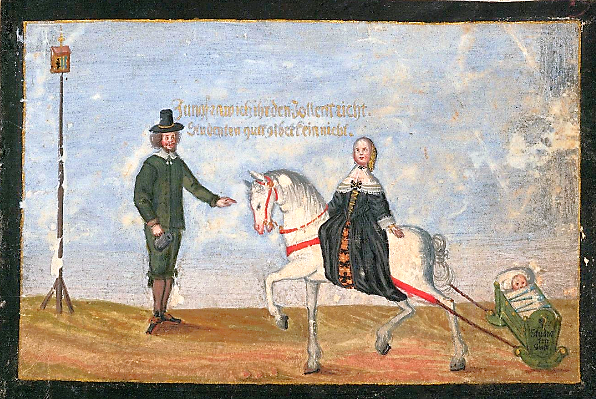
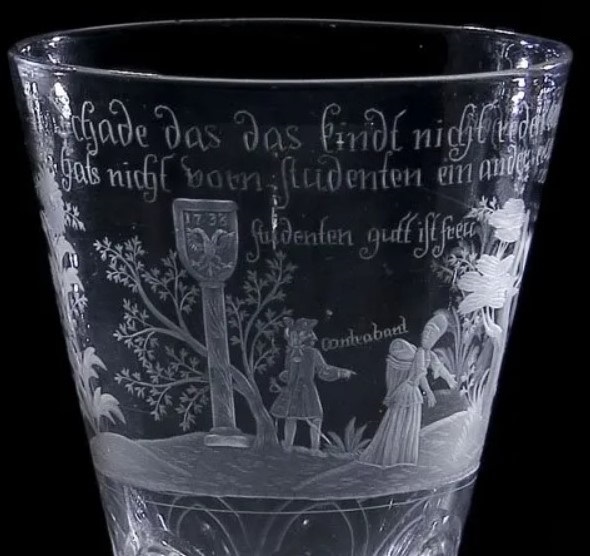
In Eisenhart’s Grundsatze der teutschen rechten in sprichwortern (Helmstedt, 1759) appears the apparent legal maxim, Studentengut ist zollfrei [student goods are duty-free], but it appears with the variant gabenfrei in a poem published by Picander 30 years earlier — as in the form in the Harpprecht album below (1738). The joke here — in case it’s not obvious — is that the baby will not have to pay any duty as it is the student’s, and “student goods are duty-free”.
The later album amicorum images derive from the engraved frontispiece to Le Content, Accademischer Frauenzimmer-Spiegel ([Halle], 1718), but the Hensel album (below) shows the motif was already known in 1630, and in fact, marginally earlier still must be the version of the scene in the album of Nathanael Schmidt (dated entries 1618-25), as described here in Ernst Edler von Hartmann-Franzenshuld & Moriz Maria Edler von Weittenhiller, u.a.: Stammbücher in Jahrbuch des heraldisch-genealogischen Vereines Adler in Wien 6/7 (1881), p.57:
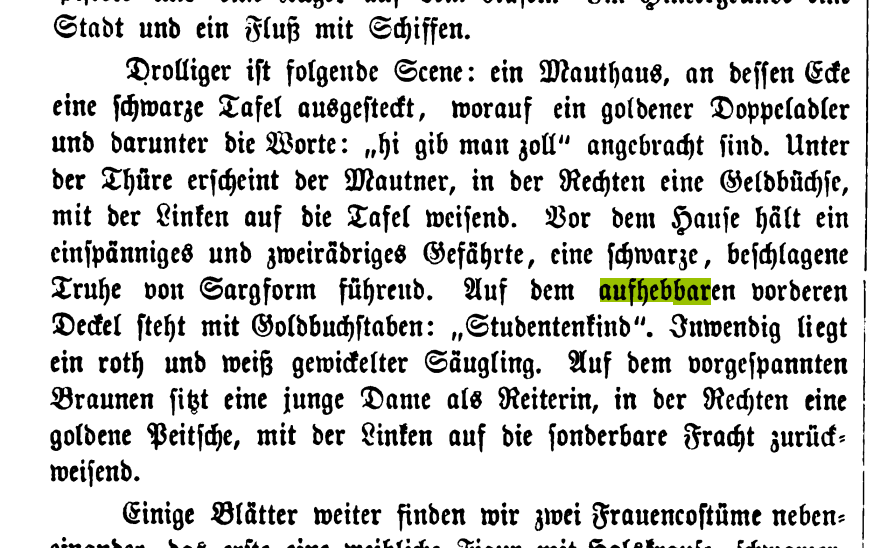
Did they perhaps misread Studentenguot as Studentenkind ?
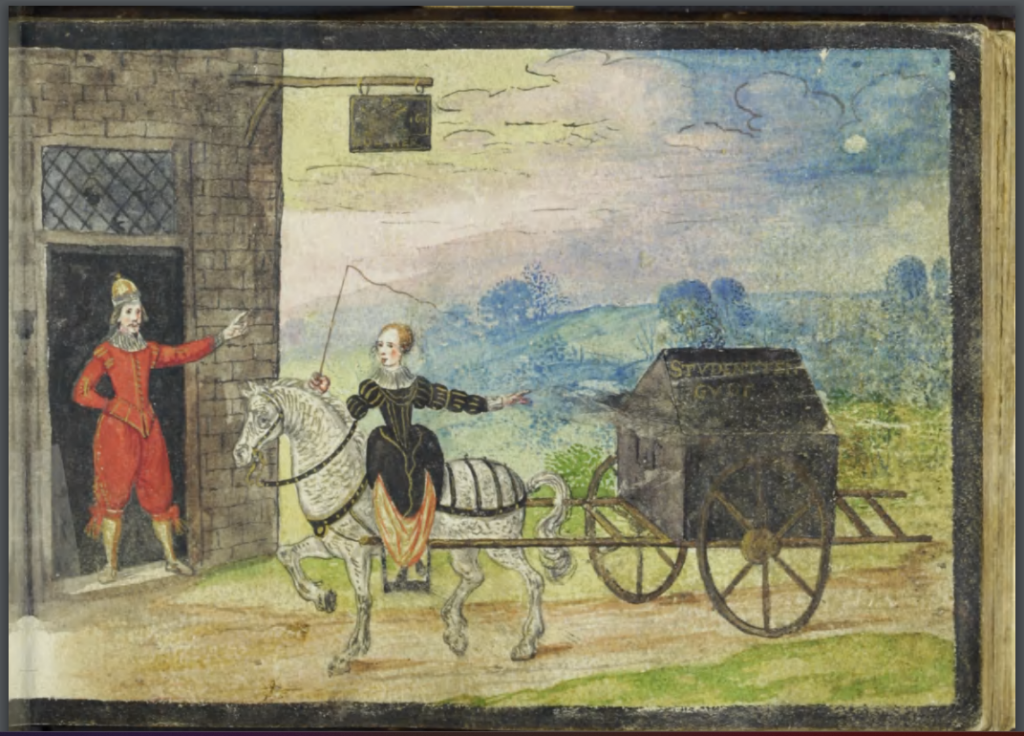
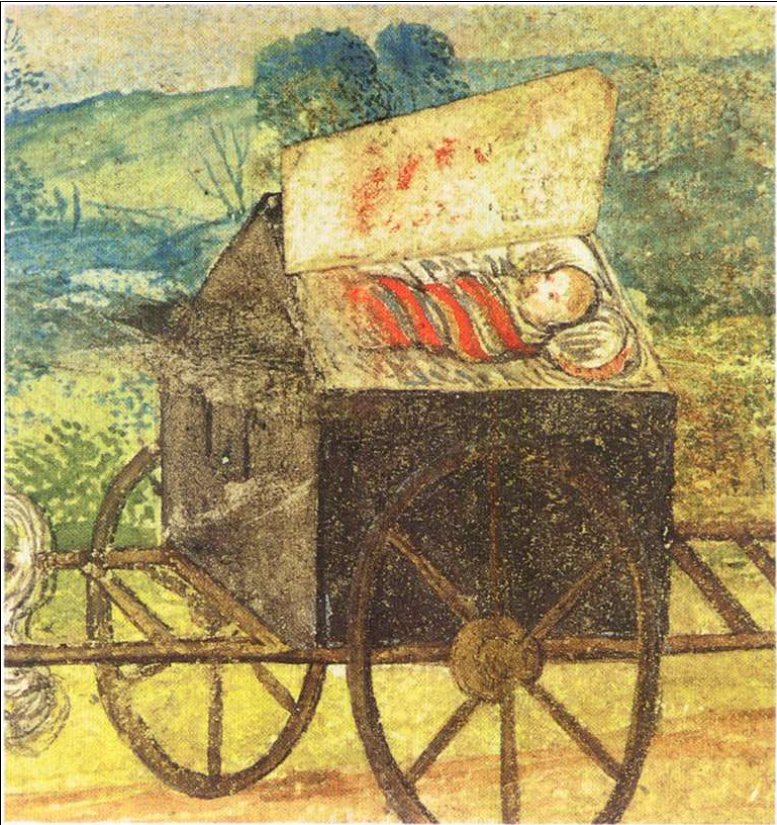
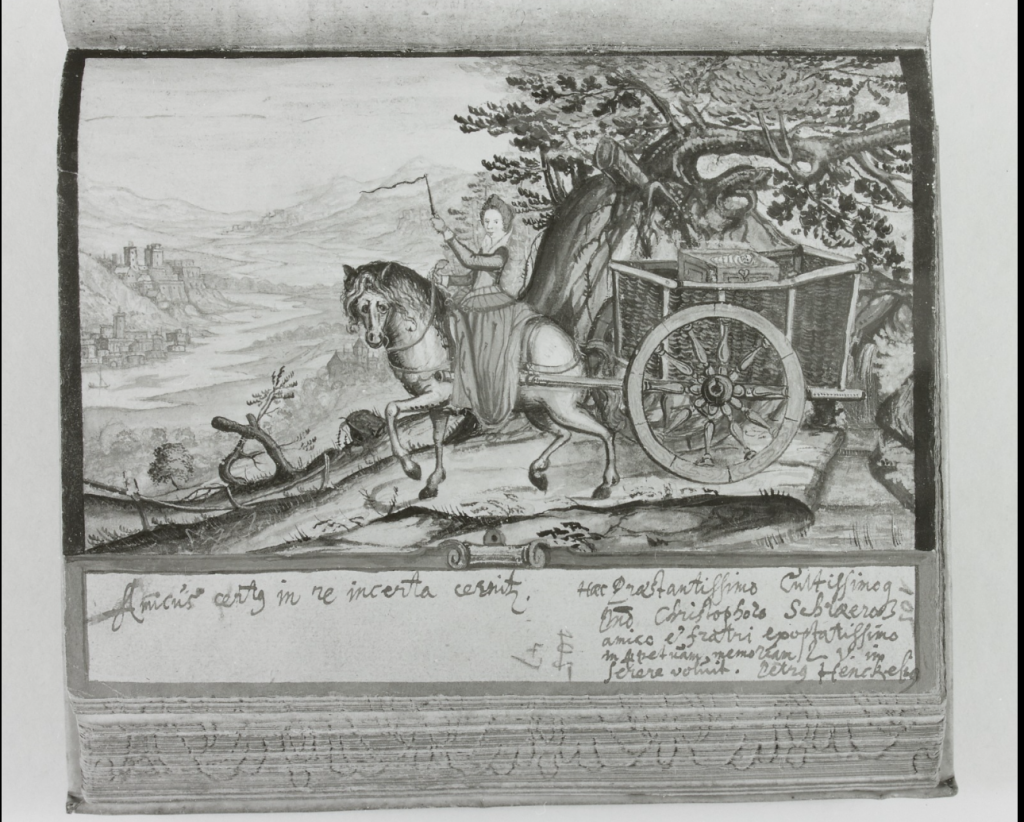
This is another lift-the-flap miniature — the lid of the casket on the cart inscribed STVDENTENGVOT, revealing a baby when lifted.
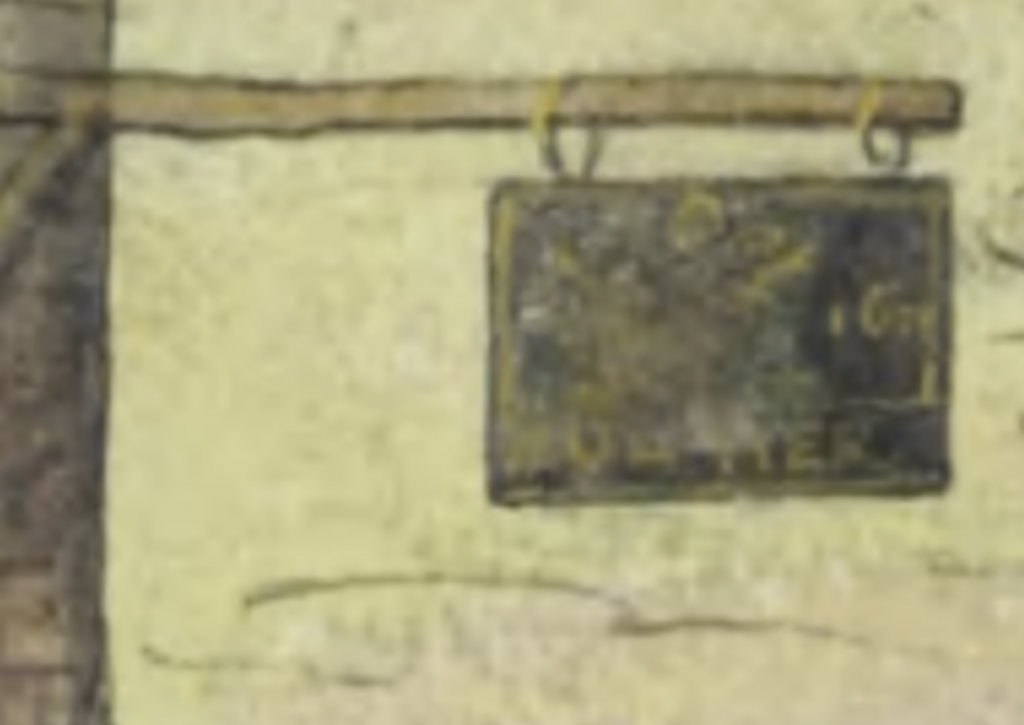
But what does the sign-board of the toll-house depict, and what is its name and date?
This miniature in the album of Christoph Schröer (below) is as early as that of Schmidt, if indeed, my identification of it as representing the present motif can be accepted; the caption written below is a common Latin tag, Amicus certus in re incerta cernitur — [a true friend is discerned in uncertain times], and not obviously relevant to the image.
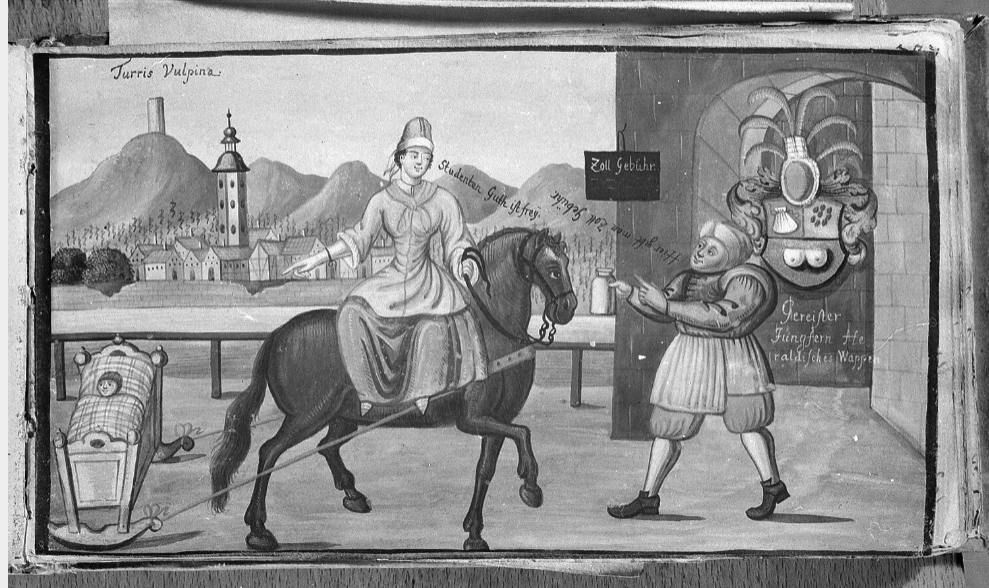
Note the coat-of-arms on the wall of the toll-house, labelled Gereiste Jungfern Heraldisches Wappen [Heraldic arms of well-travelled girls] — the quarterings on the shield include a purse and a pair of breasts.
Other media
Leave a Reply