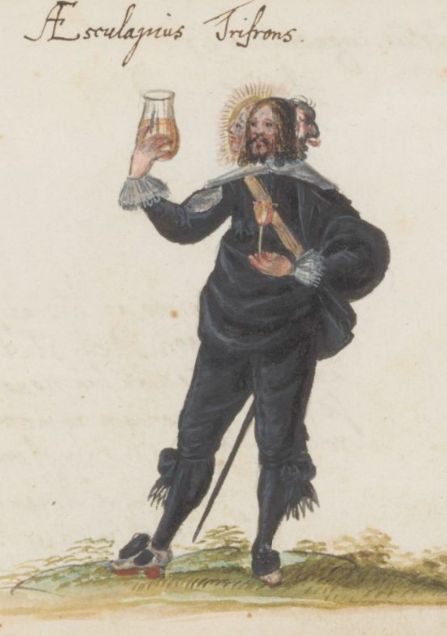
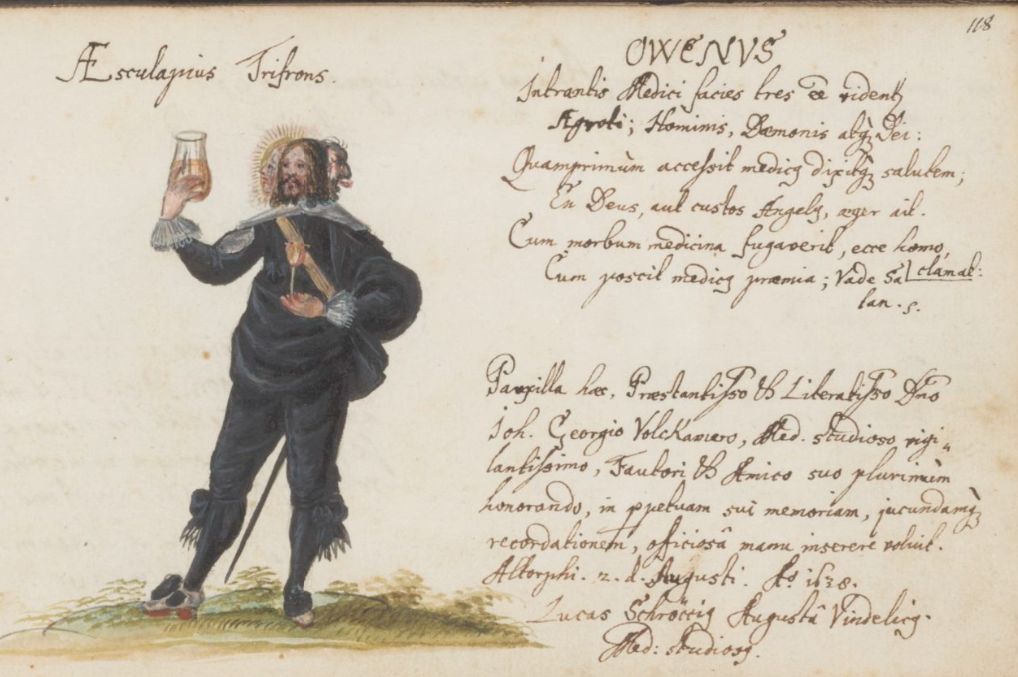
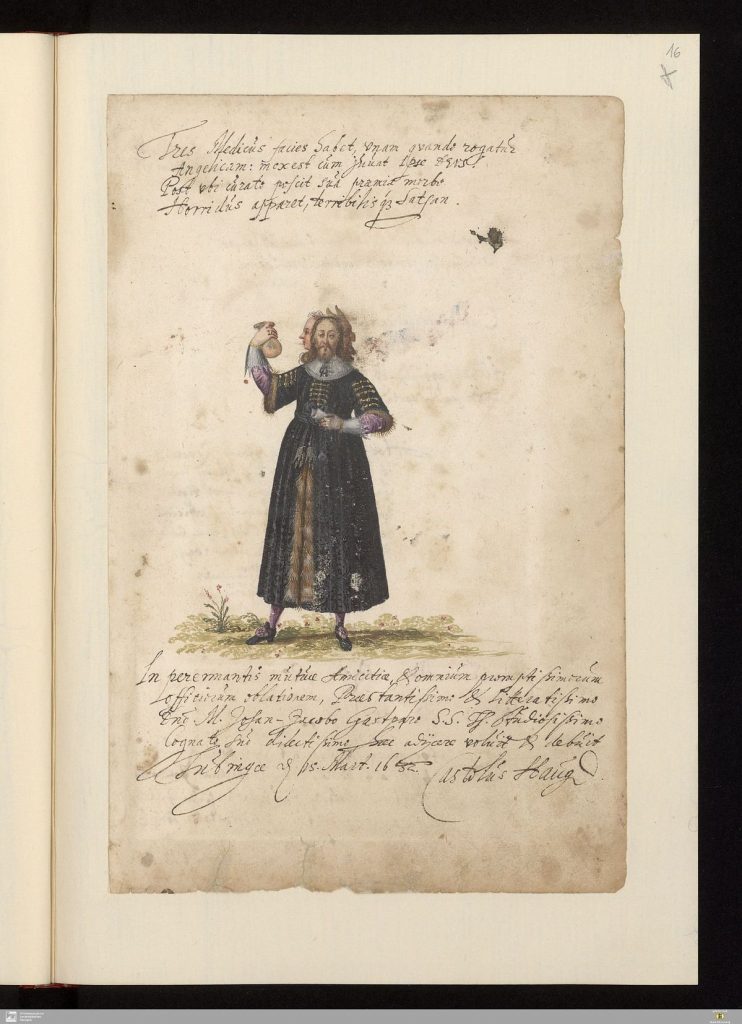
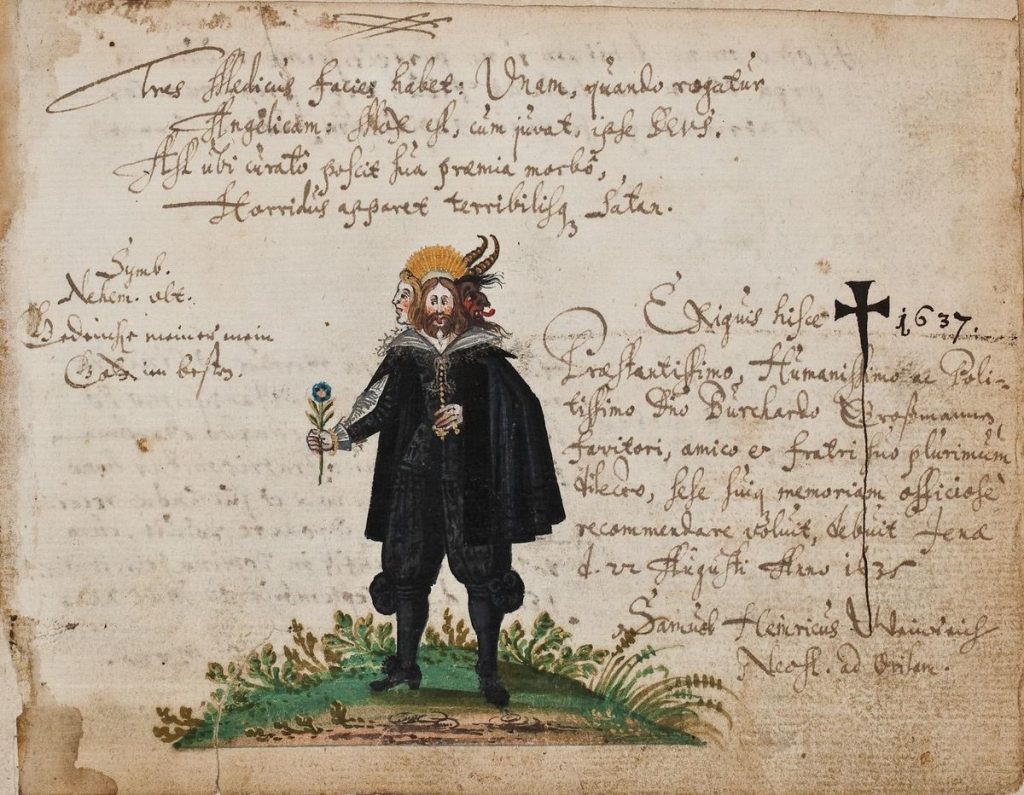
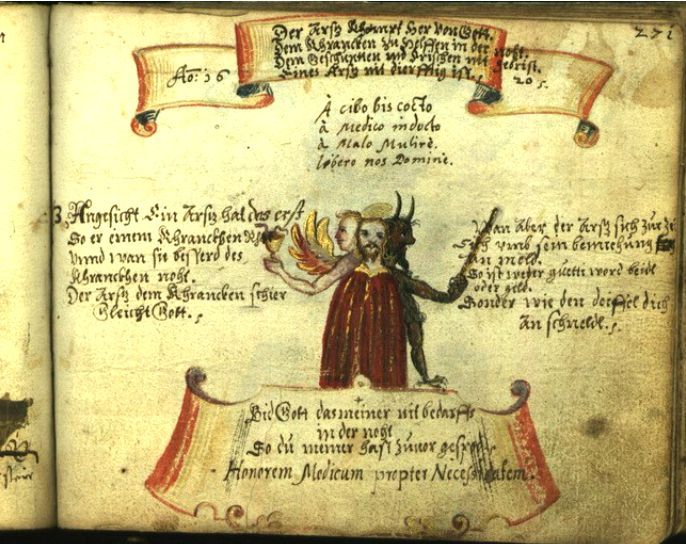
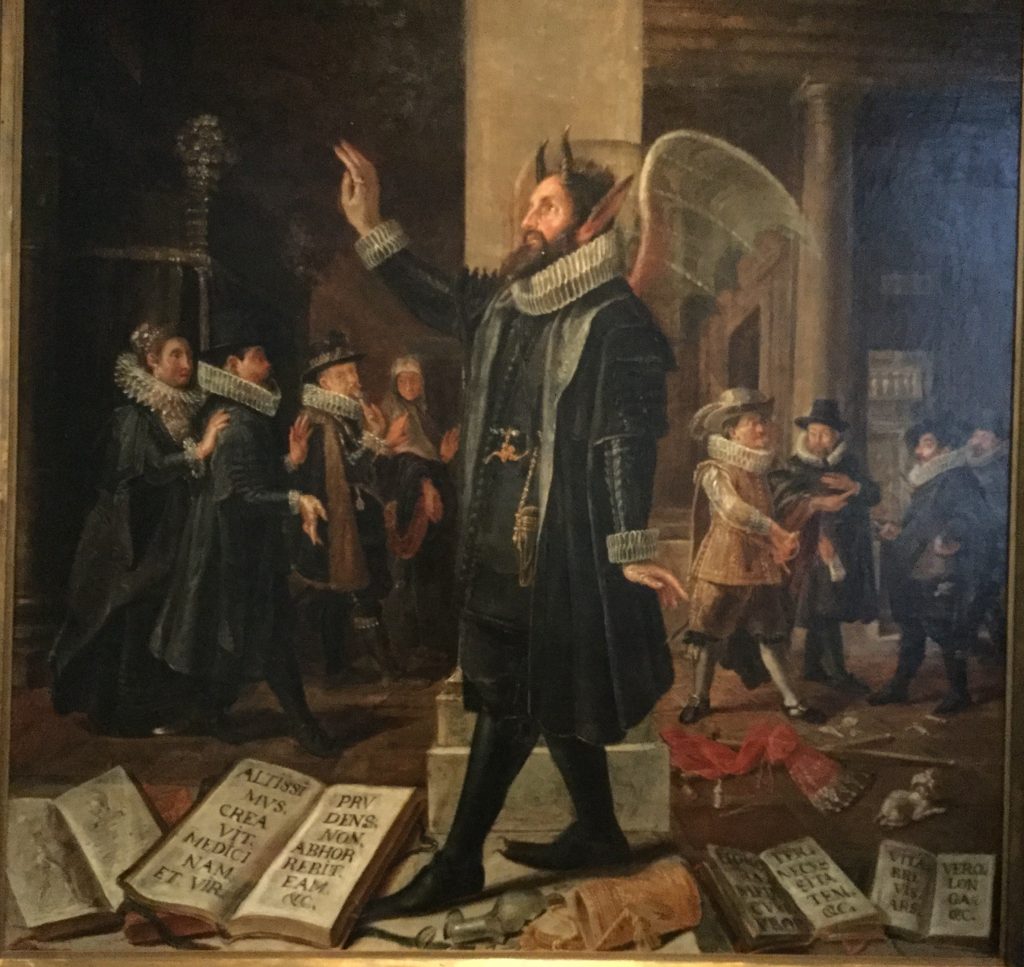
Seemingly deriving from an early 16C neo-Latin epigram by Heinrich Solde [Henricius Cordus] of Brunswick, beginning Tres medicus facies habet [the doctor has three faces], this is in fact a satire on the patient not the physician! I first encountered it in the alba amicorum (4 examples below — one dated 1620, the rest 1630s). The doctor is an angel when he answers the call to attend the sick, a god when he alleviates the patient’s suffering, but seen as a devil when he demands payment for his services.
The tricephalus type of presentation — as in the albums — appears to postdate the series of 3 separate figures, or 4 when the doctor in his ordinary human state is included, as in the set engraved by Hendrik Goltzius in 1587, and those after his prints. Regarding the Goltzius impressions in The Wellcome Institute collection, the commentator notes that “Four other series on the same subject are also recorded: see C.E. Daniels, “Docteurs et malades”, Janus, vol. 5, 1900, pp. 20-26.”
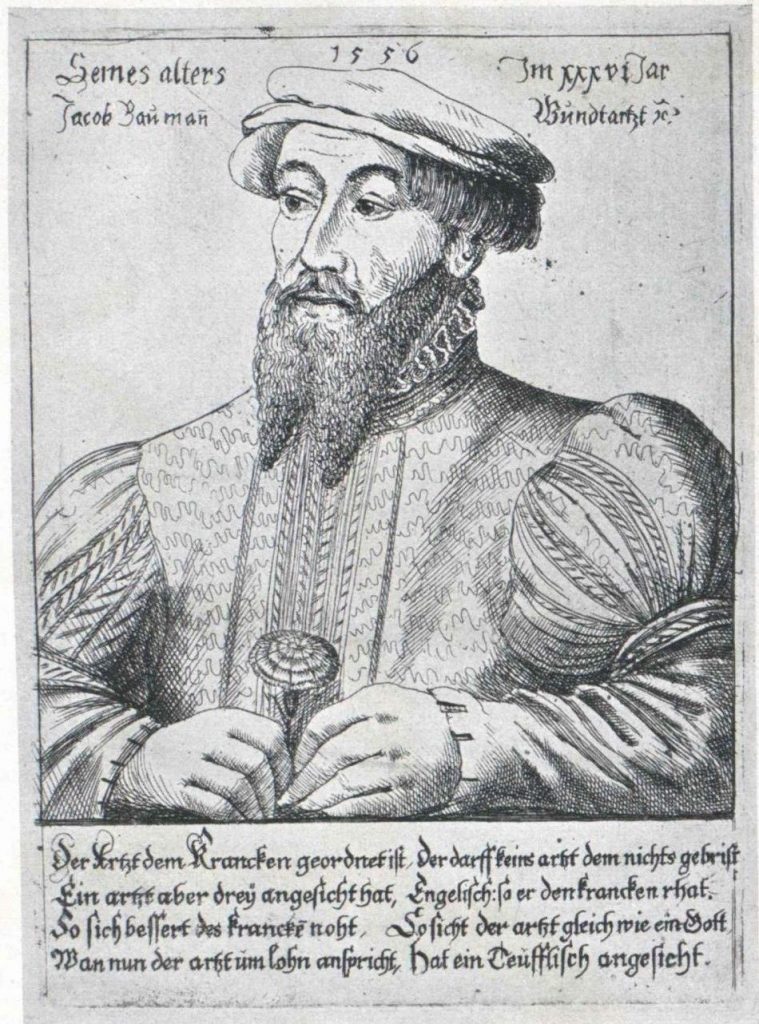
Below is a woodcut portrait of the physician Jacob Baumann by Virgil Solis dated 1556 — the verse caption is the earliest known German translation of the Latin epigram.
Ein artzt aber drey angesicht hat [But a doctor has three faces]
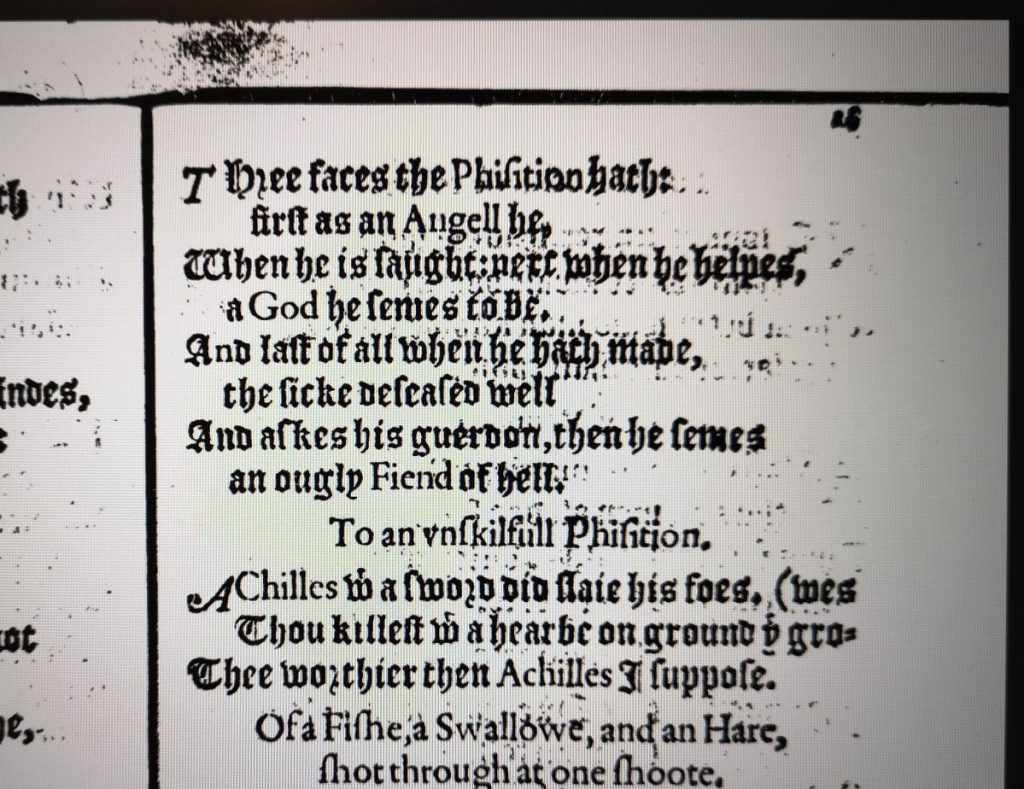
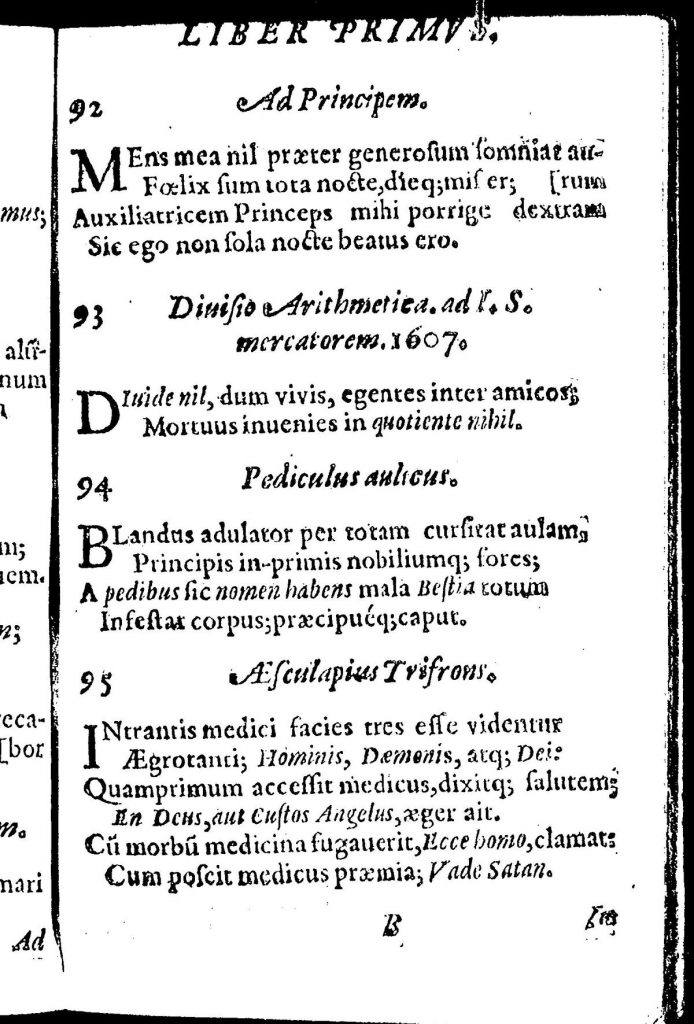
The epigram is found in contemporary England too — both in English and Latin:
Other media
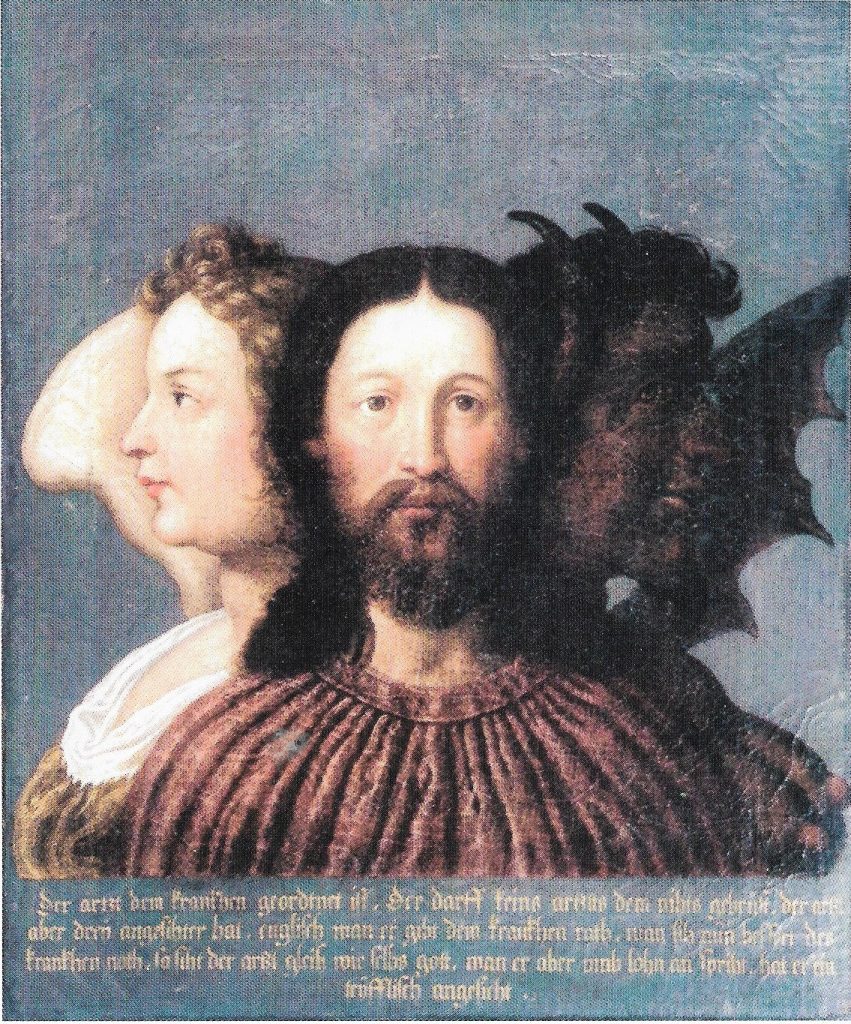
Later 17C [my estimate] German painting of the Three Faces of the Doctor, captioned by the traditional rhyming verse, here beginning Der artzt dem krankhen geordtnet ist. In the Reichsstadtmuseum, Rothenburg-ob-der-Tauber. There is evident ‘contamination’ here with the Christus medicus motif (as in the Goltzius-derived print quartet)
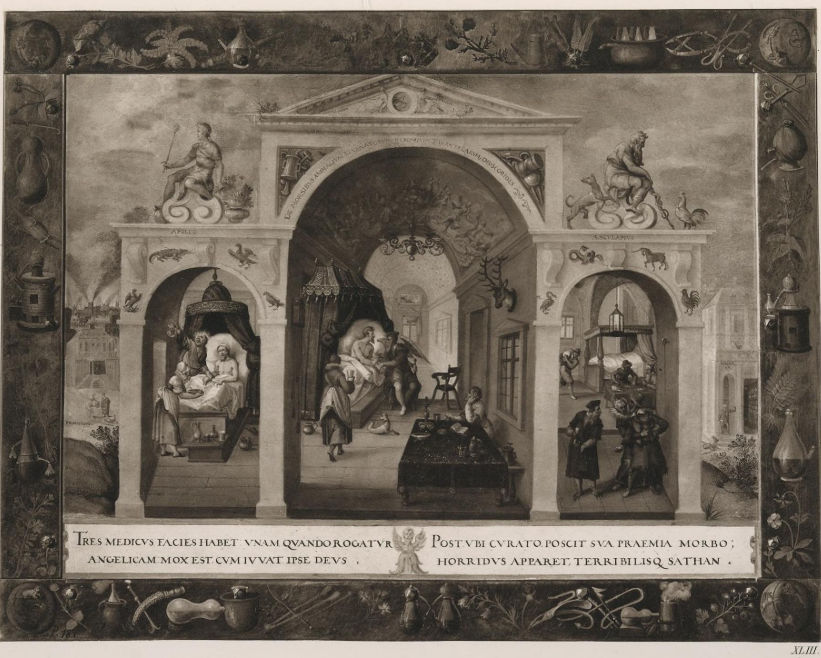
Painting by Anton Mozart c.1620 included in the Pommersche Kunstschrank — captioned with the traditional Latin verse; here, in 3 separate scenes, are 3 separate figures of the doctor as angel, god and devil.
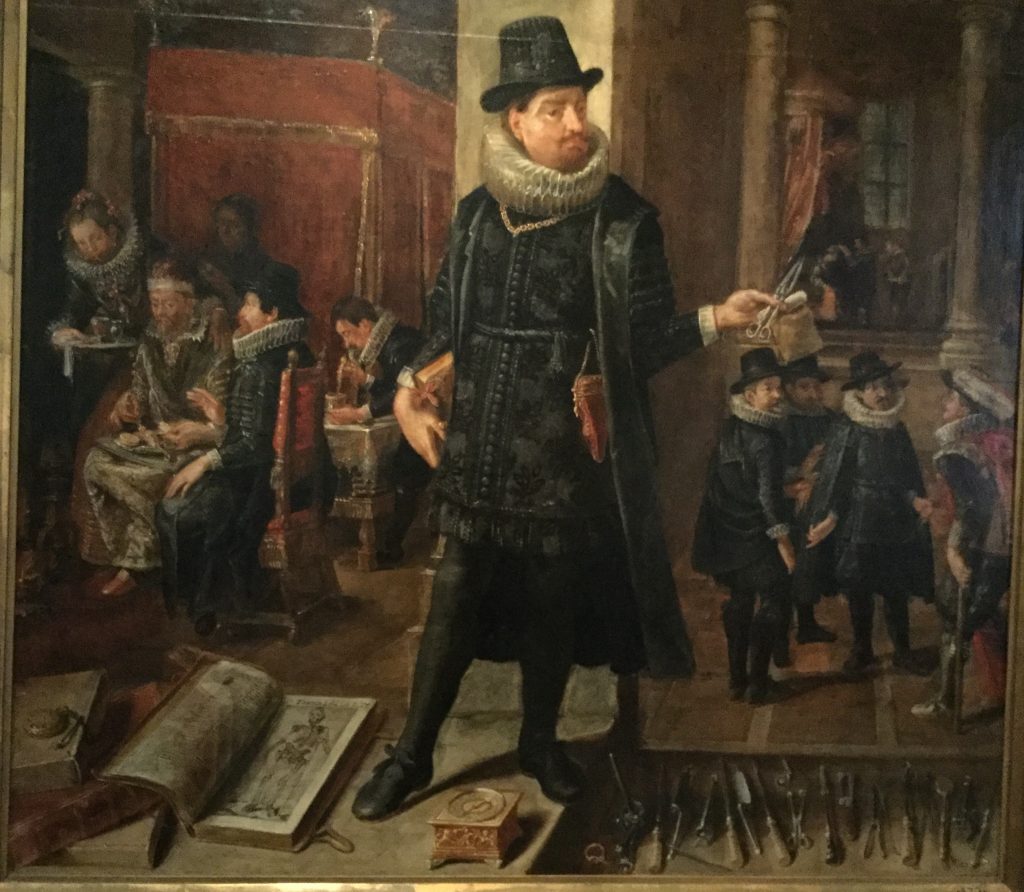
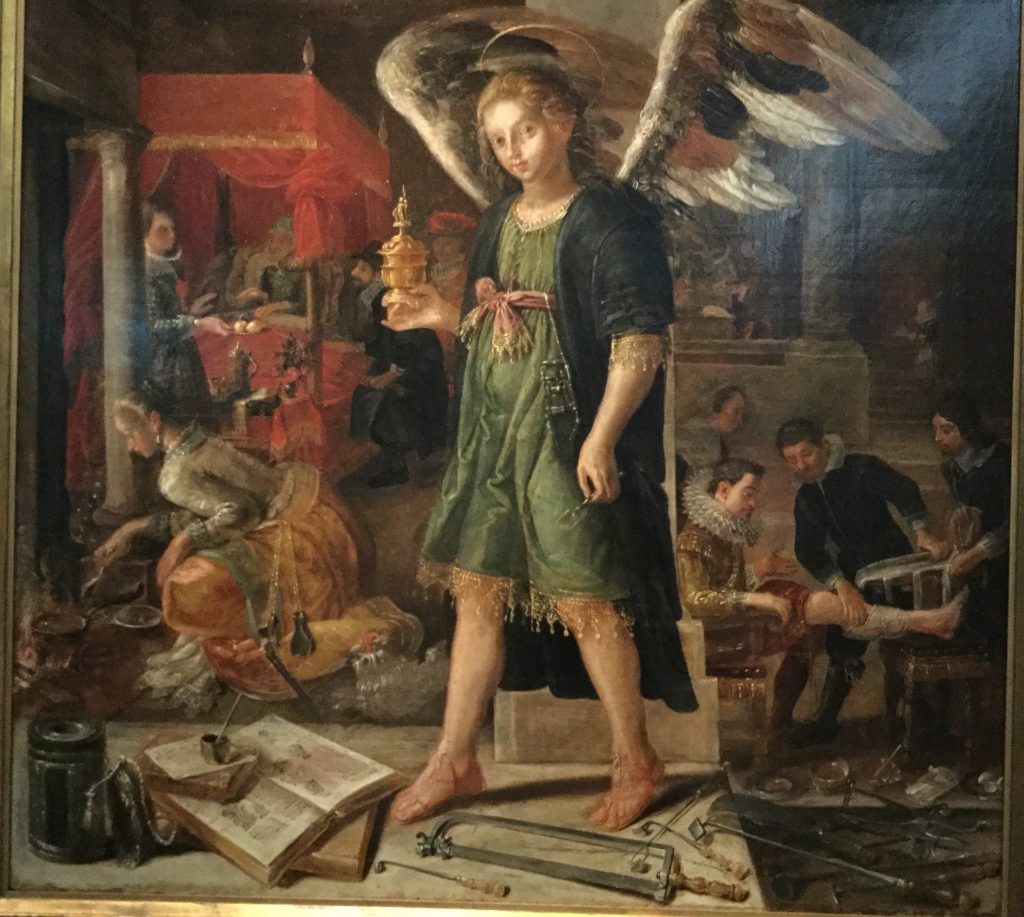
The Boerhaave Museum in Leiden has a set of 3 late 16C paintings of the personae
Leave a Reply