Jost Amman was perhaps the inventor of the motif in 1579, but it was taken up and elaborated by the Monogrammist BKGF in 1590 [SEE ALSO my “Sieving the Suitors” post here], and then copied 6 years later by the de Brys in their enormously influential Emblemata Saecularia (1596, 1611), though I cannot find it in the print-books before the Allemodisch Stambuch, published in Berlin in the 1630s, which is clearly based on the de Brys’ design.
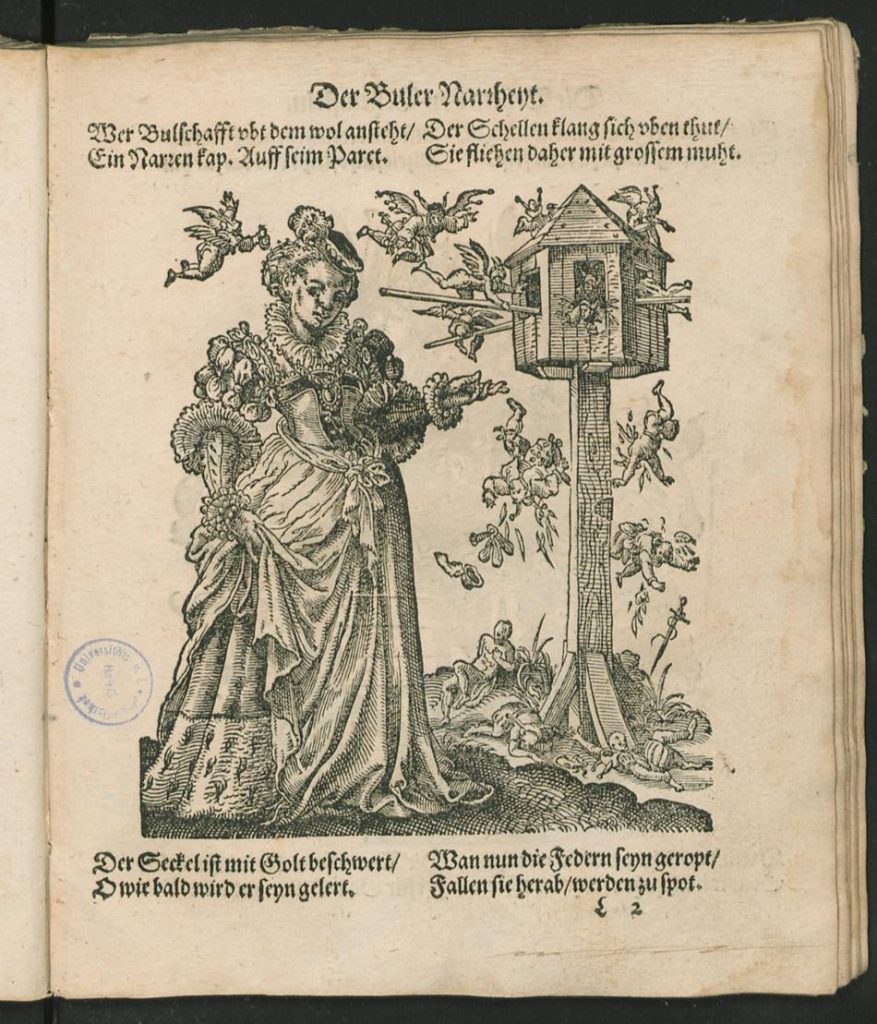
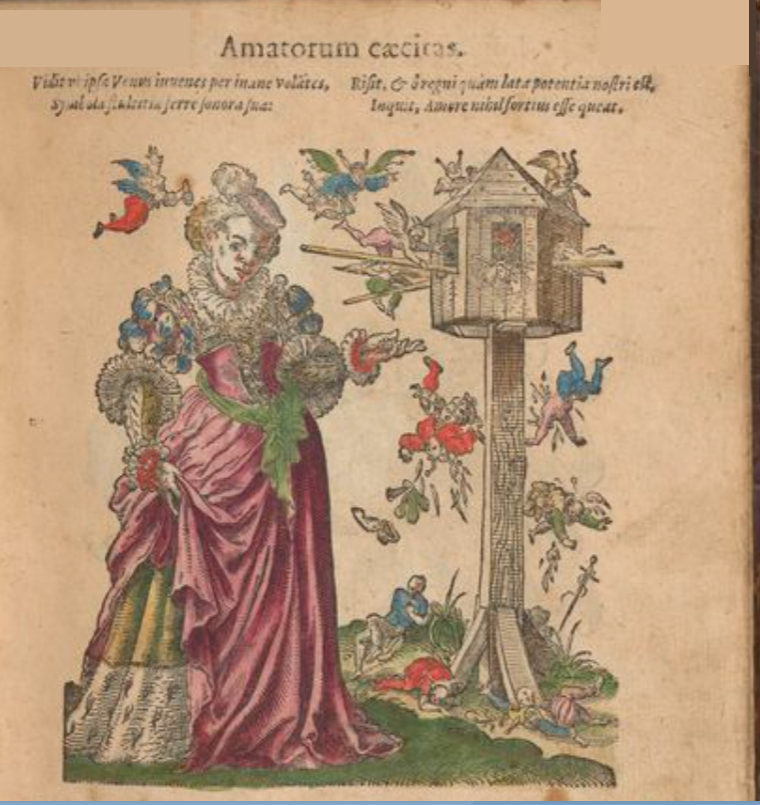
Jost Amman’s woodcut first appeared in 1579 in Feyerabend’s Stam und wapenbuch hochs und niders standts (Frankfurt 1579) one of the earliest printed books deliberately designed for the Stammbuch market — as used, for example, by Balduin von dem Knesebeck, from 1580. Here the cut is entitled Der Buler Narrheyt [the Folly of Lovers], but appears also in Feyerabend’s similarly purposed Flores Hesperidum. Anthologia gnomica and Stamm- oder Gesellenbuch, issued the same year.
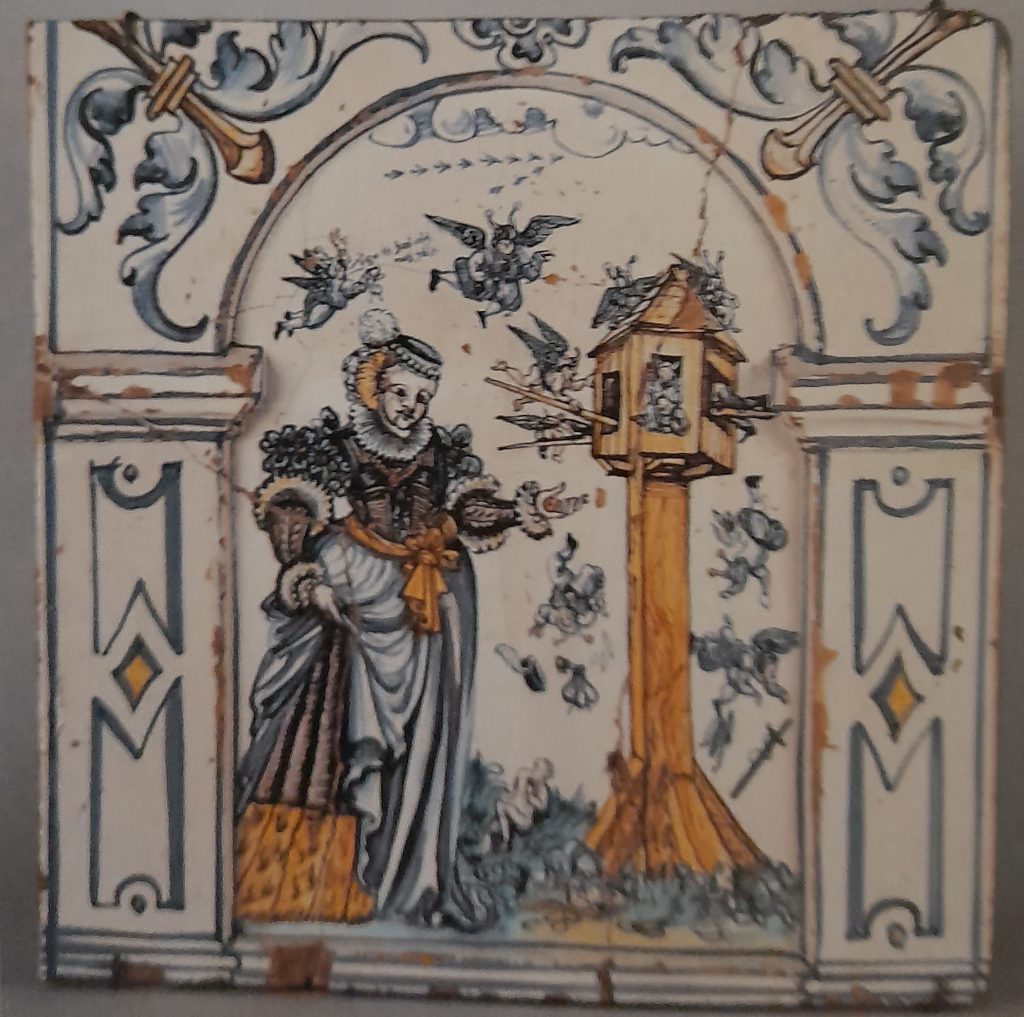
Once again, the motif — in the earlier Amman version — was used by artists in other media — see the Winterthur tile below.
Though the Harsdorffer album (below) does not include the image, the central couplet in the frame above the young couple here, on this page dated 1601, includes the familiar rhyming comparison of the young woman’s heart to a dovecote:
ihr Herz ist gleich eim Taubenhauss Her heart is like a dovecote
der ein fleucht ein der ander auss as one flies in another flies out
a couplet which had already been used by Hans Sachs in 1544.
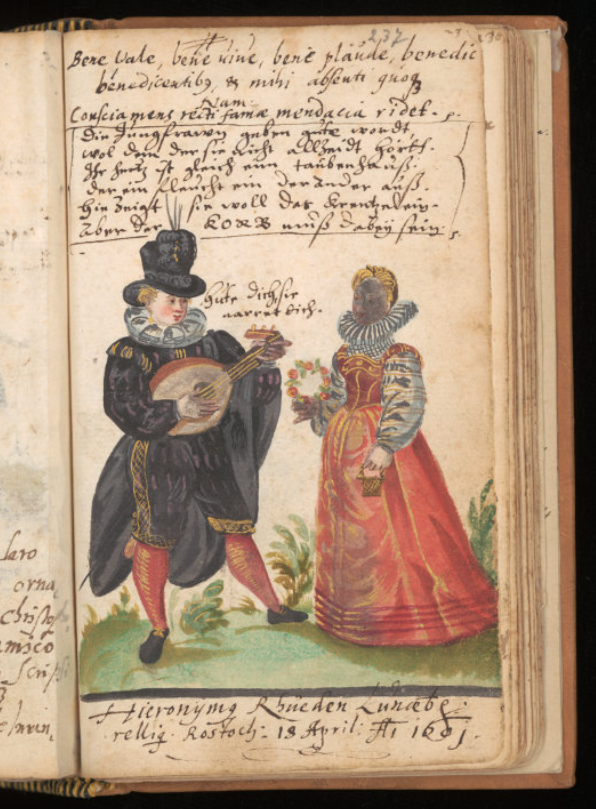
F 7, Nr. 22
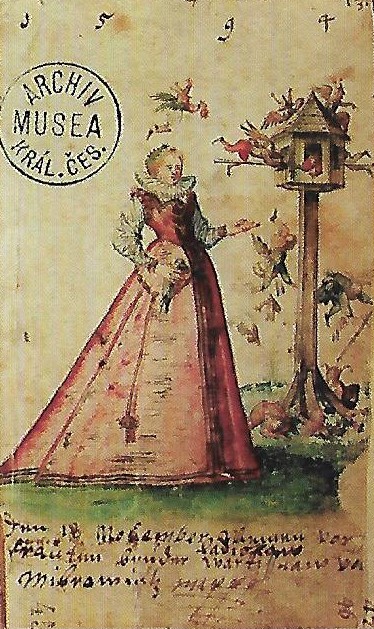
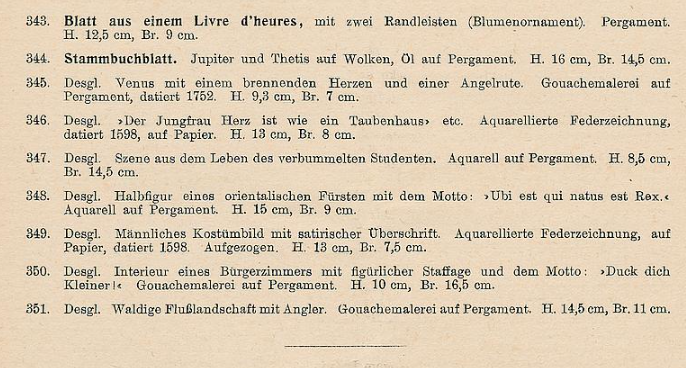
And see the title to the image in the Caspar von Abschatz album (below). The same verse evidently captioned a drawing dated 1598 on an orphaned leaf sold at auction by Helbing on 15th May in 1907 (lot 346 below):
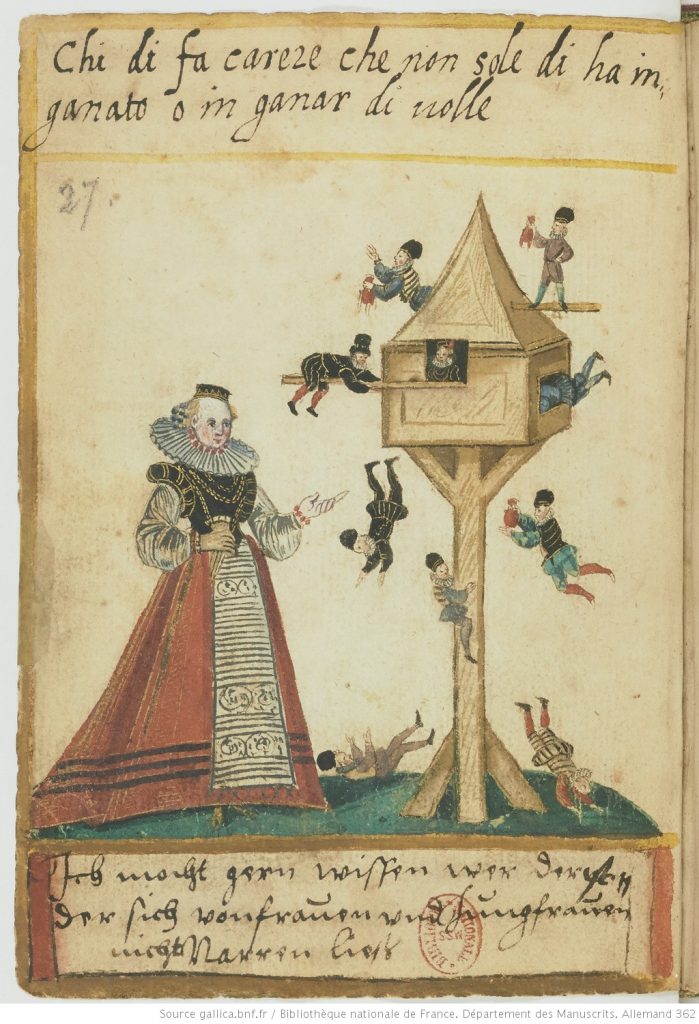
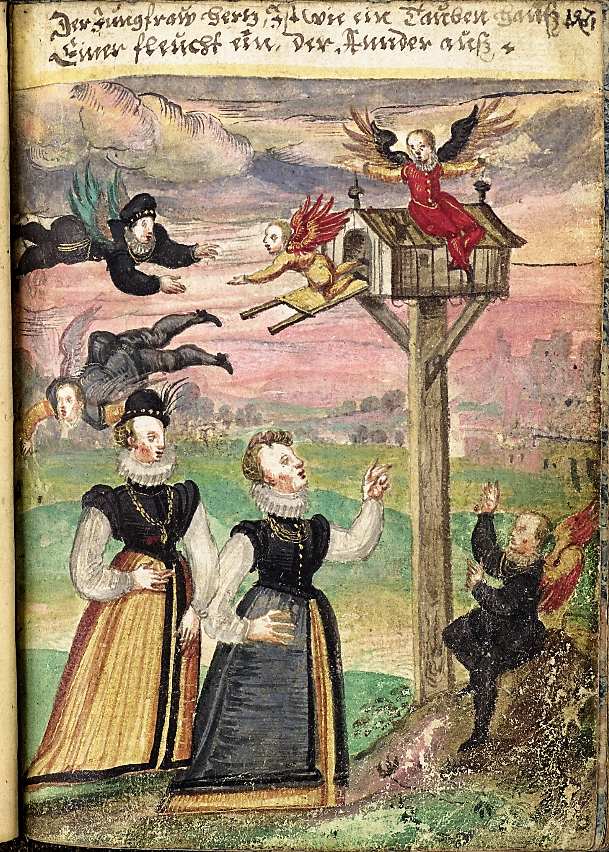
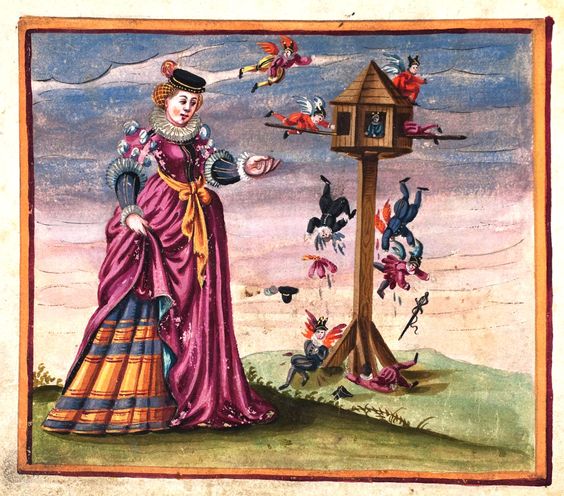
This image in the Schrotter album, painted in the 1580s, perhaps takes a hint from the Amman woodcut but is certainly no slavish copy.
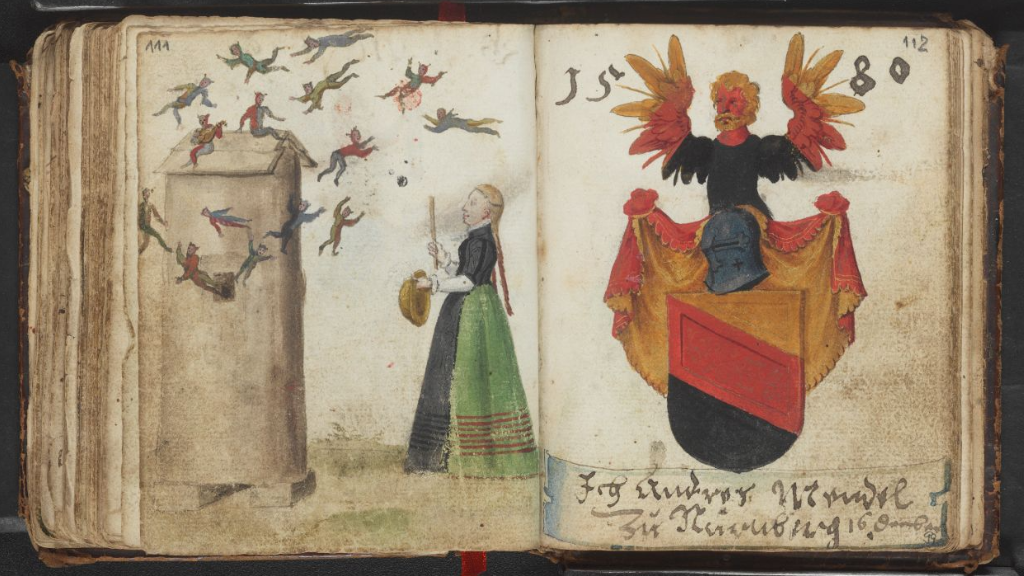
Stb 350, p.112
Applied use
In this copy of Amman’s design on a Winterthur tile one of the flying fools says, Oho ich hab ouch noch gält [Oh! and I still have money!]
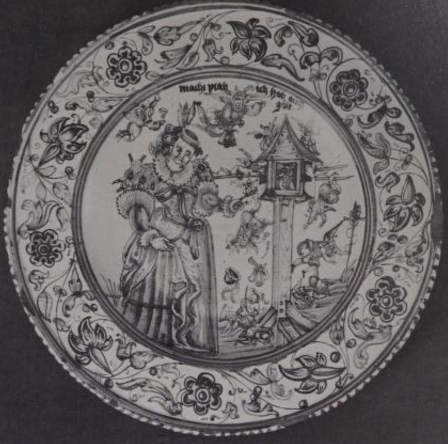
This plate of the same date and place of manufacture is attributed to Hans Heinrich Pfau, nd again one of the fools cries, macht platz ich hab auch galt [make room — I’ve got money too].
The de Brys’ version and derivatives
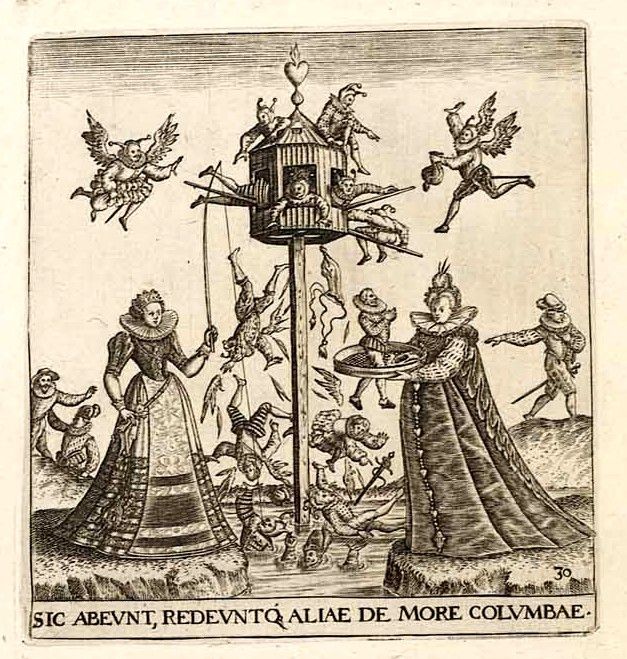
The Emblemata Secularia incudes many engraved ’emblems’ that are scaled down copies of single-sheet prints; in the present instance a print issued 6 years earlier (1590) engraved by the Monogrammist BKGF and using the familiar couplet as its title:
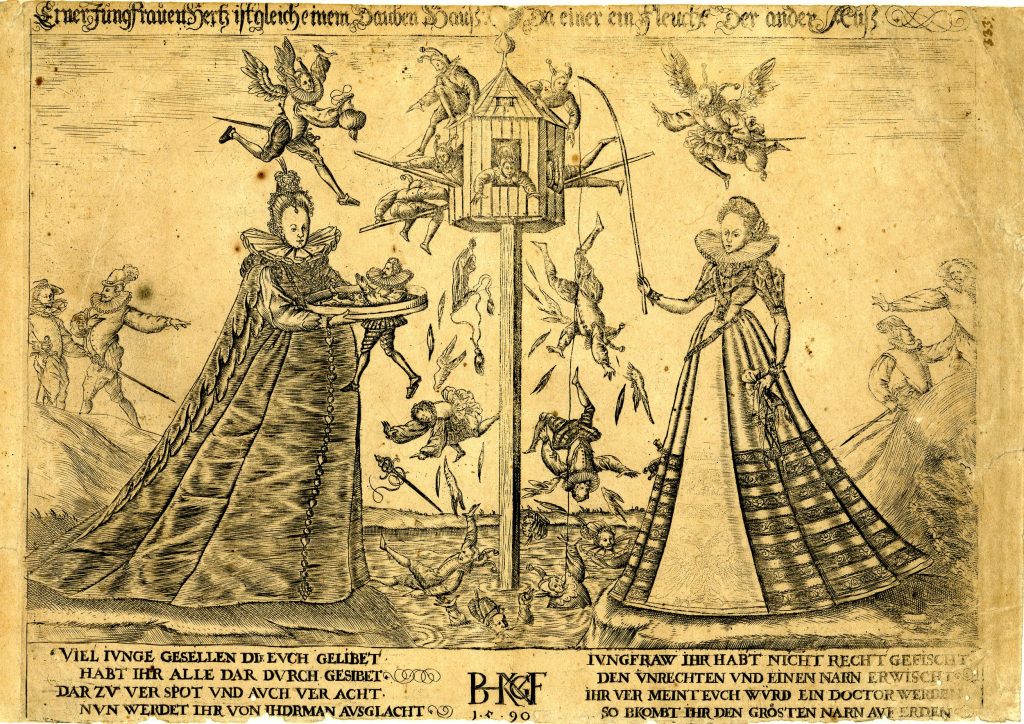
The Latin motto here means “Thus they depart and others return, just like doves”, and in the associated explanatory verses under the title Columbarium puellarum [the dovecote of girls] the familiar German couplet that BKGF used as his title, and which we have noticed in the Harsdorffer album and elsewhere (above): Einr Jungfrawen Hertz ist gleich einem Daubhauss / Da einer einfleugt der ander auss.
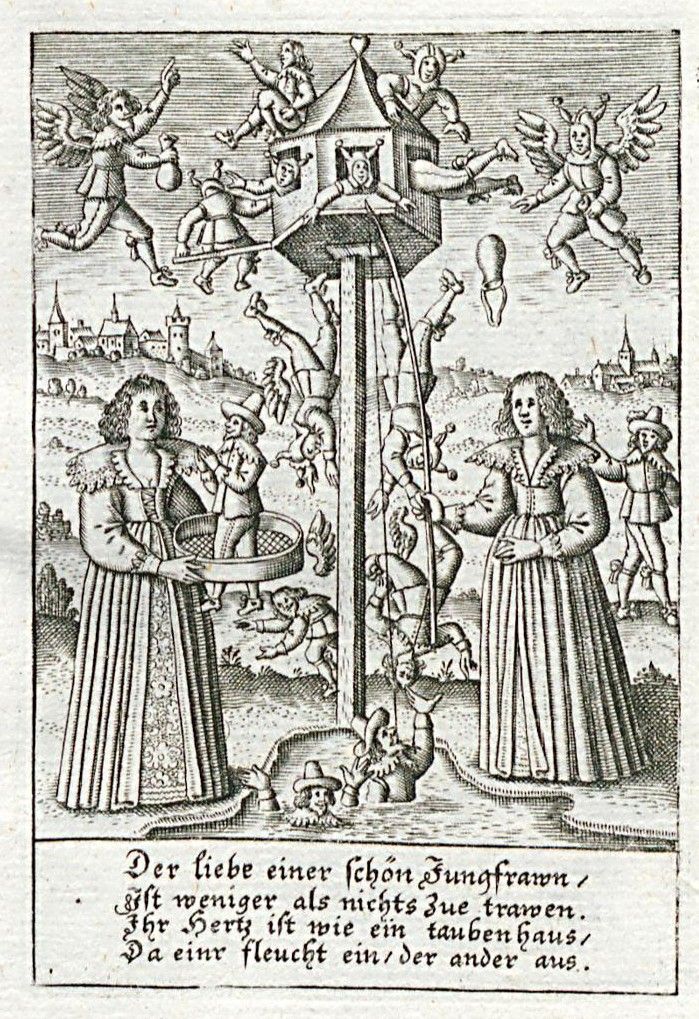
And, finally, a French version, ?c.1650
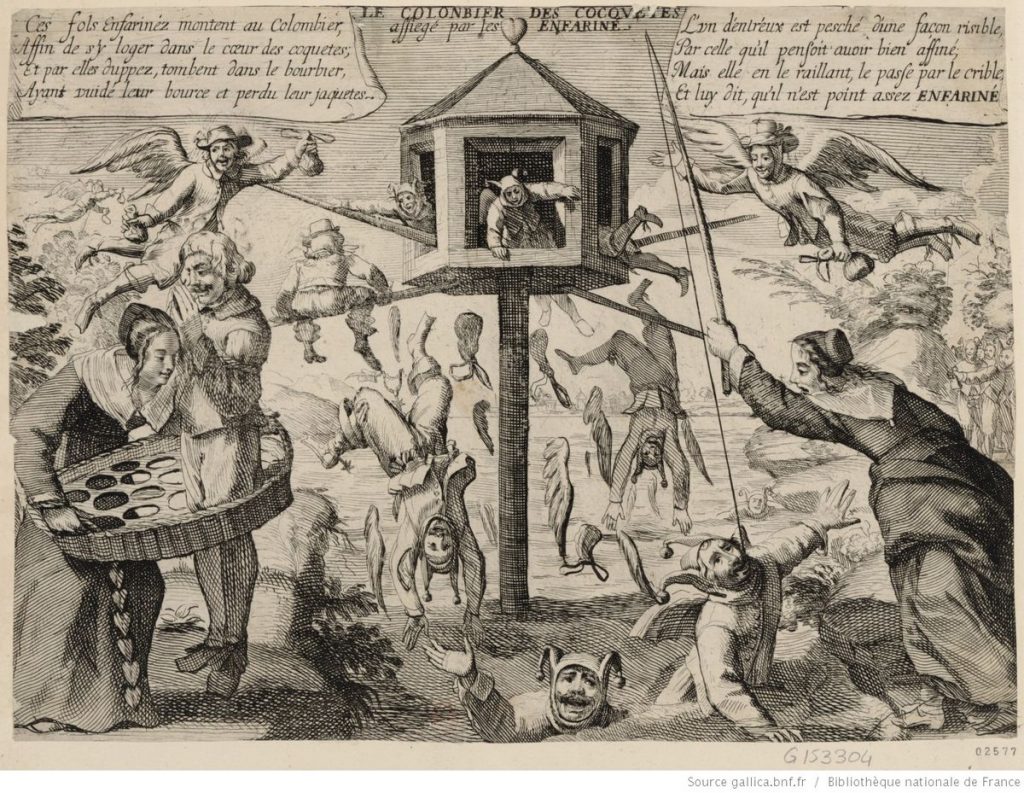
Leave a Reply