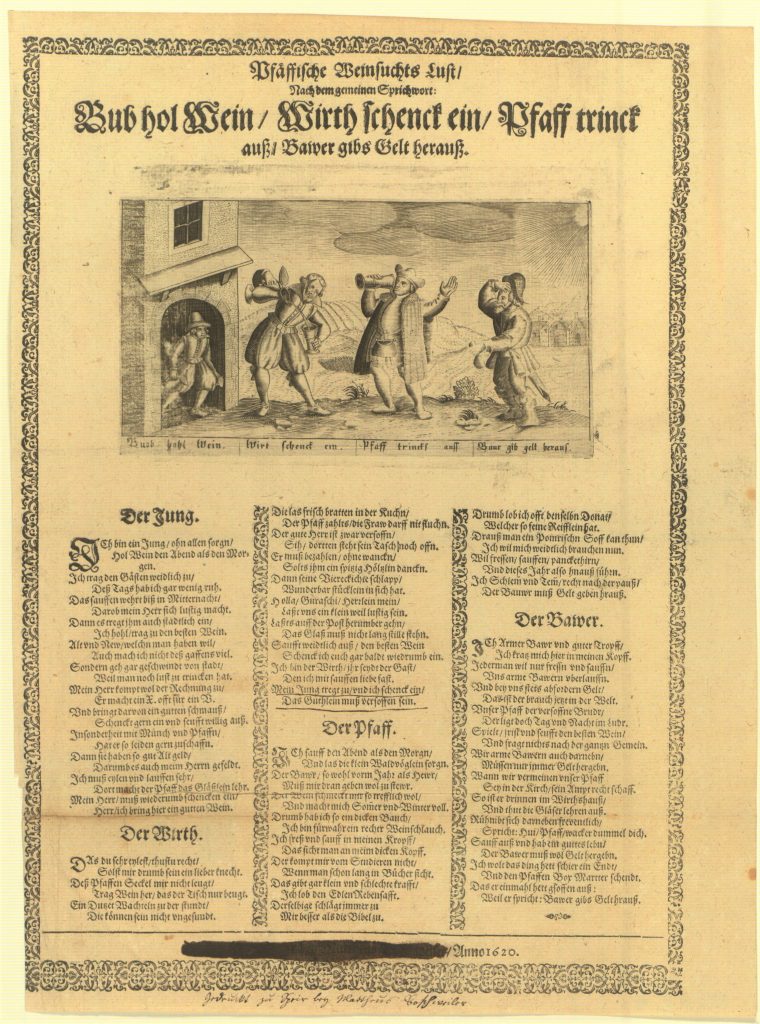
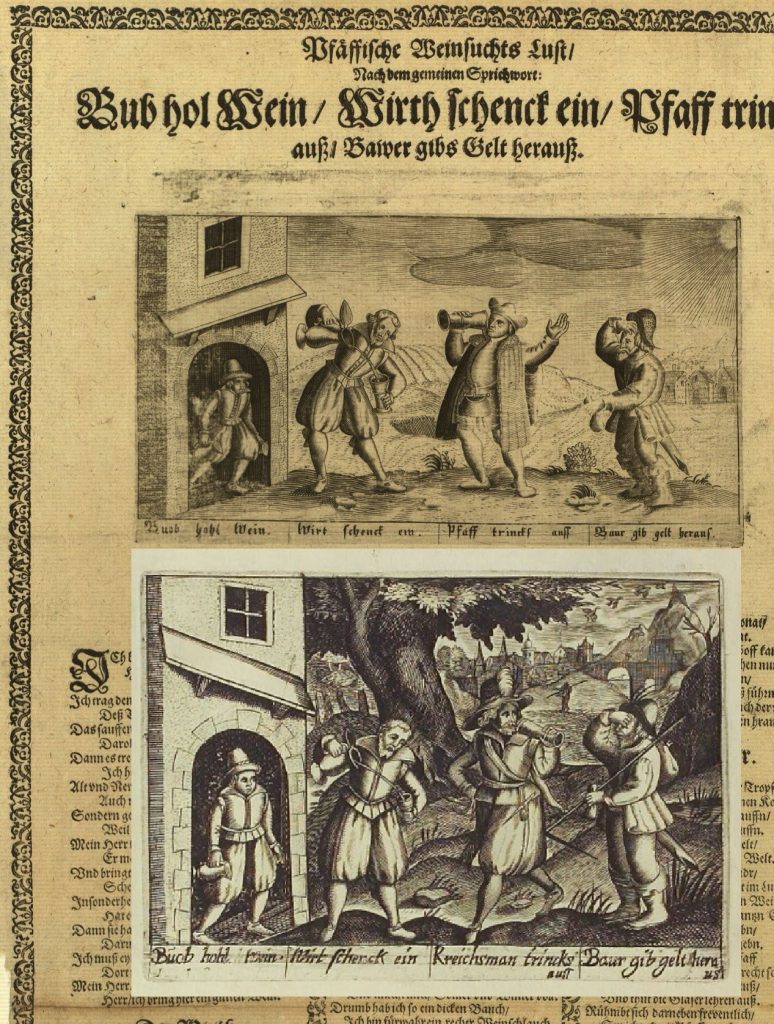
This satirical motif involves 4 characters standing in a row — from left to right, first the boy [Bube] who brings the wine, then the young woman who pours it (in the later prints, she is replaced by the landlord), then the man who drinks it off, and finally the peasant/poor man [Bauer] who pays for it. It seems to appear in the alba amicorum before it exists as a print [see dates below] The exploiter varies: Soldier/Priest/Student/Whore.
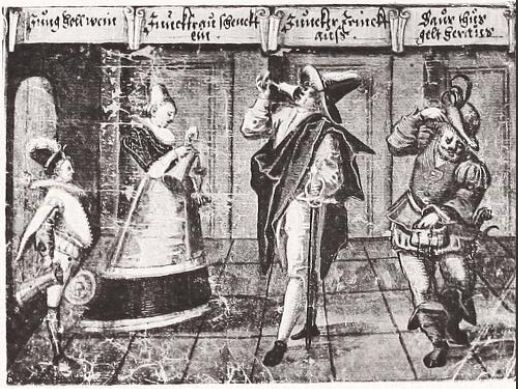
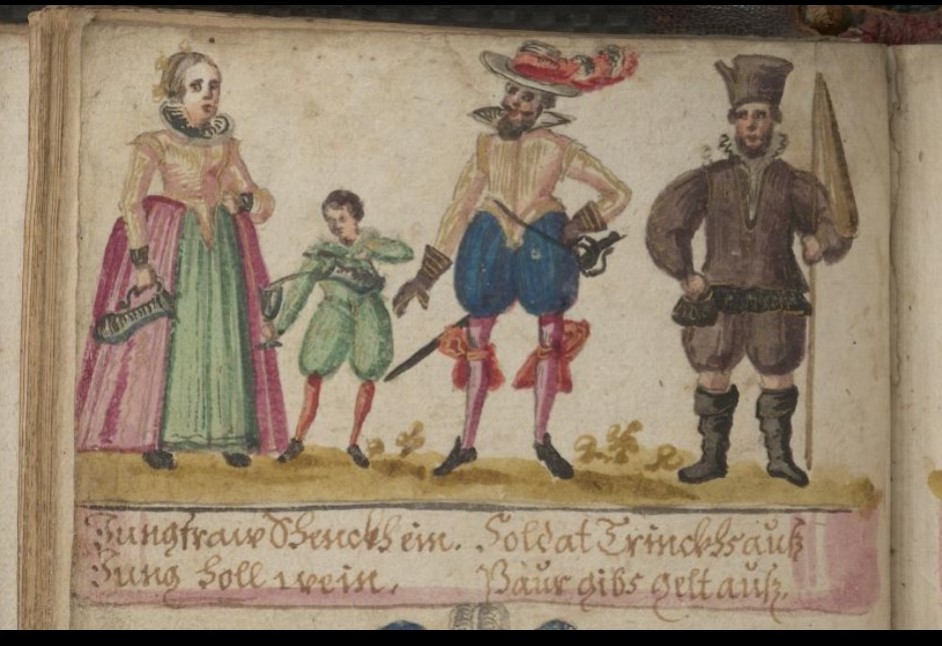
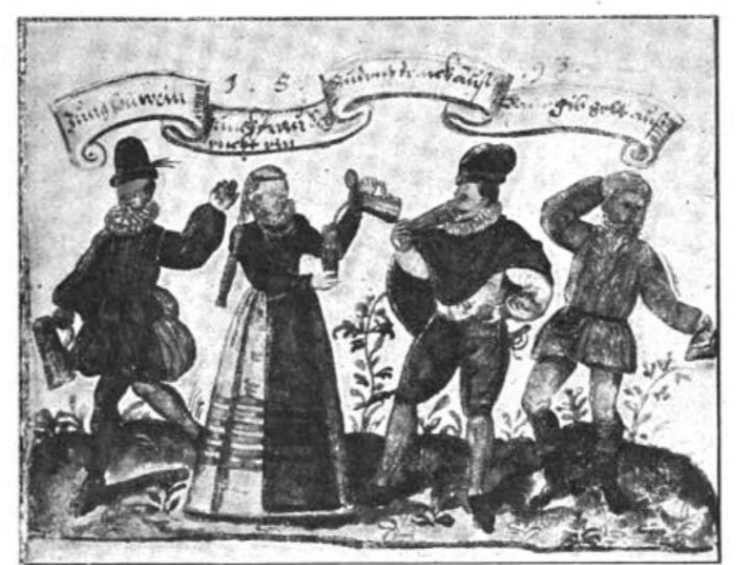
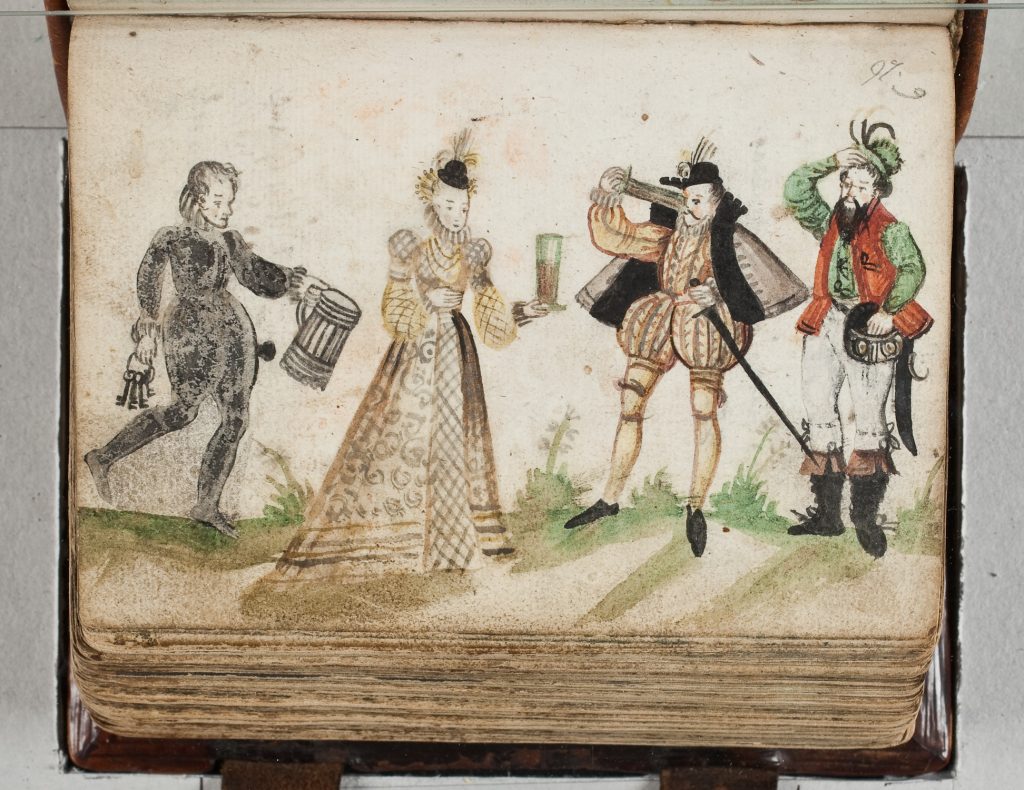
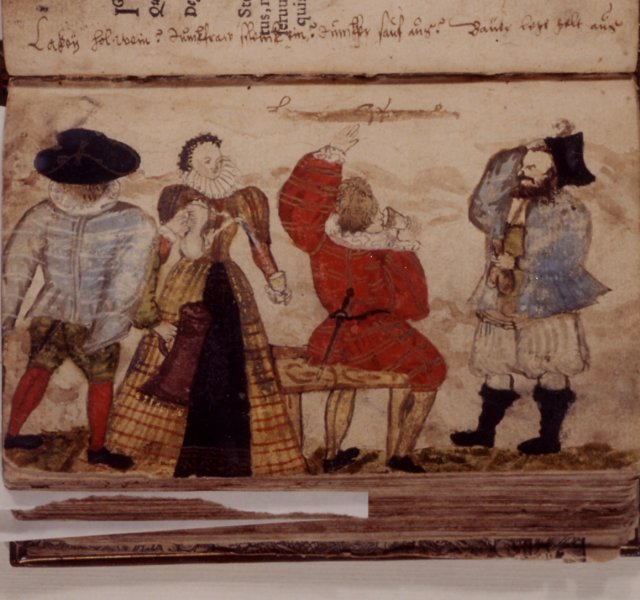
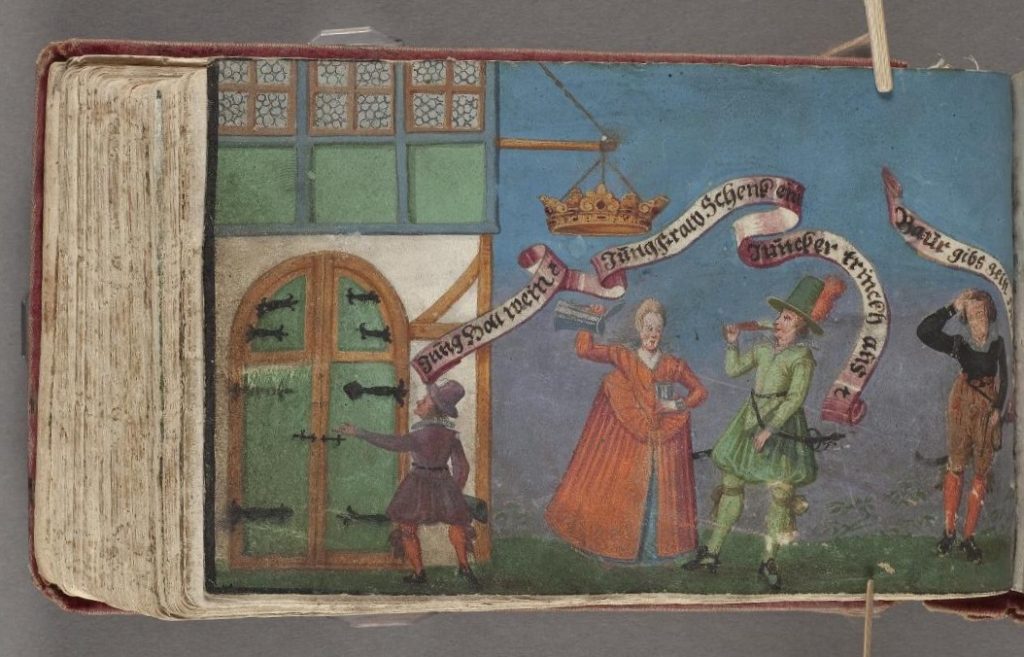
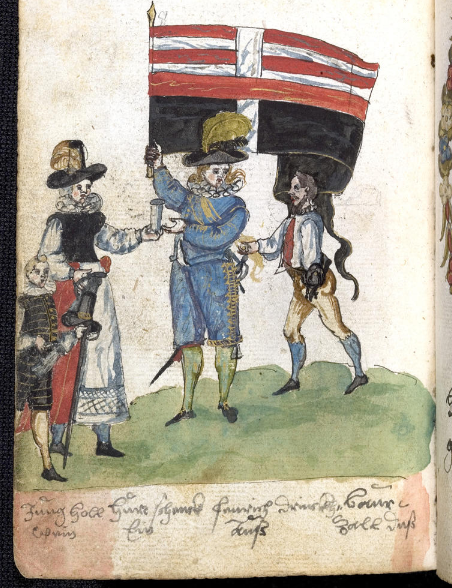
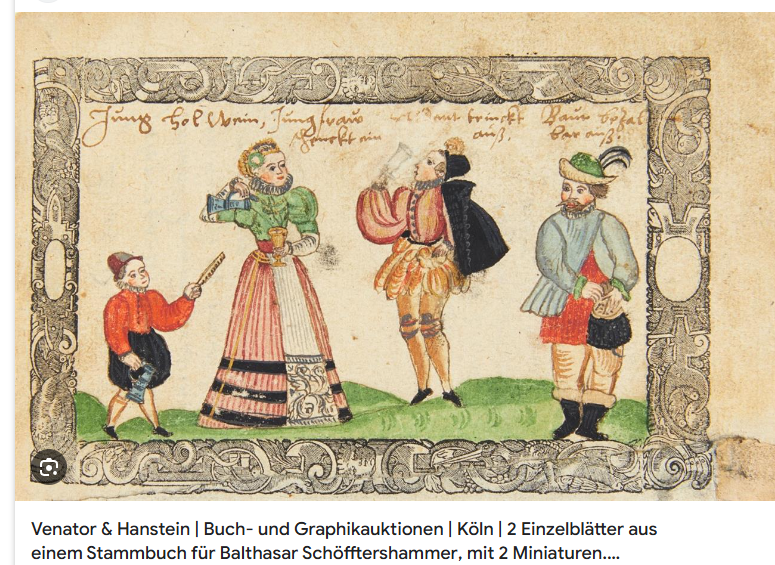
Another example, but I have no reproduction, in the album of Johann Heinrich Kirchberger (dated entries 1602-7). Labels: Jung hol d. Wein; Jungfraw Schenck Ein; Student Trinckh auss; Baur gibs Geld raus — in the Stadtbibliothek, Nurnberg — according to RAA
prints
In 1620, long after the earliest album versions of the motif were painted, a single-sheet print was published in Speyer, illustrated with an engraving of our motif. Entitled Pfaffische Weinsuchts Lust [the priestly lust after wine], it quotes the 4 speeches which it styles a ‘common proverb’ — though it is noticeable that none of the 8 album images includes a priest as the exploiter, and in an evidently closely related engraved plate which appeared in the 1637 edition of the Pugillus facetiarum [see comparison below] the exploiter is a soldier.
Leave a Reply