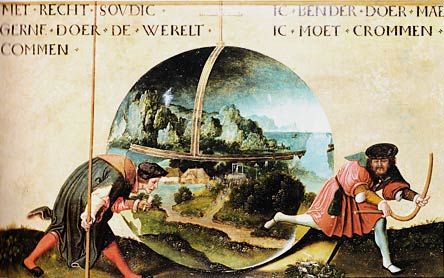
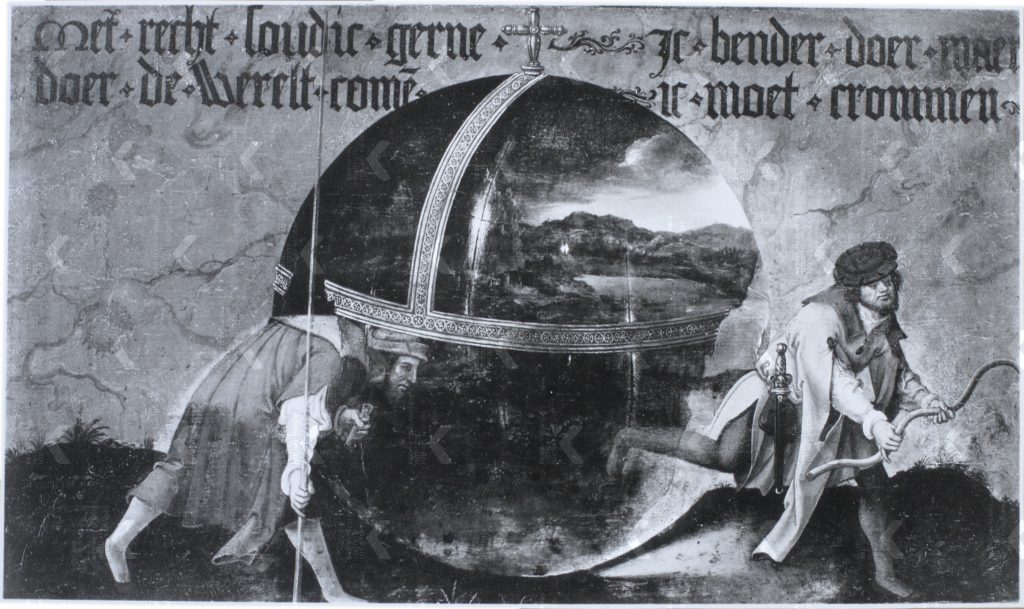
Here people quite literally go through the world/globe. They may have to bend as in the earliest example here (the painting attributed to Patinir), or they may simply have grown old by the time they emerge as in the album amicorum examples.
(Man with upright stick) MET RECHT SOVDIC GERNE DOER DE WERELT COMMEN [Upright I should like to go through the world]
(Man with bent stick) IC BENDER DOER MAAR IC MOET CROMMEN [I went through but I had to bend]
This painting — in the Museum Waterburcht Anholt — sometimes called “Allegory of the World” is attributed to Patinir or his circle, Flemish, c.1515 :
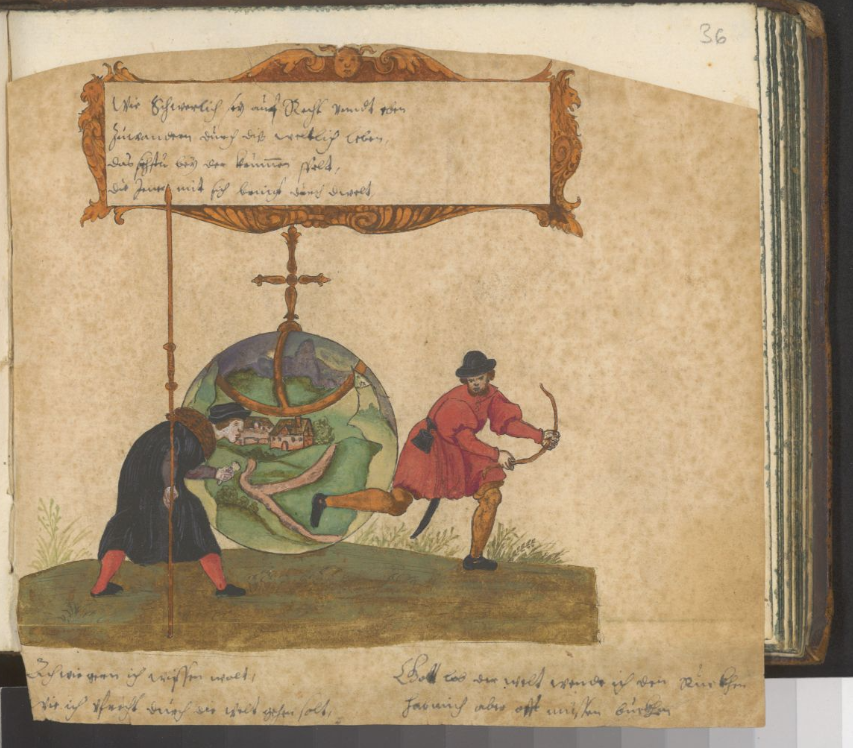
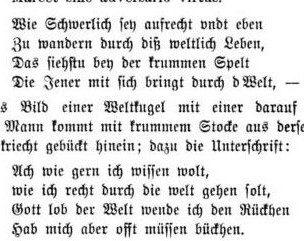
Transcription of the above texts from Robert & Richard Keil, Die deutschen Stammbücher des 16.-19. Jahrhunderts (Berlin, 1893), 68 (bottom 4 lines below):
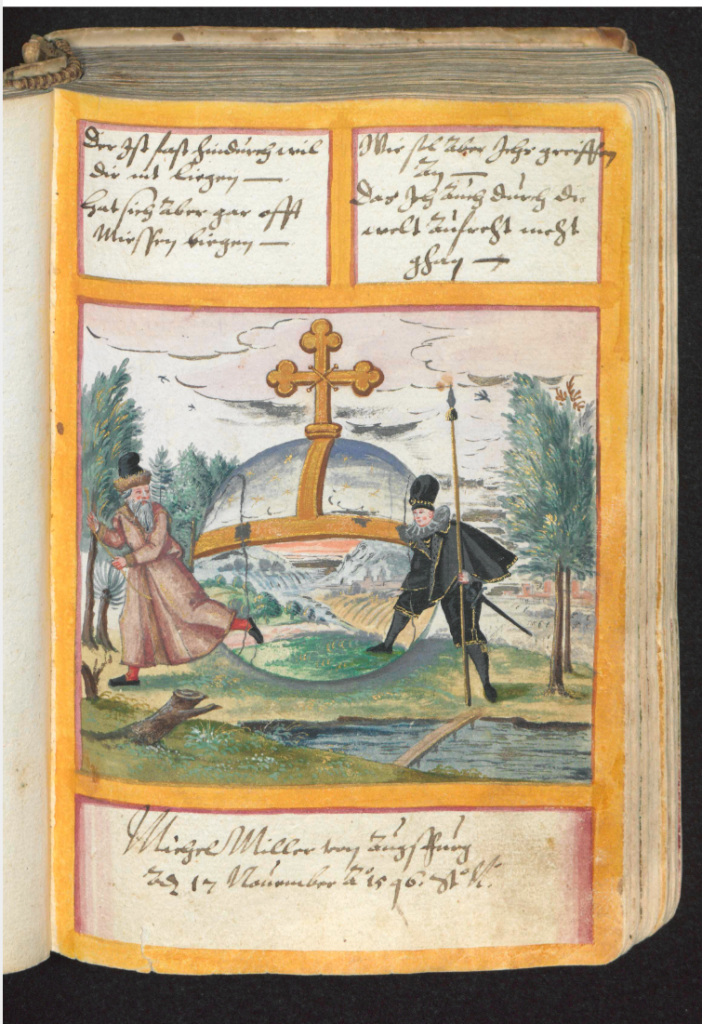
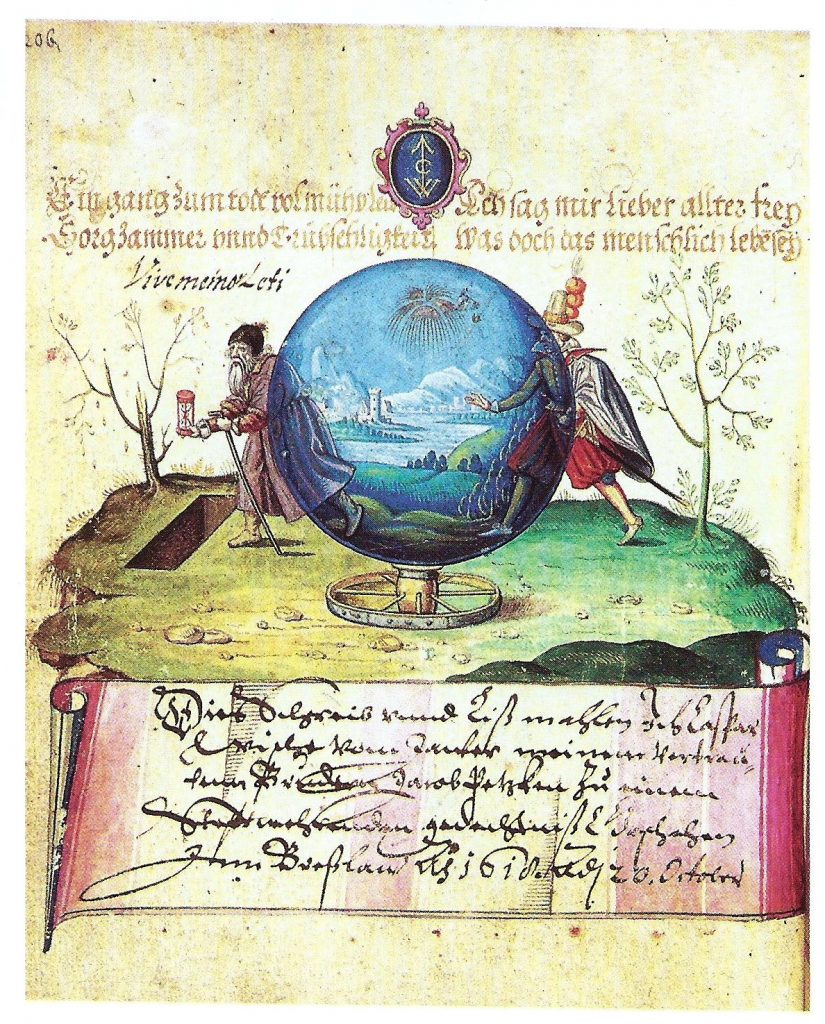
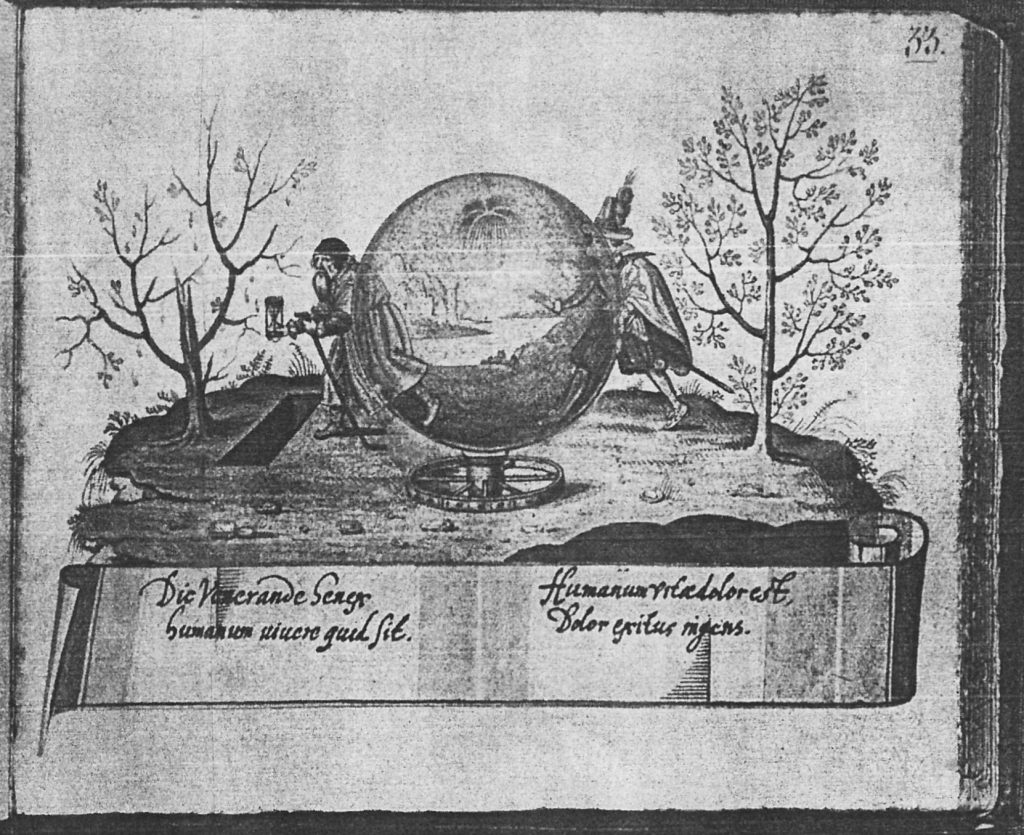
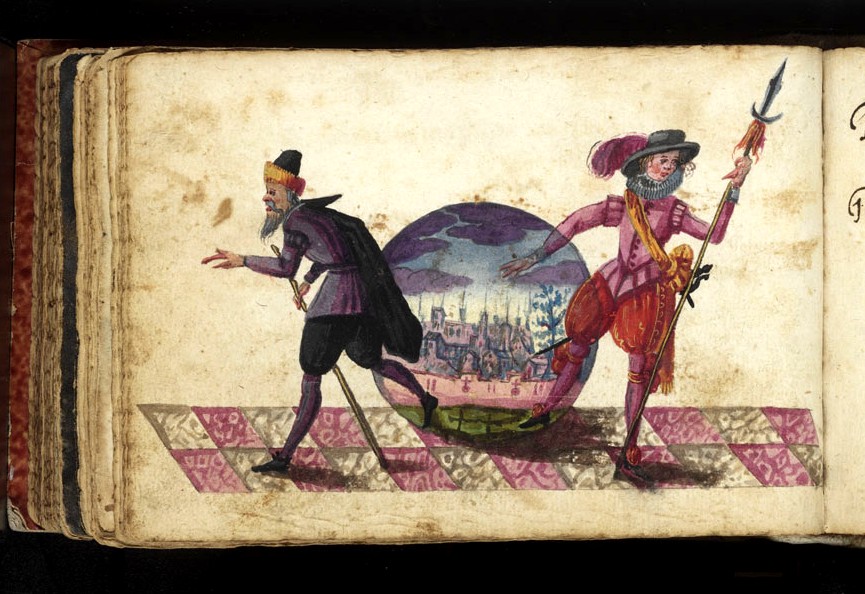
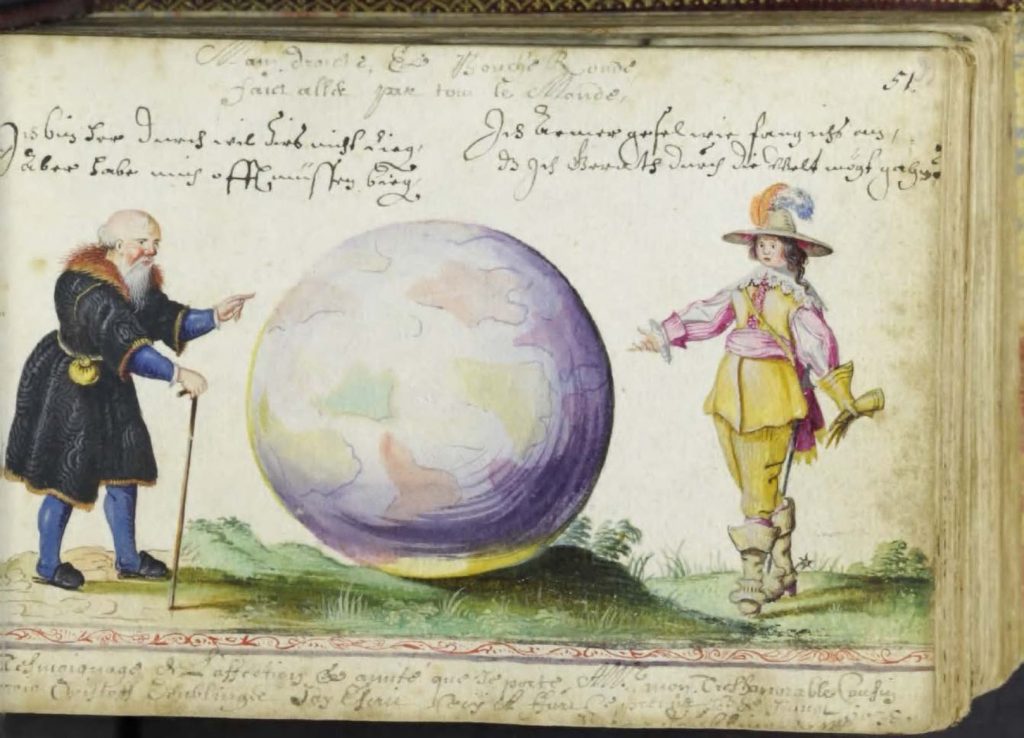
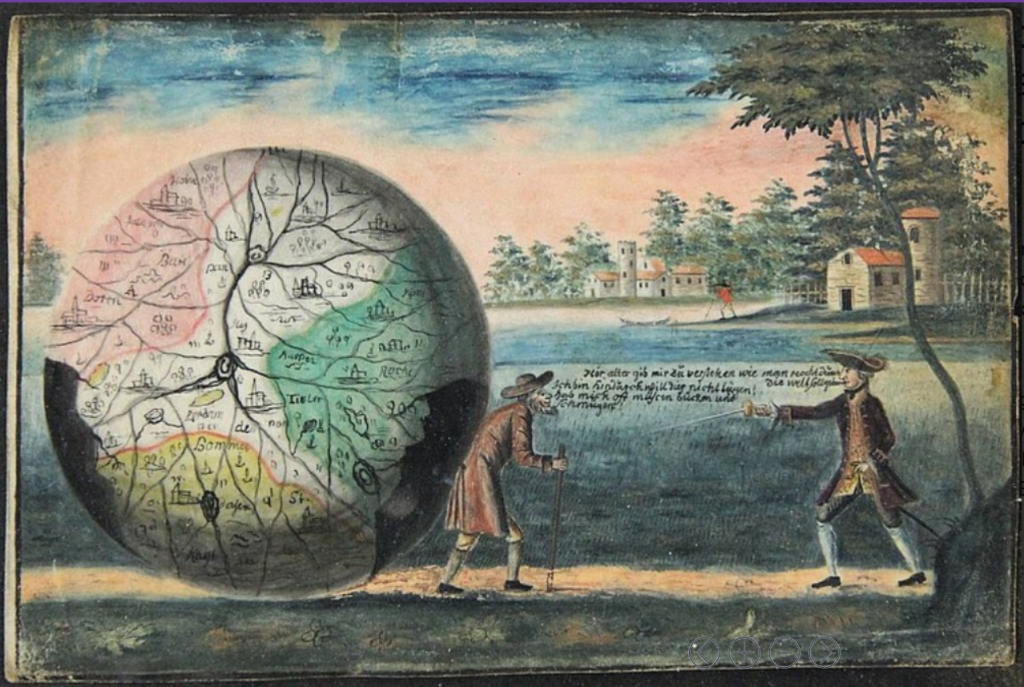
Other media
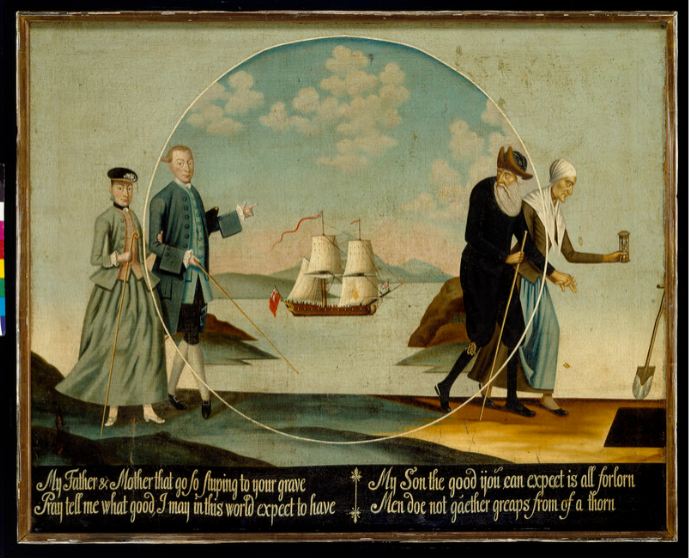
The Ashmolean panel (ABOVE), editorially entitled Allegory of Youth and Age, features a dialogue between the son and the parents, which ends with a traditional, Biblical adynaton [Matthew 7, xvi & Luke 6, xliv]:
My Father & Mother that go stuping [stooping] to your grave
Pray tell me what good I may in this world expect to have
My son the good you can expect is all forlorn
Men doe not gaether greaps [grapes] from of a thorn
This English example is evidently related to this Swedish wall-painting of 1783:
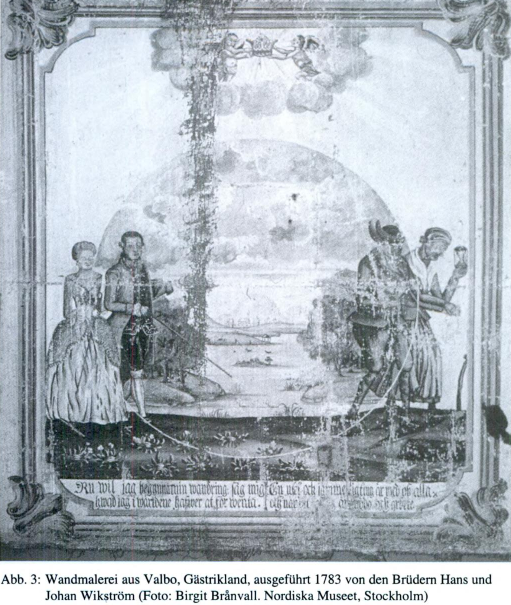
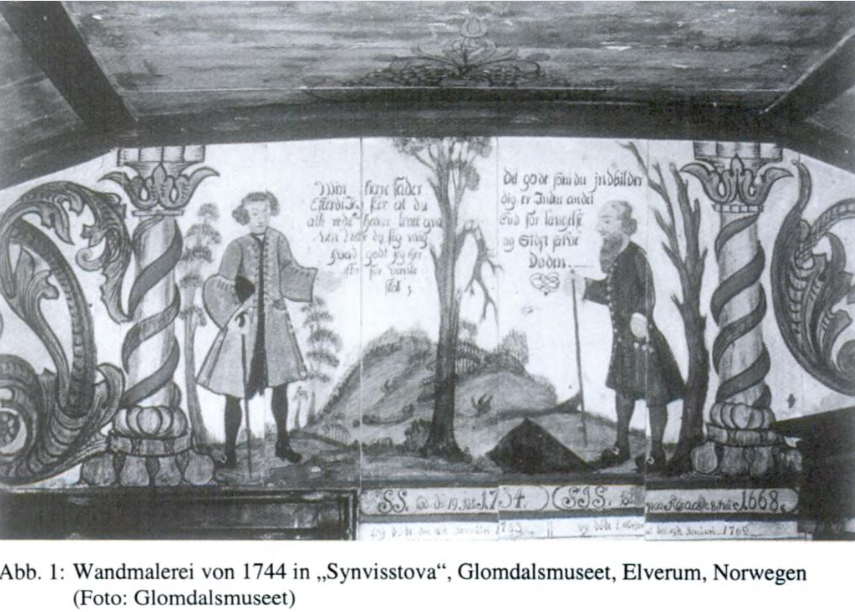
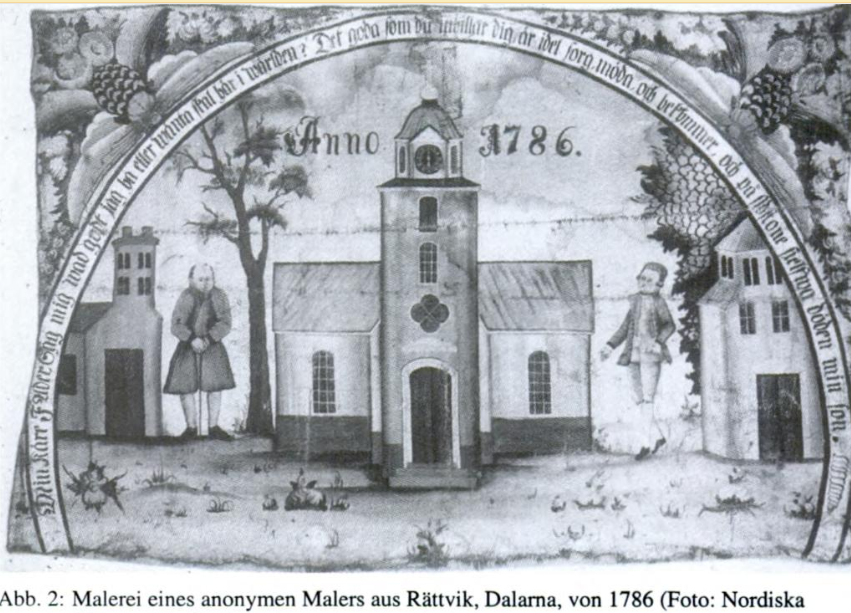
InTagungsband Berlin 2000, Christa Pieske published a list of the examples of our motif known to her at that date, the majority being 18 & 19C Scandinavian wall-paintings, though it seems that many lack the transparent world-orb, like the two below.
Leave a Reply