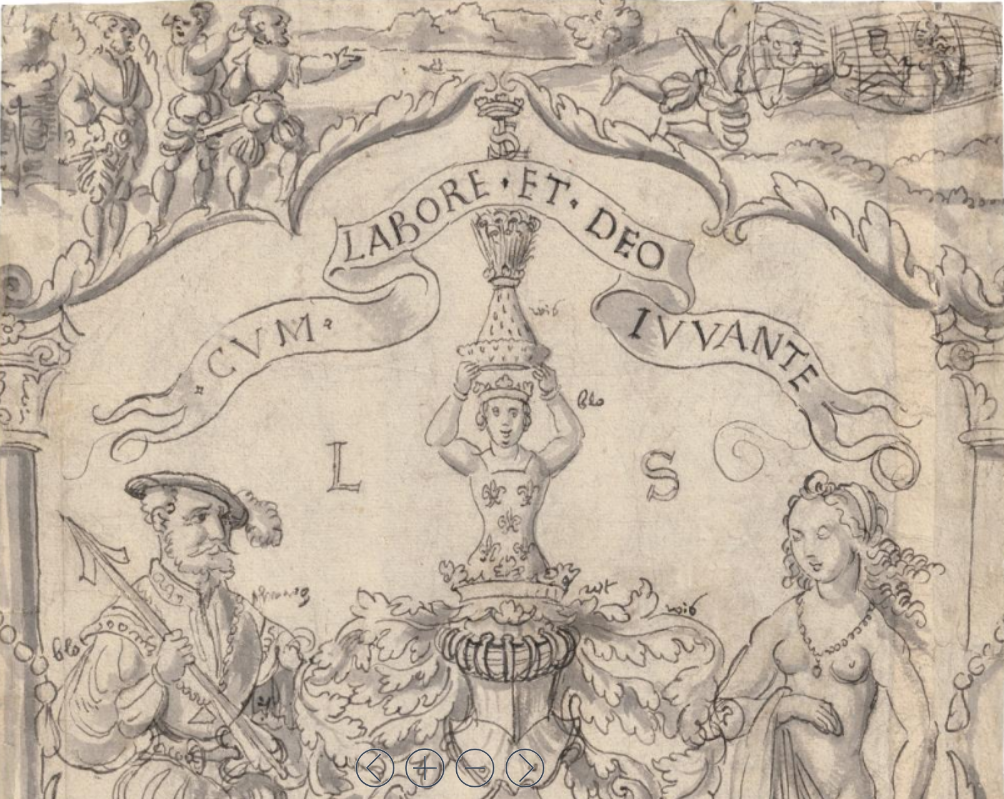
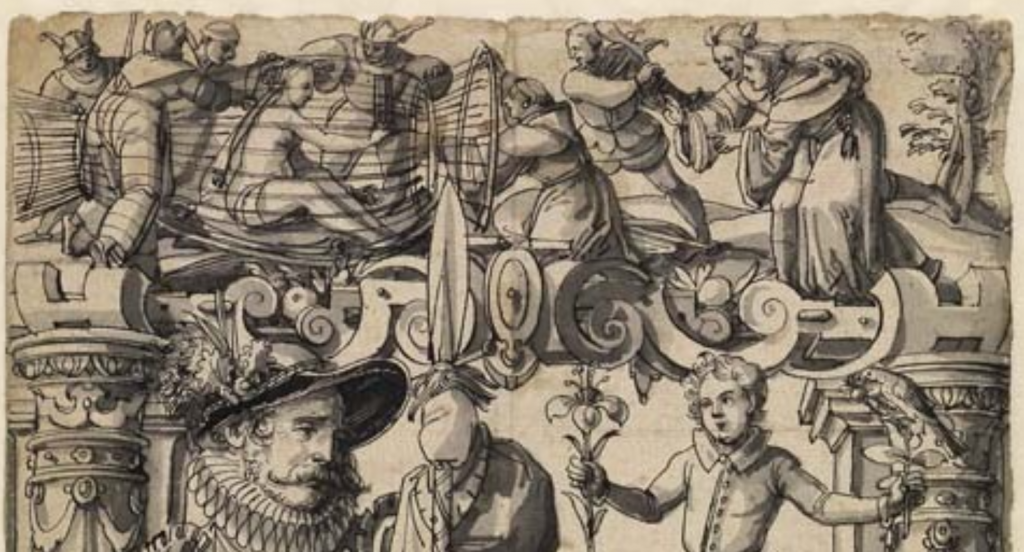
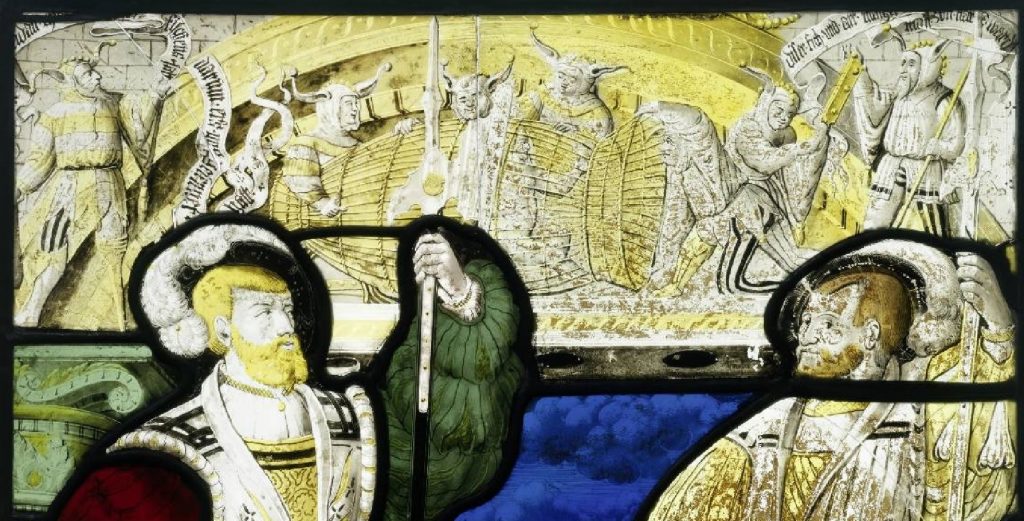
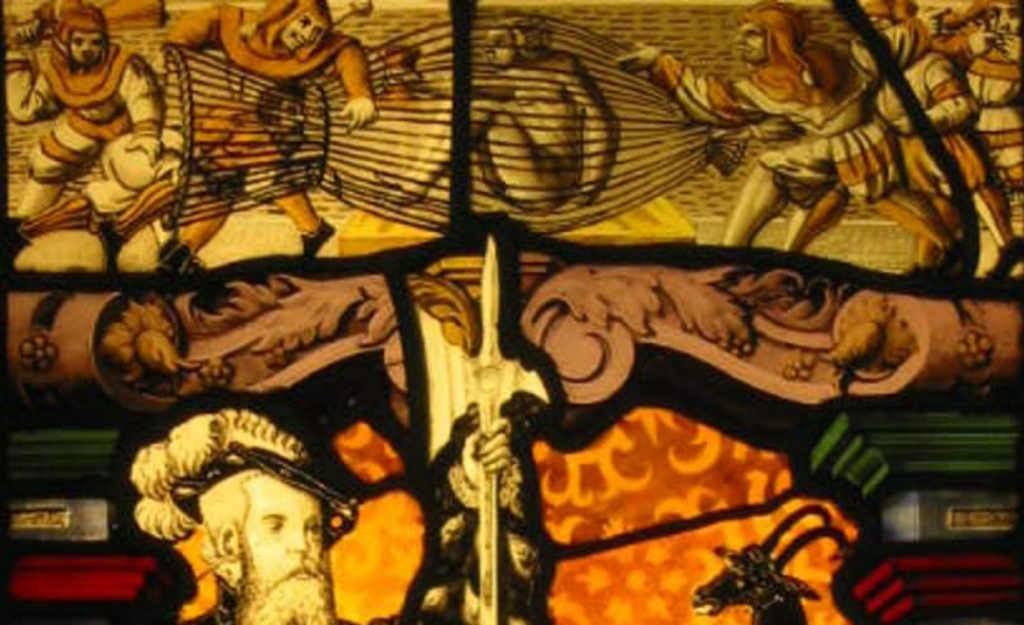
This popular album scene is but one of several satirical motifs fixed by the Pugillus Facetiarum print-book (Strasbourg, 1608, 1618, etc). It was especially popular with 16C Swiss glass-painters too, found on Wappenscheiben [coats-of-arms painted on glass panes] and Scheibenrissen [designs for these] from 1552 onwards. Daniel Lindtmayer, for example, used it at least 3 times. Gessner’s calendar woodcut issued in Zurich in 1557 is the earliest printed example, I’m aware of, and 1543 the earliest I’ve noticed the motif to date — painted above the arms on a Wappenscheibe made in Konstanz and now in the Germanisches Nationalmuseum.
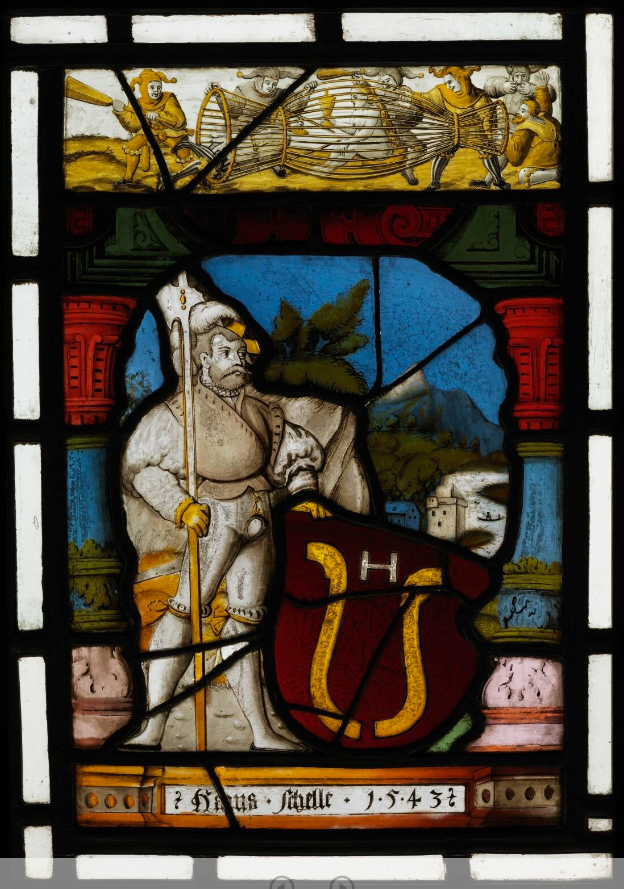
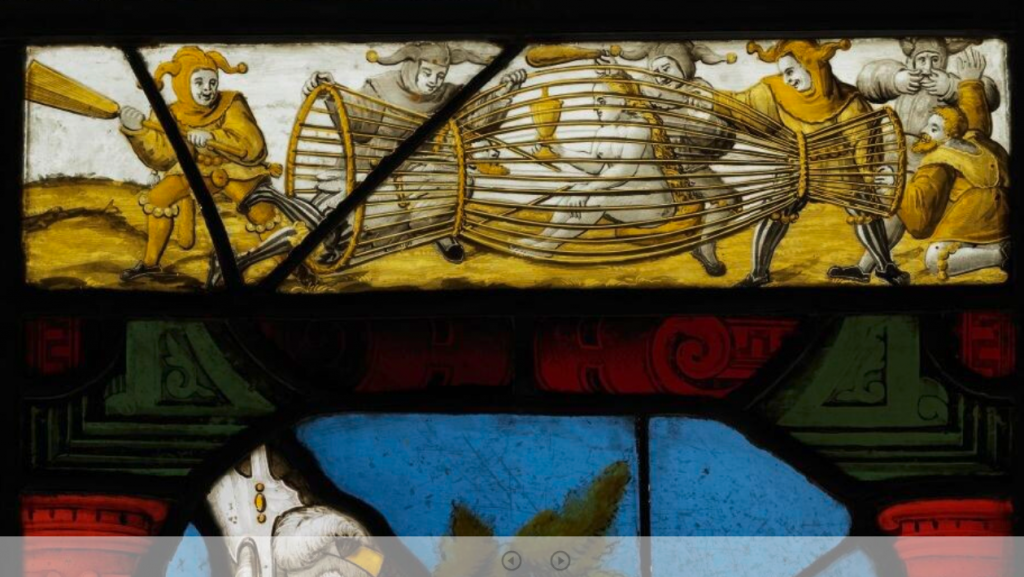
This is what I shall term the the classic presentation. A naked woman sits in the middle of the pot as the bait — in addition to the lure of her own person, she displays a golden goblet — a bearded man in striped hose has already crawled more than halfway inside the trap. Five fools — costumed as such — look on gleefully, that on the far right making the derisive, two-handed, mouth-stretching gesture known in German as a Gahnmaul. Another dupe — is he perhaps more cautious than his fellow? — seems to be attempting to enter the pot from the wrong end. Note the garter of ‘folly bells’ around his knee — but, of course, the presence of the fools cheering the other man on is itself the strongest possible signal of the meaning of the image — what fools women make of men!
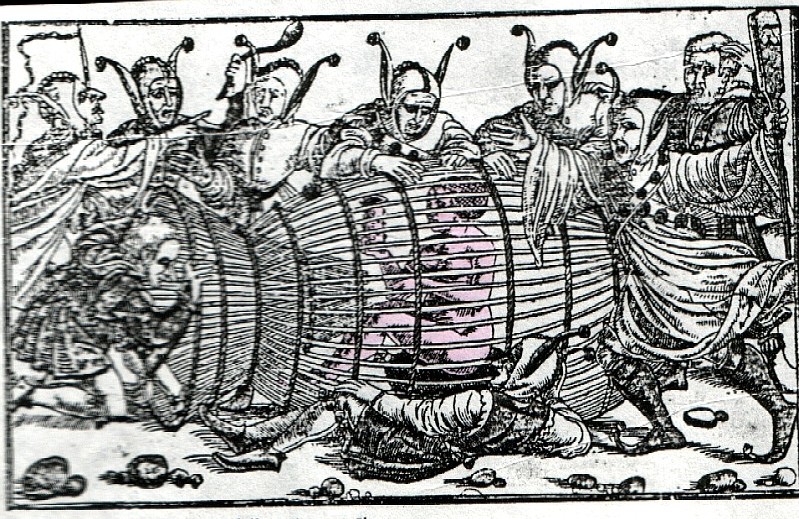
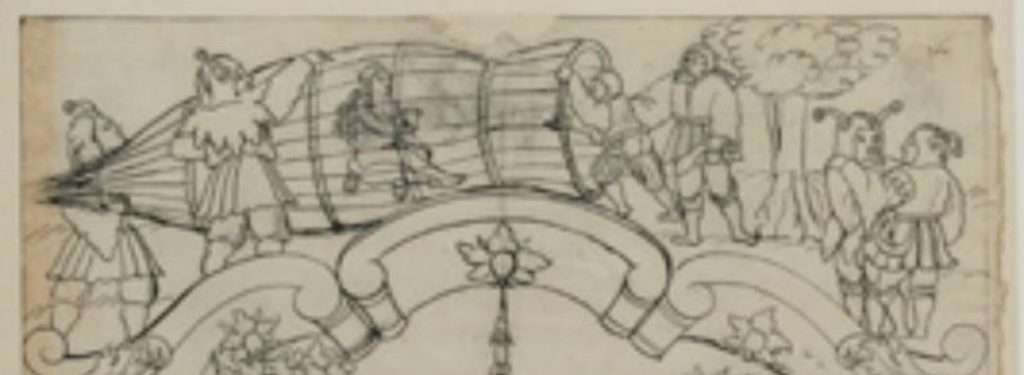
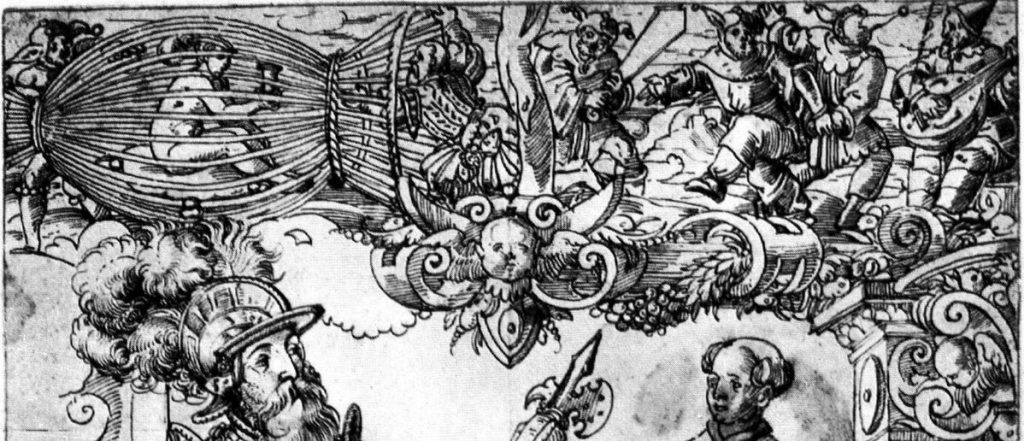
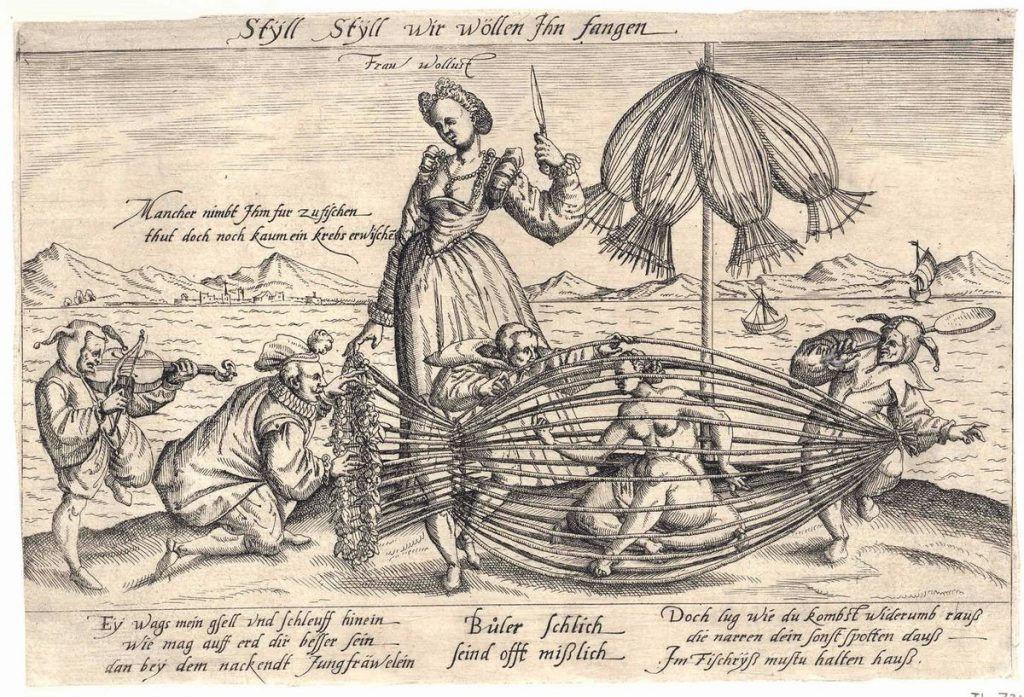
An undated print also featuring fools egging the hapless man on, but dominated by the figure of Frau Wollust, was issued at some point in the first quarter of the 17C. It was copied into the album of Philip Hainhofer now in the Herzog August Bibliothek, Wolfenbuttel.
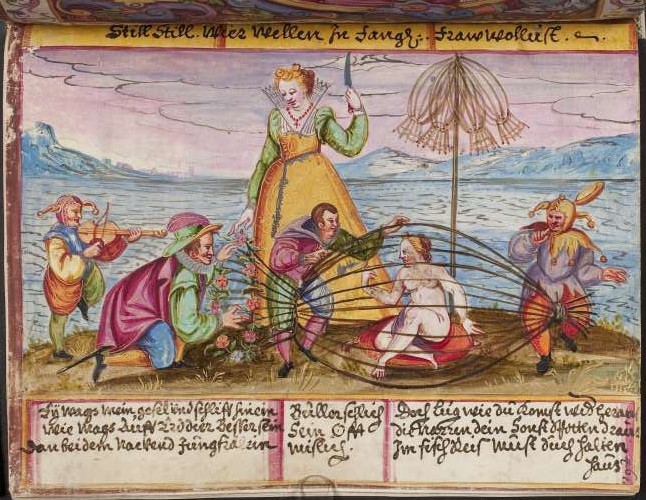
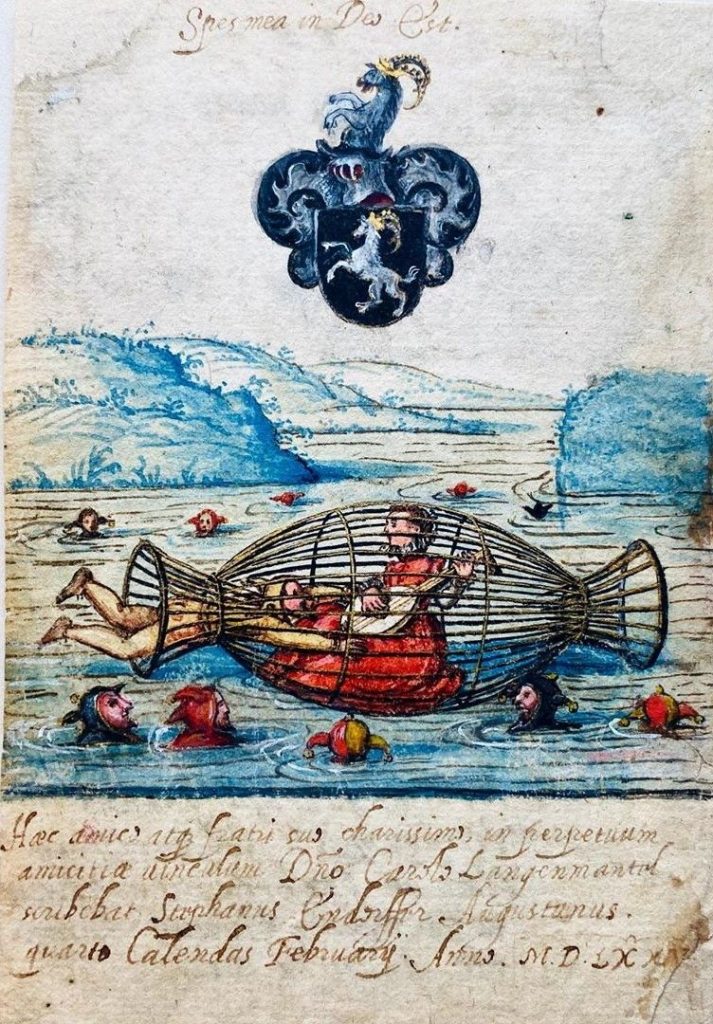
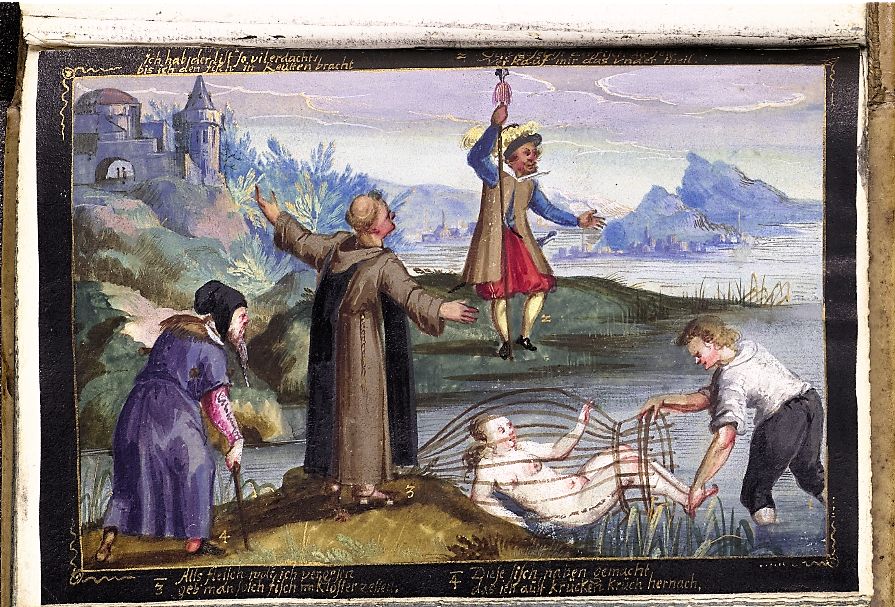
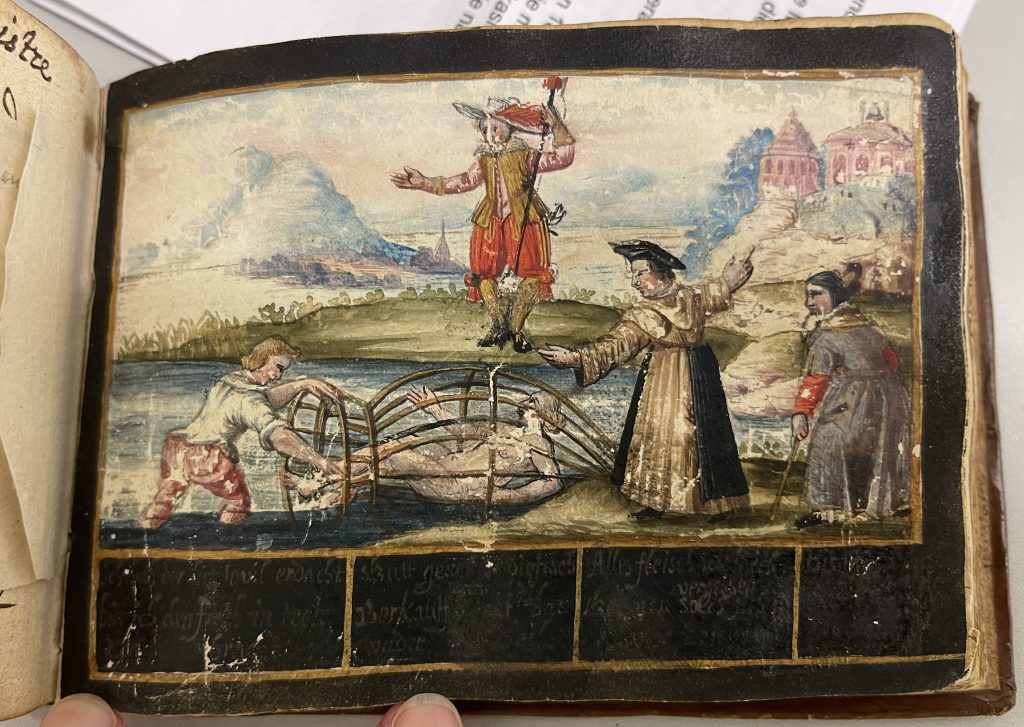
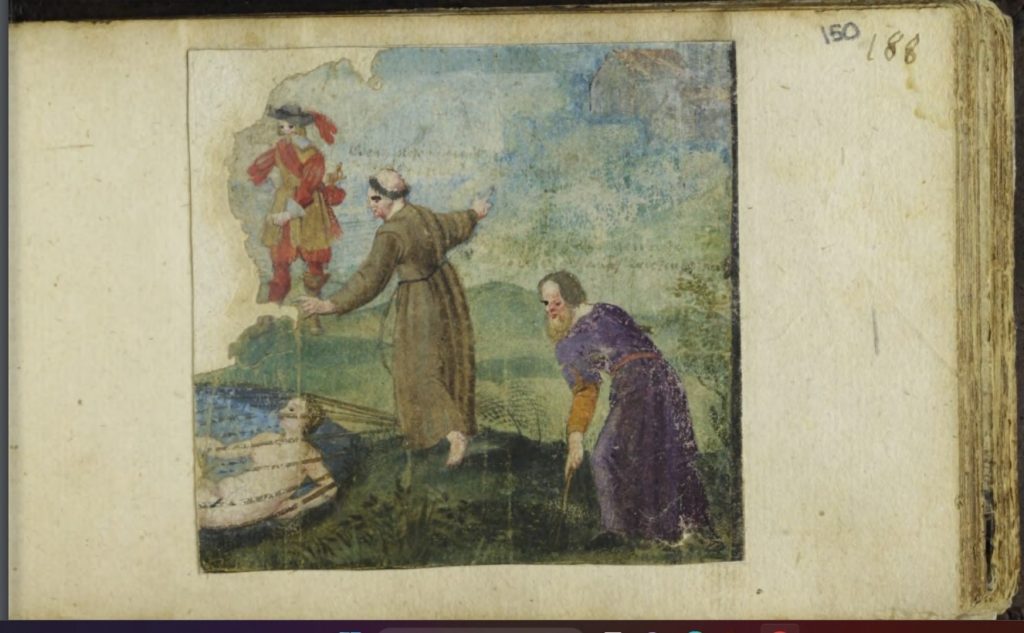
This is the earliest album painting of the motif I have noticed thus far — dated 1575 — one of a collection of orphaned leaves offered for sale by Sanctuary Rare Books of New York.
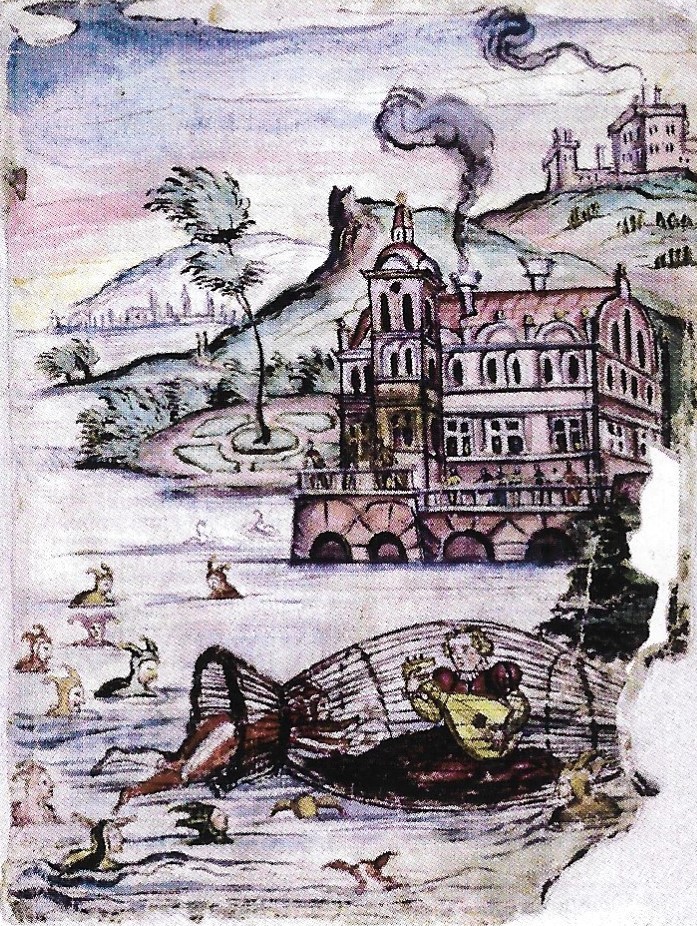

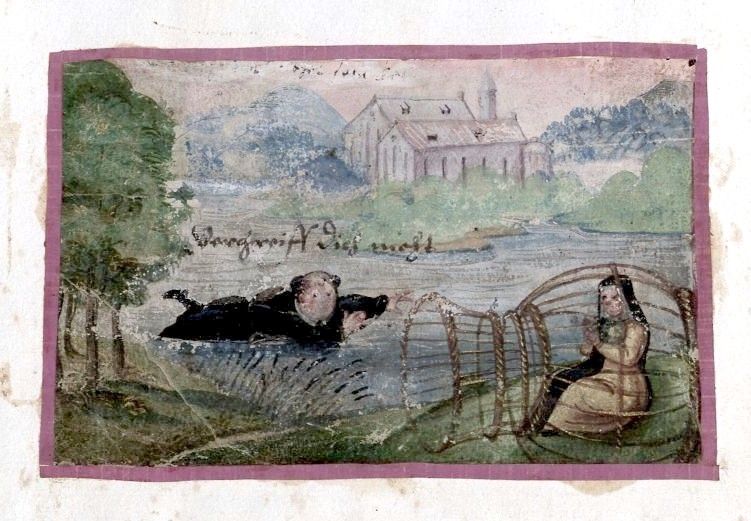
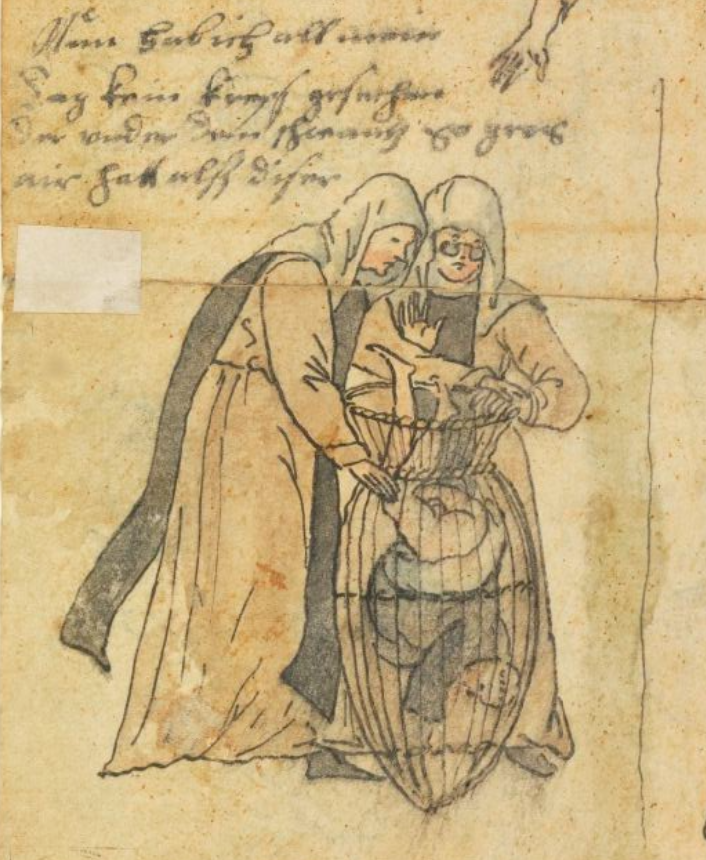
two nuns (one wearing spectacles — are we meant to think she is so short-sighted that she really thinks it’s a lobster?) hold a lobster-pot vertically between them in which is a bare-arsed monk, face-down. Caption (kindly read for me by Christoph Gasser, translation mine): Nun hab ich all mein Tag kein kreps gesechen der weder sein schwantz so groß nie hatt alß dieser [In all my days I have not seen a lobster with a tail as big as this one’s]. It is one of several watercoloured pen-&and-ink drawings on two sheets of paper preserved in the Germanisches National Museum, HB2012 who date them 1586×1600.
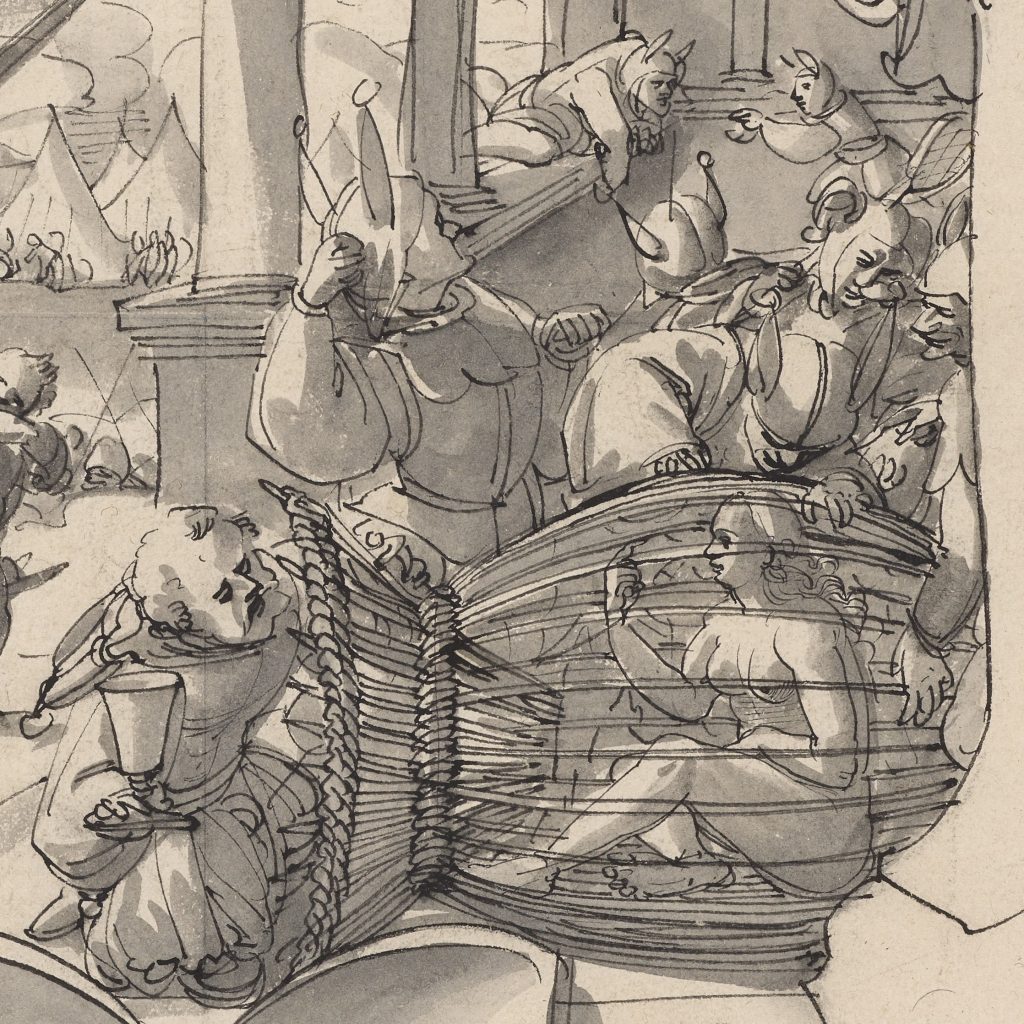
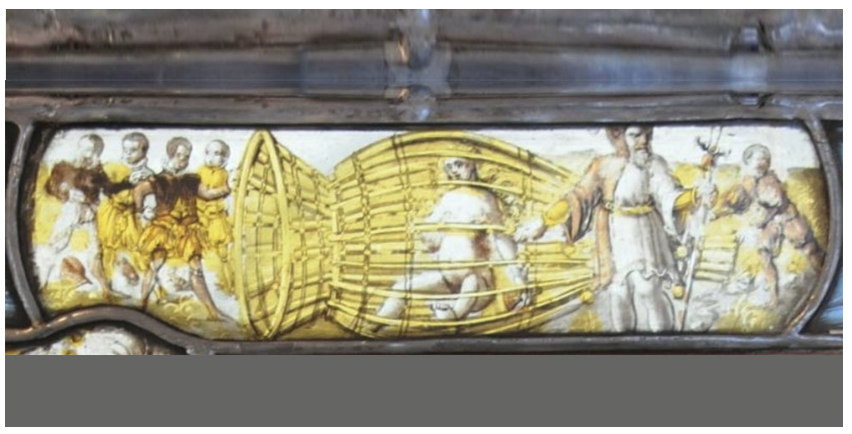
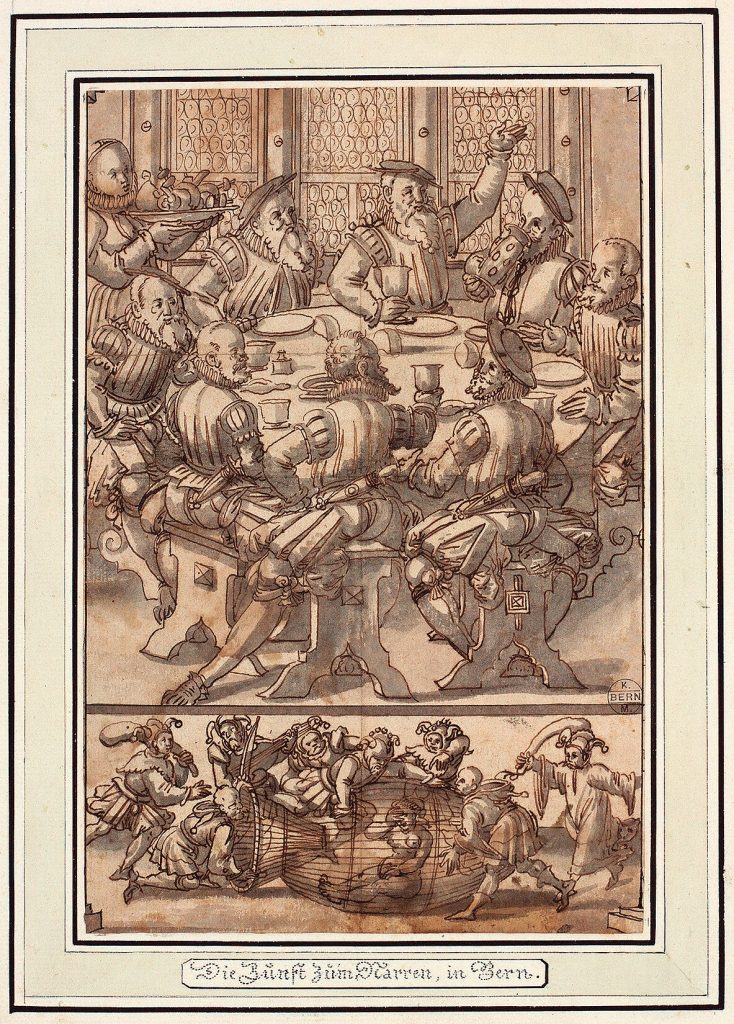
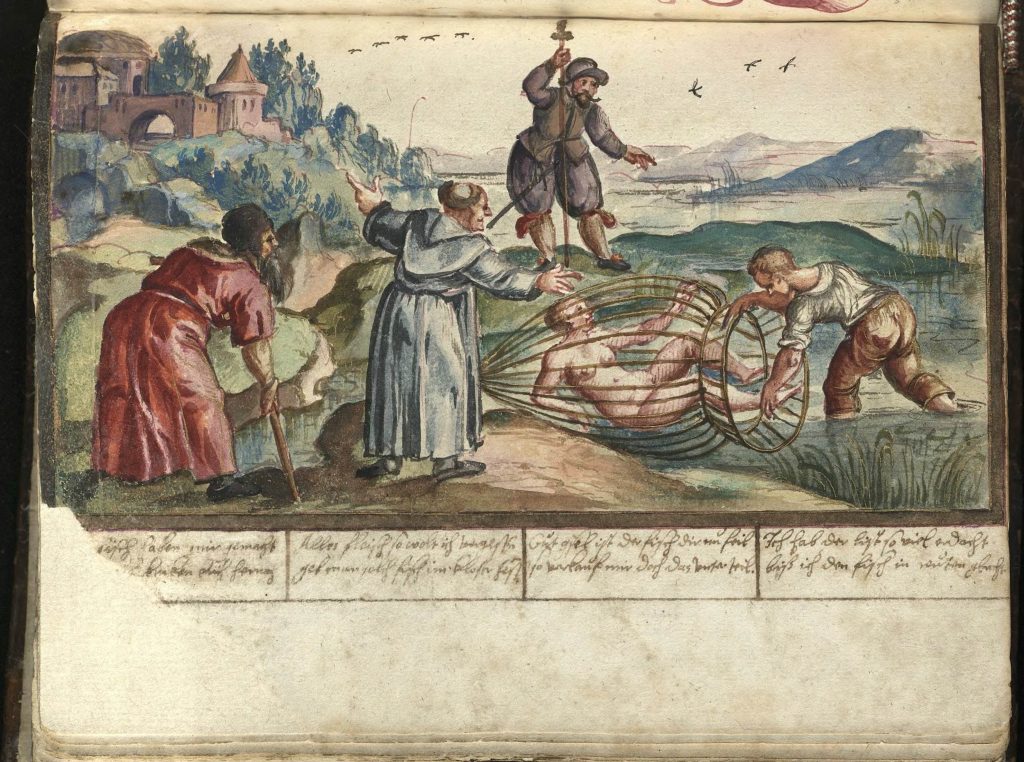
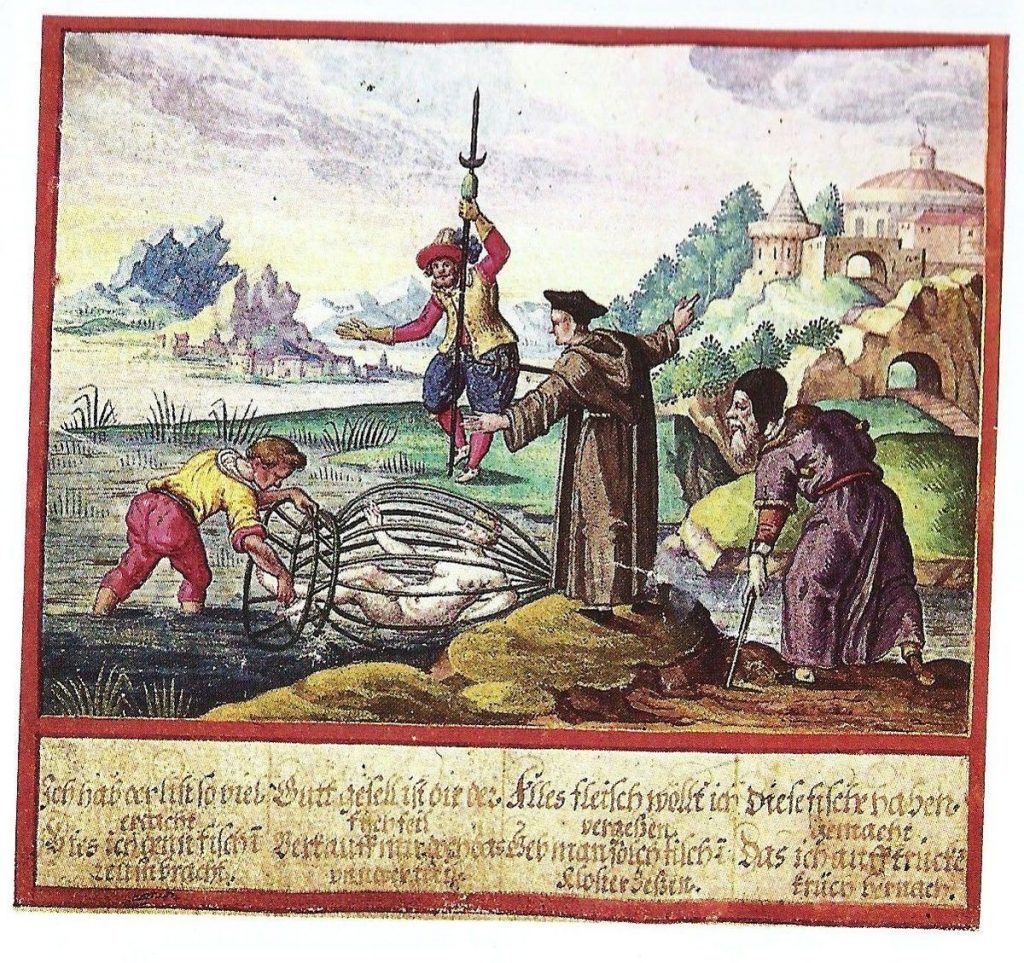
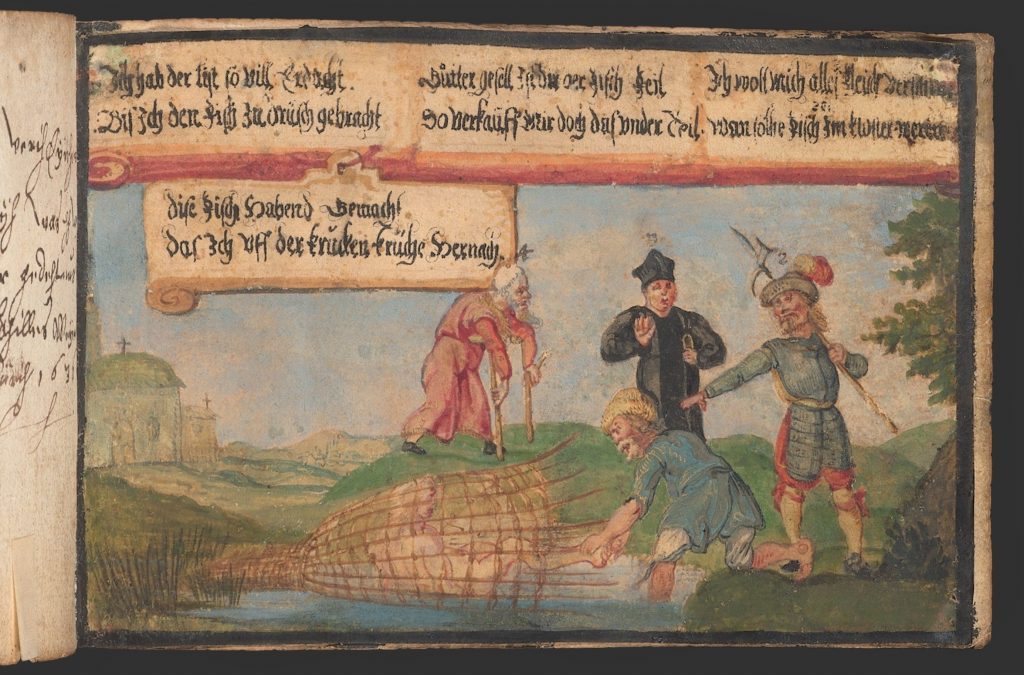
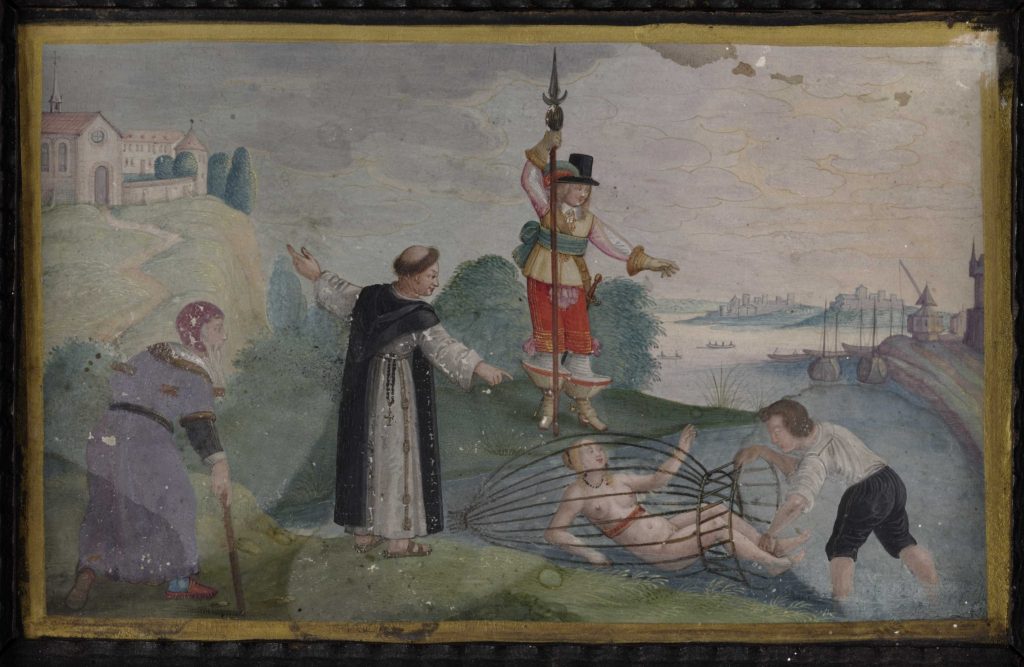
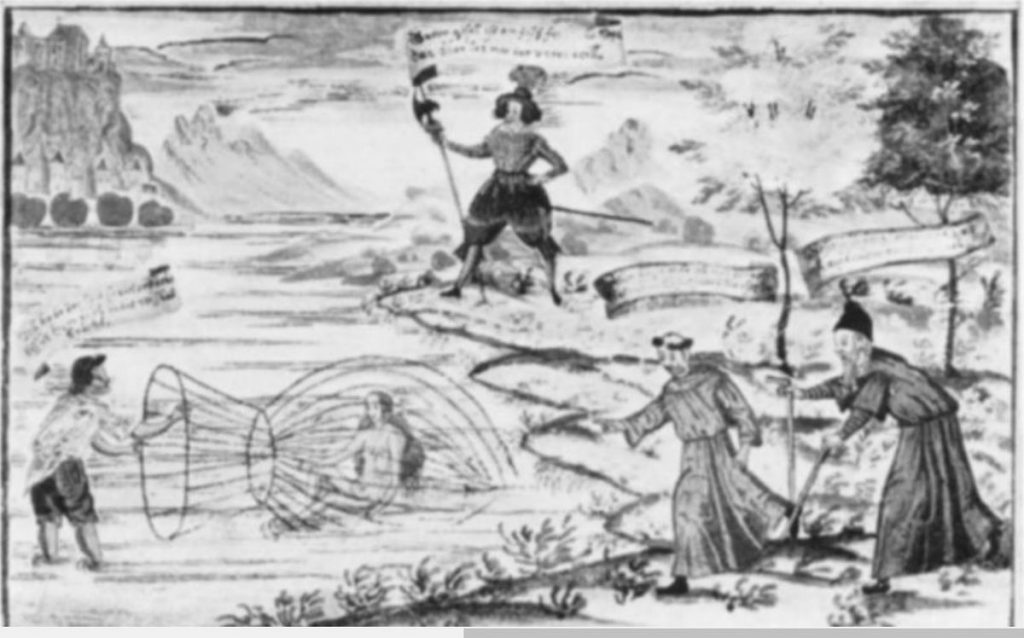
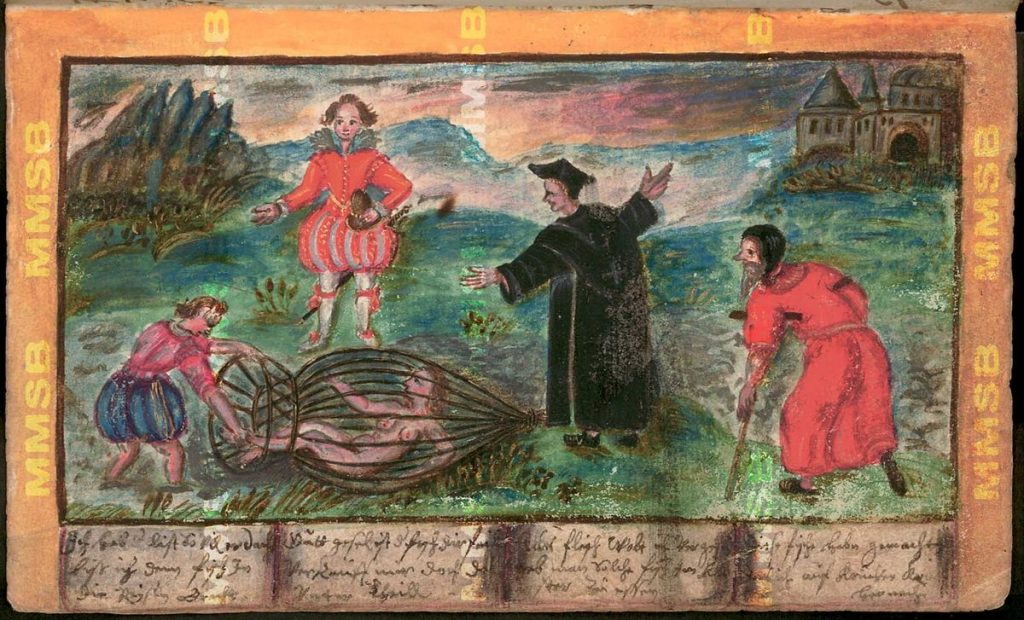
1608 is a watershed year for this, as for several other popular album motifs, with its appearance in the Pugillus Facetiarum, published (and perhaps engraved) by Jakob von der Heyden in Strasbourg. The contents of the editio princeps are far from certain — surviving copies are variously dated and variously made up, but the copy of the plate in the album of Michael von Heidenreich (dated entries 1601-12) proves that this was one of the original plates, before the 2nd edition — under the title Speculum Cornelianum — was published a decade later (Strasbourg 1618). The moral is clearly that all sorts and conditions of men are fatally susceptible to the charms of a woman… Again, the design was taken up in other media
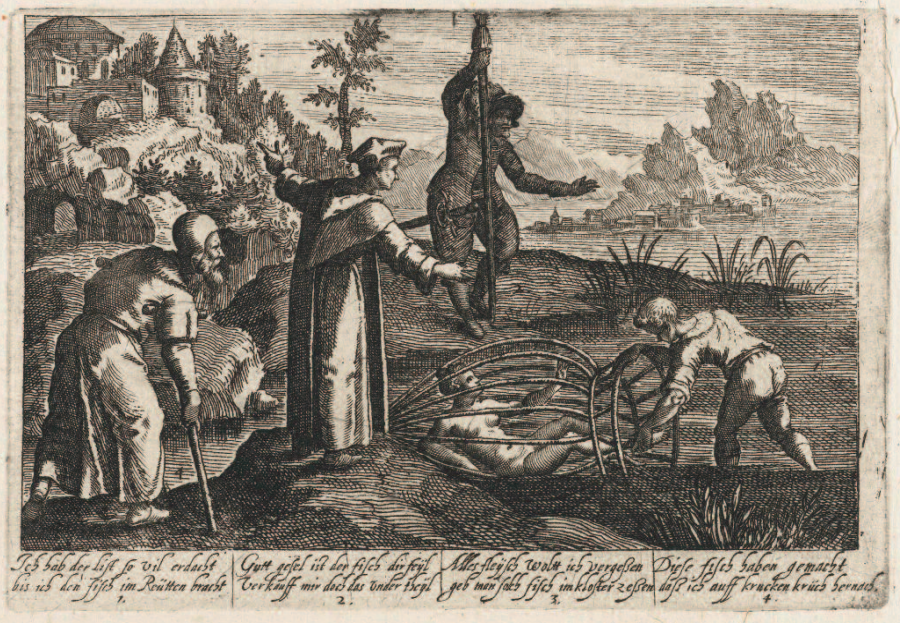
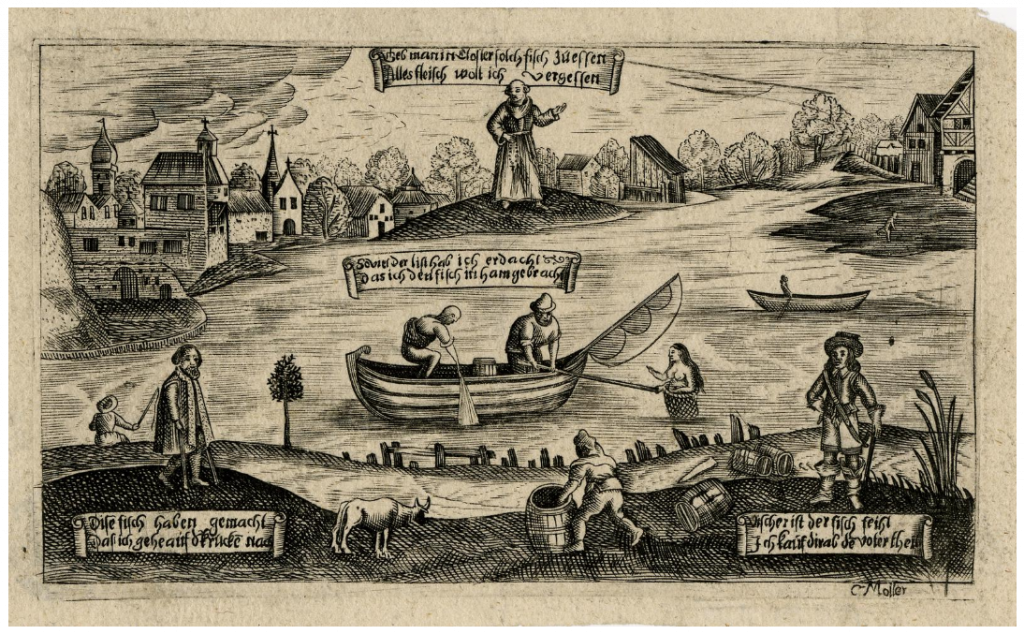
(above) from the Pugillus facetiarum (Strasbourg, 1608). Speeches in translation:
1. Fisherman: I thought it out so cunningly till I brought the fish into the trap
2. Soldier: Friend, is that fish for sale? At least sell me the lower portion
3. Priest: I’d forget all flesh if there was such fish to eat in the cloister
4. Old Man: It’s thanks to such fish that I creep along on crutches now.
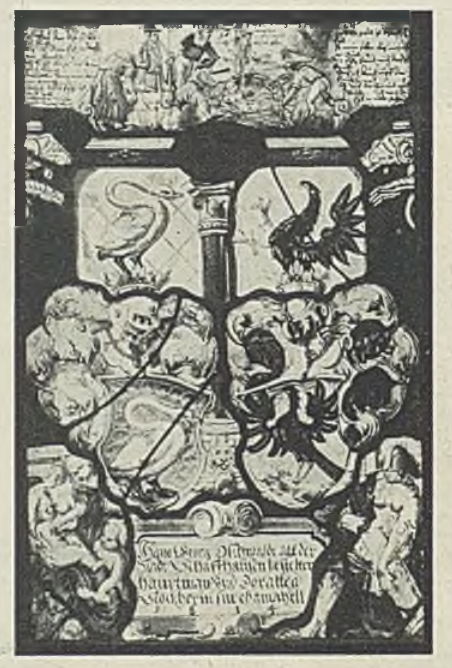
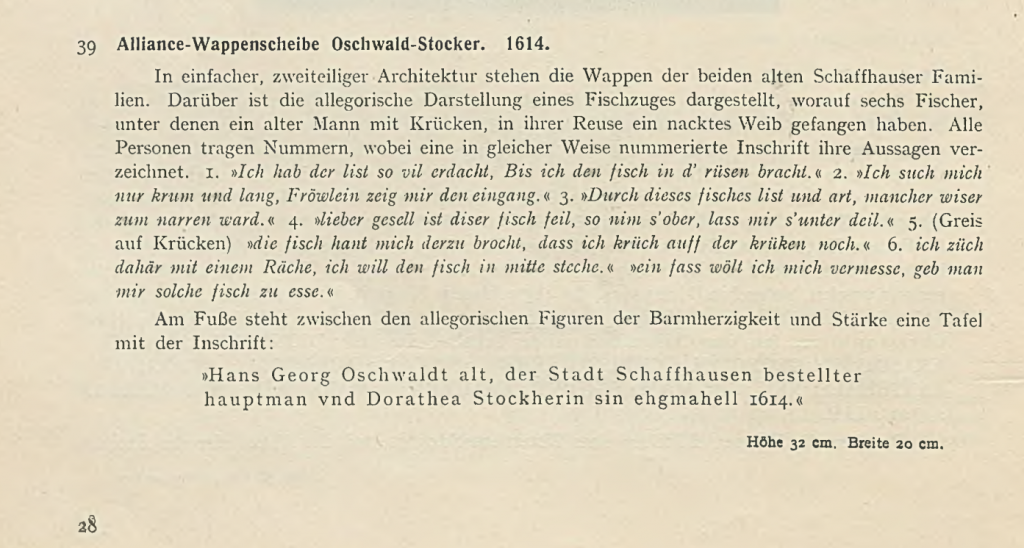
This Wappenscheibe sold at auction in Munchen in 1912 by Hugo Helbing is the only representation of the motif known to me painted on glass, and as it is dated 1614 again confirms that the design was present in the editio princeps.
Applied uses of the motif
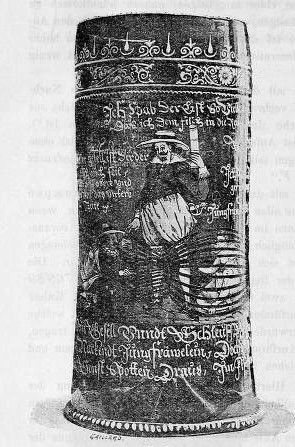
One of the earliest survivng applied uses of the design is to be found on an enamel-painted Humpen dated 1625 and painted with a slight variant of the familiar scene and texts, the woman being here identified as Jungfraw Wolust [the Virgin Lust] — something of an oxymoron! In 1891 it was in in the Museum in Wroclaw and I hope it still is, but WW2 may have intervened — the image below is scanned from the catalogue of the museum’s glass published that year, compiled by E von Czihak (available via archive.org)
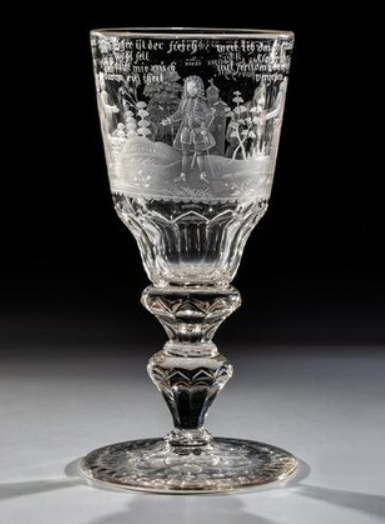
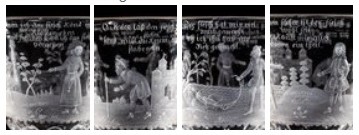
The above glass was engraved in the Riesengebirge area, c.1730 — Dr Fischer Auktion, Europaisches Glas und Studioglas 20 March 2021, lot 207. (details of the 4 men below). According to Walther Bernt, Spruche auf alten Glasern (Freiburg i. Brg. 1928), 34 [164] there is another contemporary S. German glass of this motif in Ulm Museum.
Later paintings and prints
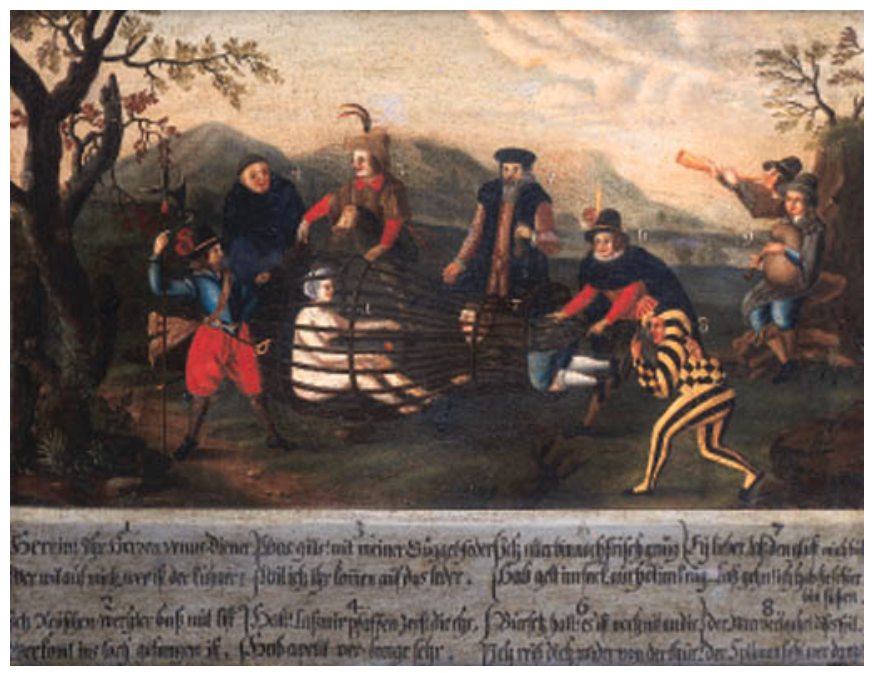
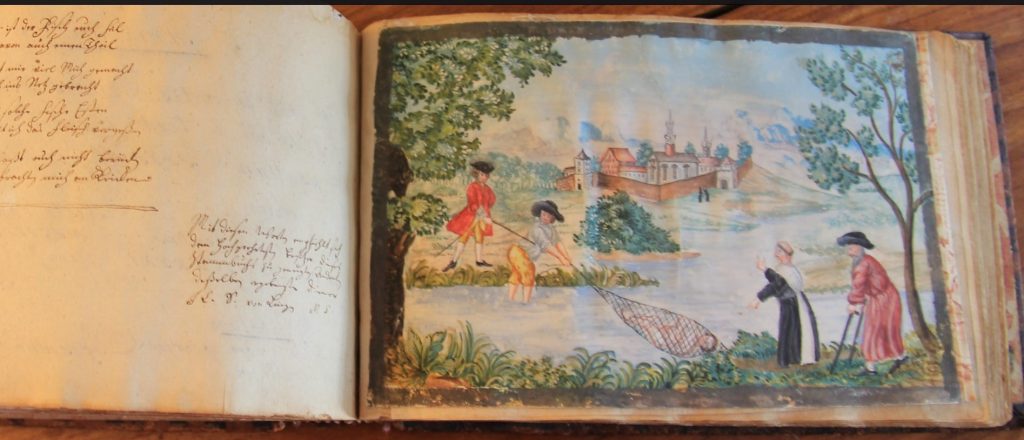
My knowledge of the 17 & 18C paintings here I owe to Thomas Fusenig, “Ich hab der List so vil erdacht… Frauen als Fische in einem Bildwitz der Frühen Neuzeit” in Anzeiger des Germanischen Nationalmuseums, 2013, S. 25-36
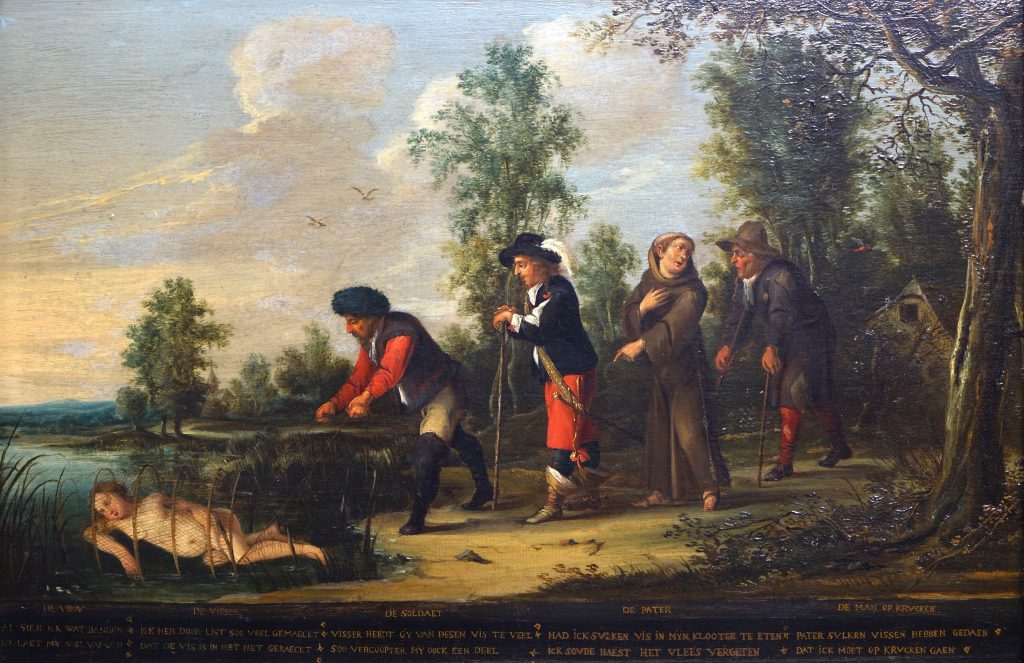
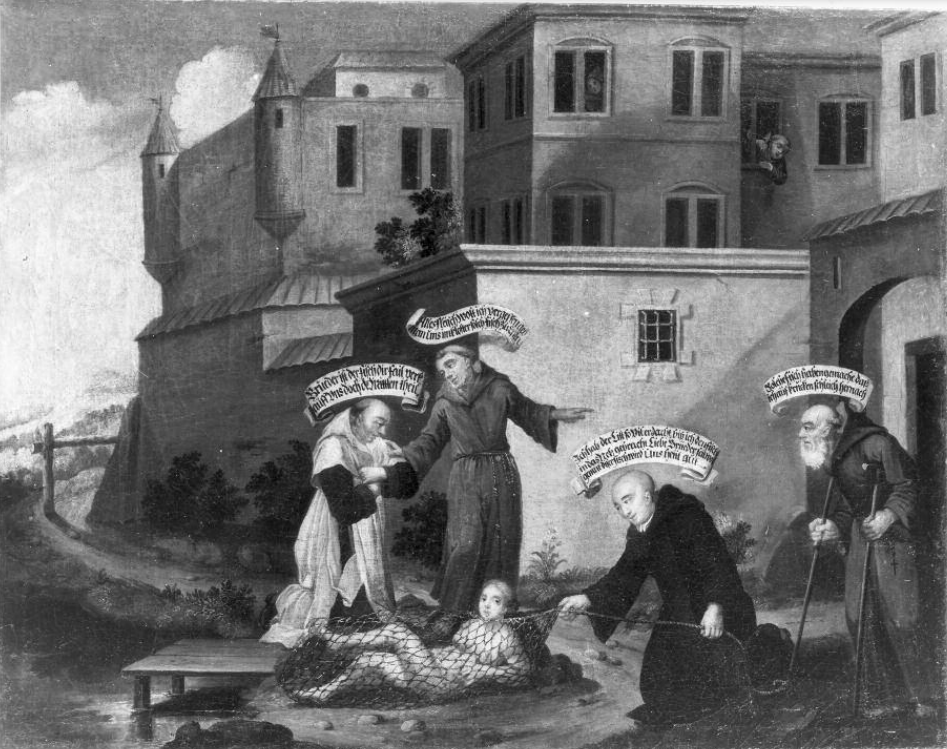
Museo Correr, Inv. Nr. Cl. I 990
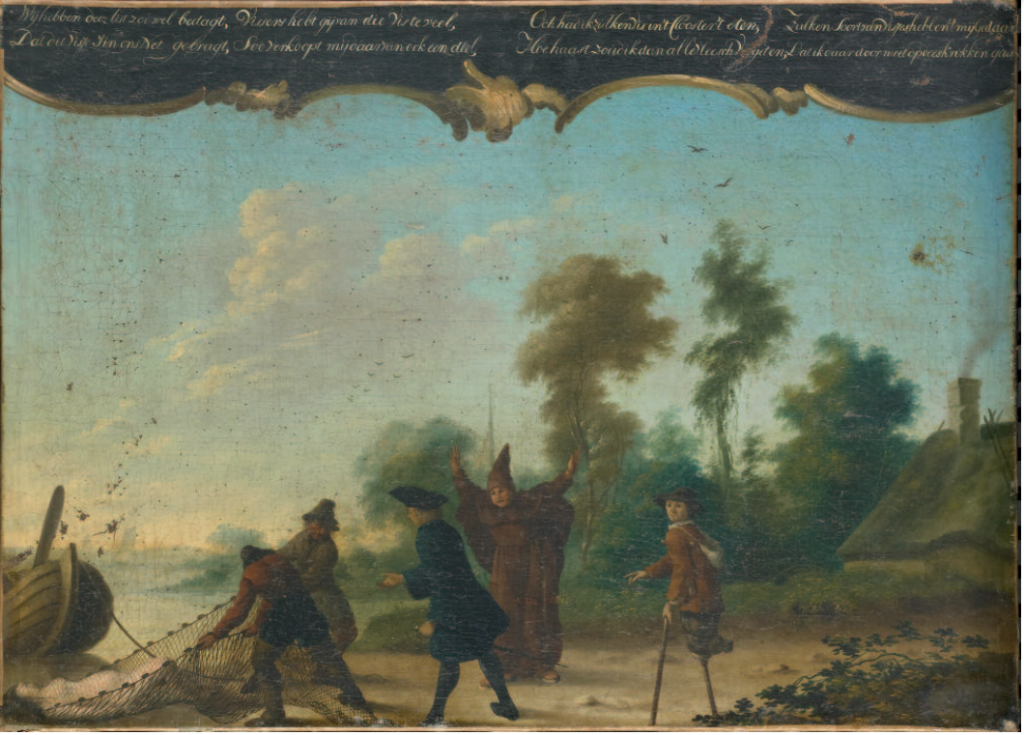
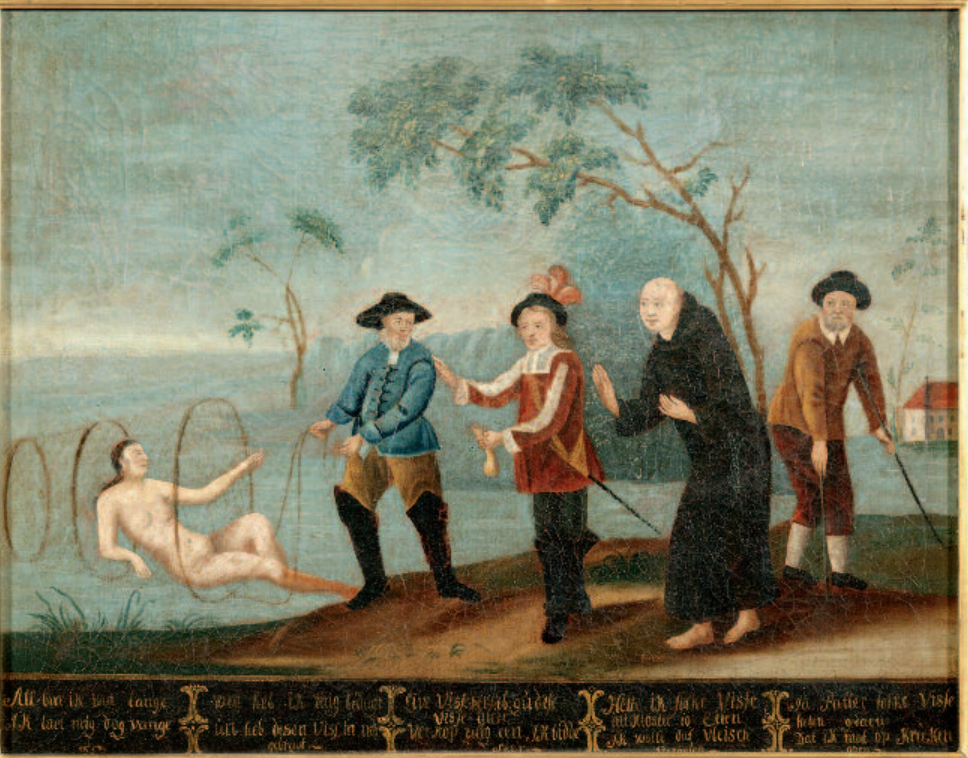
Inv. Nr. ZZM 004658
A Dutch variant of the scene was issued as a print by Hugo Allard
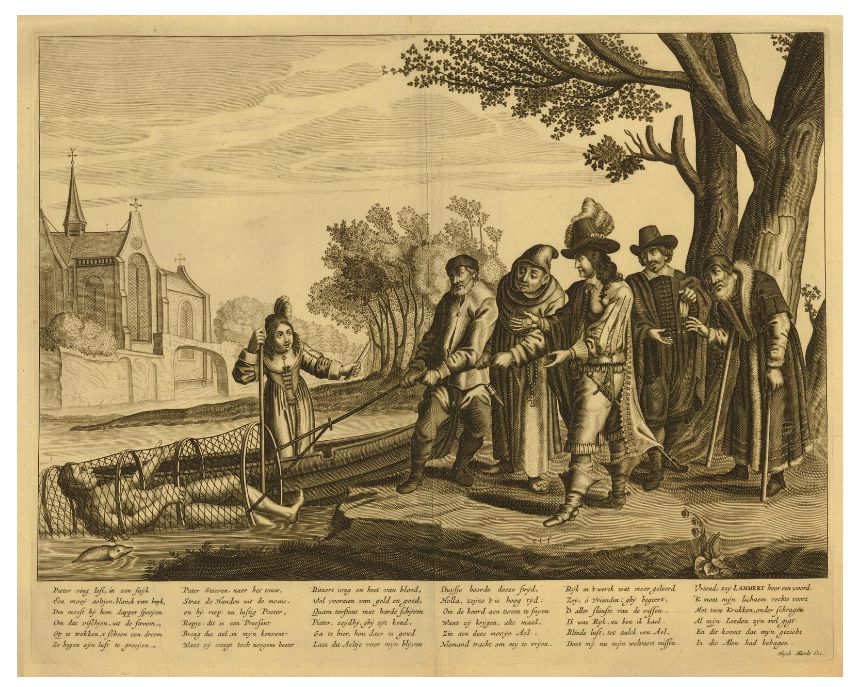
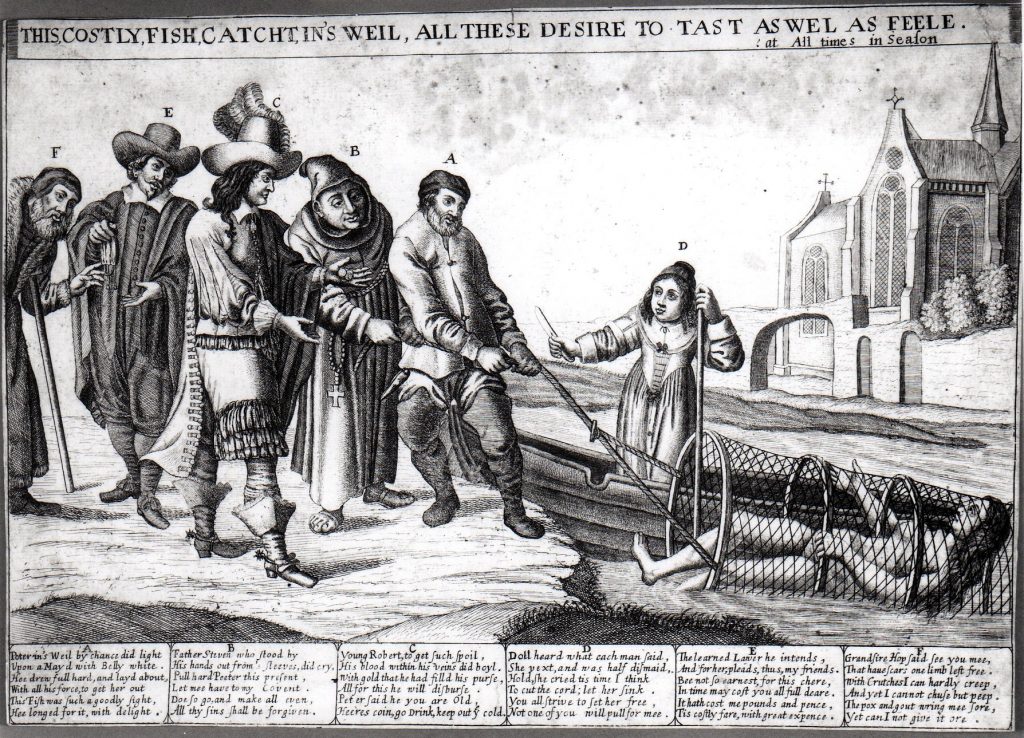
Douce Prints W.1.2 (413)
Yet another version of the design with the familiar speeches was engraved by C Moller, possibly in Hamburg c.1640. British Museum, 1848,0708.379
Leave a Reply