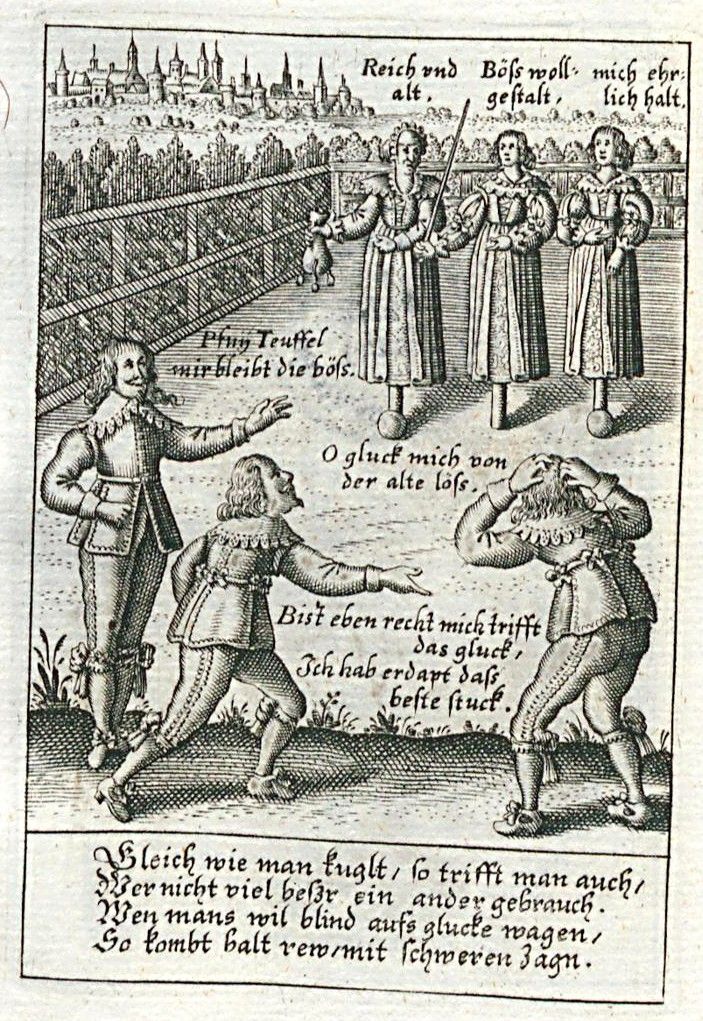
From its earliest appearance in the Pugillus Facetiarum (Strasbourg, 1608,1618) the motif was taken up by the album amicorum painters and endured as an independent engraved sheet into the 18C
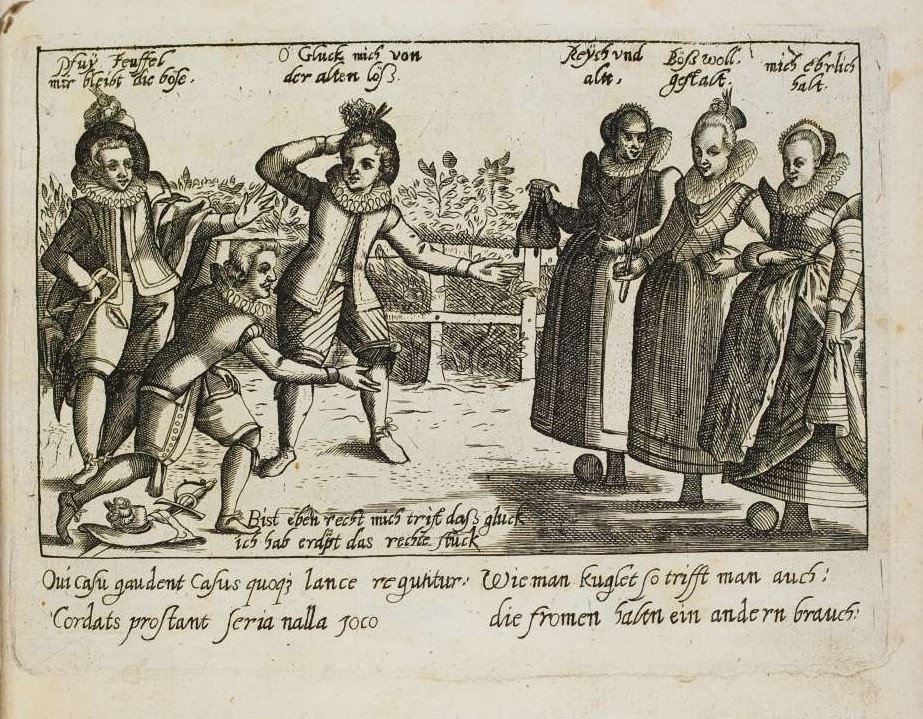
Three young men try their luck at bowling for the first prize woman. The ladies declare themselves (?) (from left to right): “Rich and old”, “Bad-tempered [but] shapely” (she brandishes a rod with which to beat her man!), and “I keep myself decent/honourable”. The young man who has just bowled is very pleased with the skittle he has hit: “you’re right, the luck was mine, I’ve hit the right one”. The man who bowled first holds his hand to his head and announces despairingly, “O save me from old ones!”, while the who has yet to bowl exclaims, “Devil take it! I’m left with the bad-tempered one!”
Unusually, we have two painted album copies which date from the year following the publication — one of them from an album kept by a young woman.
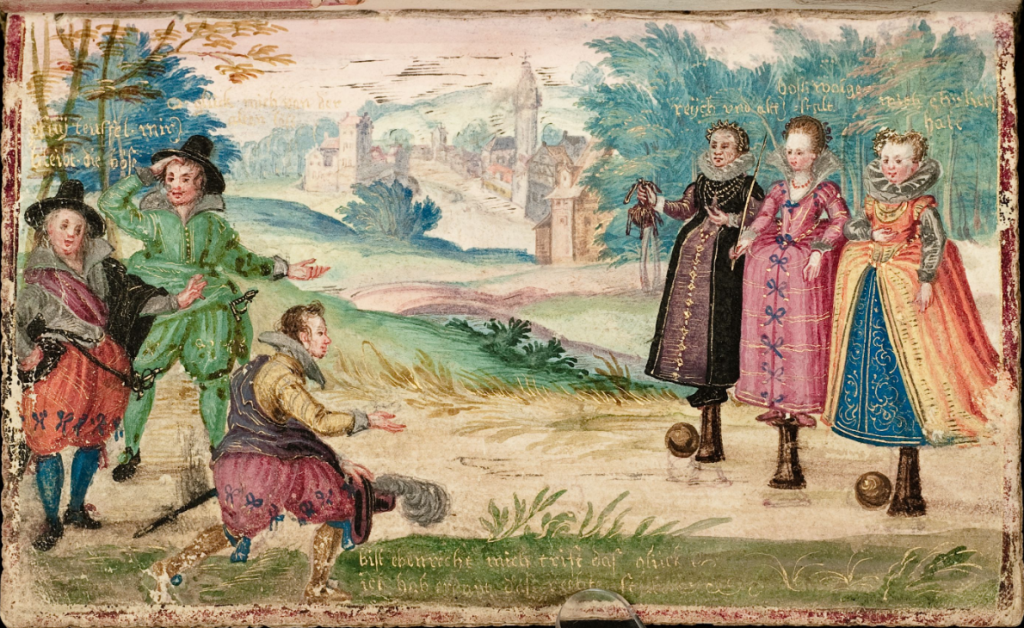
In the example below the painter has improved on the model by showing all three men as having bowled, and by numbering both bowlers and ‘skittles’ to make clear who has ‘won’ whom!
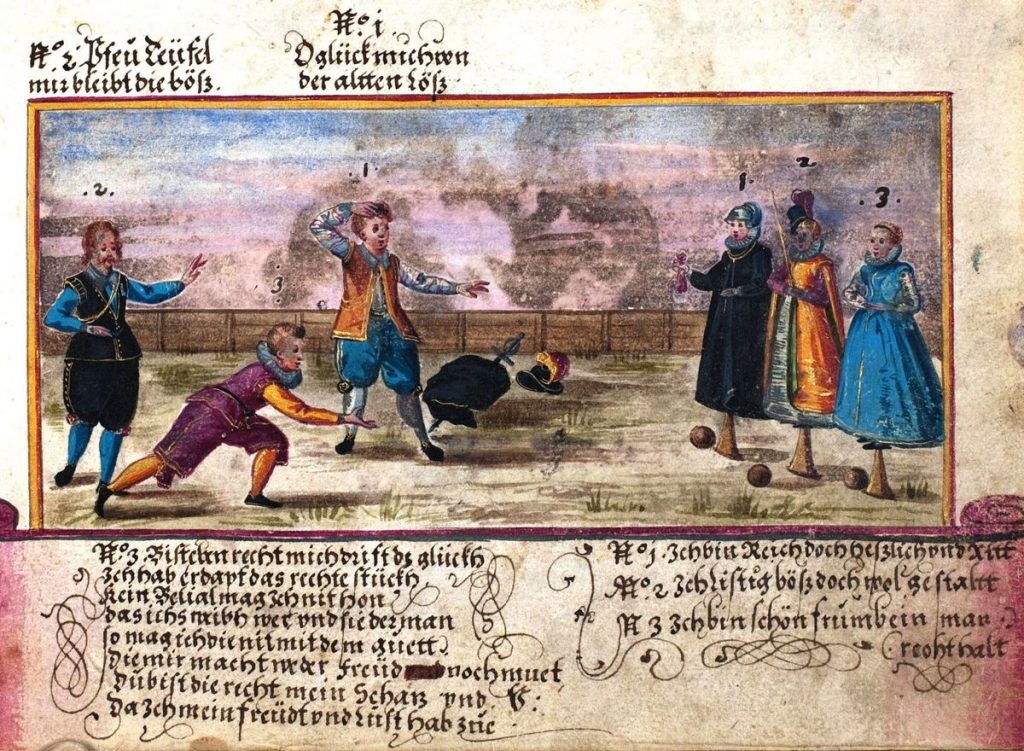
A signficantly altered version:
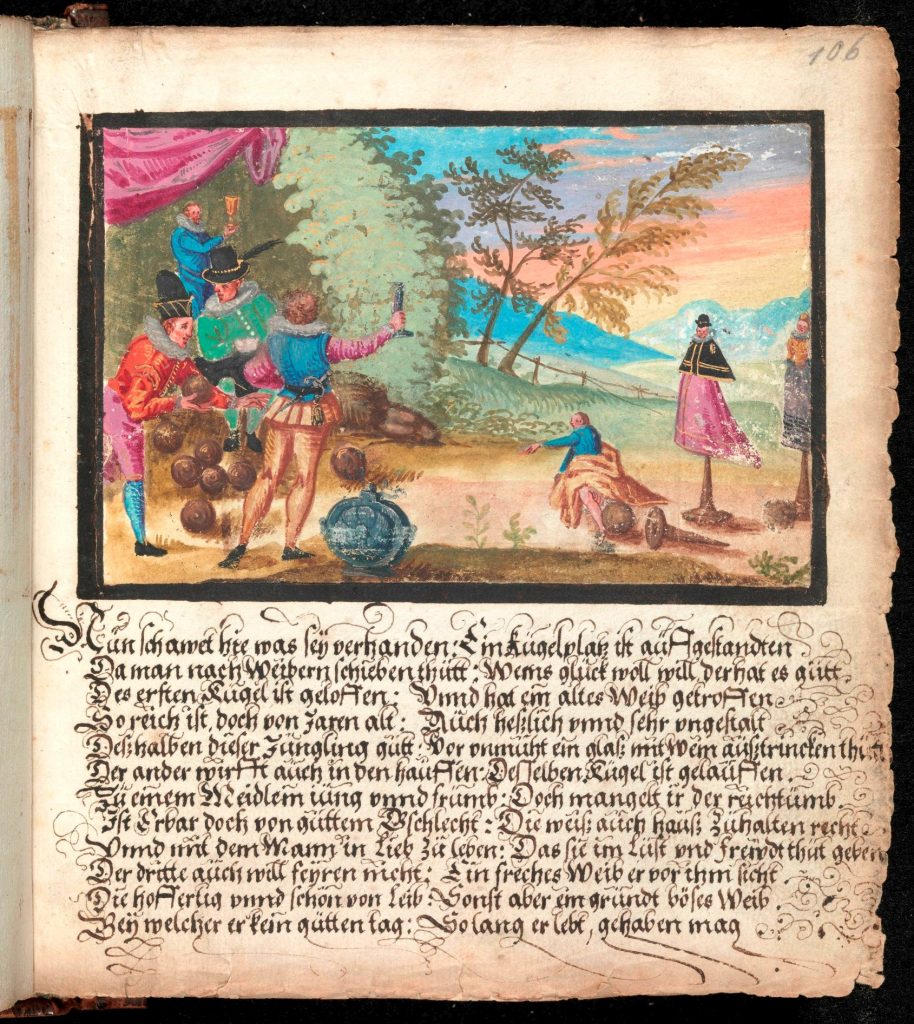
Msc. Hist. 176, f.106r.
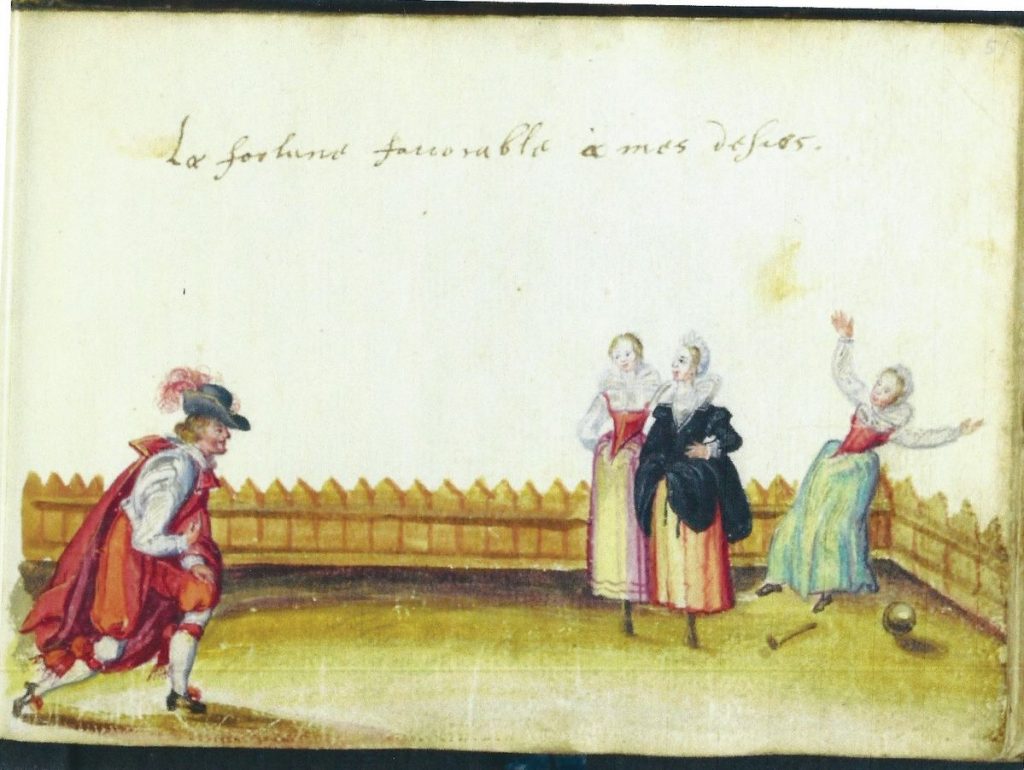
In Johann Hensel’s album there is just one bowler this time, but he seems to have hit the right ‘skittle’ as the French inscription above reads “Luck favourable to my desires”.
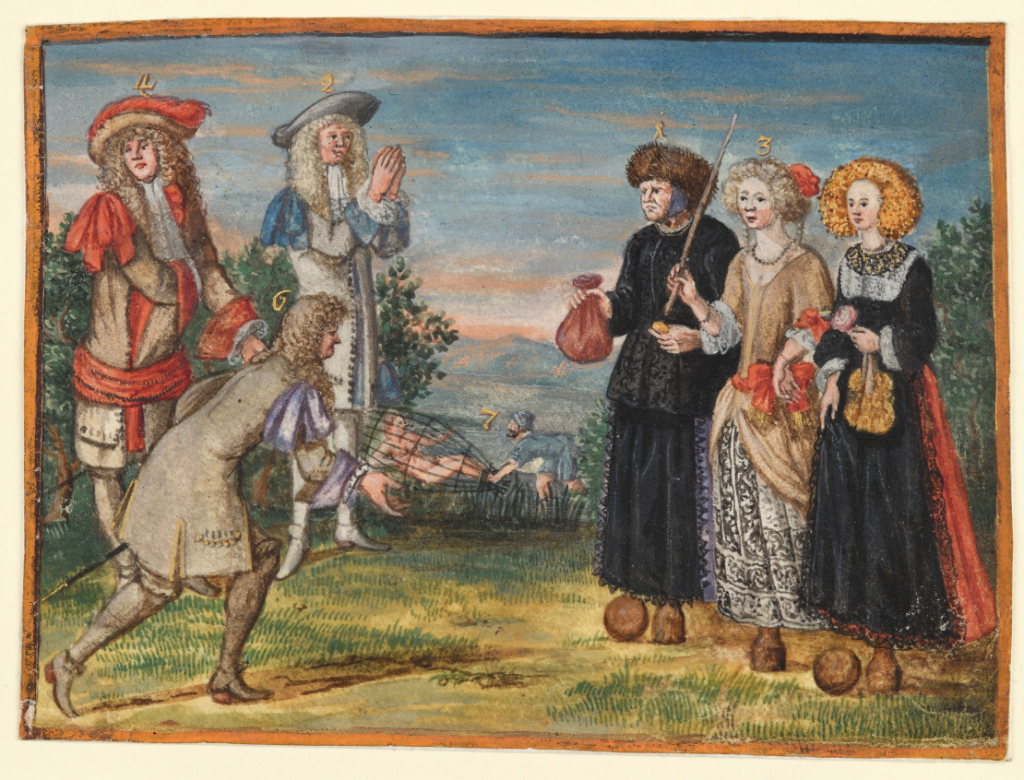
A late example, dated 1680, appears on an orphaned leaf preserved in Berlin. The fisherman with the naked woman in the lobster-pot/Reuse in the background is another Pugillus-derived motif — see my post,
https://albumamicorumear-e4qvahs764.live-website.com/woman-as-bait-in-eel-lobster-pot-ger-reuse-to-catch-men-fools/
Below the image are the title, Freyer-Kegel-Spiel [Wooers’ Skittle Game], and 8 lines of verse keyed to the numbers on the painting:
- Das ist zwar reich, doch alt gestalt:
- Hatt ich das Geld und sie war kalt.
- Die bellt und beisst, der Balg nur pralt:
- Sie macht mich vor dem Altar alt.
- Hier Tugend wohnt und Wohlgestalt:
- Da treff ich recht, Gott sie erhalt.
- Nun wohlgefischt. Ich hab’s erwischt.
later prints
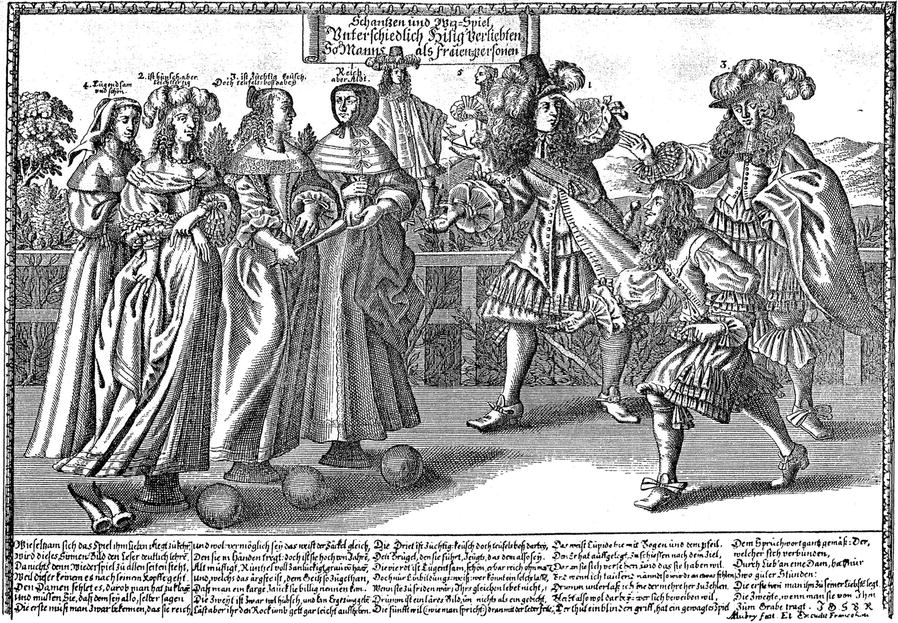
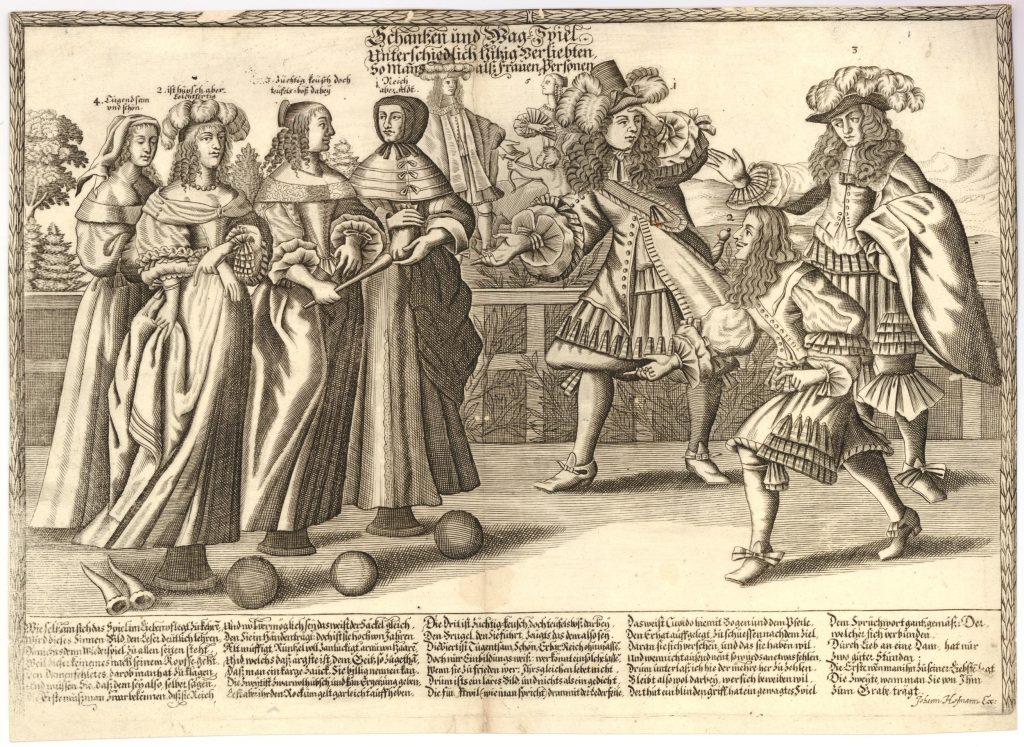
In this print below, engraved and published by Abraham Aubry in Frankfurt in the 1660s, the original composition is adapted and extended to include now 5 types of women.
A later copy was issued in Nurnberg by Johann Hofmann
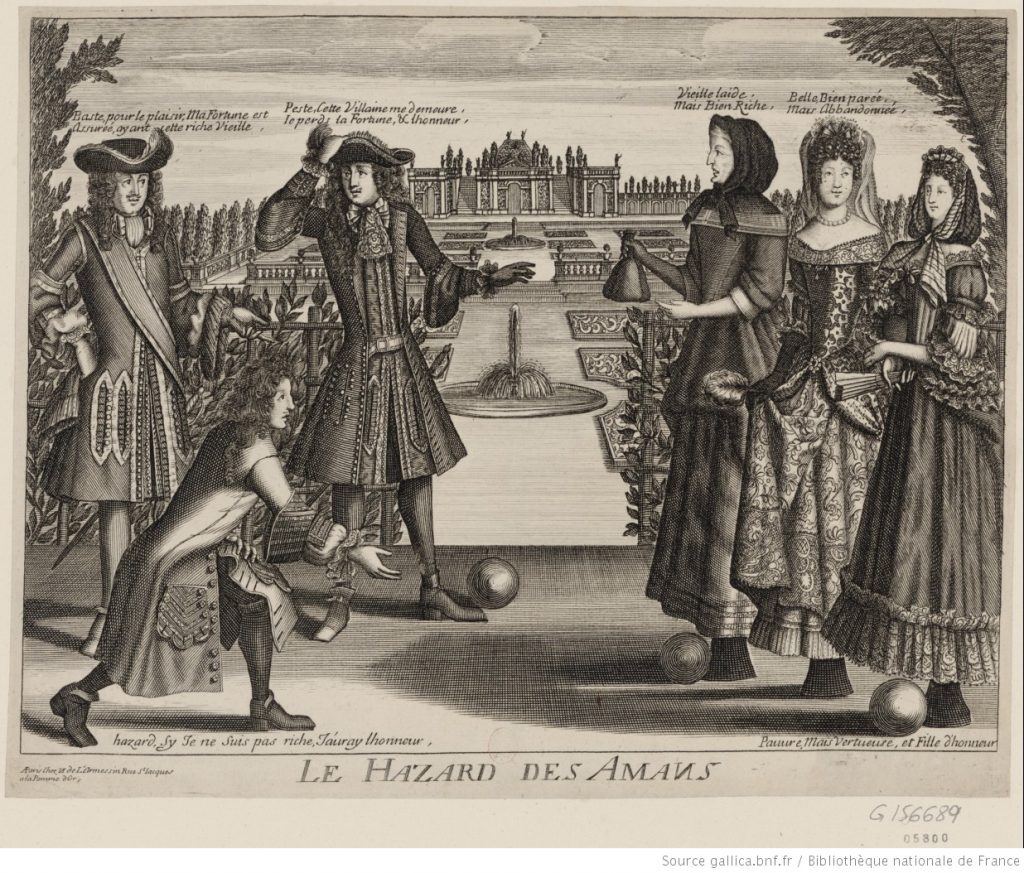
A French version (?1660s) is faithful to the original model, merely updating the costume. It is entitled Le Hazard des Amans and bears the imprint line: A Paris Chez N. L’Armessin Rue St Iacques a la Pomme d Or.
Leave a Reply