As we noticed in our Emblems in the Albums I post:
https://albumamicorumear-e4qvahs764.live-website.com/emblems-i-copied-alciato-et-al/ ,
the rise of the album-keeping habit co-incided more or less with the rise of the emblem-book, and it is a rare album in our period (c.1550-c.1650) that does not have at least one miniature copied from an emblem-book — not always labelled with the same motto, of course, and sometimes adapted, but original, home-made emblems [subject of a future post ] are rather less common.
The emblem-corpus by 1650 is already vast, numbering thousands of examples, and there will be many I have missed in my somewhat random trawls through the album-corpus, but having dealt previously with Alciato and Camerarius, I now move on to Jacobus à Bruck (Angermunt) — I first came acros him as one of the authors of the neo-Latin couplets captioning several plates in the Pugillus Facetiarum (Strasbourg 1608) and other print-books, only to realise later that he was himself the author of 2 emblem-books, Emblemata Moralia & Bellica (Strasbourg 1615) and Emblemata Politica (Strasbourg 1618) — both published by Jakob van der Heyden, publisher of the Pugillus.
Our first emblem from Bruck’s earlier book shows a lily growing from a heart within a thorn-fenced enclosure placed between a thistle and some other flower; here the motto reads Crescit vulnere virtus [Virtue grows from a wound]
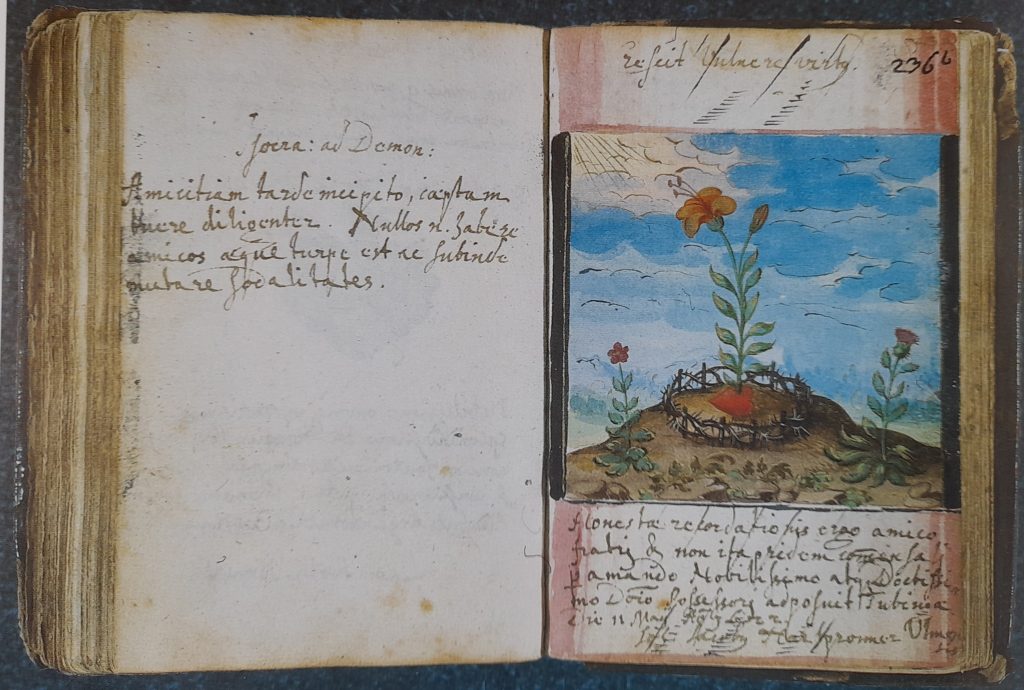
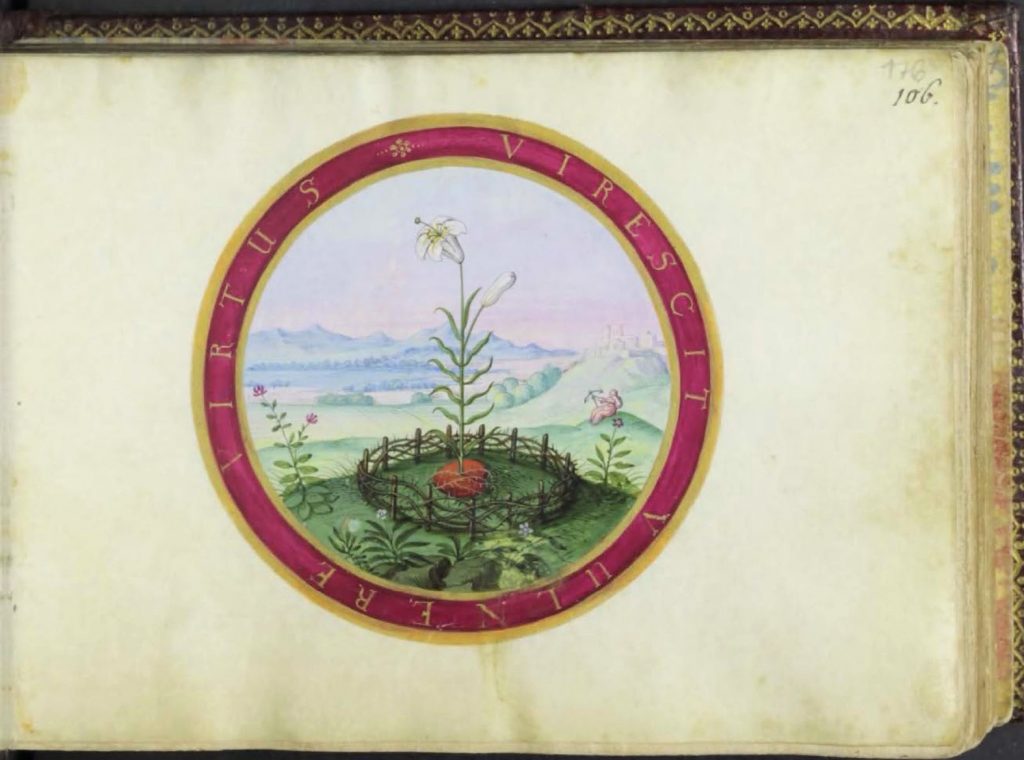
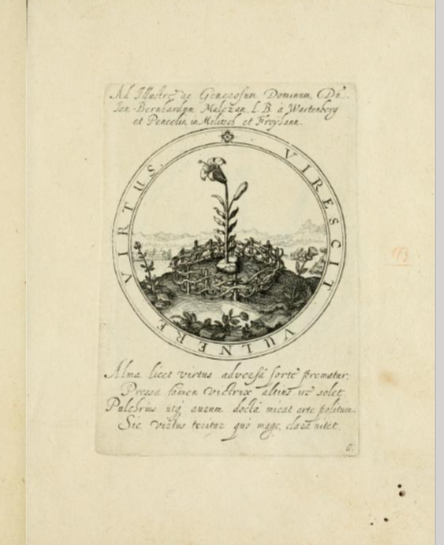
whereas the later Deublinger album copy gives the motto as in the emblem-book source, VIRESCIT VULNERE VIRTUS [Virtue flourishes from a wound] and is a close copy of the engraving by Jakob van der Heyden [Henkel/Schone attribution].
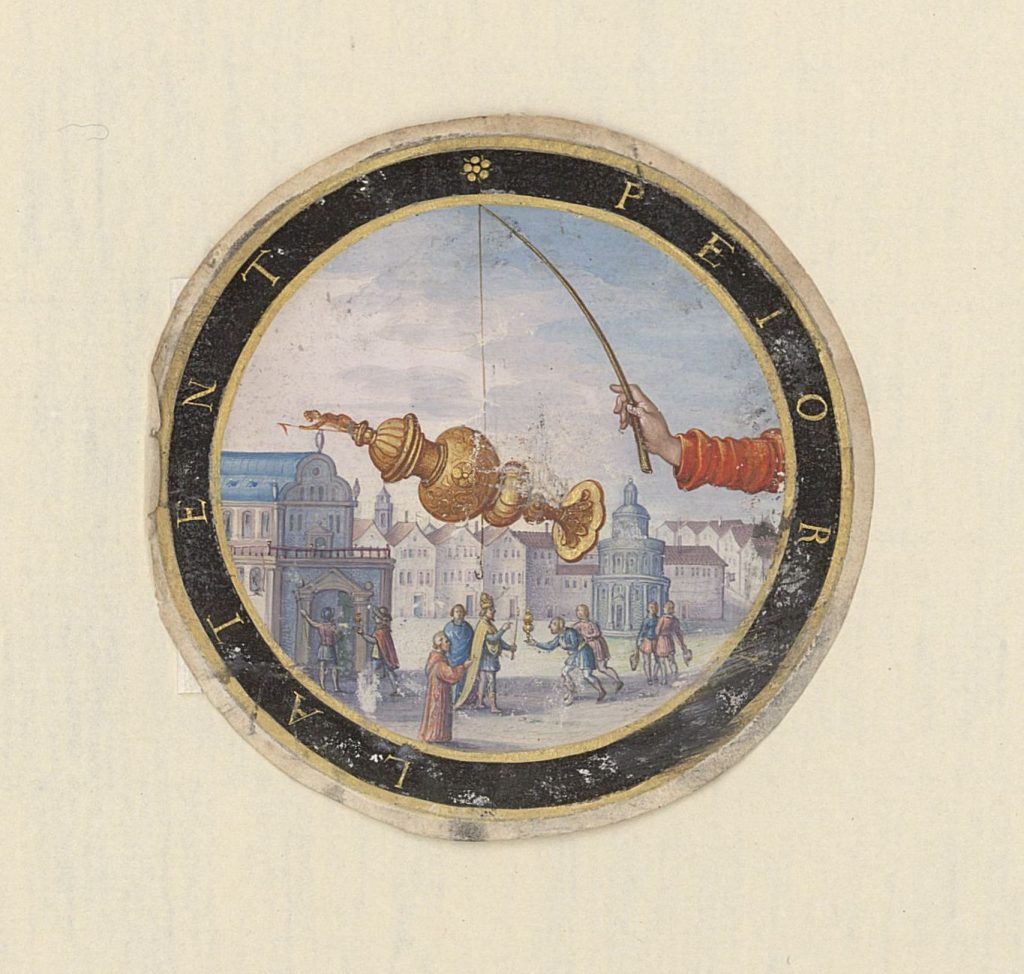
PEIORA LATENT [worse things lie hidden] in the album of Johann Jacob Gastpar is similarly a close copy of the emblem in Bruck’s Emblemata Moralia et Bellica, the implication of the motto being that such a gift is really a bribe, the bait, which if one accepts, will lead to something bad.
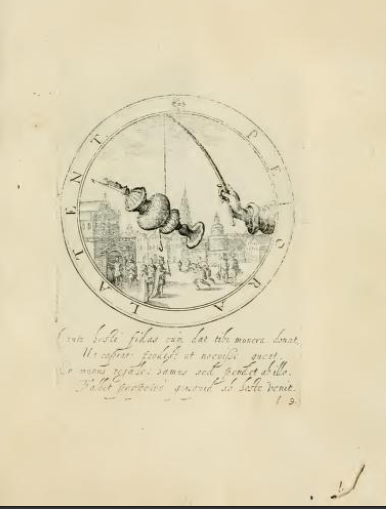
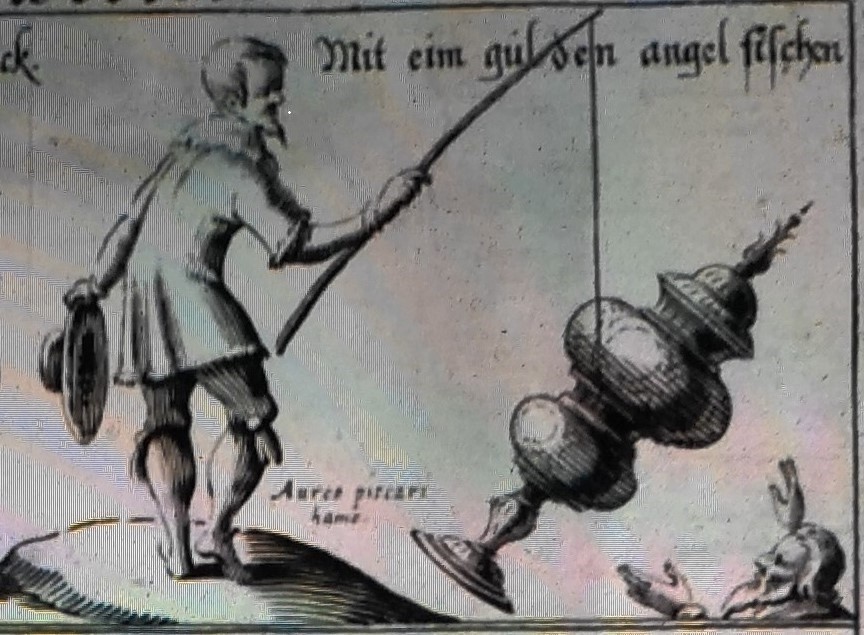
The device was too good not to be repeated elsewhere — below, as one of the 16 small illustrations on a broadside illustrating German proverbs entitled Teutsche Sprichworter and thought to have been published c.1640. The proverb is given in german as Mit ein gulden Angel fischen [to fish with a golden hook] and in Latin translation too — Aureo piscari hamo, but this had already been the subject of one of Erasmus’s Adagia [2.2.60] a century earlier.
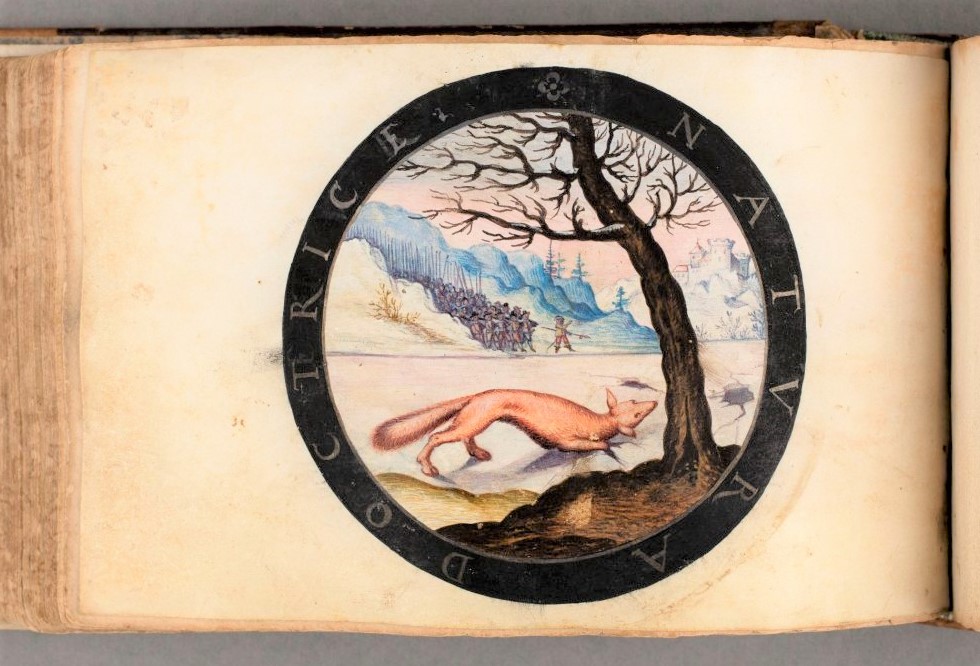
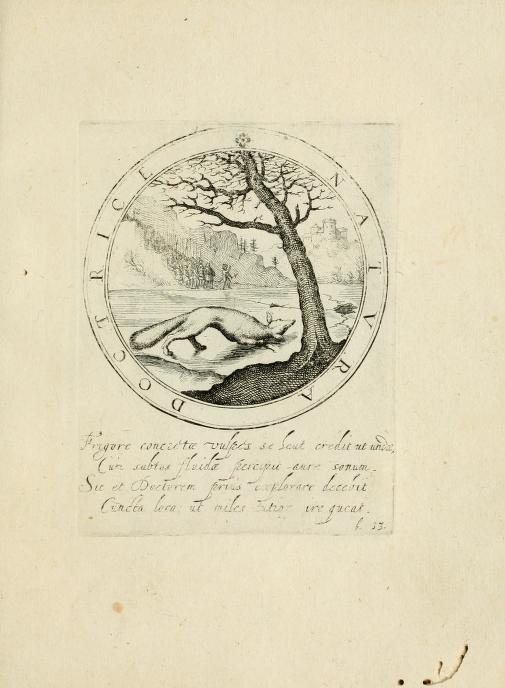
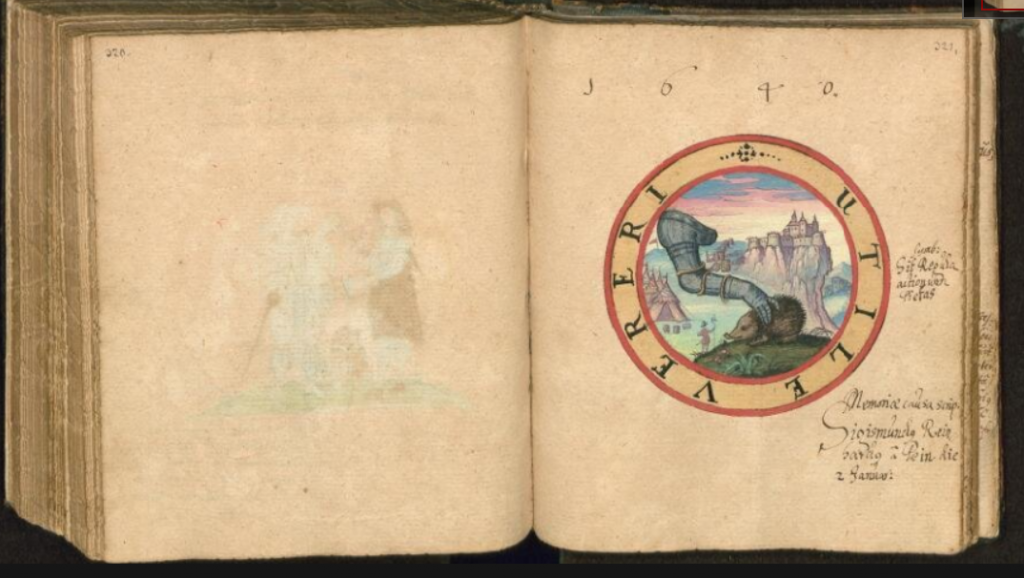
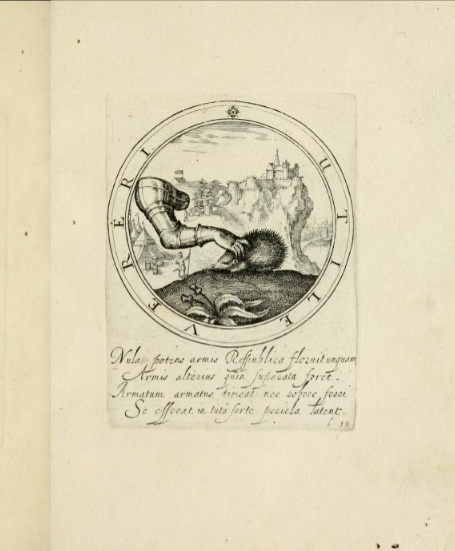

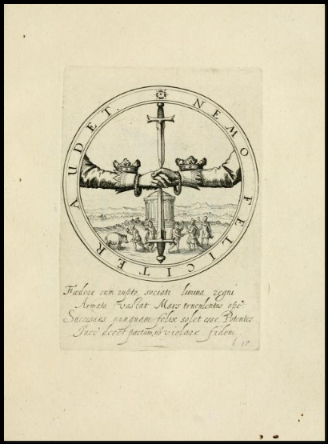
Cod. hist. 8° 270, f.240r.
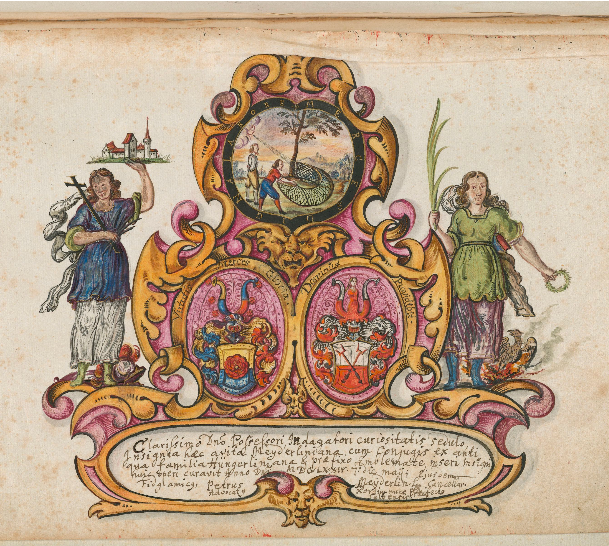
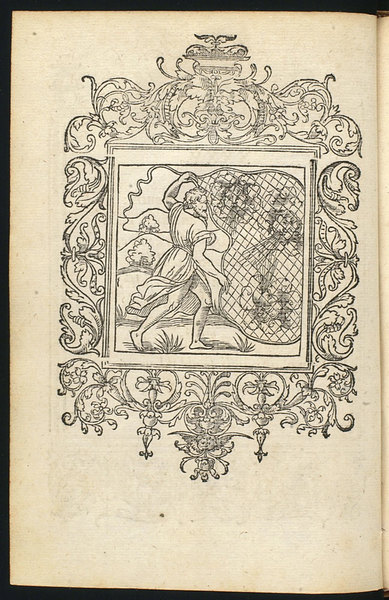
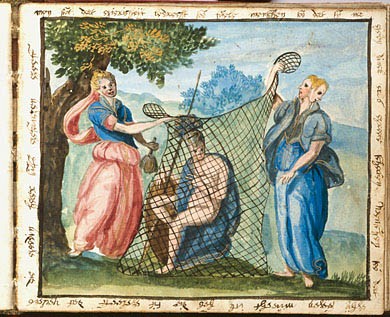
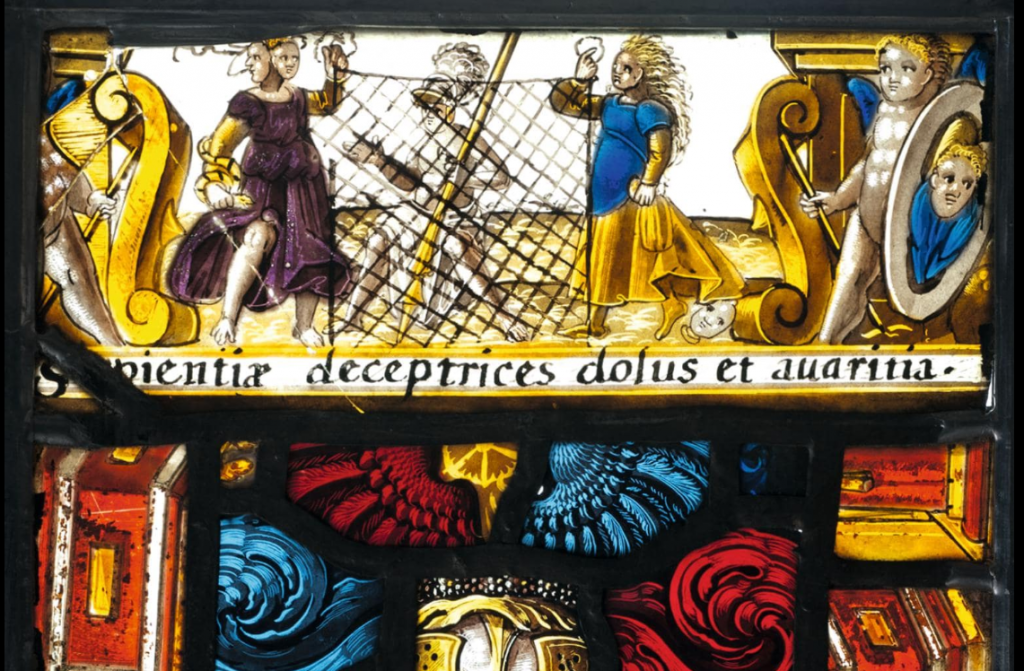
Next — one of my favourite adynata — the proverbially foolish notion of catching the wind in a net! It is as old as Plutarch, discussed by Erasmus [Adagia 1.4.63] and is one of the follies the Officers of the Quintessence are indulging in in Rabelais’s Cinquieme Livre. TPMA s.v. WIND 10.2 provides no English examples, but it is at least as old as Wyatt’s 1527 sonnet, “Whoso list to hunt I know where is an hind” which includes the line “Sithens in a net I seek to hold the wind” — an image not in his Petrarchan original.
Here the album-painter has clearly copied the emblem in Bruck’s Emblemata Politica (Strasbourg 1618) with its ironic motto MERCES DIGNA LABORE [the reward is worthy of the labour]

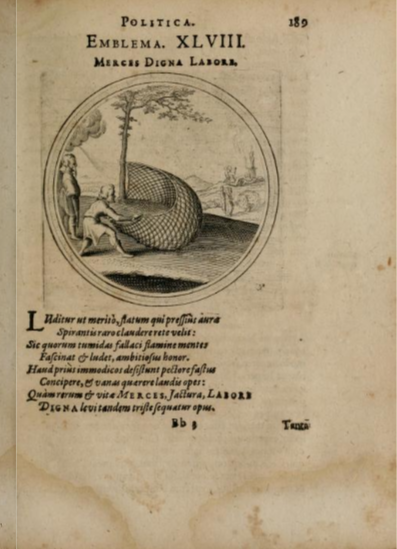
Though it seems likely that Bruck was familiar with the design in the earliest post-Alciato emblem-book, Guillaume de la Perrière’s Theatre des bons engins, published in Paris in 1539:
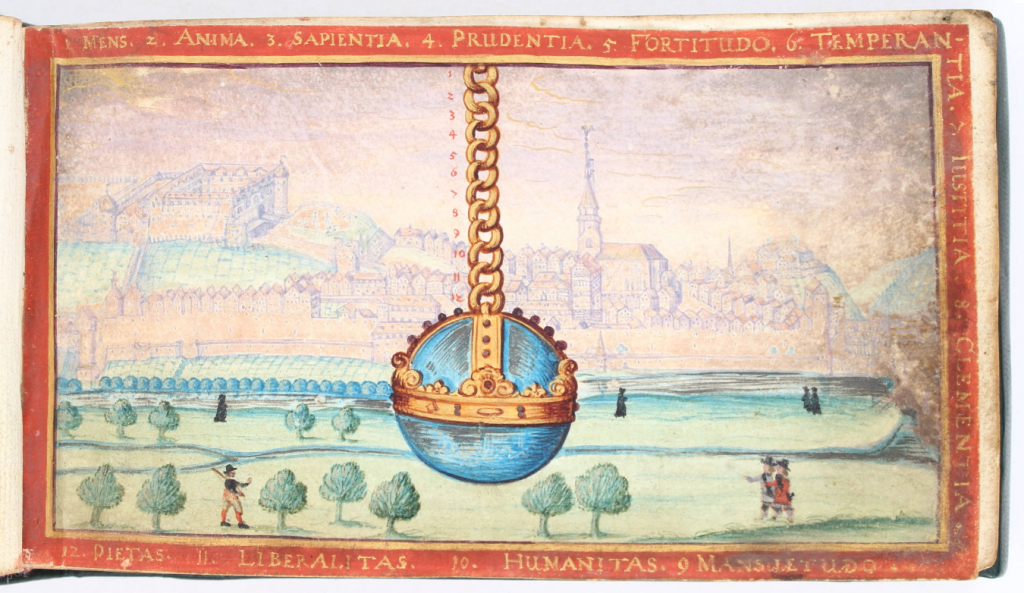
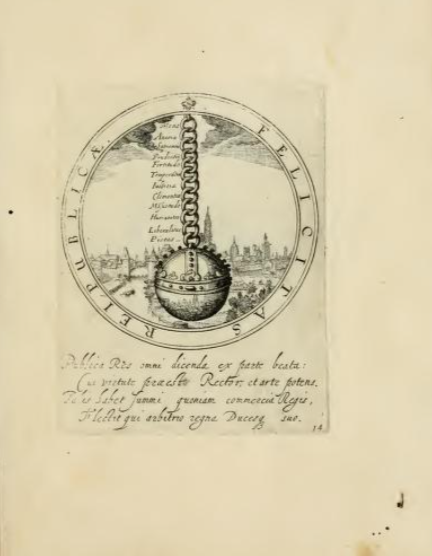

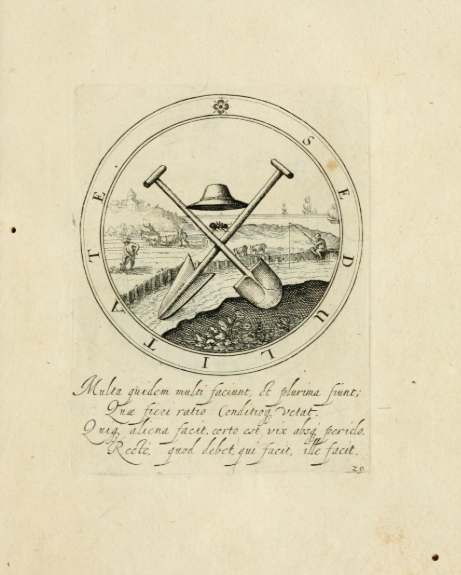

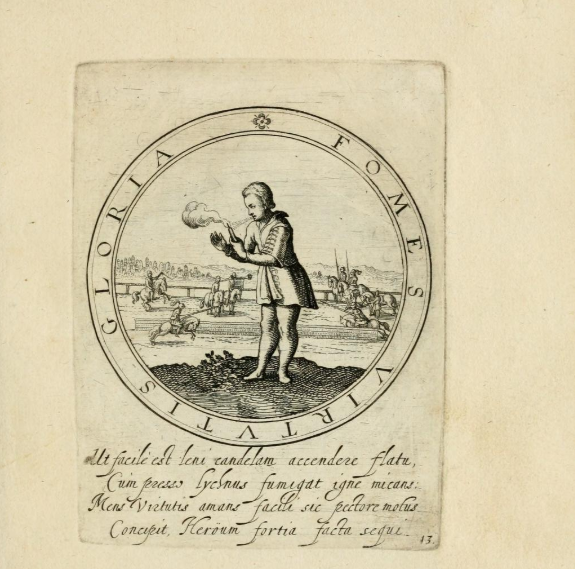
Haecht’s Mikrokosmos Parvvs Mvndvs Antwerp 1579, [German trans., Speculum virtutum & vitiorum Heller Tugend vnd Laster Spiegel Frankfurt 1619]
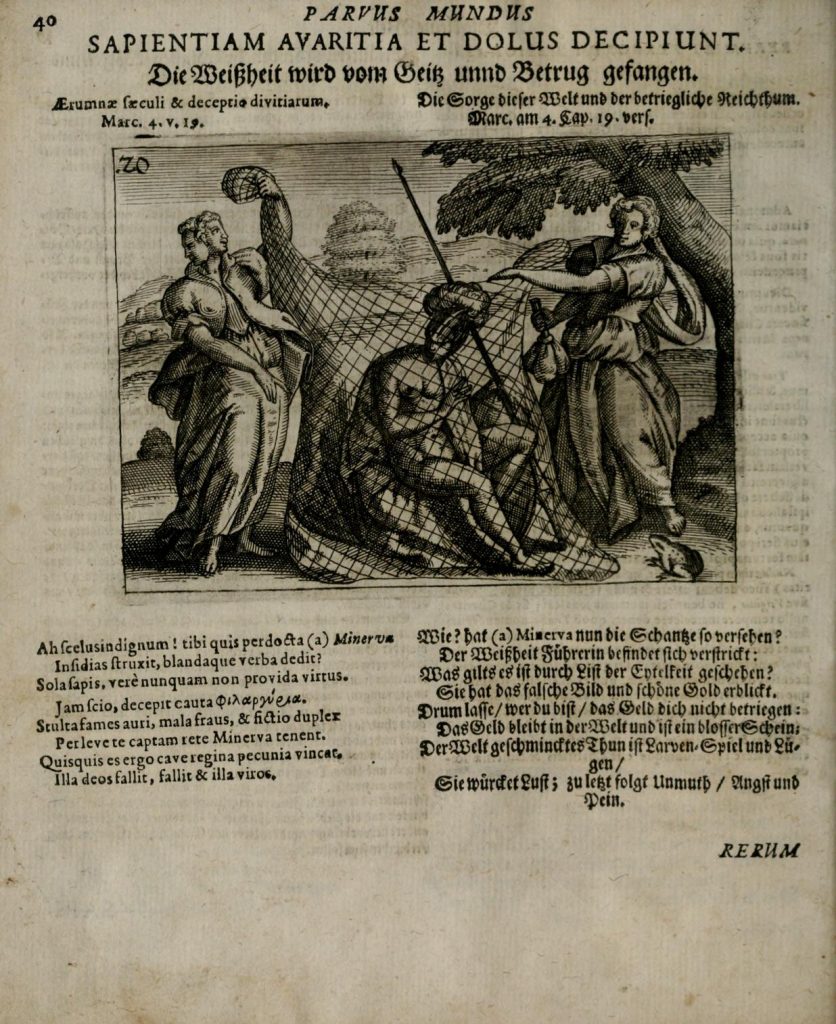
In another medium the emblem was painted on a 17C glass pane, now fragmentary:
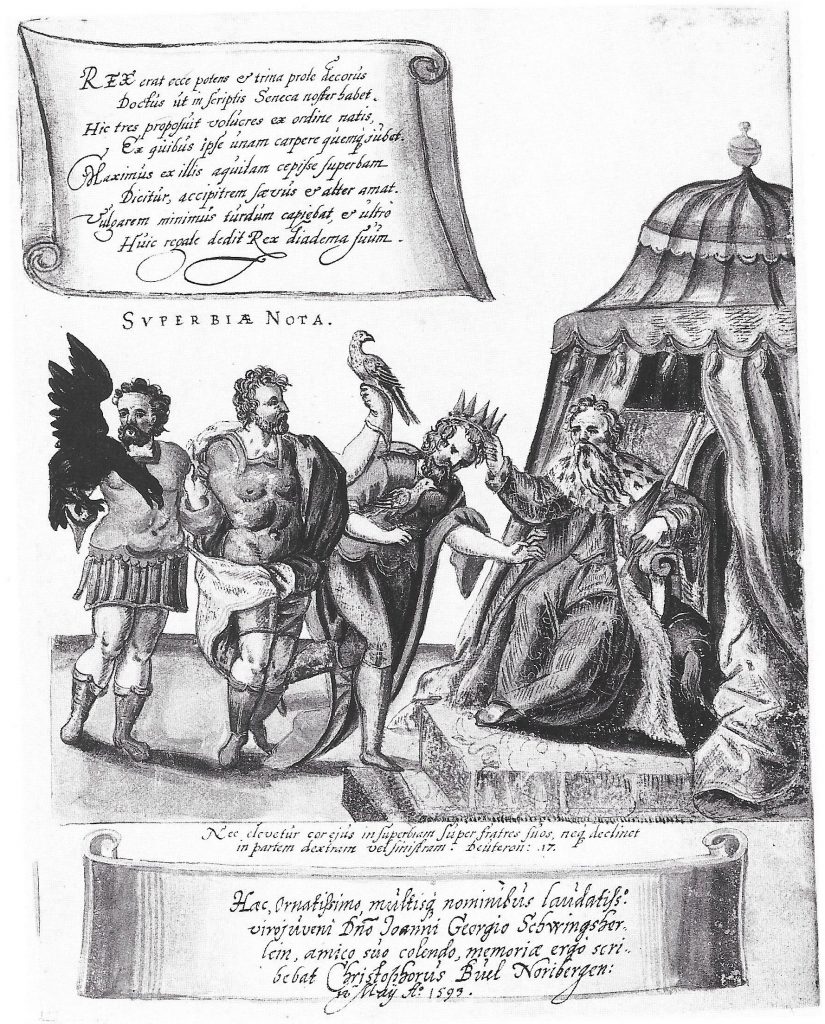
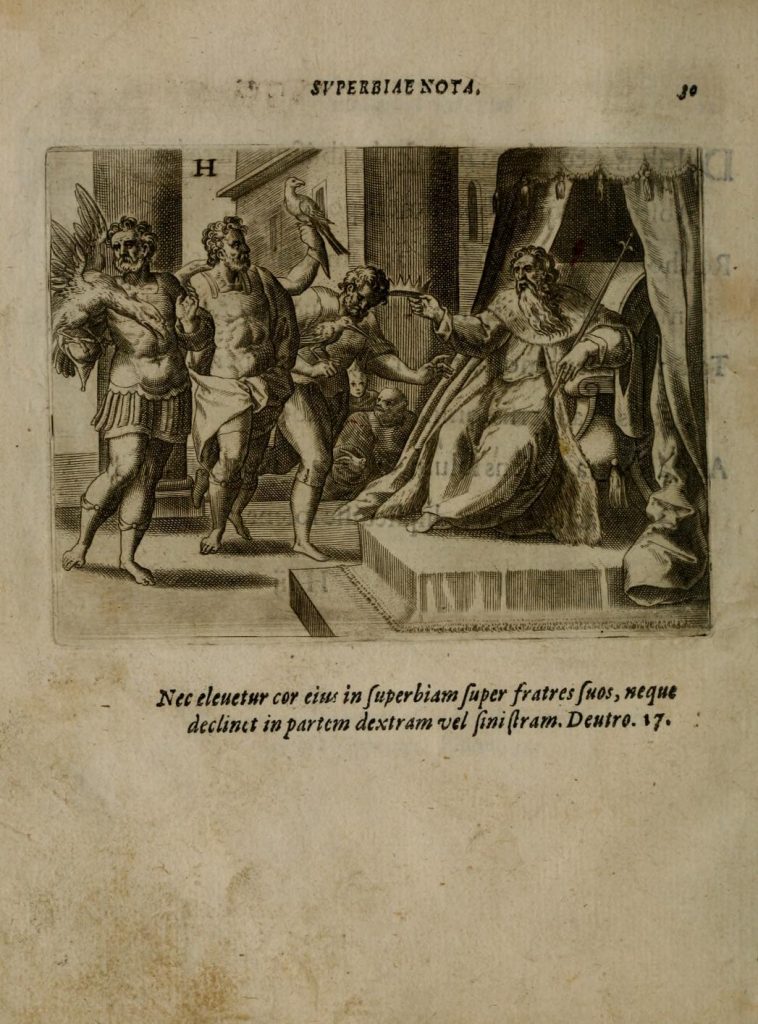
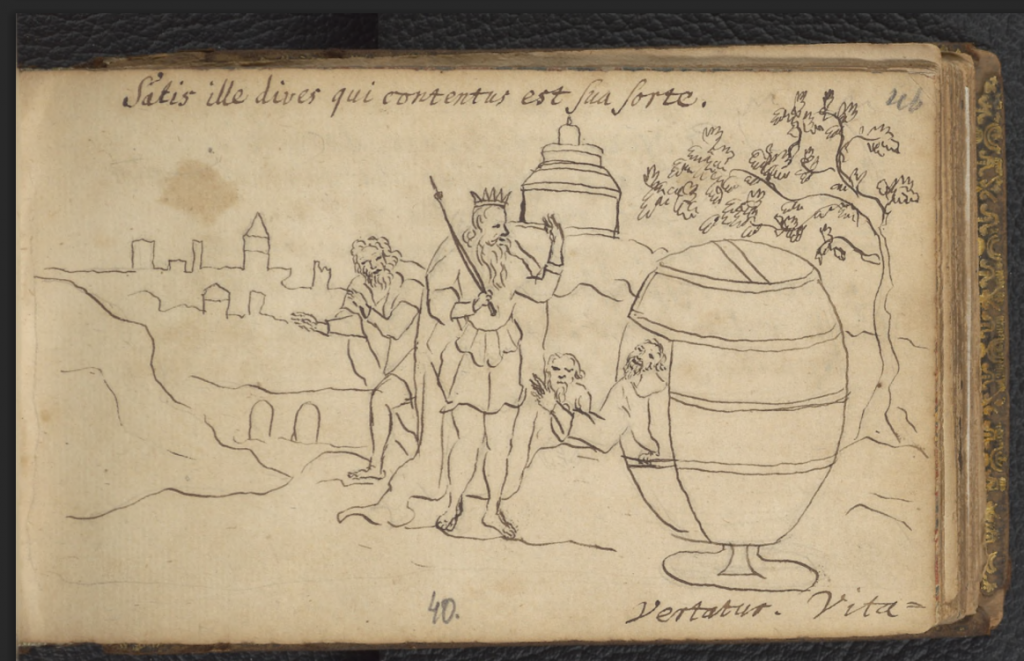
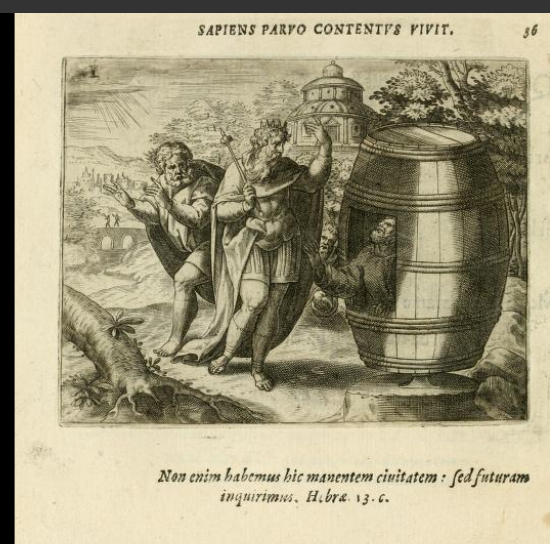
The album of Jacob Freund, now in Warsaw, with entries dated 1614-, contains a dozen or so sketches evidently derived from the Mikrokosmos, but as I have already posted many of these earlier [Search Freund], I content myself with just this one, showing Diogenes in his barrel
Paradin
Paradin’s Devises heroiques was first published in Lyon in 1551, reproducing 118 impresa-like devices, with a second edition six years later, bringing the total to 182. From 1561, with publication in Antwerp by Plantin, a further 37 devices by Simeoni were added.
One of the most popular devices from Paradin in the albums is the touchstone against which a gold coin is scratched, the motto SIC SPECTANDA FIDES [thus loyalty is to be tested].The perimeter legend on the coin in the original woodcut of 1551 (below) reads HENRICV DEI GRATIA FRANCOR REX (i.e. Henri II, reigned 1519-1559); in the Glandius album the legend is the clearly unhistorical and, indeed, ’emblematic’ PER ME FIUNT OMNIA [through me — i.e. money — all things are done], but in the later Medinger album, it has reverted to the more authentic HENRICVS IIII REX FRANC (reigned 1589-1610), whose coinage was doubtless still in circulation in 1620.
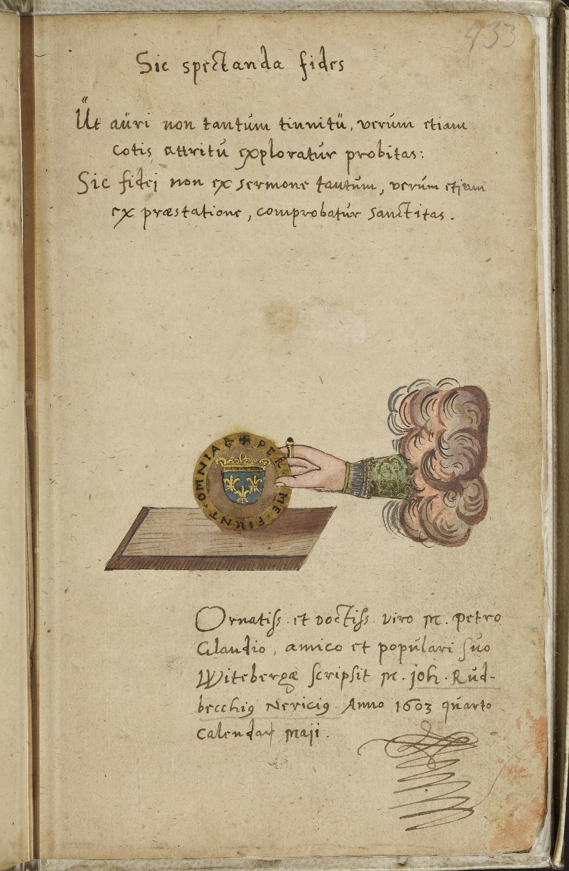

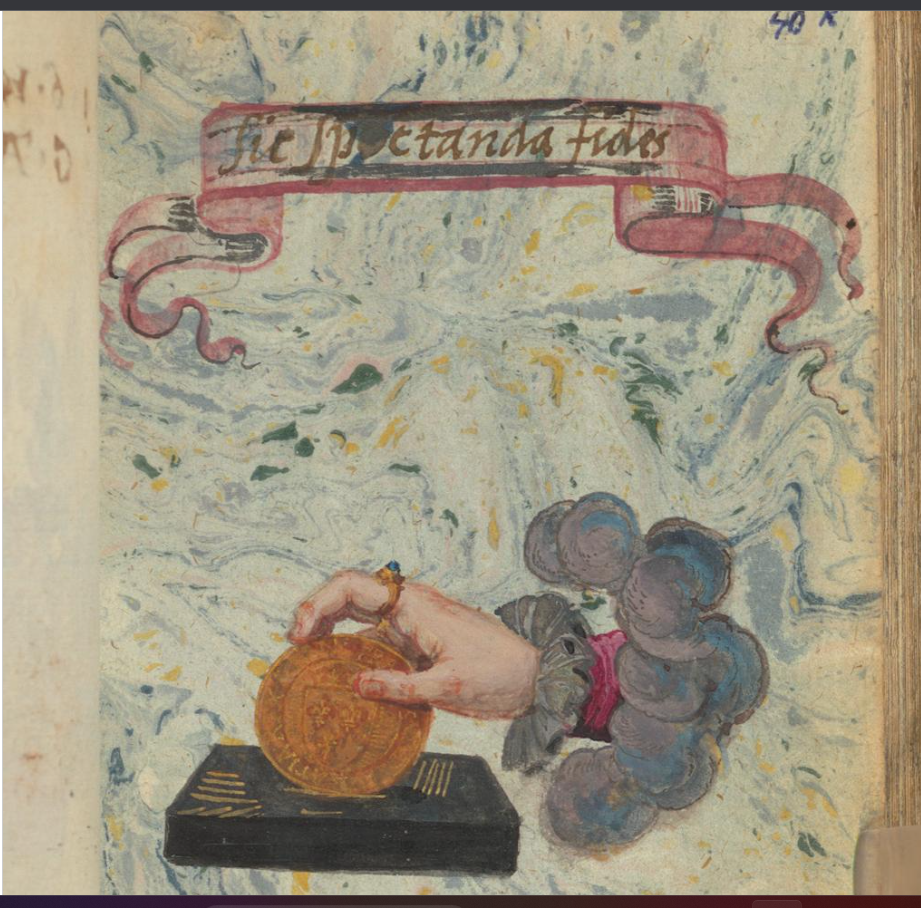
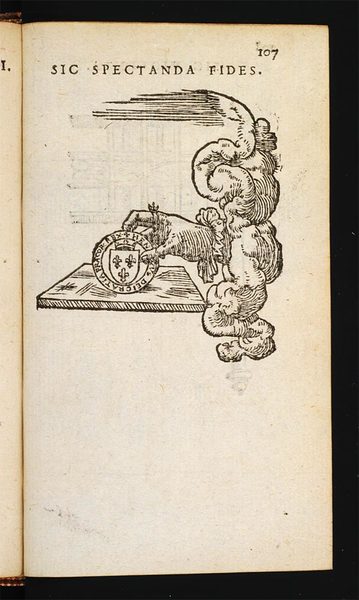
I’m assuming the coin shown on the original emblem (above) is gold — as so coloured in the album miniatures — the only Henricus at issue in the 1550s is Henri II (reigned 1519-1559) and below is a photograph of a gold écu current during the reign —
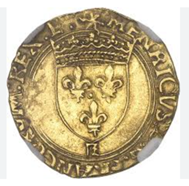
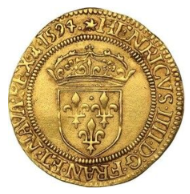
From which we can see that the block-cutter has engraved the arms correctly, 3 fleurs-de-lys crowned, but his HENRICV DEI GRATIA FRANCOR REX should actually have read HENRICVS D.G. FRANCORVM REX. The Medinger artist has updated his miniature so that the coin legend refers to the most recent Henri, HENRICVS IIII REX FRANC (reigned 1589-1610), but simplified the legend somewhat — here is the actual écu of Henri IV, which in fact, reads HENRICVS IIII D.G. FRAN. ET NAVA. REX
Later uses of Paradin’s emblem continue to update the name of the king — and this fact reminds me of a rather more important point, and that is that we [I think I mean I !] tend to assume the album-painter is working from the first edition of the emblem-book, forgetting that in many cases the book in question may have been reprinted several times, or the emblem copied in the books of other authors, or — as below — sampled in some subsequent collection.
Geoffrey Whitney’s collection — usually considered the first English emblem-book, though the majority of emblems are copied from other books, and the work was published in Leiden (in 1586) — is openly entitled A Choice of Emblemes, and one of those he chose was our present motif from Paradin’s book:
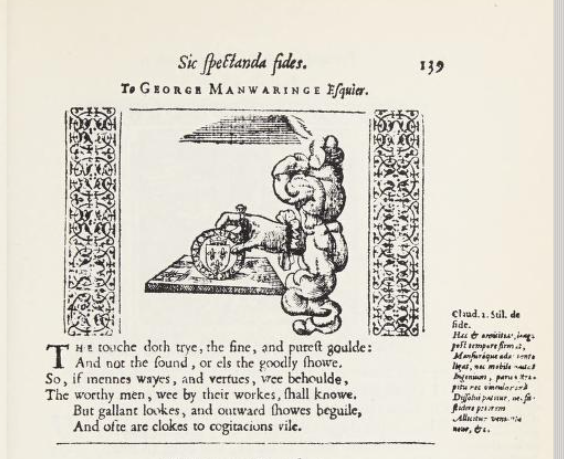
Probably via Whitney’s book, Shakespeare included this very emblem as one of the imprese borne on the knights’ shields in Pericles, Act II, scene ii:
The fifth, an hand environed with clouds, Holding out gold that’s by the touchstone tried;The motto thus, ‘Sic spectanda fides.’
the coin that never was…

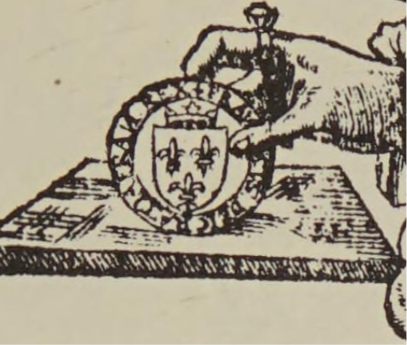
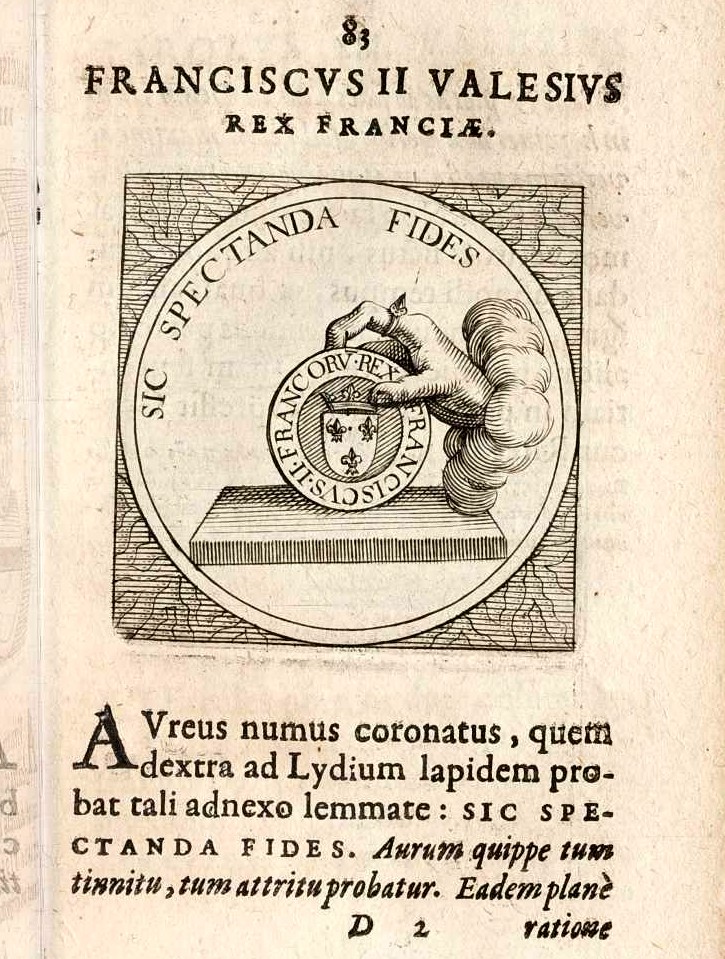
When the printing of Paradin’s Devises moved to Plantin’s press in Antwerp in 1561 the legend on the coin was updated to show the name of the new King of France, Francois II, i.e. FRANCISCVS DEI GRATIA FRAN REX (see detail above). Unfortunately, he died on 5th December 1560, after only 17 months on the throne — too soon, it appears, for the mints to have produced a new coinage so that no coins are known bearing his name, those of his predecessor/father Henri II being still current.
Sixty years later the German publisher and engraver, Lucas Jennis, had less excuse for reproducing this imaginary coin in his emblem anthology, Selectorum symbolum, issued in Frankfurt in 1619 (below) — nor did he indicate the trial marks left on the touchstone by scraping the coin, as all the other images do!
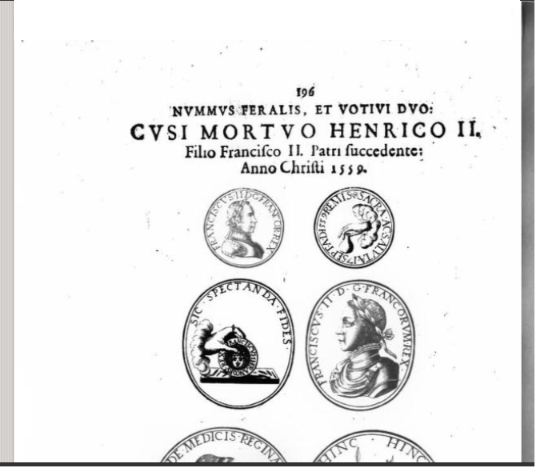
and the imaginary coin appears again on the reverse of an alleged medal of Francois, reproduced in Pierre Aubry, Sylloge numismatum elegantiorum published in Strasbourg in 1620 (below):
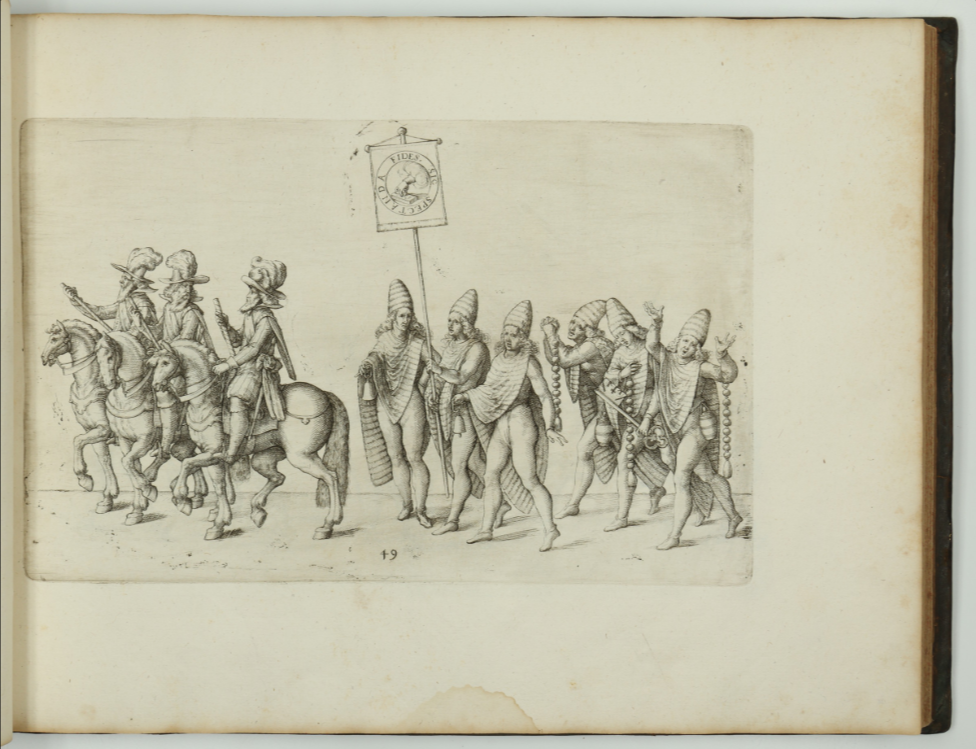
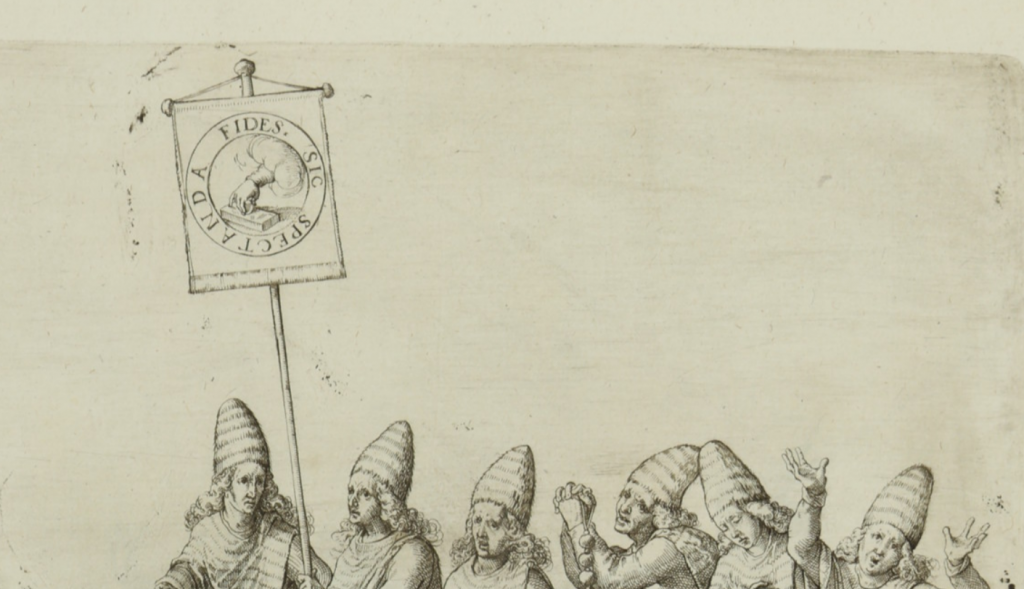
The emblem appeared too on a banner held by one of the ?Incas in a procession staged in Stuttgart in 1617 as part of a double celebration of the baptism of Prince Ulrich, son of Duke John Frederick of Württemberg, and the wedding festivities for his brother Louis Frederick with Magdalena Elizabeth of Hesse. The drawings for the procession plates are attributed to the Dutch-born artist Esaias van Hulsen while several of the engravings are signed by Friedrich Brentel of Strasbourg and Matthias Merian, but van Hulsen probably also participated in the engraving:
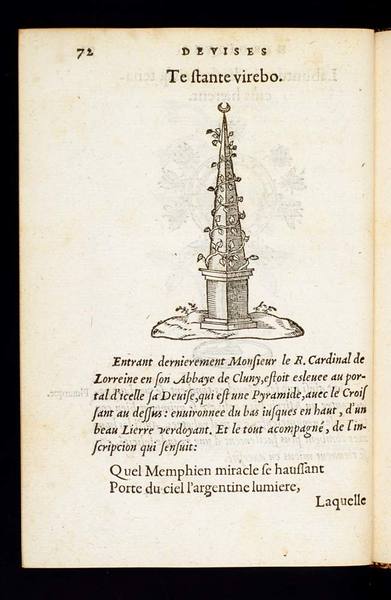
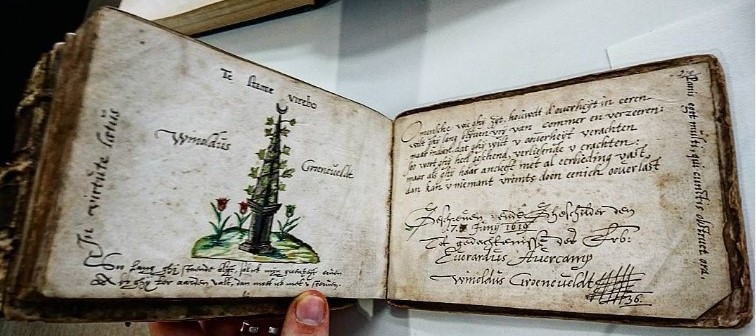
The emblem of an obelisk around which ivy twines first appears in Paradin’s Devises with the motto TE STANTE VIREBO [while you stand I shall flourish]. It was to become very popular – not least amongst other emblem-book authors; Junius copied it in 1565 (though with different motto), Whitney in 1586, Camerarius in 1590, Rollenhagen in 1613 and — with the addition of a flying Cupid — twice in books by Daniel Heintz in 1601 and 1615.
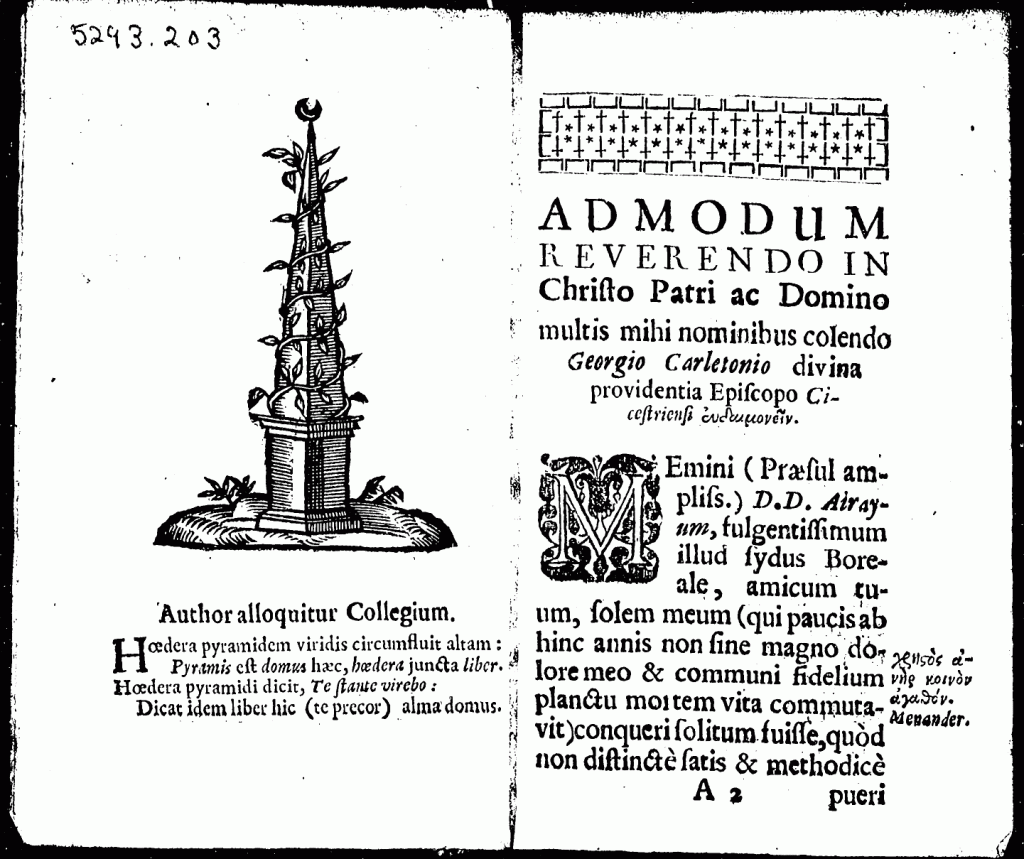
The third edition of Thomas Vicars’ Cheiragogia (1628), has, opposite the dedication-page, a woodcut illustration of the ivy-clad obelisk above a quatrain entitled, Author alloquitur Collegium.
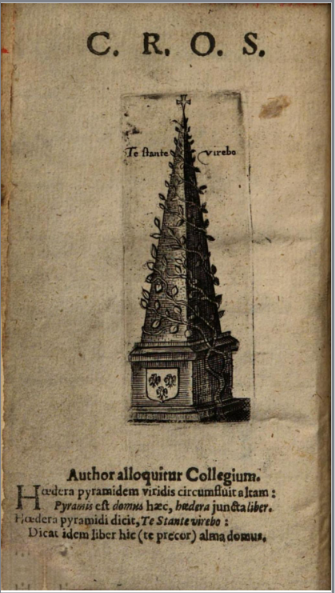
In a different setting of the same edition, however, the ivy-clad obelisk now appears as an engraving opposite the title-page, labelled with the motto, but topped by a cross, substitued for Paradin’s crescent, and with a shield bearing the device of three eagles on its base, the first with a star on its breast — the arms of Queen’s College, Oxford. As Vicars styles himself Carleolensis, nuper Collegii Reginensis apud Oxonienses Socio [of Carlisle, recently member of Queen’s College, Oxford] the large initials C.R.O.S. above the plate must therefore stand for Collegii Reginensis Oxoniensis Socius. Vicars was familiar with at least three ‘English’ engravers, Willem de Passe, Frederick van Hulsen, and Robert Vaughan, so that it may well be that he commissioned the emblematic engraving himself.
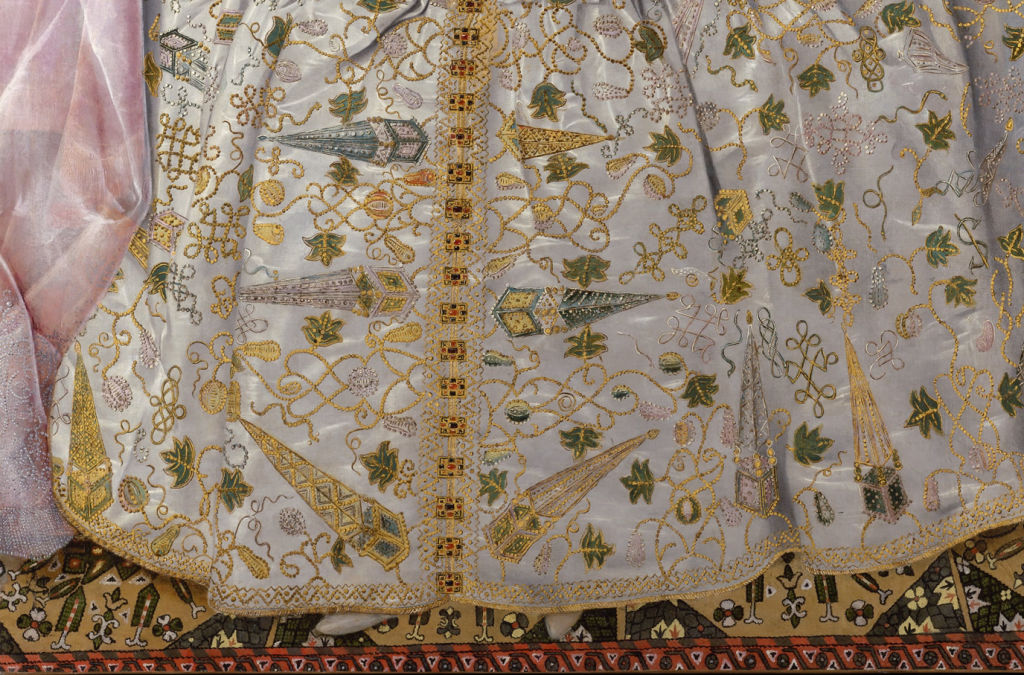
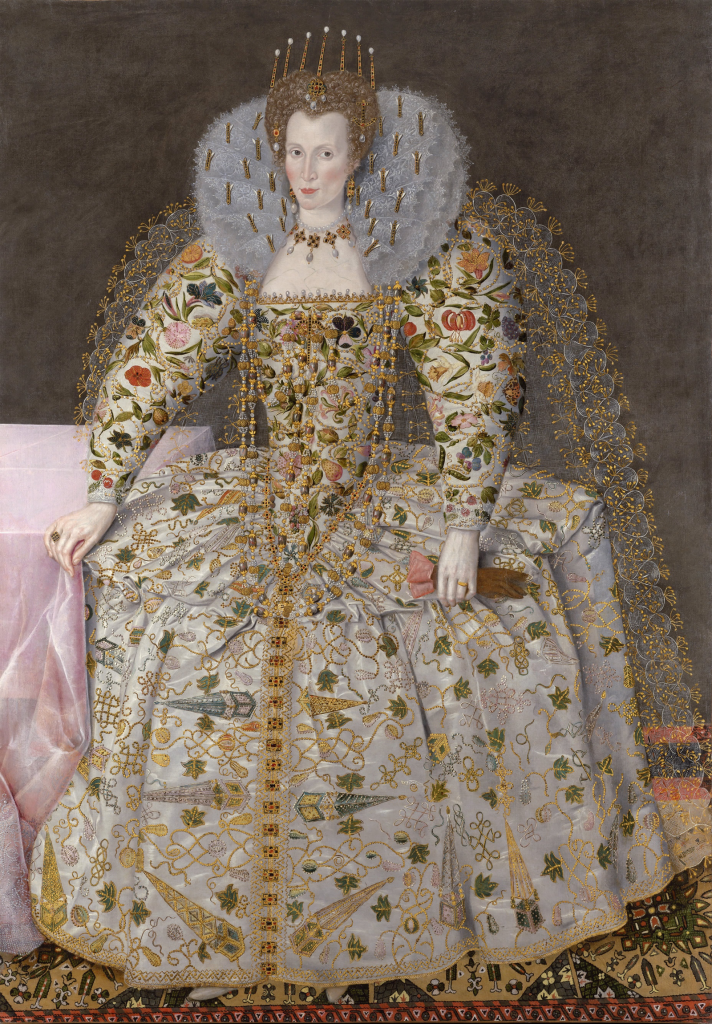
In 1988 Janet Arnold [Queen Elizabeth’s Wardrobe Unlock’d ] suggested a further proof of English familiarity with this emblem, in the shape of the obelisks decorating the petticoat of a late Elizabethan lady, thought to be Catherine Howard, Countess of Nottingham (d.1603) and attributed to Robert Peake the Elder and studio.
Rollenhagen
Gabriel Rollenhagen compiled two centuries of emblems, illustrated by Crispijn de Passe the Elder, and published in Arnhem in 1611 and 1613.
The fool emblem reproduced by the painter in the Firnhaber album has already appeared on the Fools post here:
https://albumamicorumear-e4qvahs764.live-website.com/the-fool-in-the-albums/
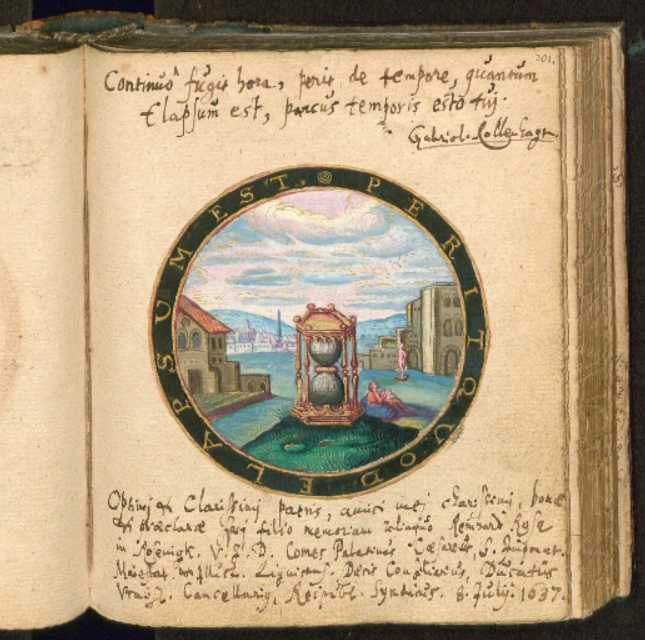
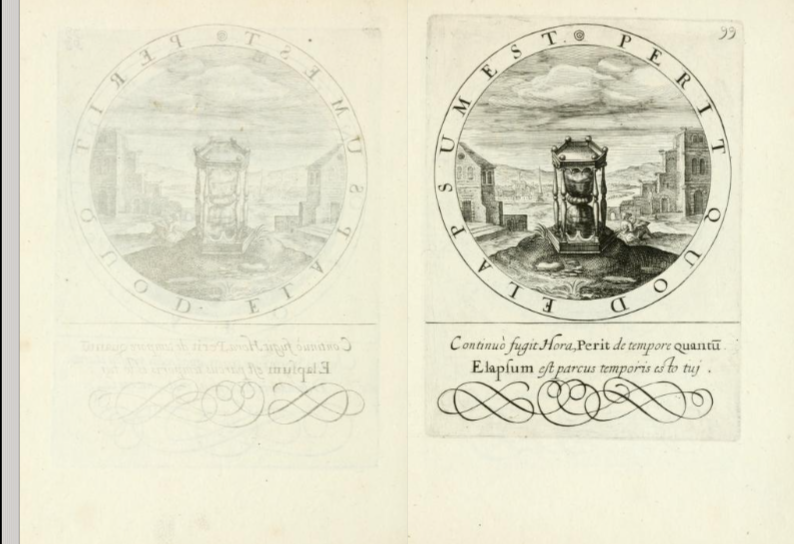
The painter in Esaias Maior’s album has made a close copy of Rollenhagen’s hourglass emblem, PERIT QUOD ELAPSUM EST [What has slipped away is lost]
This emblem below was apparently painted for the Kunitz family of Leipzig by Andreas Bretschneider (d.1632) — if so, it hardly rates as one of his best works
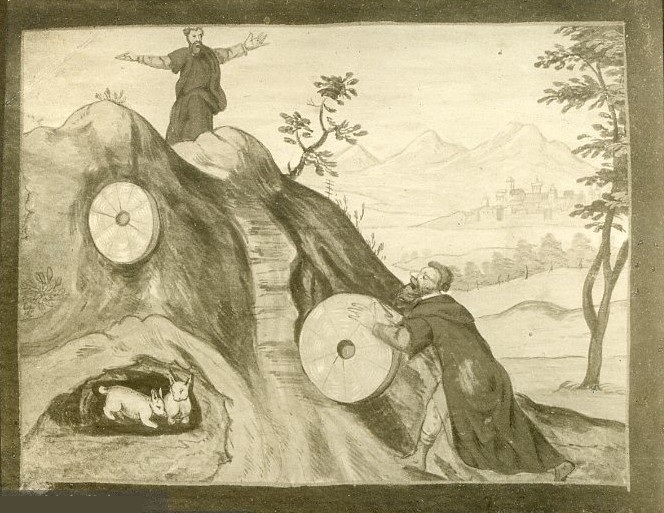
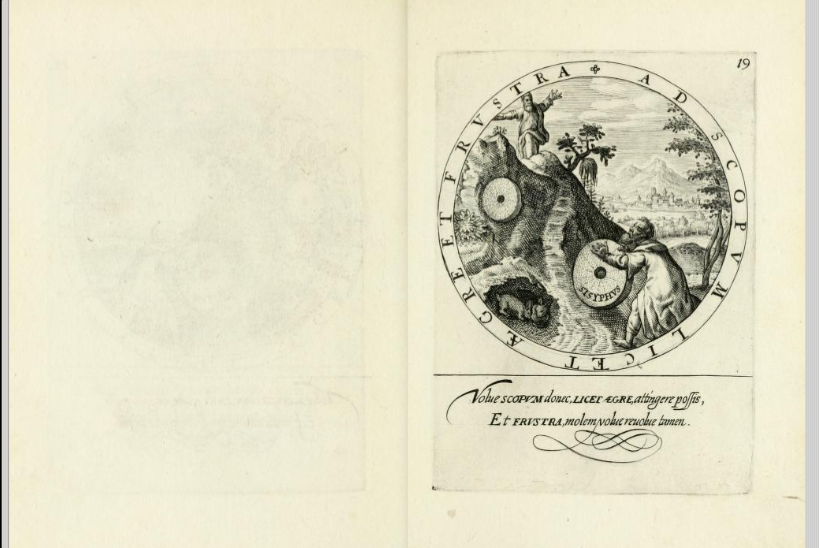
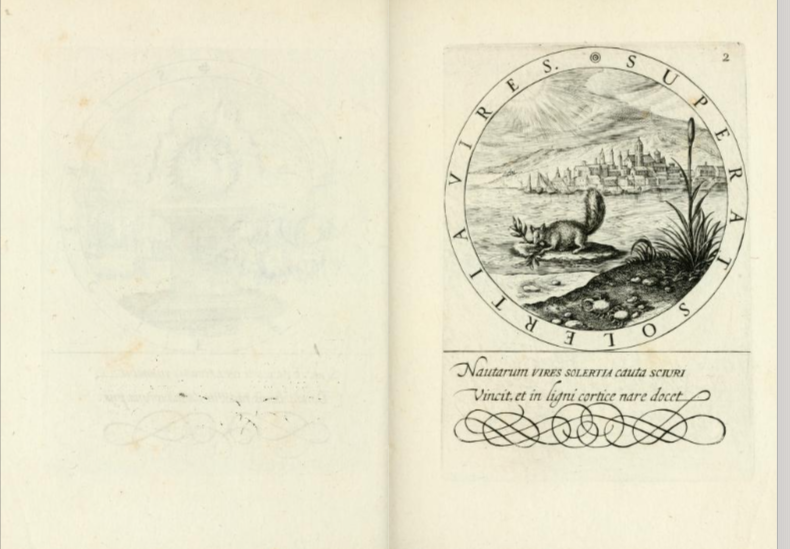
The English emblem of 1792 which Wikipedia uses to illustrate its entry on Sisyphus was cleary copying Rollenhagen — even to the extent of including the rabbits in their burrow.
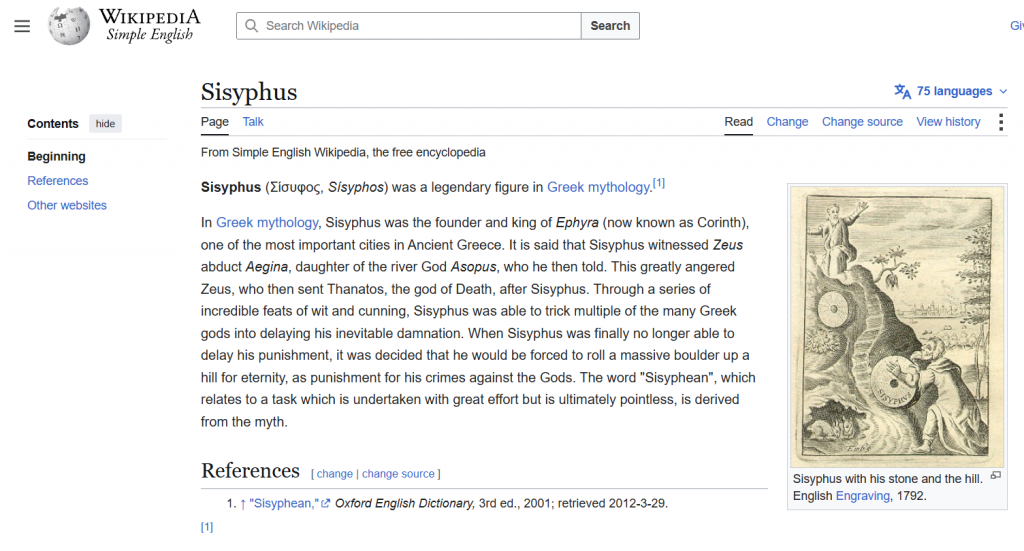
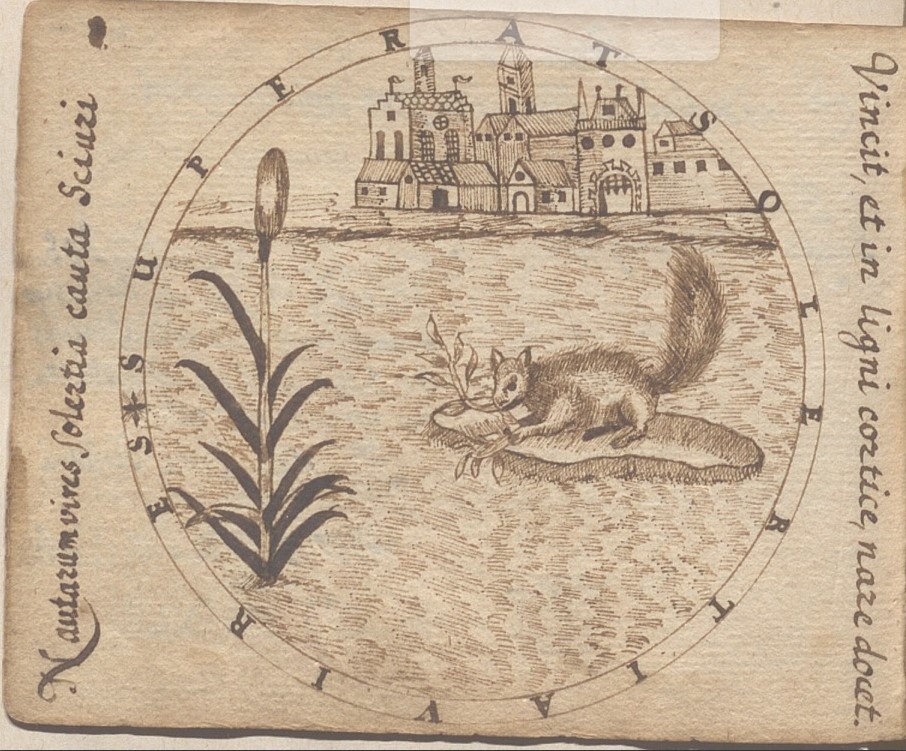
The enterprising squirrel who uses his tail as a sail appeared first in Gilles Corrozet’s early emblem-book, Hecatongraphie ( Paris, 1540), subsequently in Camerarius, then as one of the Altdorf Academy prize medals [Hilsius, 1602], and then in Rollenhagen here :
The copy (below) in the album of Godfried Thicesius drawn some time in the 1640s, curiously places the bullrush on the other side of the composition:
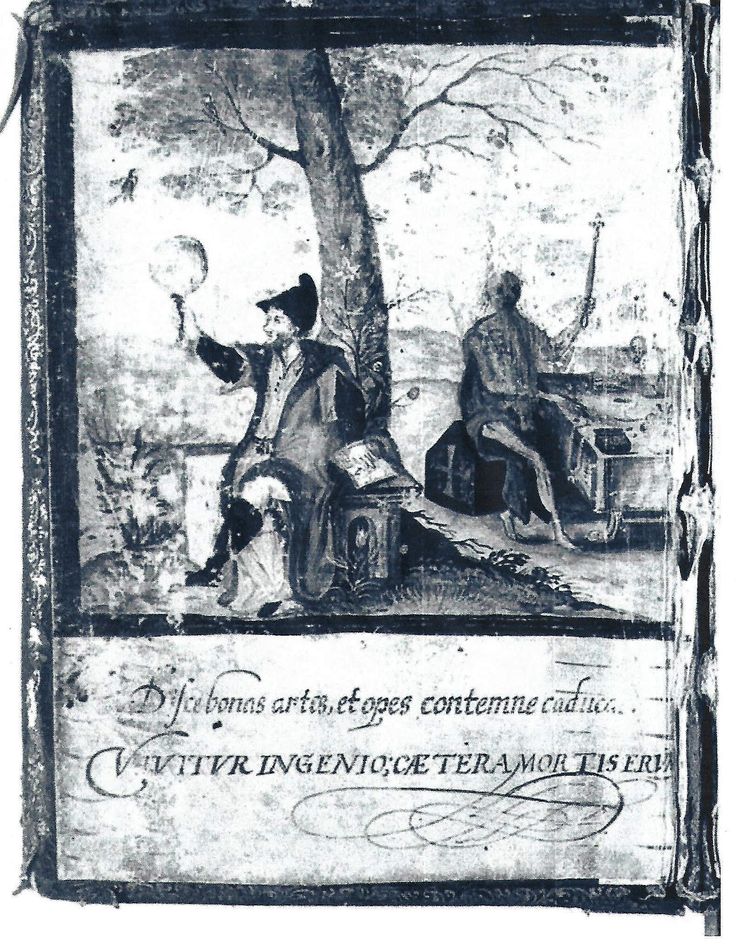
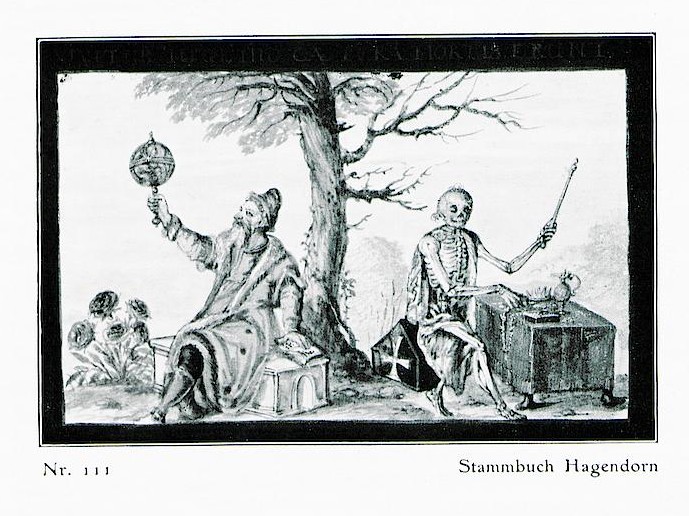
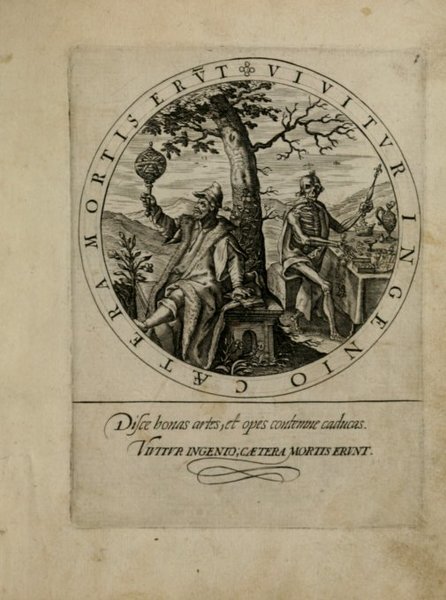
One of these days I shall have to tackle memento mori images in the albums — which are quite as omnnipresent as emblems — or, arguably, the same! However, for present purposes, I reproduce Rollenhagen’s memento mori emblem and as copied in the two albums below:
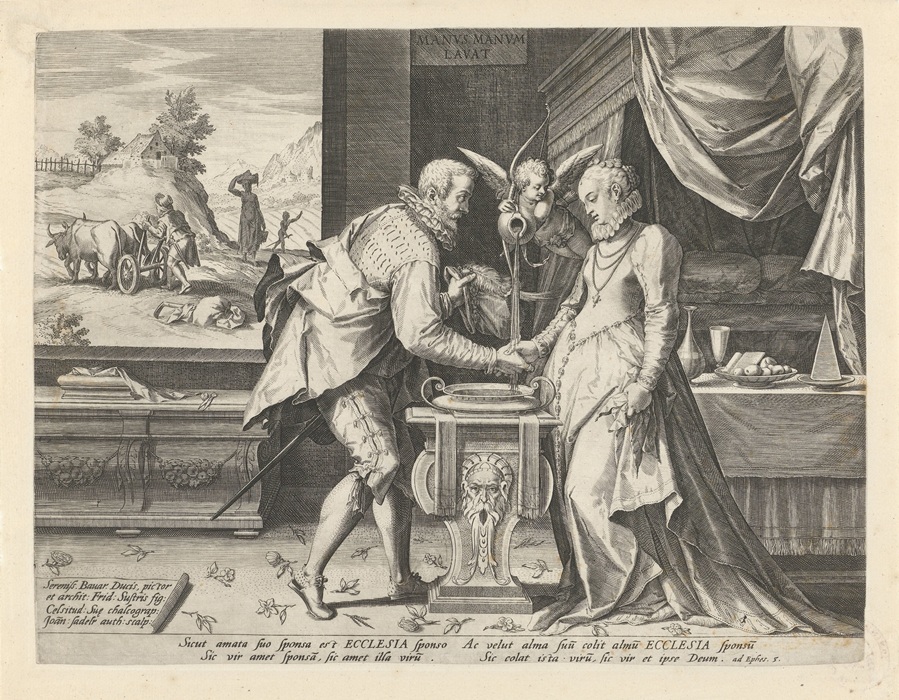
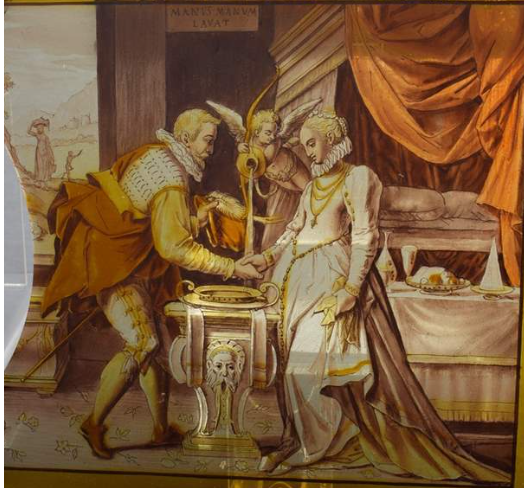
manus manum lavat — one hand washes another
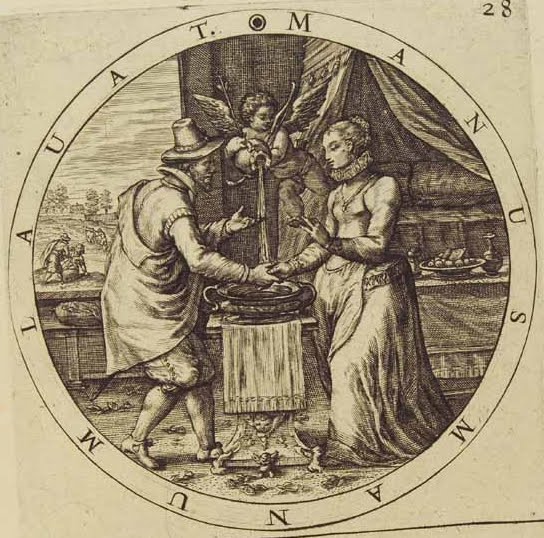
This is the emblem in Rollenhagen’s 2nd century published in 1613, which cannot therefore be the model for any of the three examples painted in the albums (below), all of which pre-date his book
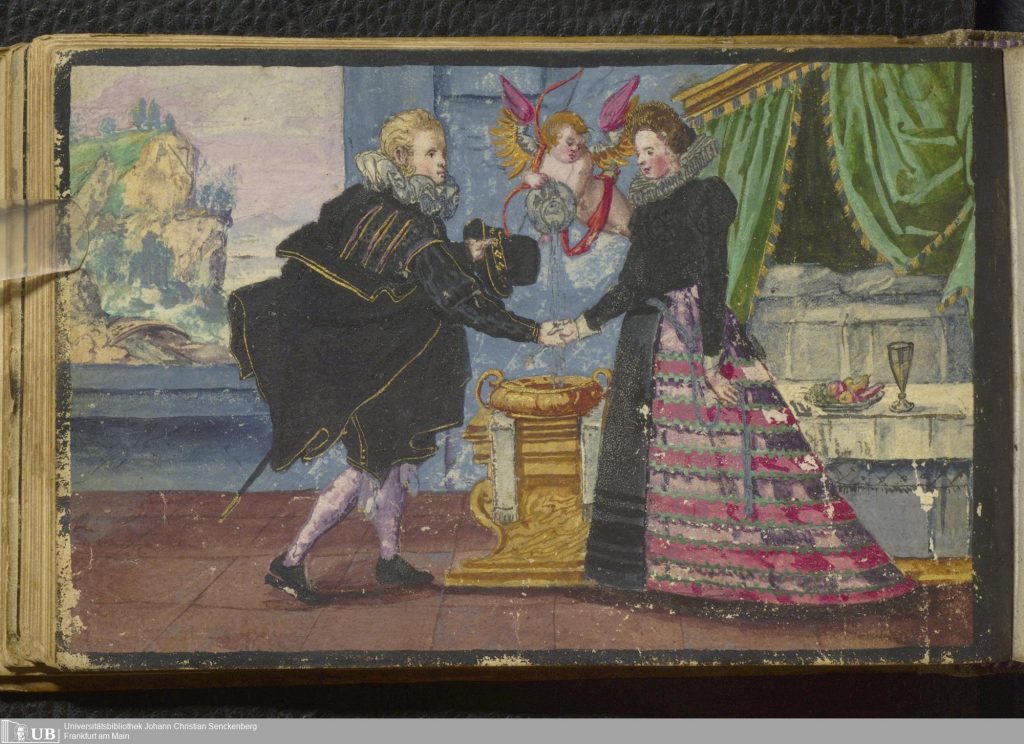
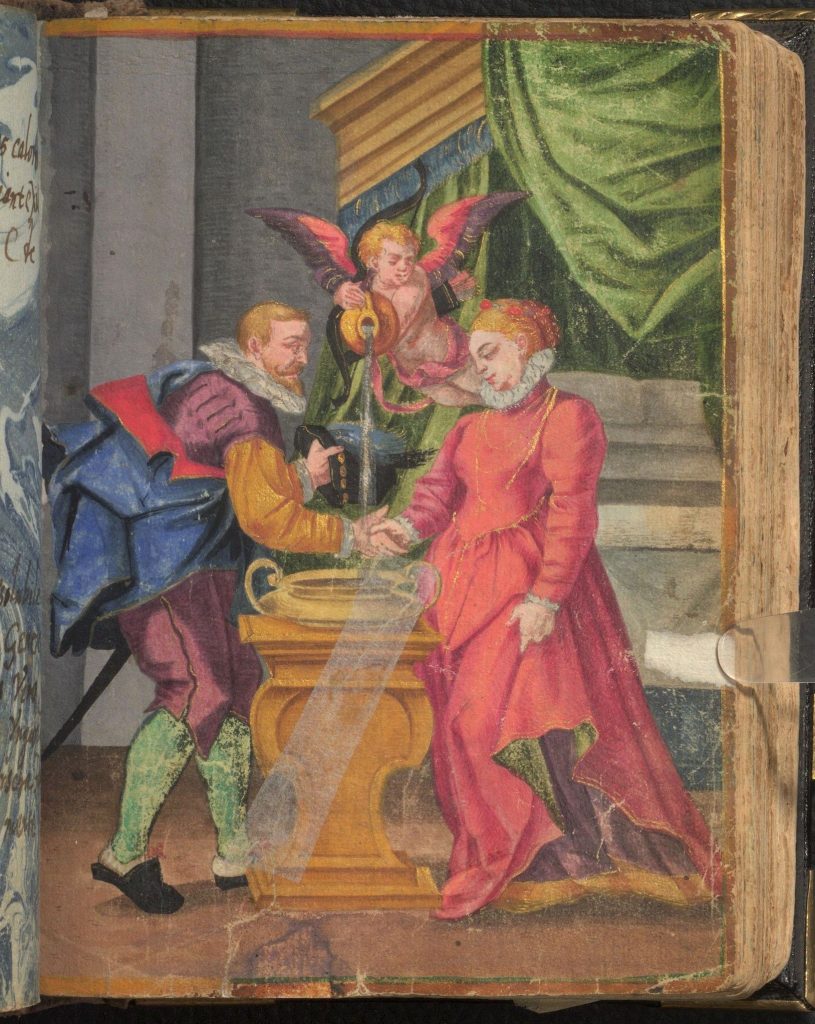
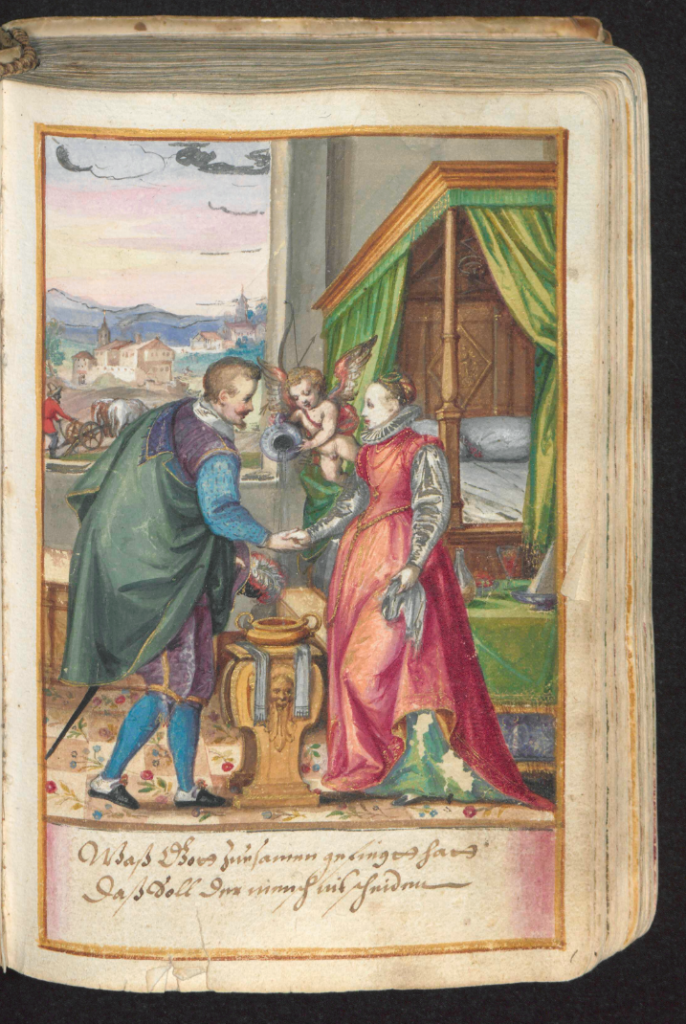
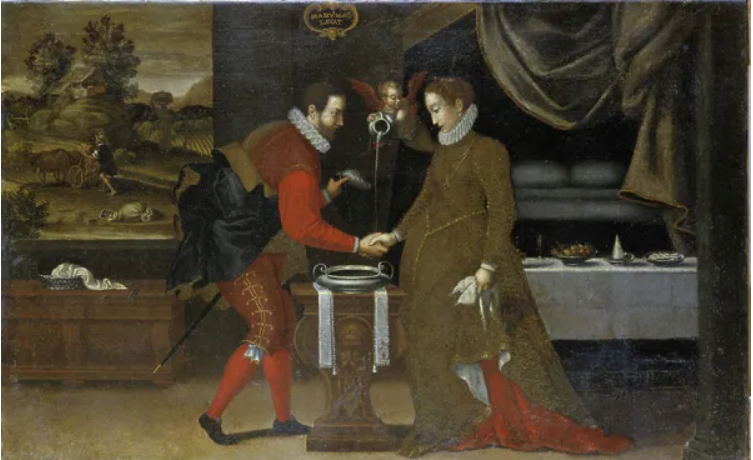
Rather, all three miniatures would seem to derive from a print engravred by Jan Sadeler after Friedrich Sustris (see below). The Rijksmuseum date the sheet 1588×95, the Boijmans Museum, 1590×95. If the derivation from the print is accepted, then this now narrows down the date of issue somewhat to a.1593, the date of the painting in the Reutter album.
The original painting from which Sadeler engraved the print is preserved in the gallery in Modena:
Pasted into the album of Paul Jenisch, however, is another engraving of the scene, captioned with a rhyming couplet in German:
hend mit solchem wasser wesch [Wash the hand with such water Damit die Liebde nicht erlesch so that love will not be extinguished]
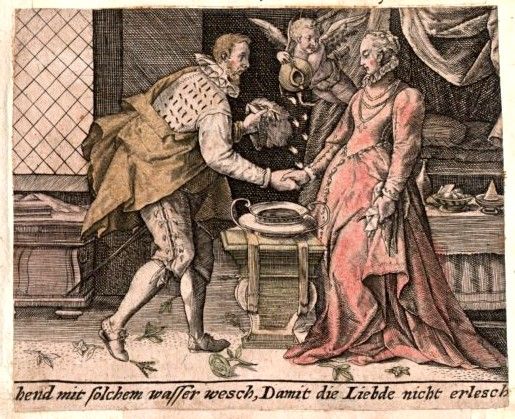
The print is from a rare print-book issued in Koln by Bussemacher c.1600, the prints engraved by Heinrich Wirings and …….. Hogenberg ADD TITLE
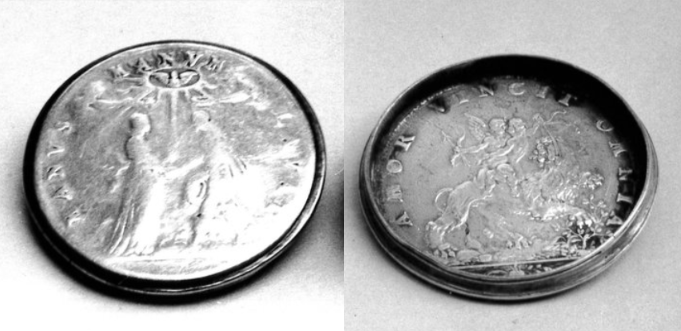
But although there are no witnesses present, the clasping of right hands gesture [dextrarum iunctio] and the water/oil [?sparks/flames here — cf. erlesch] poured by Cupid/Eros/Amor imply a formal act of betrothal. The image was thus popular on commemorative wedding medals in mid-17C Germany. It is interesting to see how the Cupid pouring the water over the hands of the couple has here been transmuted into an angel, above which is the dove of the Holy Spirit.
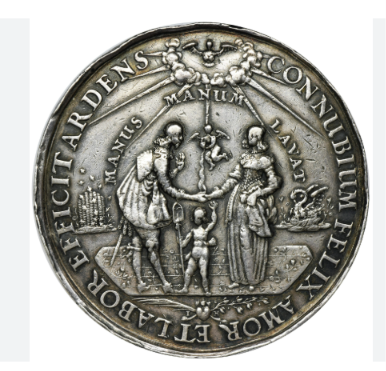
Another such medal was subsequently made to serve as the lid of a tobacco-box
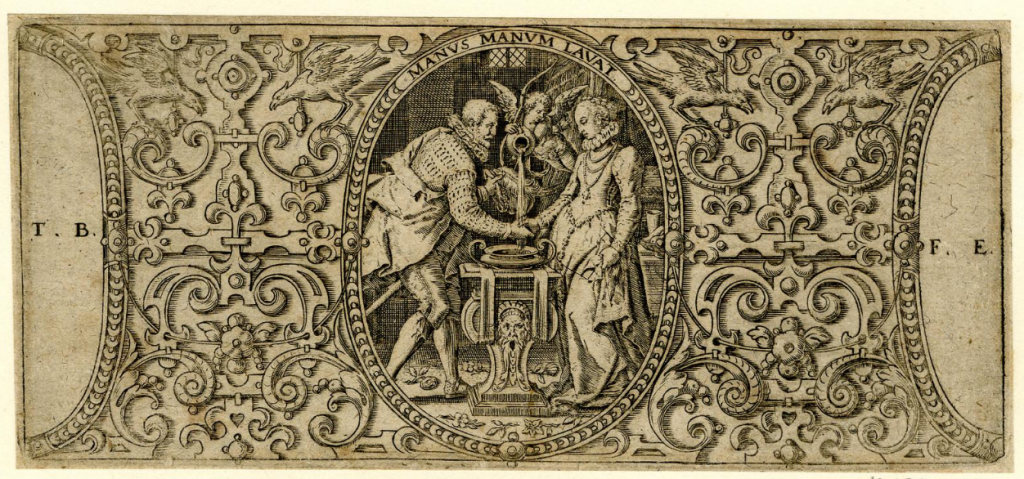
The omnivorous Jan Theodor de Bry copied the motif from Sadeler at least twice for his ornament prints:

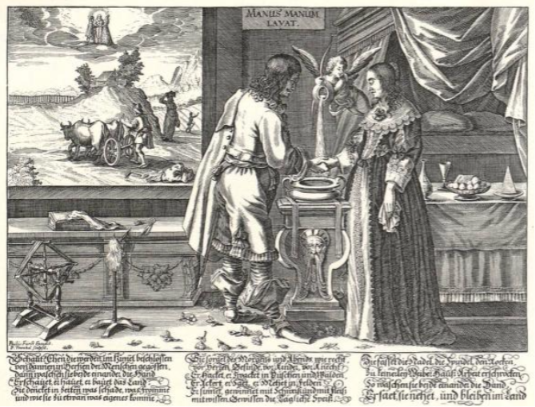
and Peter Troschel updated the costume for a print issued by Paulus Furst in Nurnberg in the 1640s
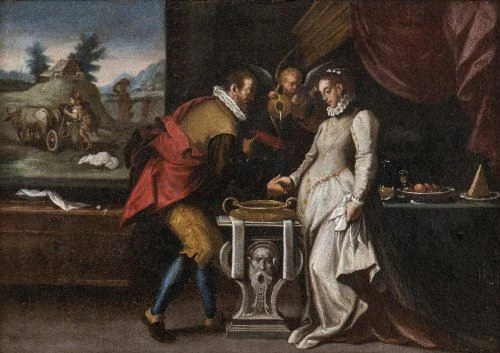
There are several copies of Sustris’s original painting known including one in the collection in Gotha, and another sold at auction five years ago (below)
In an auction the following year appeared a damaged glass pane of the motif:
Leave a Reply