The album amicorum originated in the desire to commemorate one’s fellow students, one’s university friends — and professors — in mid-16C Wittenberg. As soon as it became customary to include drawn and painted devices and miniatures, every album contained such schematic visual emblems of friendship, Lat. amicitia.
Friends, in this context — certainly throughout the rest of the 16C — means male friends — but the emblems of friendship are closely related to, and often identical (except for the sex of those depicted) with the emblems of love which we have already considered at some length here:
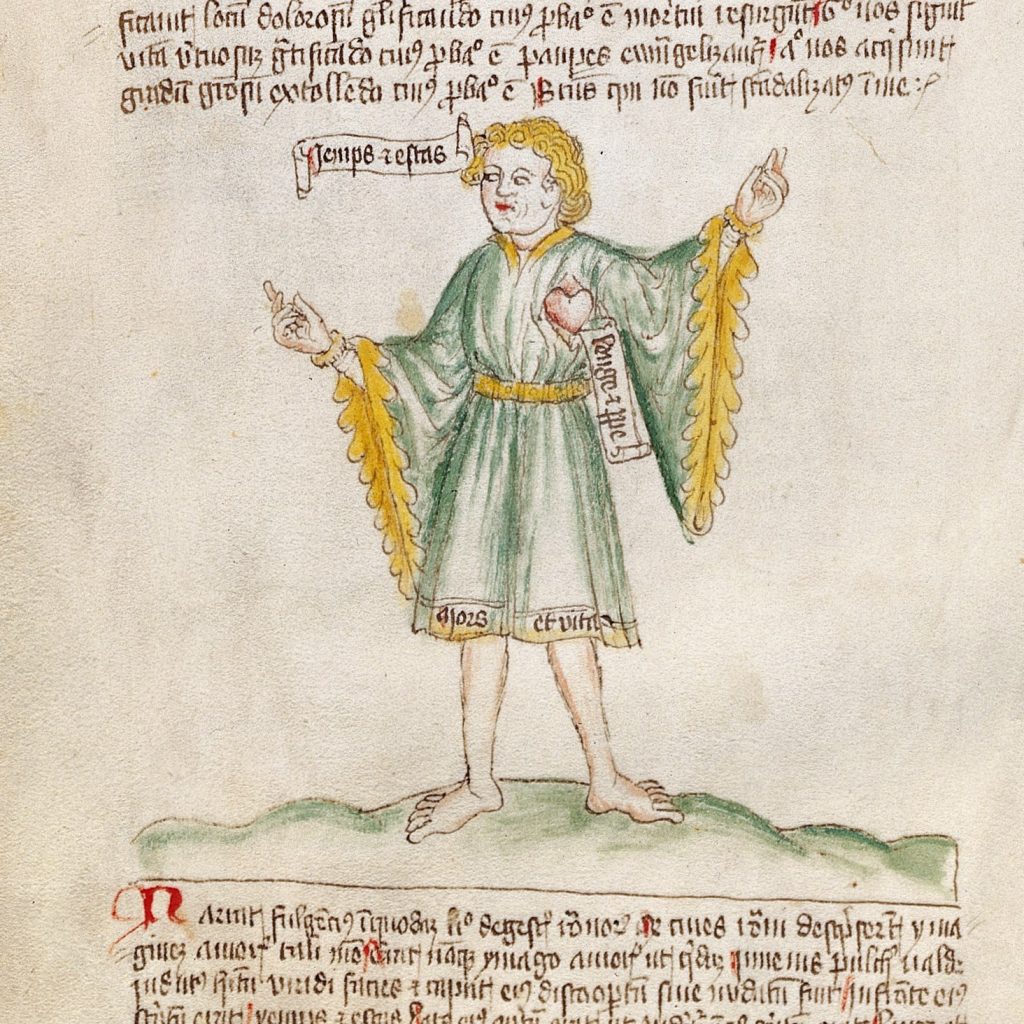
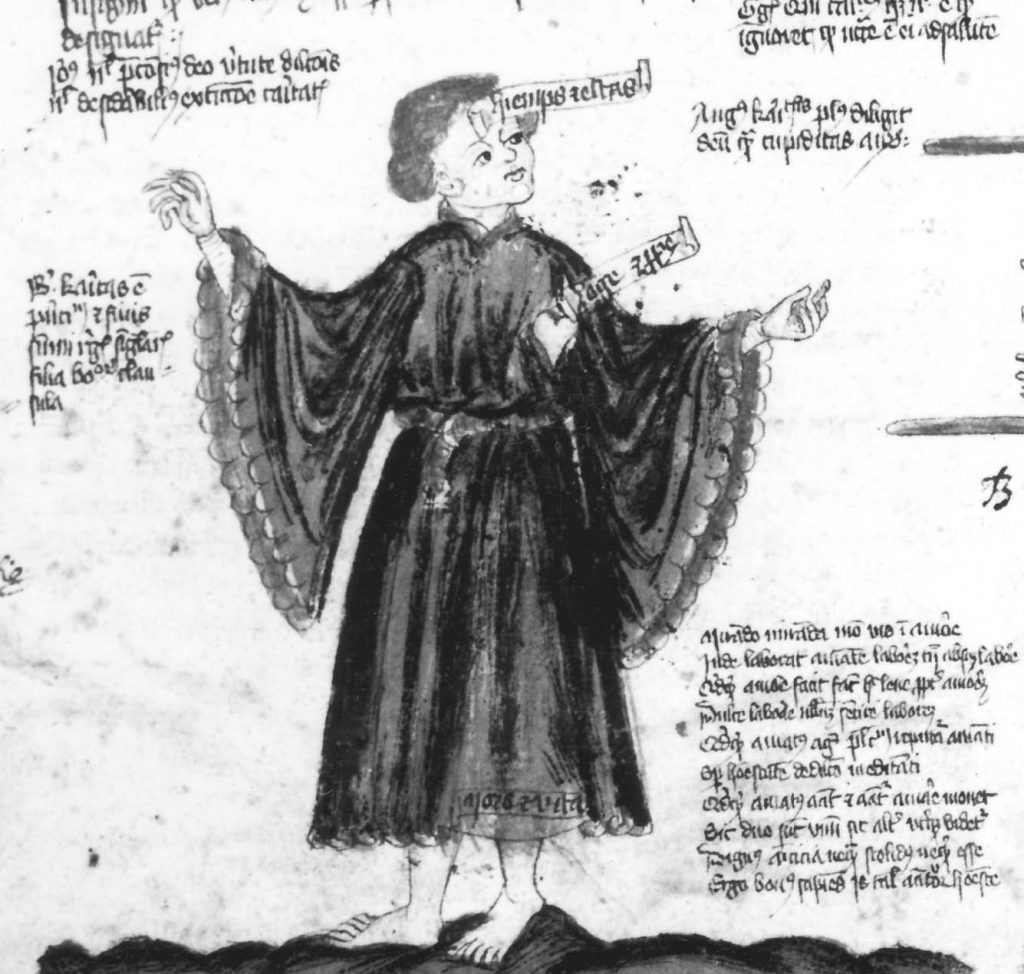
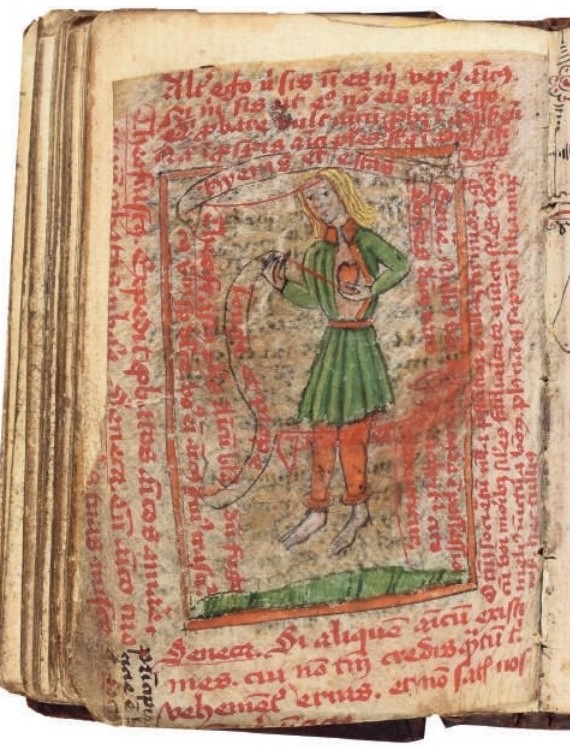
But we begin with an allegedly ancient Roman image, which the English medieval Dominican preacher, Robert Holkot (d.1349), reported in the 26th of his Moralites, as the picture of love or friendship [amor vel amicitia], and described as a barefoot young man dressed in green with his heart exposed, and labelled with three pairs of opposite words. Around his head are written, hiems et aestas [winter & summer], meaning that true love/friendship knows no season, takes no account of adversity or prosperity; around his heart, longe et prope [far & near], nor whether the friend is far off or near at hand; and around the hem of his robe, mors et vita [death & life], because a true friendship/love endures even after death.
The earliest examples of this iconic image known to me date from the second quarter of the 15C:
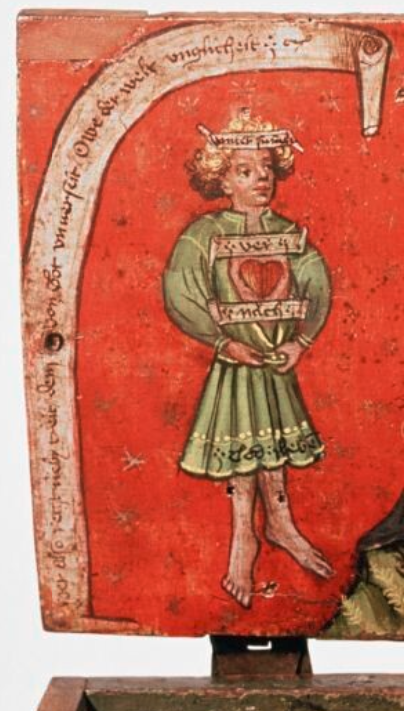
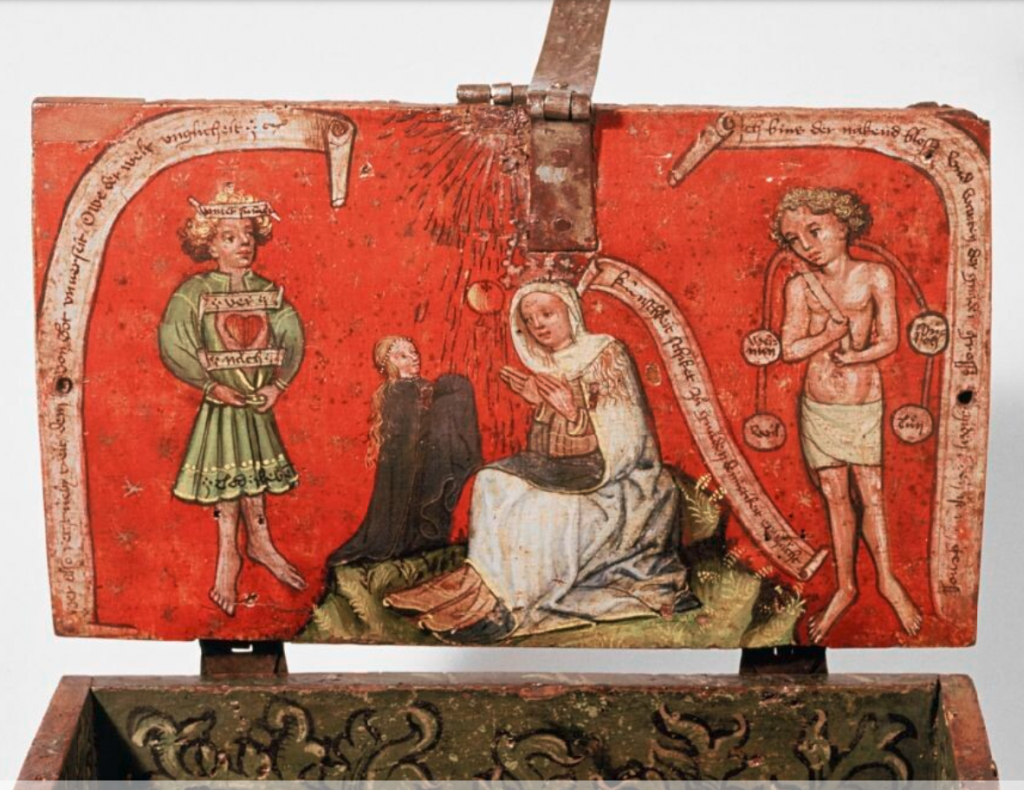
The contemporary little box (below) is particularly interesting, and I don’t believe has been mentioned in this connexion before. On the inside of the coffer-lid our young man is painted in green (as specified), with the words winter sumer on a banderole in his hair, aer and nach [far & near] around his open heart, and Tod and Lebe [death & life] on the hem of his robe. The banderole beside him makes it clear that he represents recht lieby [true love].
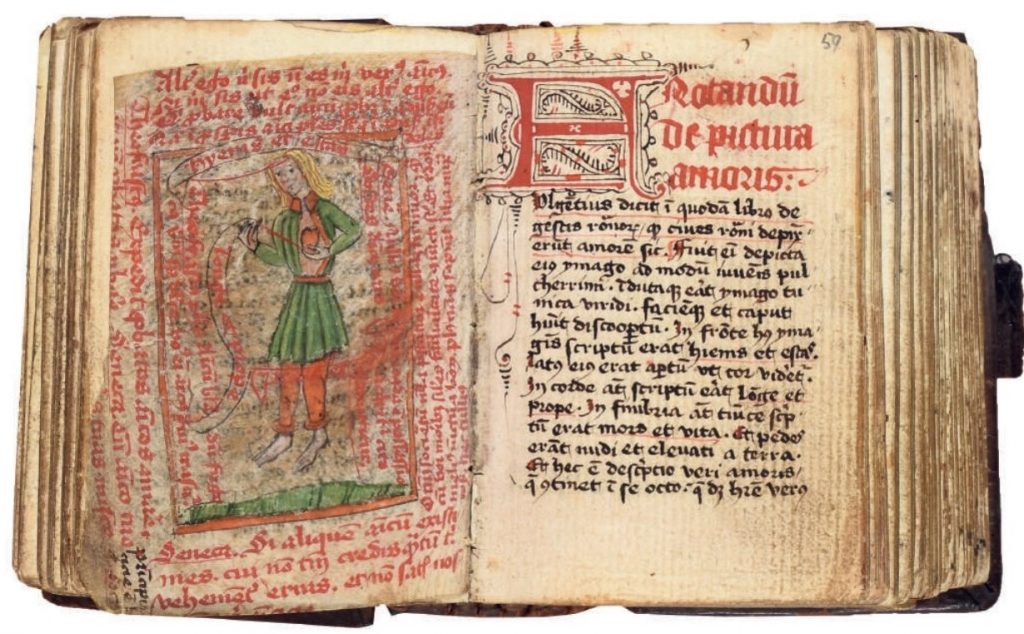
Perhaps a generation later, and at any rate before 1466, a manuscript compiled in Tongeren, Belgium, of texts intended for the instruction of novices, which includes our motif, appeared recently on the art market. The adjacent page styles the image pictura amoris [the picture of love], and cites the explanatory passage from the post-Classical Roman mythographer Fulgentius, which was also the basis of Holcot’s text.
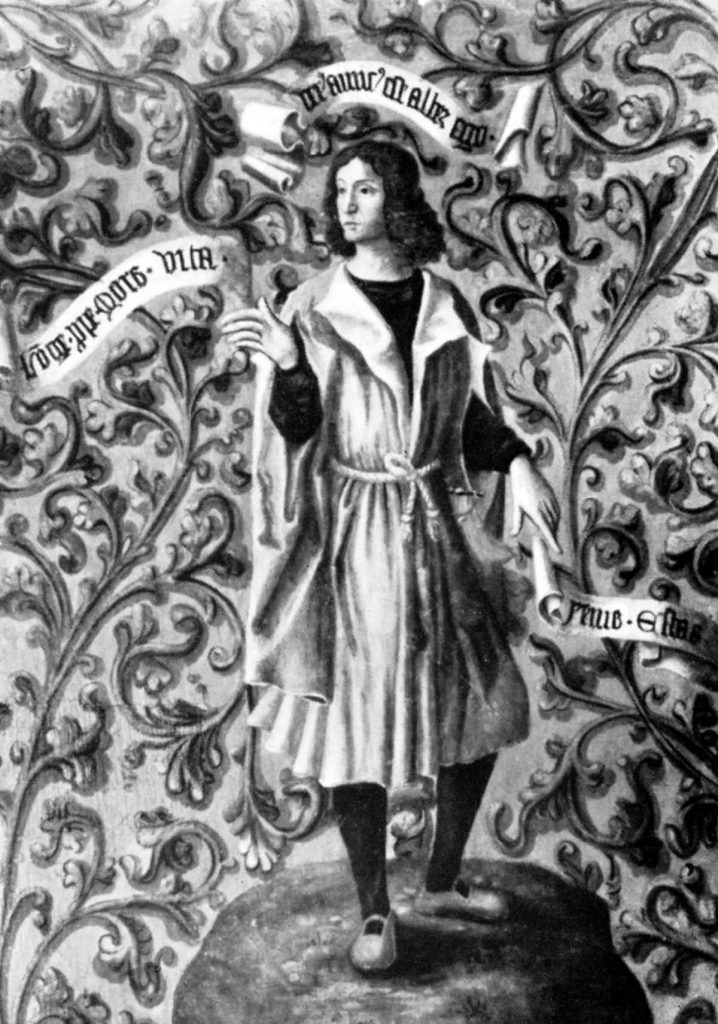
Writing in 1952, Waldemar Deonna drew attention to our figure amongst those painted in the town-hall in Geneva — labelled ver[us] amic[us] est alter ego [a true friend is another self] —
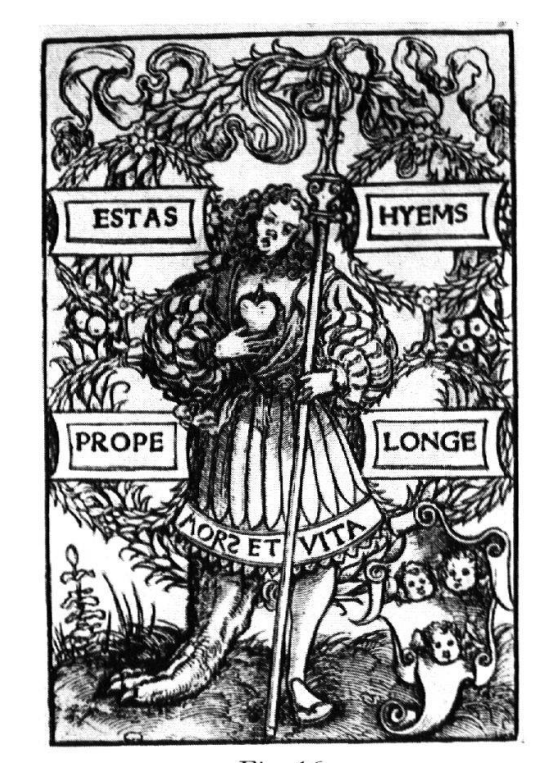
he was unaware of the above antecedents, though realised such must have existed. He was, however, able to point to the device of Strasbourg printer Wolfgang Köpfel, a generation later:
But an important omission in the early history of this motif is its first appearance in print, as a woodcut illustrating the Margarita Philosophica of Gregor Reisch, published in Freiburg in 1503:
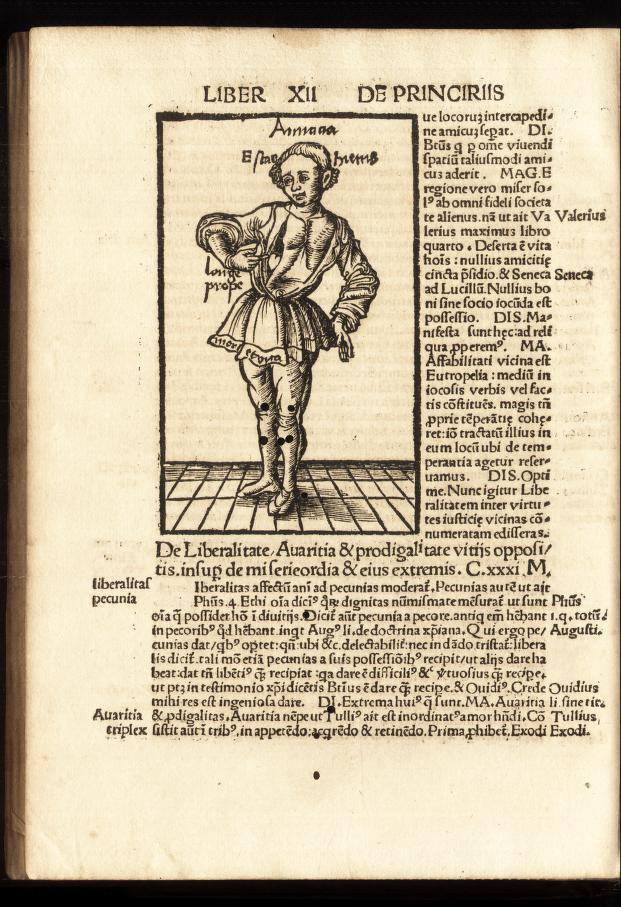
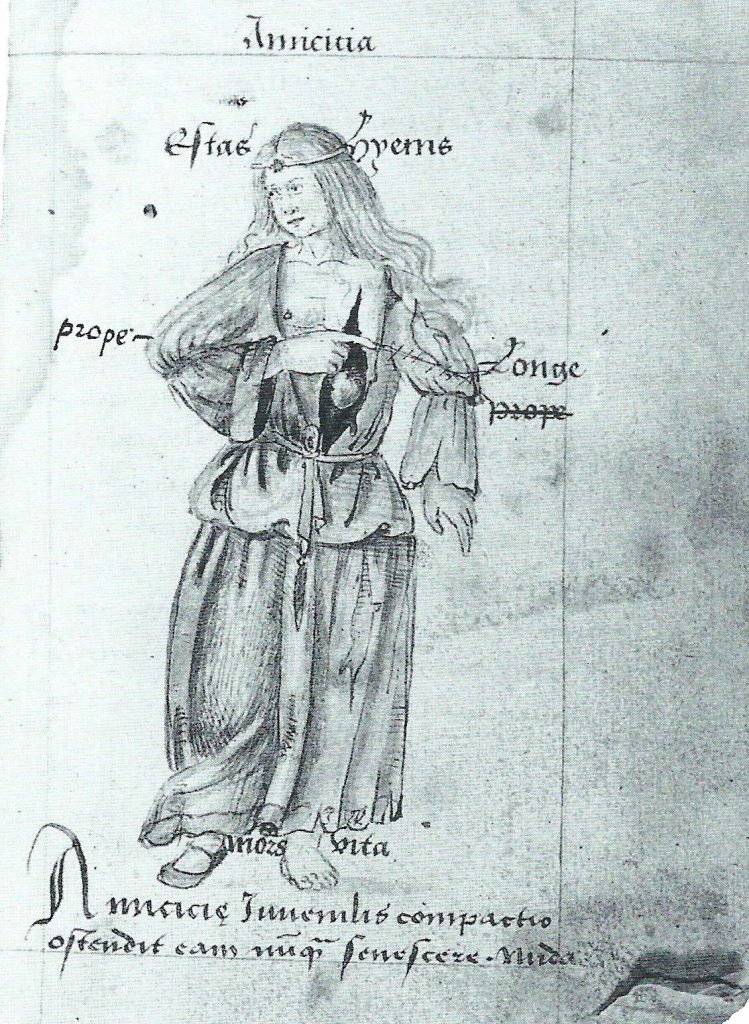
The cut itself is headed Amicicia, but the details explaining the other labels are covered on the previous page, beside the marginal note, Typus amicitiae. Only a decade or so later, c.1515, a drawn example is to be found in the proto-emblematic Woodner manuscript now in Washington:
In the albums
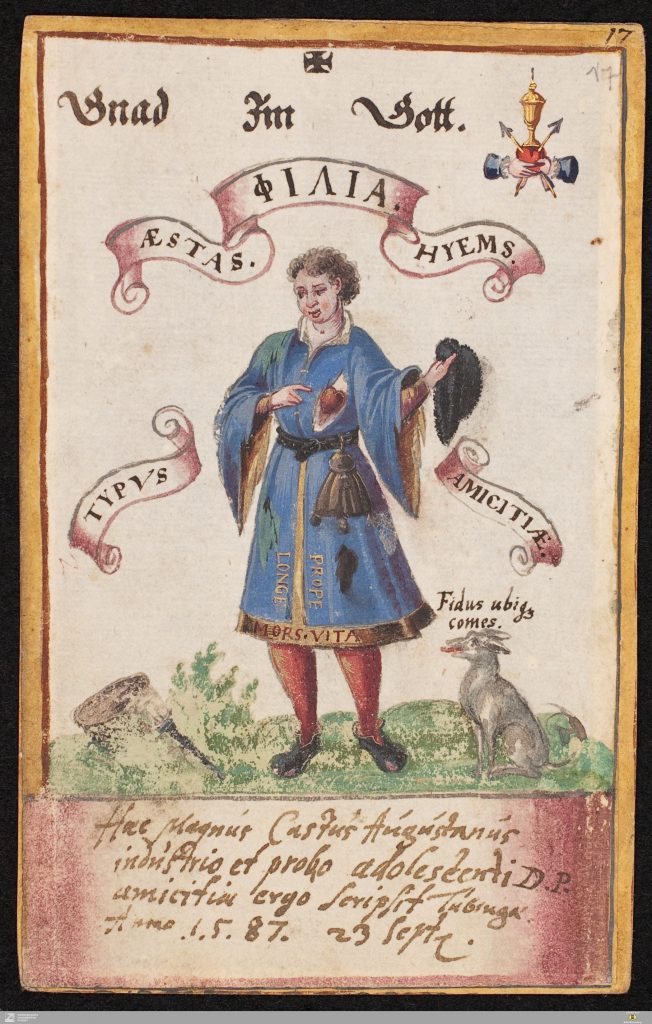
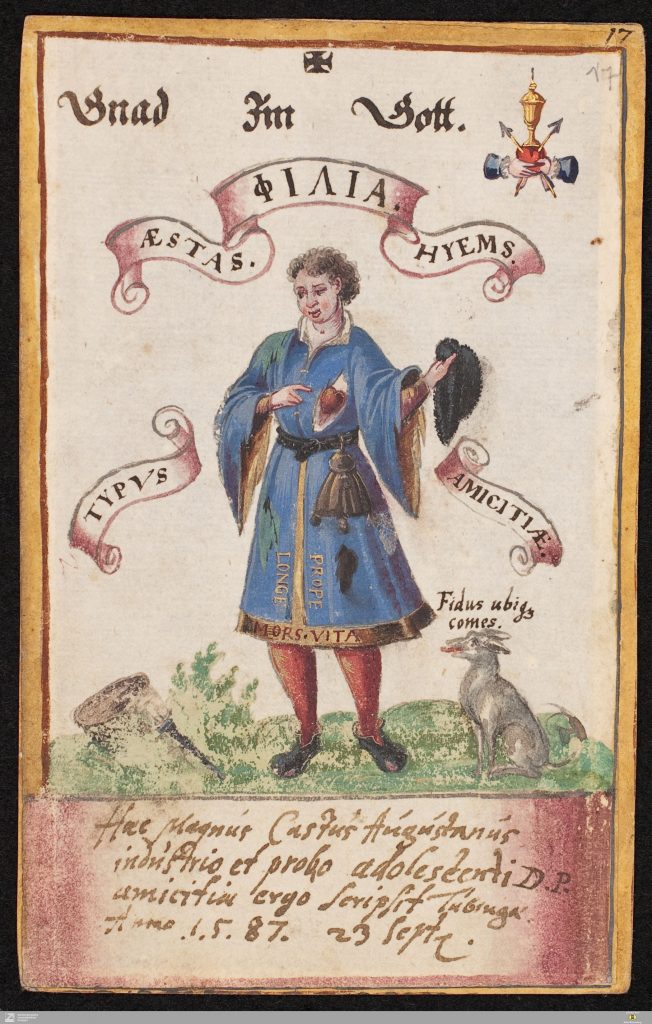
The earliest I have noticed the motif in the albums is in 1587 (below), by which date, as we have seen, it has been around for at least 150 years. There are two further examples in the 1590s, but then I have not spotted it again until the 1620s.
The Prasch album painter includes a faithful hound at the figure’s feet, labelled Fidus ubiq[ue] comes [a faithful companion everywhere], and the figure is labelled Love (in Greek), but also identified in Latin as the Typus Amicitiae. The small emblematic device in the top righthand corner shows two friends’ hands holding a heart pierced by two arrows surmounted by a golden cup.
Before the date of the Prasch painting, however, at least two single-sheet prints had been published, the earlier issued in Bern half a century earlier, being clearly the painter’s model
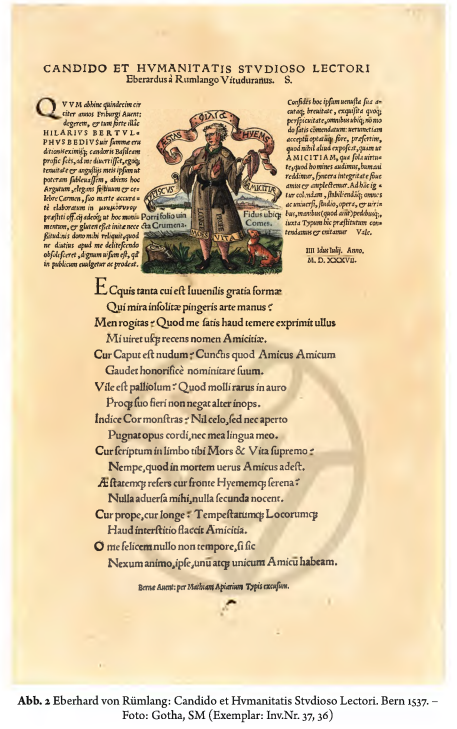
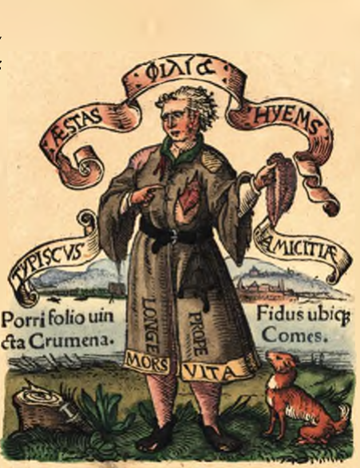
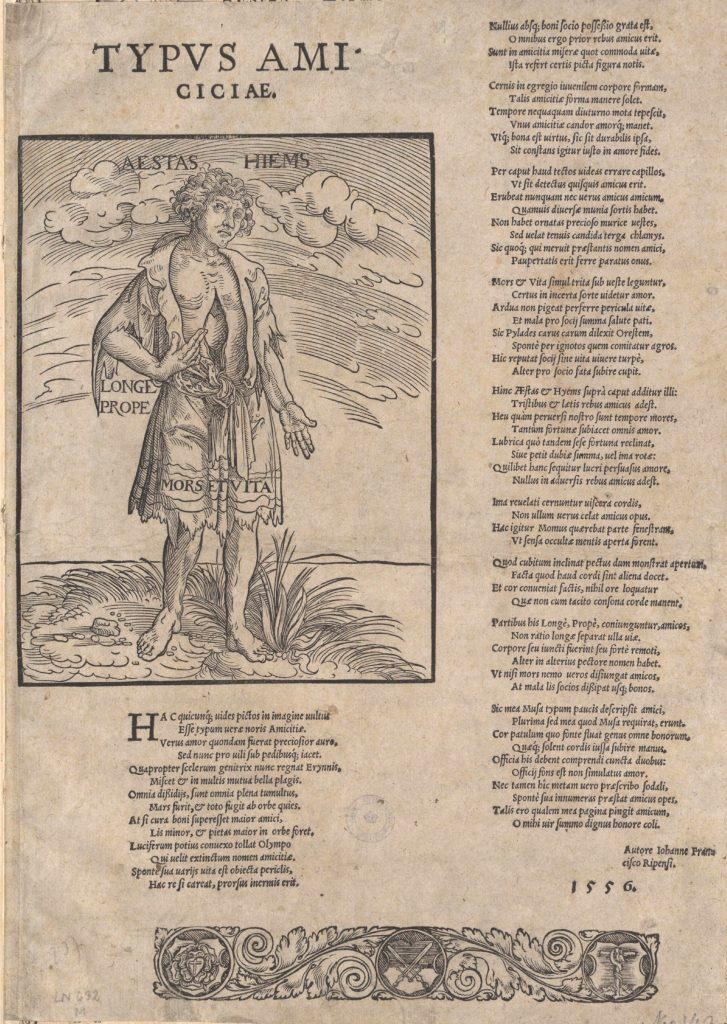
The later, issued in 1556, probably in Wittenberg, also under the title Typus Amiciciae, is illustrated with a woodcut of our motif, and was followed by another edition issued five years later dedicated to Melanchthon:
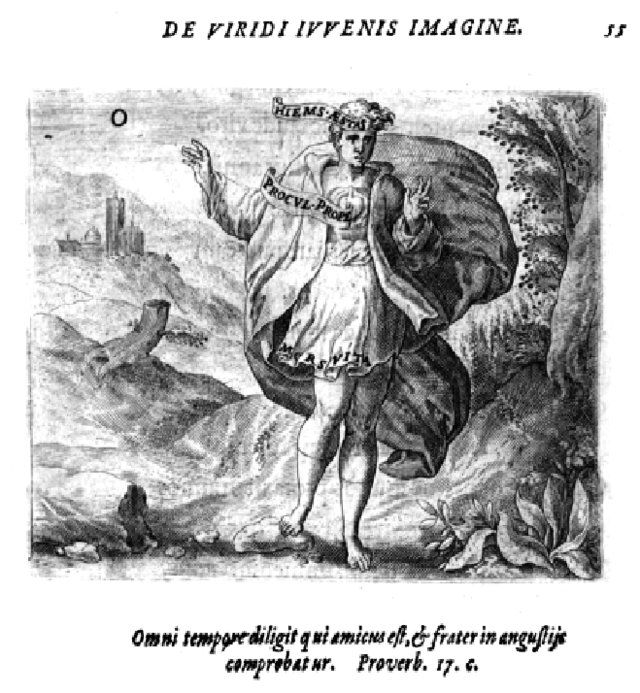
and in 1579 a similar print was published in Copenhagen, in the same year that the motif entered the emblem-books, in Laurens van Haecht’s Mikrokosmos (Antwerp 1579):
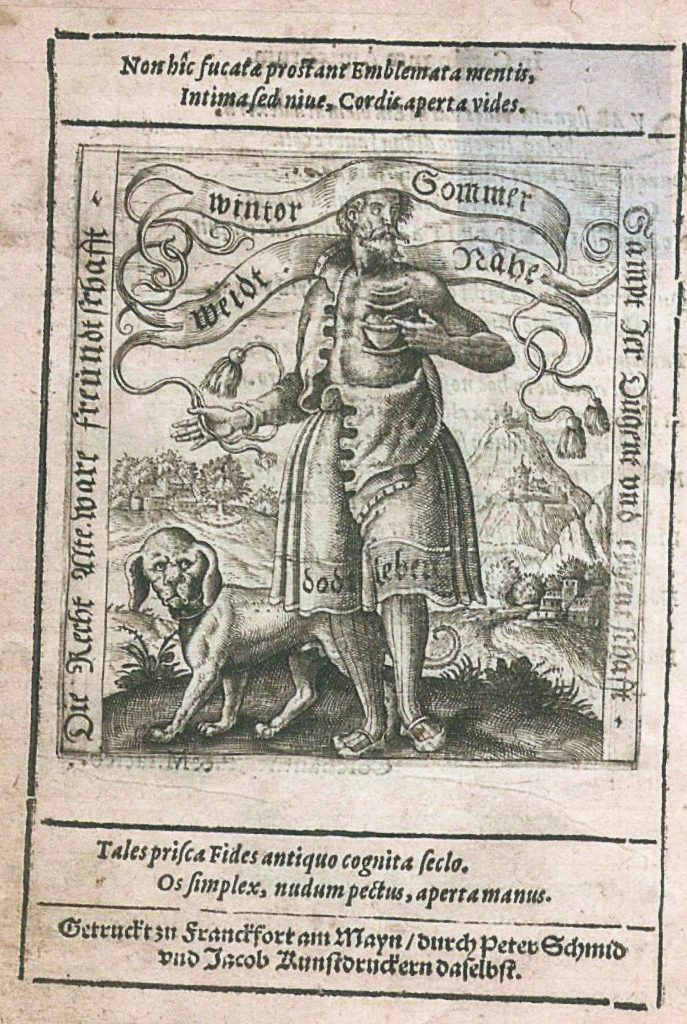
An important publication in which our motif appeared, shortly before it is found in the Welser album, and on another orphaned leaf dated 1593, is the Hoffman/Wirich Stamm- und Wappenbuchlin (Frankfurt 1592); here the figure is labelled, Die Recht Alte ware freundtschafft [The proper old True Friendship] — note the presence of the (unlabelled) dog:
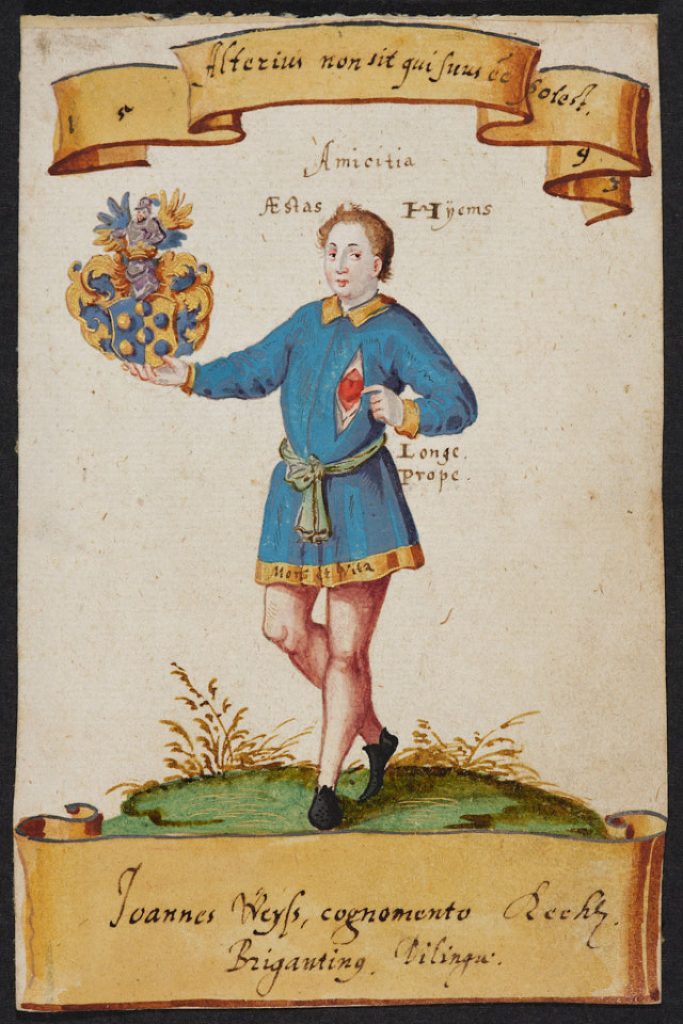
The Welser album was compiled between 1591 and 1596, and our motif appears in it adjacent to a page dated 1595, though the labelled opposites are not in their usual places:
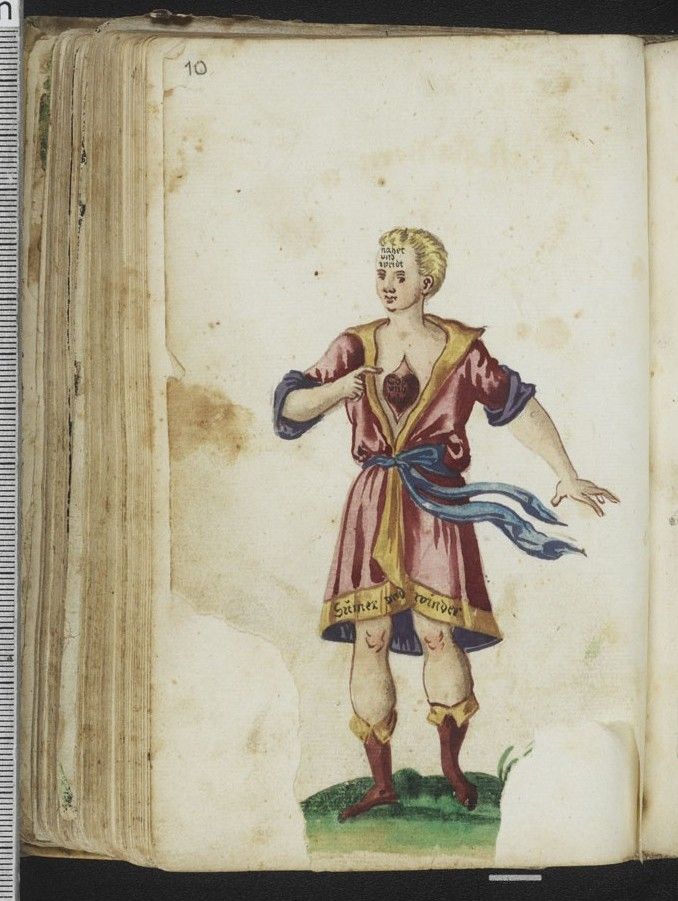
The orphaned leaf in the BNM continues their traditional placing:
Though I have been unable to see a reproduction of the image itself, Lieselotte Möller illustrated a miniature from the album of Andreas Chemnitius painted in 1602 which features a female Friendship, a naked girl standing on a plinth pointing to herself, entitled, Loquens Amicitiae pictura [this picture speaks of friendship]. It presumably bears some relation to the device used by the Parisian printer, Guillaime Julien, from 1555, up until his death in 1589.
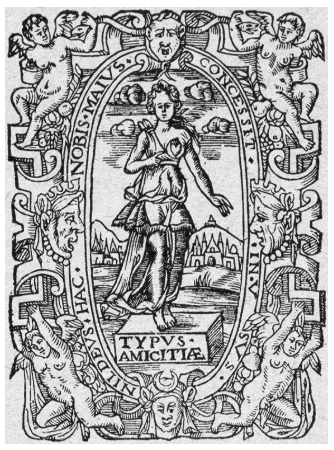
Six years earlier, Theodor de Bry engraved another female Amicitia for the Emblemata of Denis Lebey de Batilly (Frankfurt 1596); the same figure (copied in reverse) illustrates a single-sheet print published two years later under the title Typus Amicitiae.
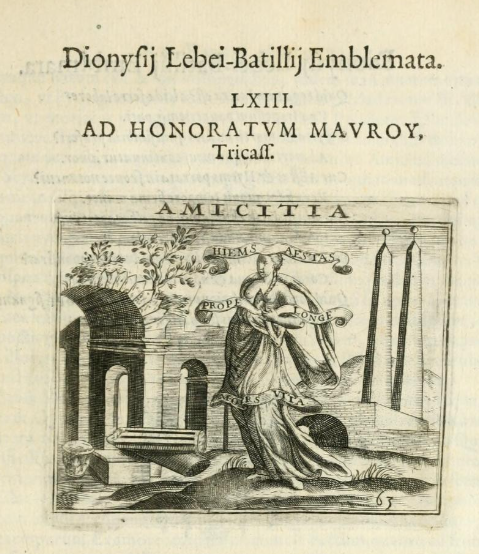
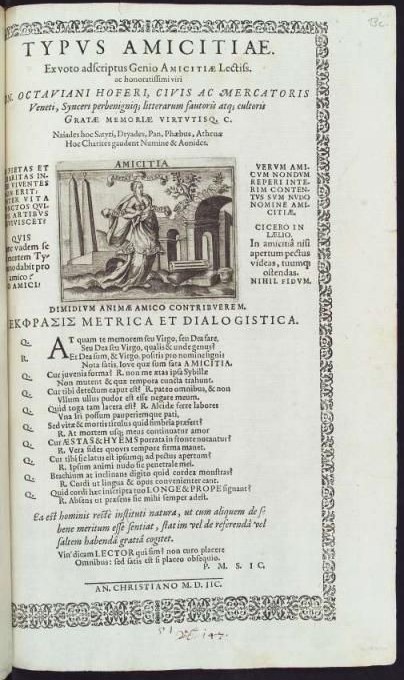
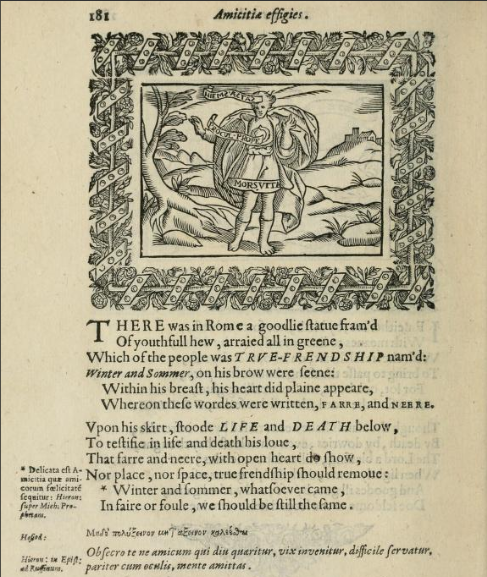
It comes as something of a surprise, though, to find our motif illustrating an English emblem-book, Henry Peacham’s Minerva Britanna, published in London in 1612. The verse accompanying the woodcut illustration shows that Peacham was fully aware of the ‘Roman’ origins of the ‘statue’, and moralises the image in the usual way.
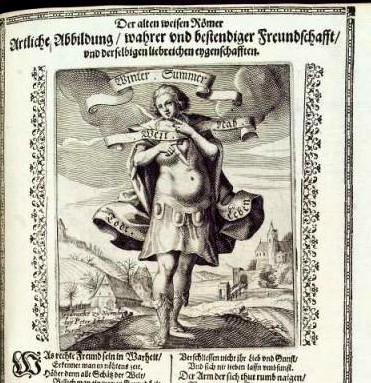
A single-sheet print engraved and published by Peter Isselburg in Nurnberg in 1617, again — in its title — proclaims the Roman origin of the motif: Der alten weisen Römer Artliche Abbildung wahrer vnd bestendiger Freundschafft vnd derselbigen liebreichen eygenschafften [The wise old Romans’ artistic representation of true and enduring friendship and the loving properties of the same]
The Wroclaw painter, Andreas Hempel (1581-1627), depicted the male figure of Friendship standing between two trees, one in leaf and one bare, presumably representing the Sumer and Winter of the label, in the album of Jacob Petzke, c.1620. The identical miniature also appears in the album of Hans Heintze (dated entries 1619-22), and — but without the trees — in that of Caspar Sagittarius (dated entries 1618-28)
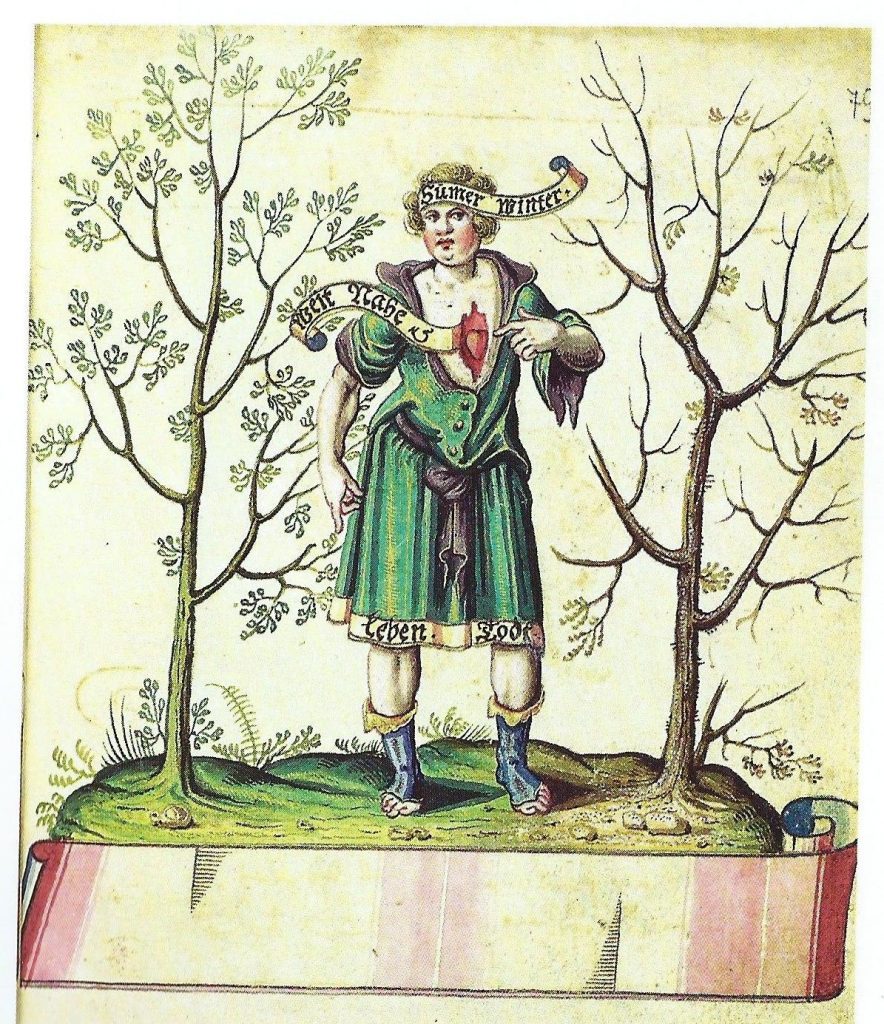
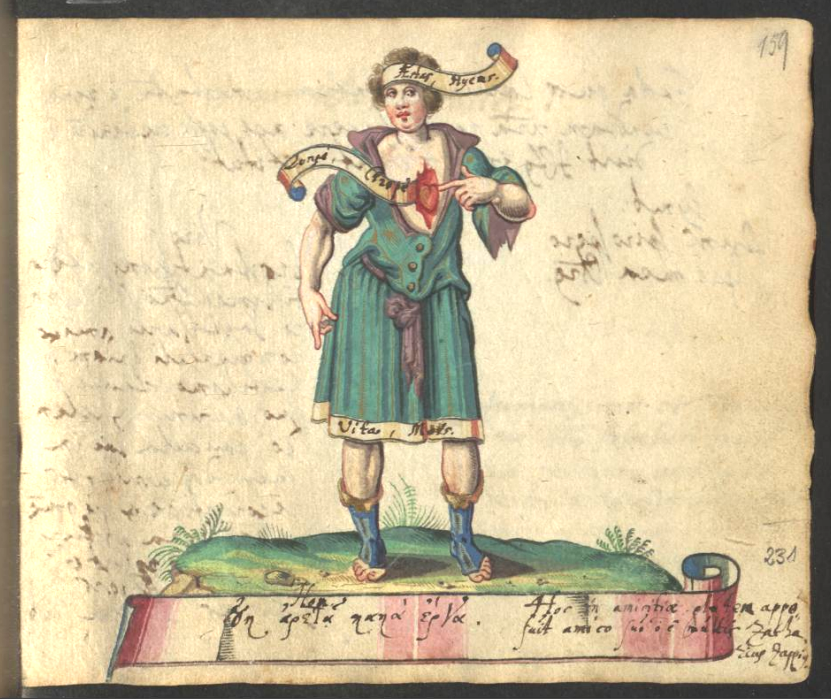
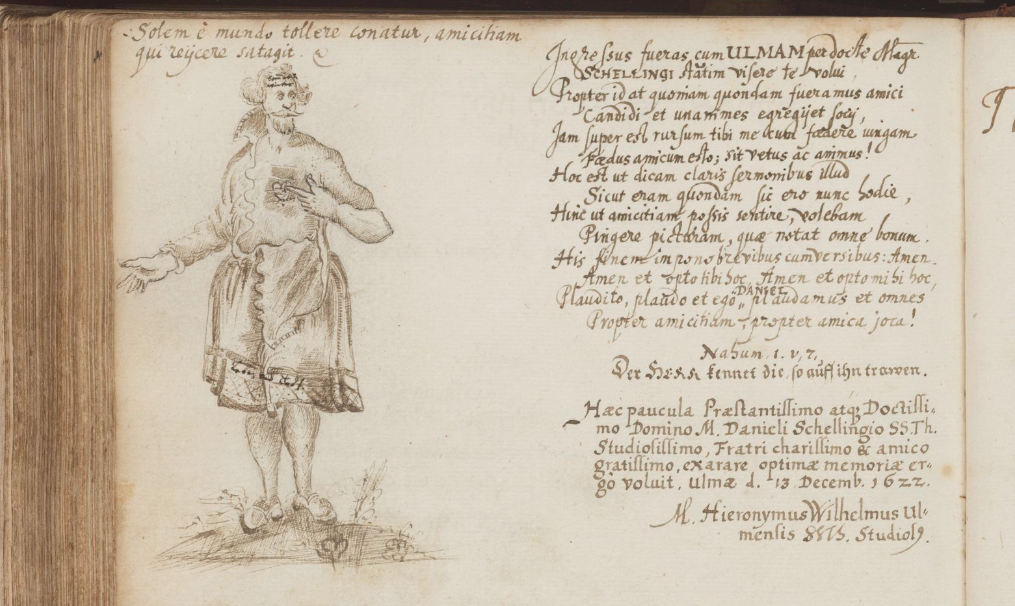
Contemporary with Hempel’s miniatures is a drawing of our motif in the album of Daniel Schelling, with a title from Cicero’s De Amicitia :
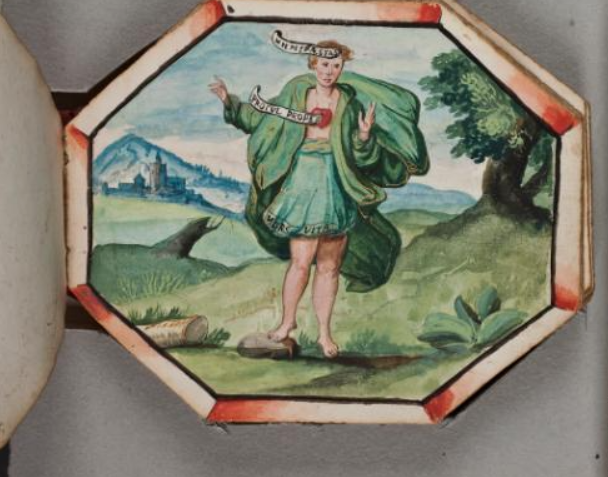
The miniature in the octagonal album of Homme van Harinxma must belong to the late 1620s
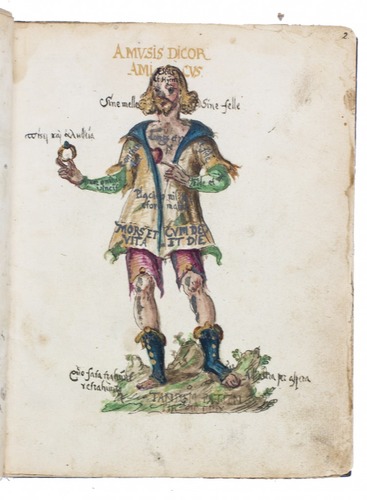
The version in the album of Wilhelm Bökel is plastered in inscriptions, several seeming to have no immediate relevance to the theme of friendship — omitting the three usual ones — the figure is entitled A Musis Dicor Amicus [I am called a Friend by the muses], and his sleeves are inscribed Fide et vide [Trust but beware] and Amor omnia vincit [love conquers all] — both popular album inscriptions in their own right, of course. Ad astra per aspera [through hardships to the stars], is another common album motto, while Quo fata trahunt retrahuntque [where Fate draws us and draws us back] is adapted from the Aeneid ; cum Deo et die [with God and the day] and sine melle sine felle [without (over-)sweetness, without poison] are two more typical Sprüche. Iconographically unique, however, is the fact that the figure holds a ring which is labelled in Greek — πίστις καί ἀλήθεια [fidelity and truth]. (My thanks to Elisabeta Negrău for reading and translating the Greek).
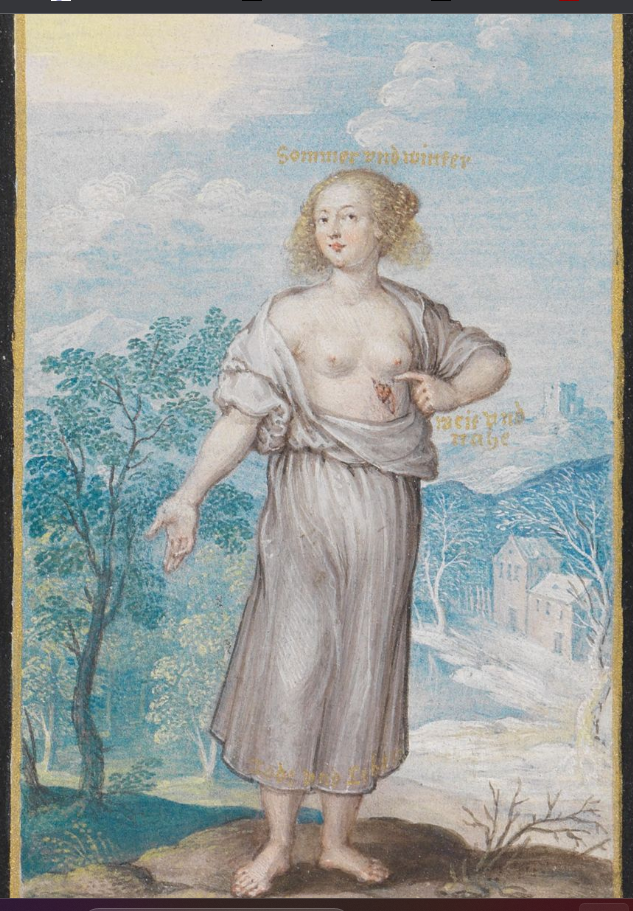
From the close of our period comes another female personification, a delicate painting by Friedrich Brentel, intended for — or perhaps extracted from — an album which, although it is labelled with the traditional word-pairs, is also a portrait of the poet and painter, Anna Maria von Baden-Durlach (1617-72), aged 28:
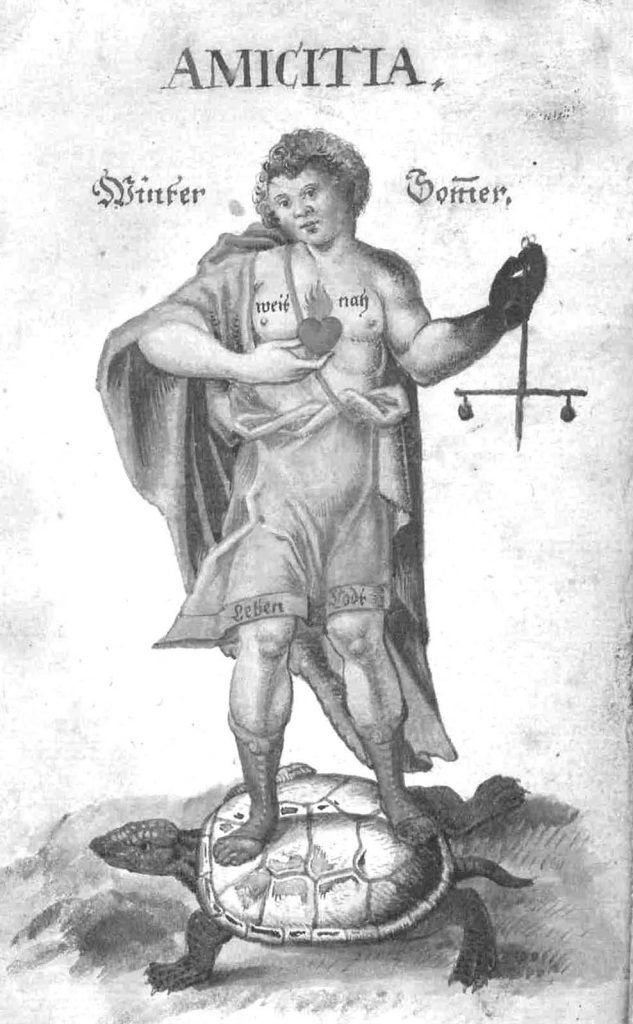
Outside our period, a late example is to be found in the album of Georg Philipp Hagel dated 1672, where Amicitia stands on a tortoise — whose hard shell, according to the accompanying verse, symbolises the durability of true friendship:
Other media
The remarkable procession of decorative sleighs that took place in Nurnberg c. 1640 was fortunately recorded for posterity in minute detail in the form of an album of paintings now preserved in the the Metropolitan Museum, New York. Dressed in the specified green, our Amicitia motif appeared in three-dimensional form as a painted wooden finial of a sleigh (together with the Pelican in her Piety, that other symbol of love, of Christ’s love for humankind):
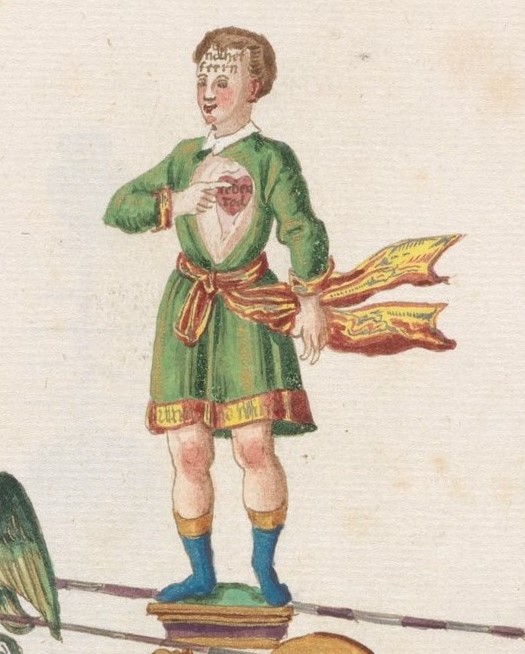
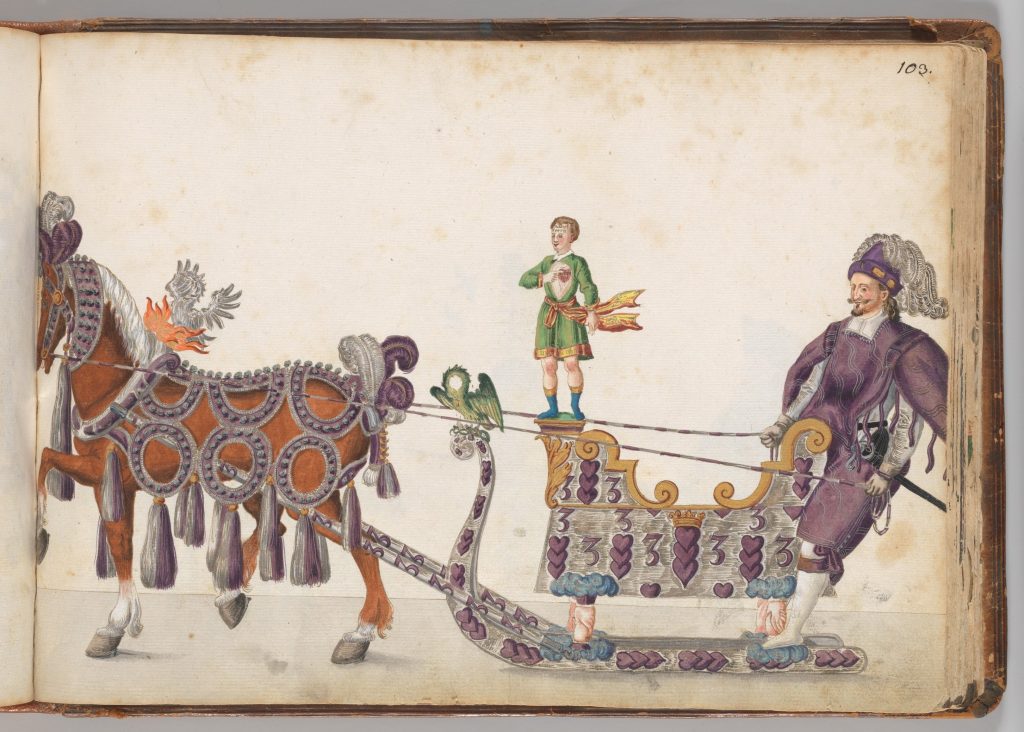
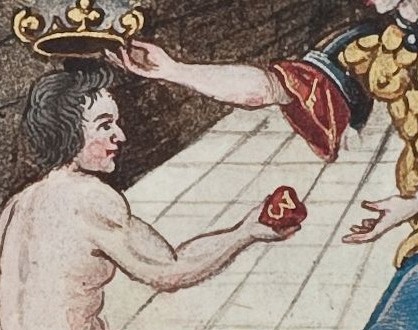
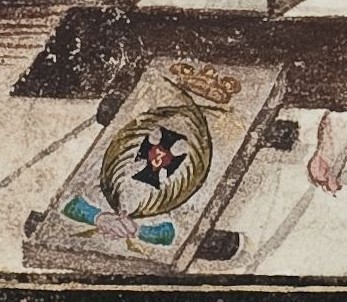
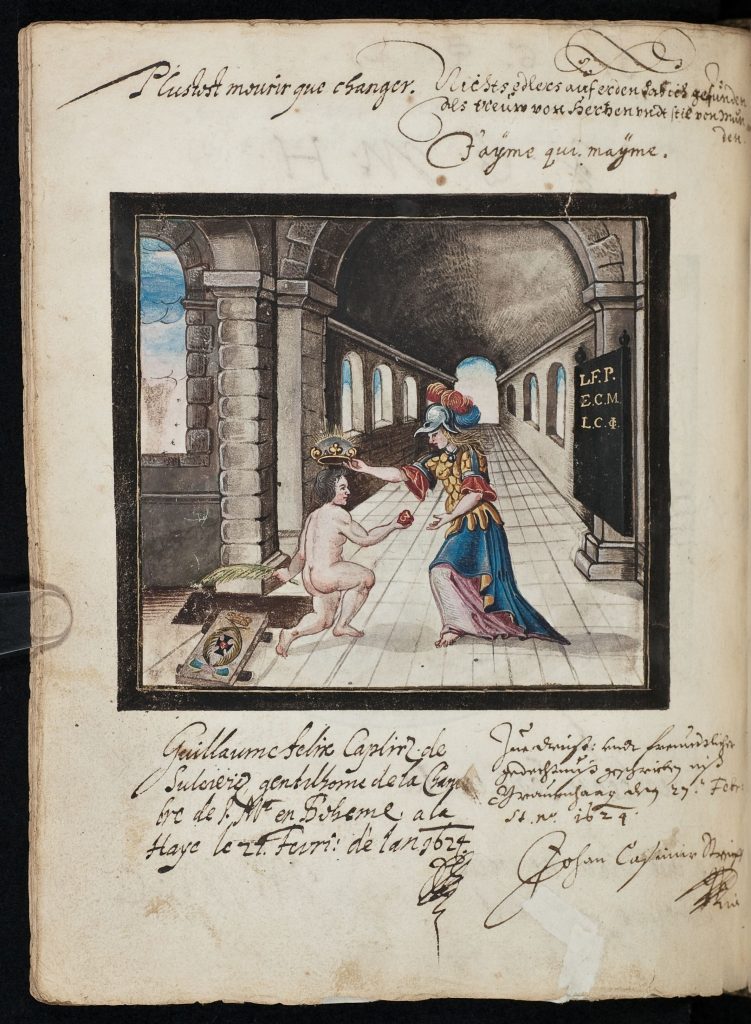
The 3 of Hearts playing-cards painted on the side of the sleigh, incidentally, are a fitting accompaniment to the Love/Friendship ornament — the numeral 3 [drei] being often used in this rebus-like fashion to signify treu [fidelity, loyalty] — as in these details of an album miniature painted in 1624:
Similarly, a rebus sentence involving mainly numerals — and the words they could punningly represent — inscribed in 1577 in the album of Johann Georg Sattler (present whereabouts unknown) was described in the late 19C as
Man 8 mein 3 ♥ 4 nicht das [drawing of sum/bill] gott
that is, Man achtet mein treu(es) herz für nicht das räche gott
[My faithful heart counts for nothing, God will avenge]


Leave a Reply to Fabienne Gallaire Cancel reply