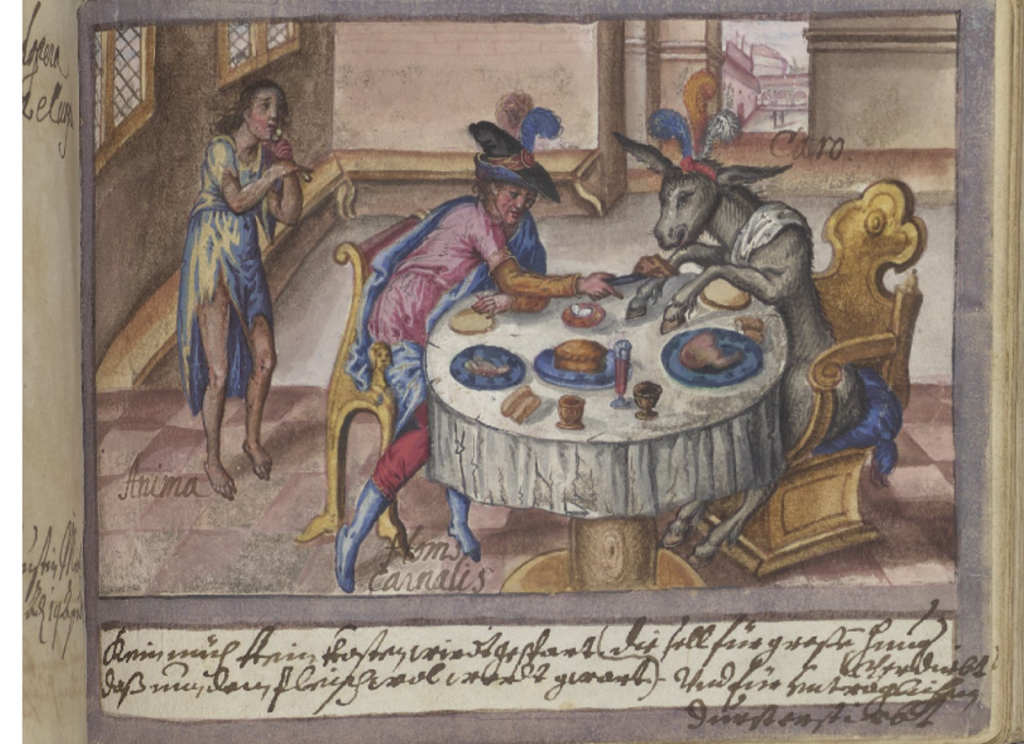
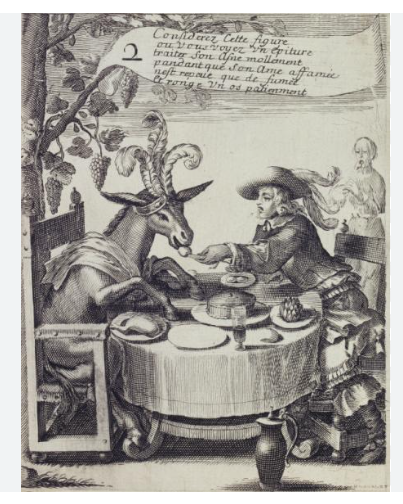
This, at first sight, comical painting of a man feeding an ass at the dining-table is soon revealed to be an allegory, when we notice the labels — Caro [Flesh] for the ass, Homo Carnalis [Carnal Man] for the man feeding him, and Anima [Soul] for the skinny, dishevelled figure hovering behind him. The caption confirms this impression:
Kein müh kein Kosten wirdt gespart No effort, no expense is spared
daß nur dem fleisch wol wirdt gwart so that the Flesh is looked after
die sell für großen Hunger verdirbt the Soul decays from great hunger
Und für unträglichen durst erstirbt and dies of unbearable thirst.
Dated entries in Amsinck’s album fall between 1620 and 1623, and the page adjacent to our miniature is dated 1623. It is copied from the second in a 4-print series seemingly first issued in Strasbourg by Jacob von der Heyden in 1618, as part of his Speculum Cornelianum print-book.
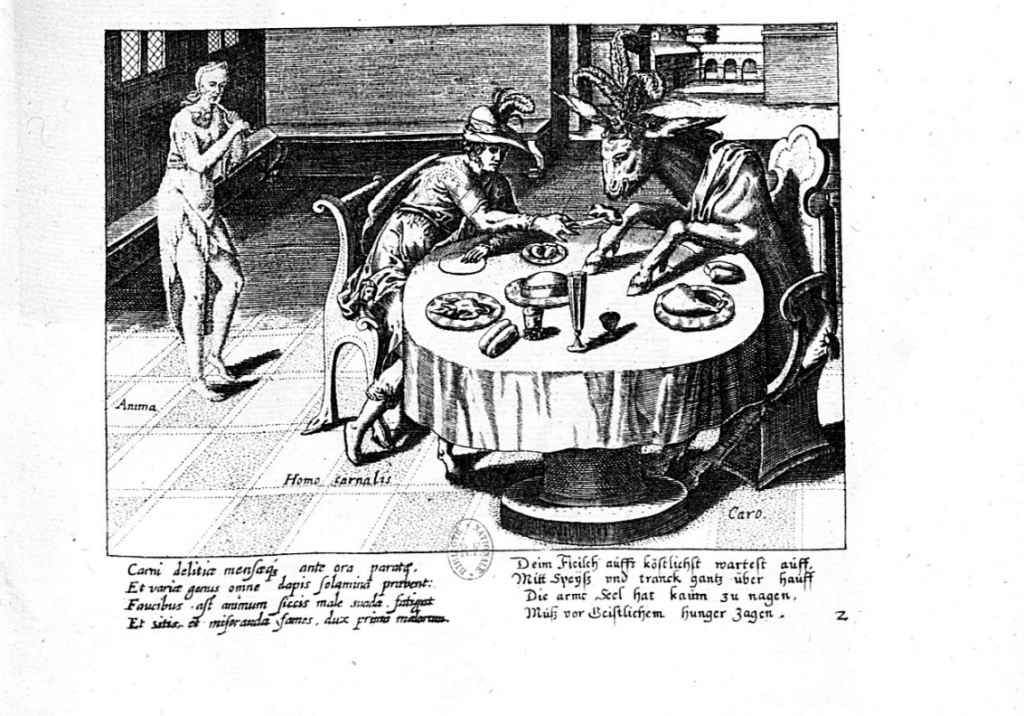
The four prints proved highly popular, and were re-issued in a variety of formats, captioned in various languages throughout the century. Though there may seem to be chronological difficulties — as it was published in 1624 — the Amsinck album painter seems to have taken the version below as his model — here too is the German verse, sandwiched between the Latin and French versions. It comes from an important collection of series of prints, many by Coornhert, published in Frankfurt in 1624 under the title Philosophia Practica.
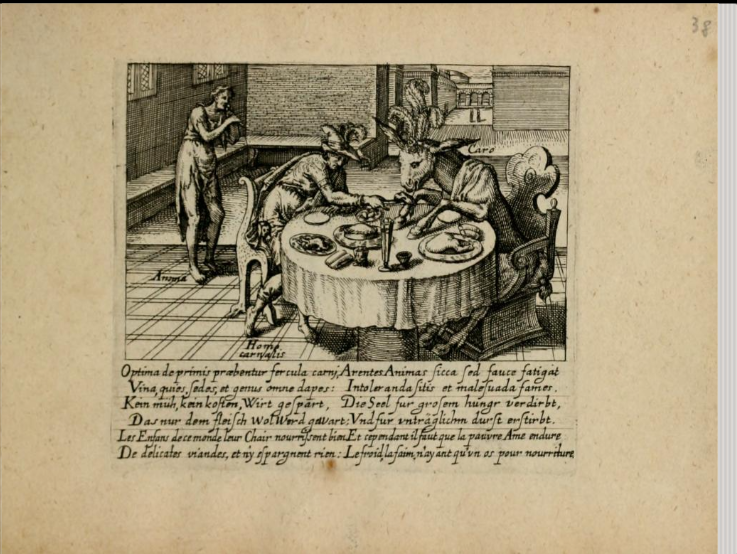
Towards the end of the album of Johannes Sarnovius — with entries dated from 1639 to 1651 — he has pasted in the 4-print series as issued by Peter Isselburg probably in the early 1620s:
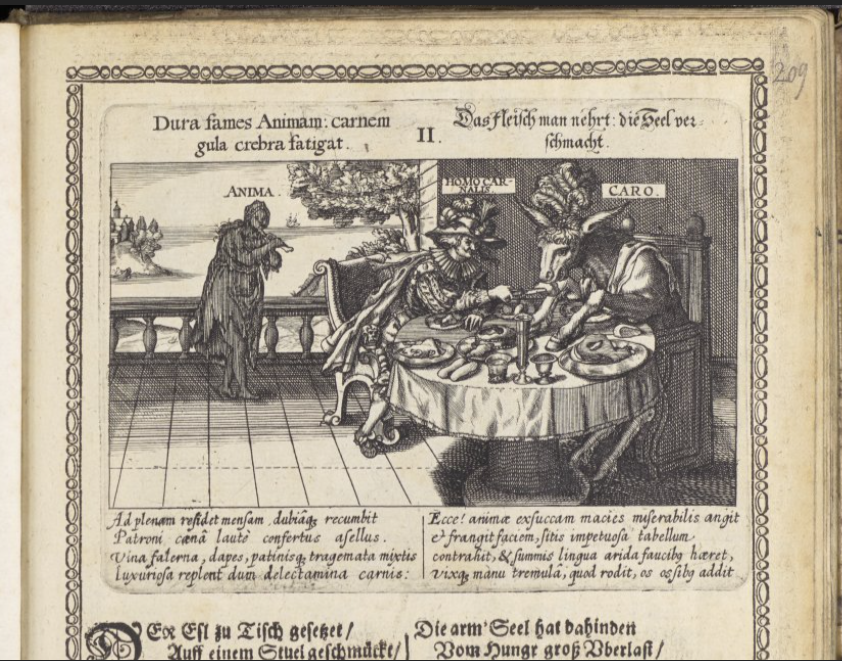
I close with a couple more versions — note the new vertical format:
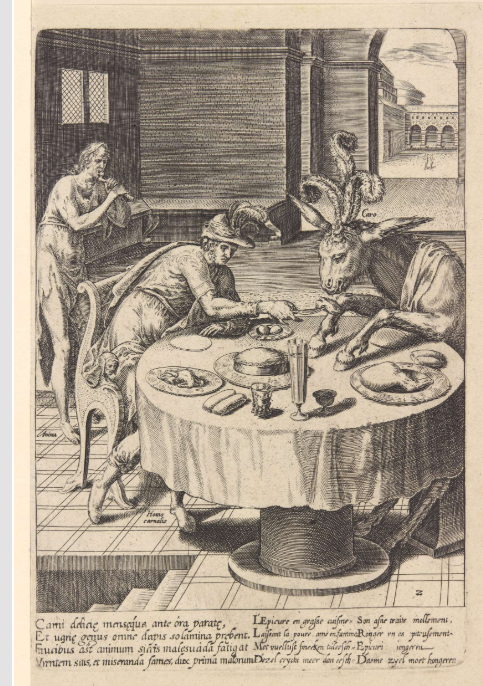
The above series with trilingual captions was issued by Ioannes Galle in Antwerp, and the engraving is attributed by the Rijksmuseum to the “workshop of Philips Galle” — with the unhelpful date-bracket, “1610-1676” !
This series is obviously related to that bearing the name of the engraver Gillis van Breen, which the Rijksmuseum dates “c.1595-c.1610” (lefthand engraving below — REVERSED for the sake of comparison):
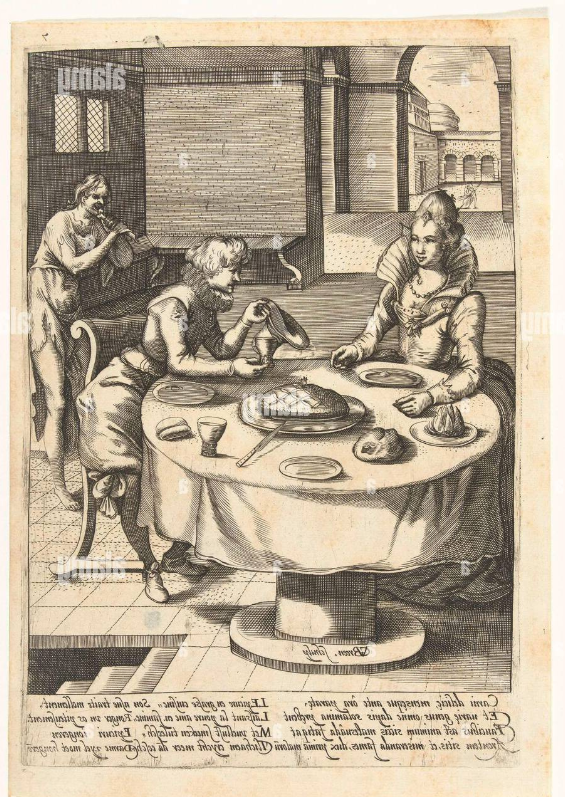
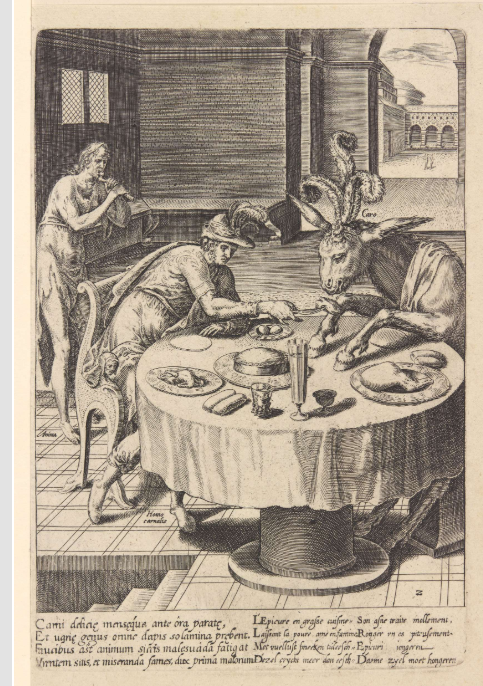
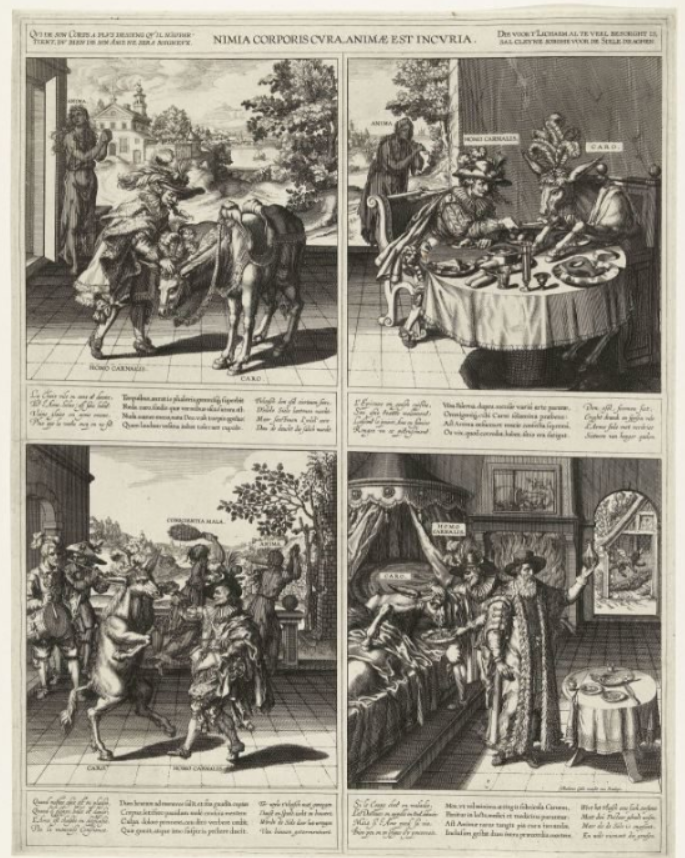
All four scenes of the series appear on a single sheet issued before 1633:
And from a French series published in Paris by Lagniet c.1660:
Leave a Reply