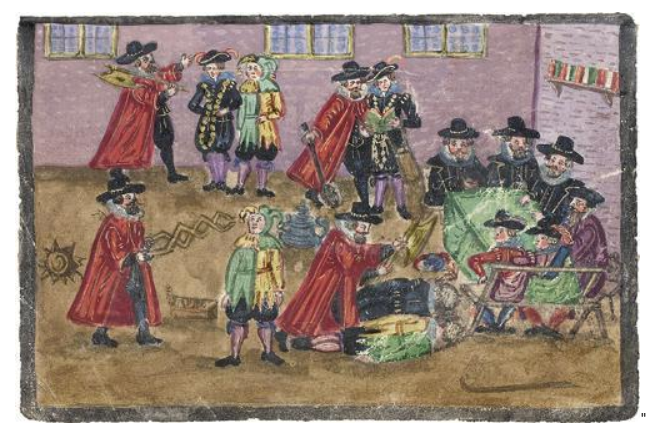
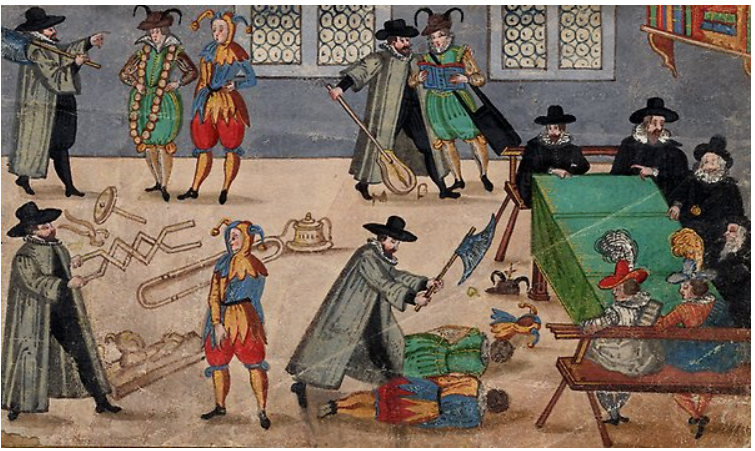
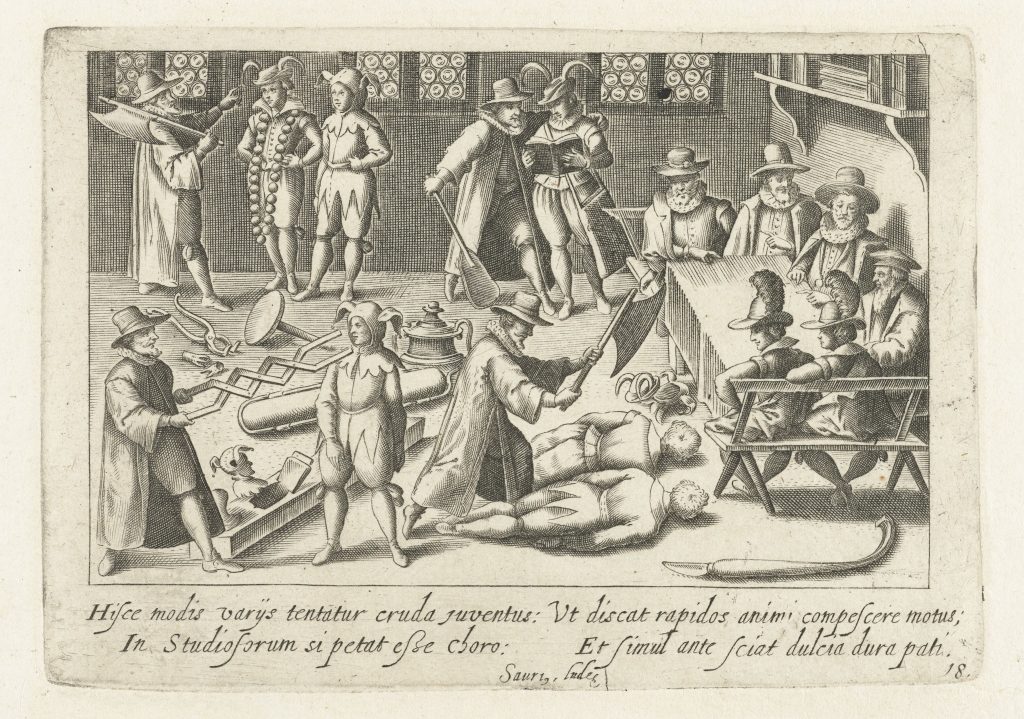
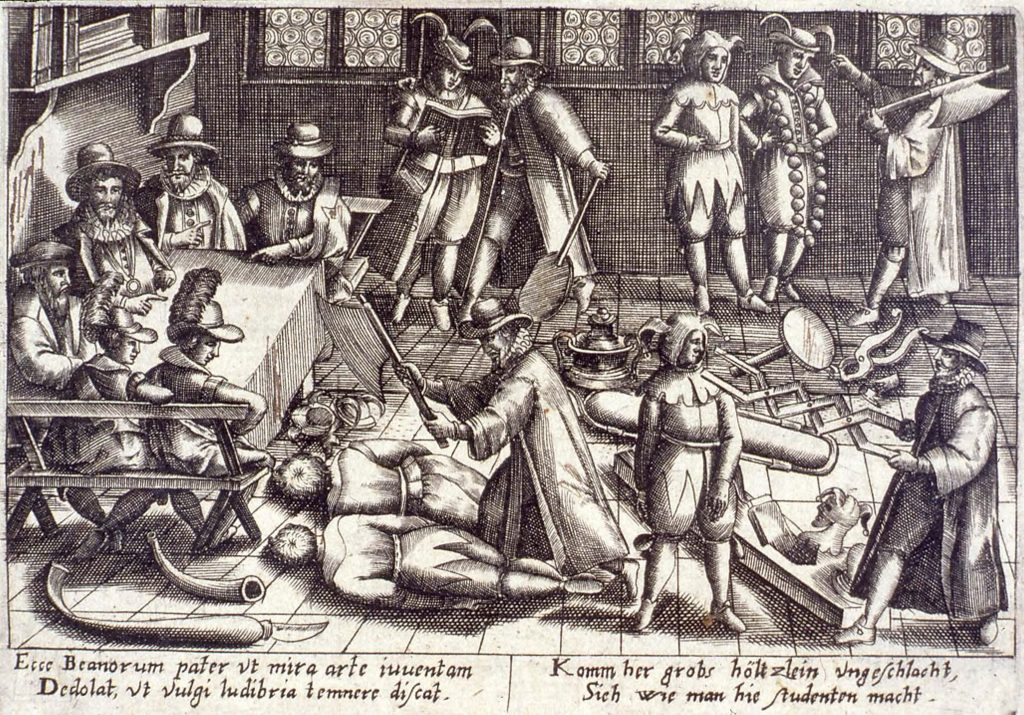
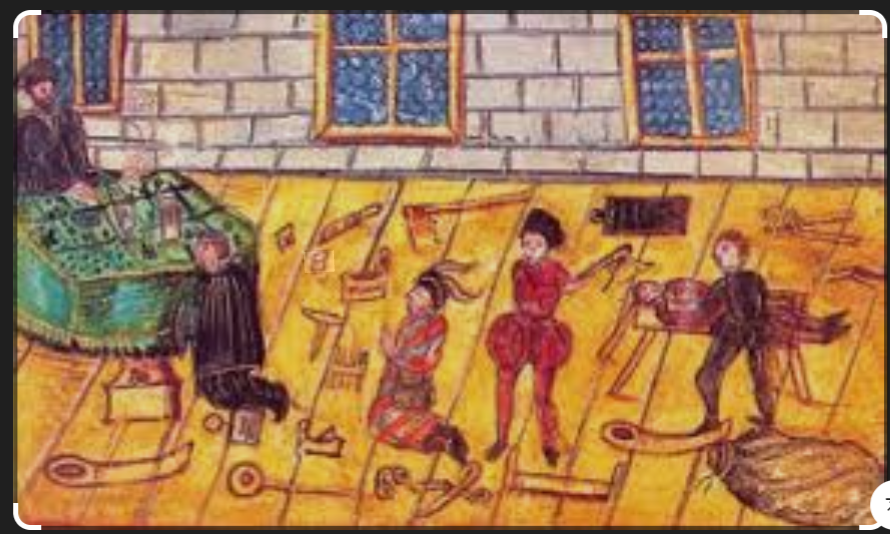
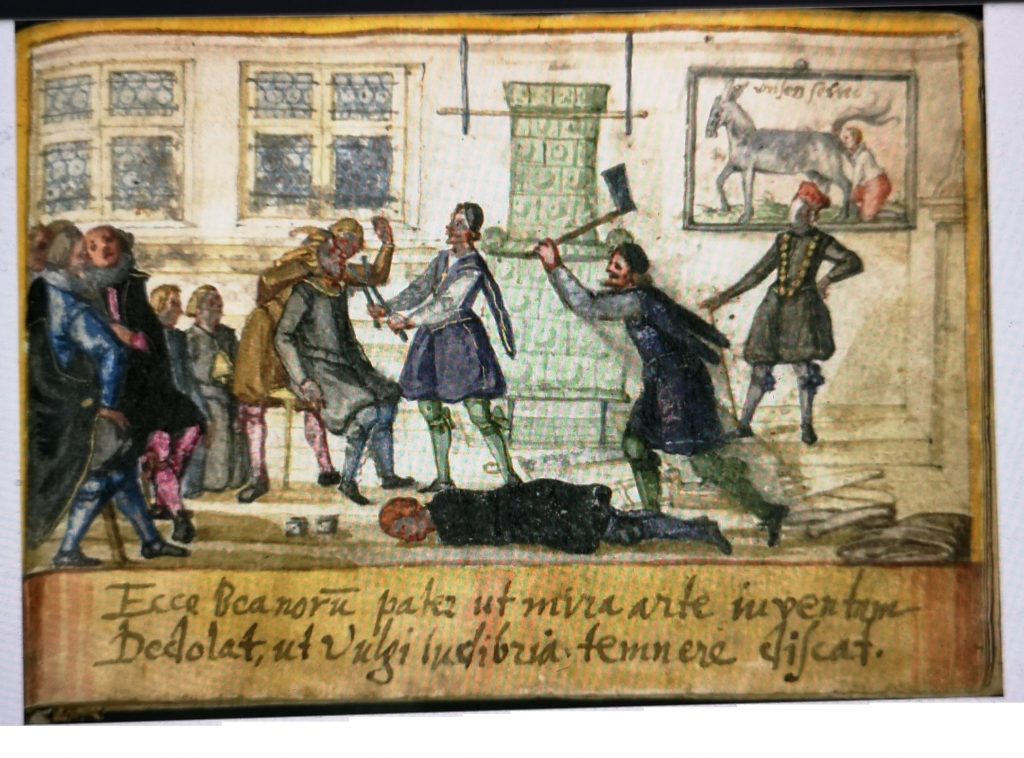
One colourful aspect of student life registered in the print-books is the initiation or ‘hazing’ ritual to which new students were subjected. The so-called Depositio appears in the Pugillus Facetiarum (Strasbourg 1608, 1618) and also in de Passe’s Academia sive Speculum Vitae Scolasticae (Arnhem 1612), and the miniature in the Frölich album clearly copies the former, but the painting in the Spoerlin album (dated 1622) depends on neither of these print models. In a room heated by a Kachelofen and before an invited audience, two bejaunes/beani [initiates] undergo different symbolic rites – one lying on the floor is about to be ‘trimmed’ by a man wielding an axe, another wearing a fool’s hood and seated in a chair is about to have his ‘tusks’ drawn with an alarming pair of pliers. When the new savage monsters have been thus tamed and rendered harmless, they will then be considered civilised enough to join the student body. But a detail just as interesting as the ritual itself, is the unremarked painting on the wall. It shows a man/student kneeling before the rump of an ass and holding its tail up so that he can kiss its arse! The picture is inscribed vnser seind [drey] [There’s three of us — i.e. ass, initiate, viewer] and is a traditional visual joke at the viewer’s expense, found in the albums elsewhere in its own right. [and discussed here in my post https://albumamicorumear-e4qvahs764.live-website.com/the-additional-fool-that-would-be-you/ ]
The caption to the album painting reads, Ecce beanoru[m] pater ut mira arte iuventam Dedolat, ut Vulgi ludibria temnere discat. [Behold the father of the freshmen in wonderful fashion may ‘tear’ youth, so that the uninitiated may learn to keep their toys]
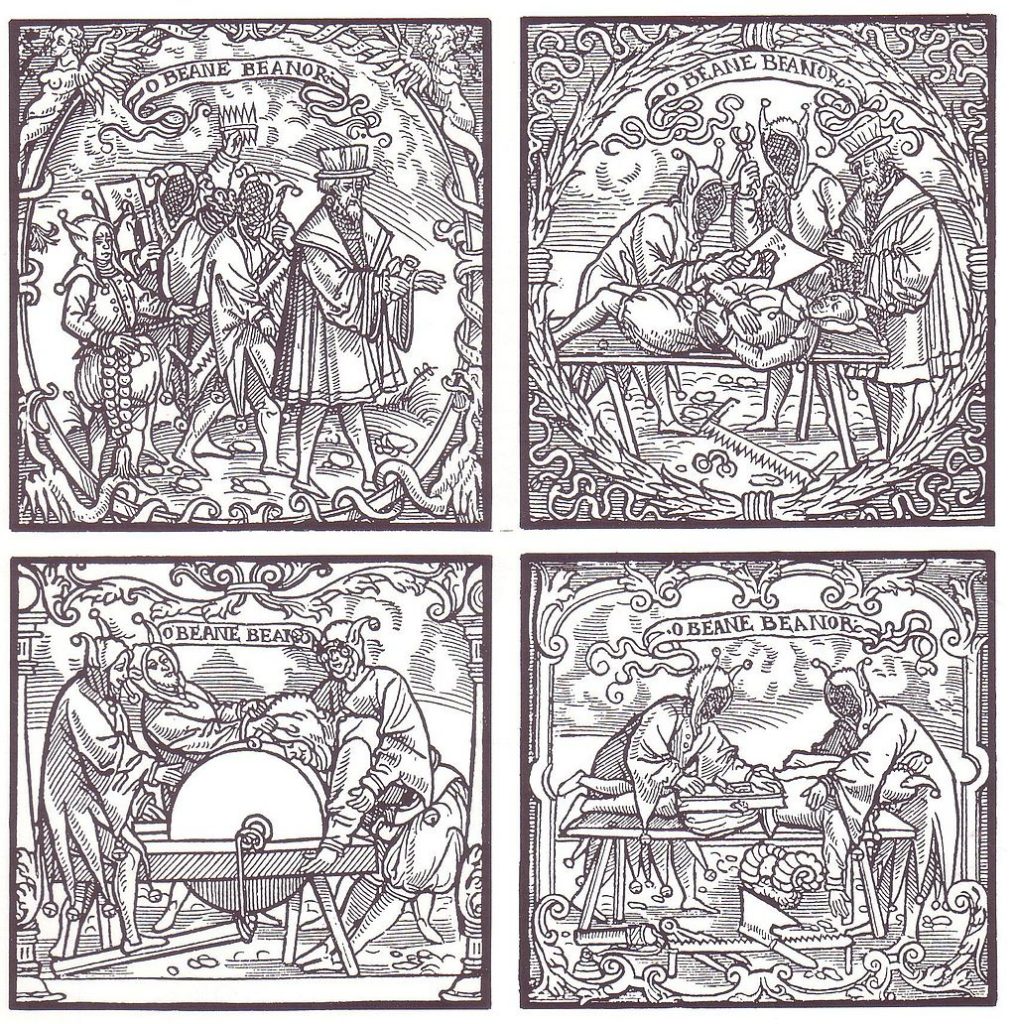
Below, an earlier set of woodcut illustrations first published in Iudicium reverendi patris D. Doctoris Martini Lutheri, de depositione in Academiis vsitata (Wittenberg 1540) and reprinted in Johannes Dinckel, De origine… depositio Beanorum (Erfurt, 1578), showing many of the same tools and activities
Leave a Reply to Commedia dell’arte and related imagery – Album Amicorum: Early Modern Stammbuch Iconography & related Cancel reply