Something of a ragbag, a miscellany! We have met with several pictorialised proverbs already in sundry other posts [Idleness is the Devil’s cushion — at witches, devils, etc, to name but one], but this will be an open-ended post to which I can add from time to time.
Of course there are problems of definition, when is a proverb not a proverb? — some fables [which have a post of their own here] are proverbial, emblems are often pictorialised proverbs, etc.
Sometimes we don’t even recognise that the painter is representing a proverb — especially if it is a proverb we are unfamiliar with, because it died out from our language centuries ago — or is one that doesn’t exist in our own language. I begin with a case in point!
It was only because I was intrigued by this painting of c.1580 on a leaf from the dismembered album of Anton Magnus von Egk that I puzzled away at the caption until I was able to read it
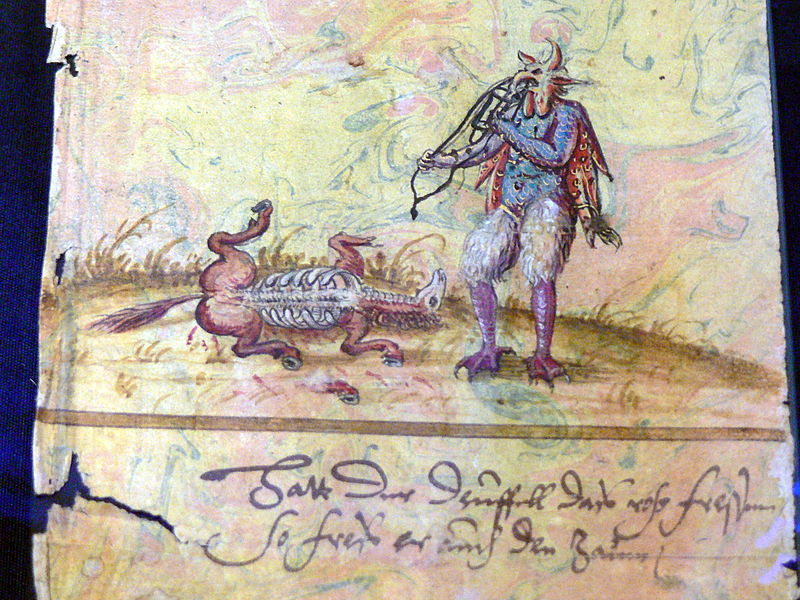
Hatt Der Deuffell Dass ross fressen / so fress er auch den Zaum [If the Devil devours the horse, he devours the bridle too]
and, of course, googled it! The general application seems to be that if someone has taken/consumed the greatest or most important thing, they might as well take any smaller bits still left. More importantly, I was unable to find any examples of the expression earlier than the 17C, so that this leaf seems to preserve the earliest known instance of this expression.
He that will learne to pray …
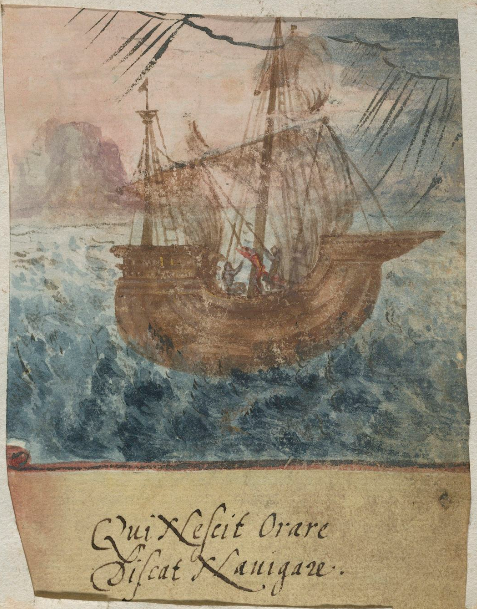
let him go to sea — as the poet George Herbert (d.1633) expressed it, in his posthumously published proverb collection, Jacula Prudentum (1651).
The miniature of a ship in a stormy sea is here captioned with the Latin version of the proverb: Qui Nescit Orare Discat Nauigare. It is also one of the many proverbs pictorialised in the late 15C French Proverbes en Rimes manuscript in the Walters Art Gallery
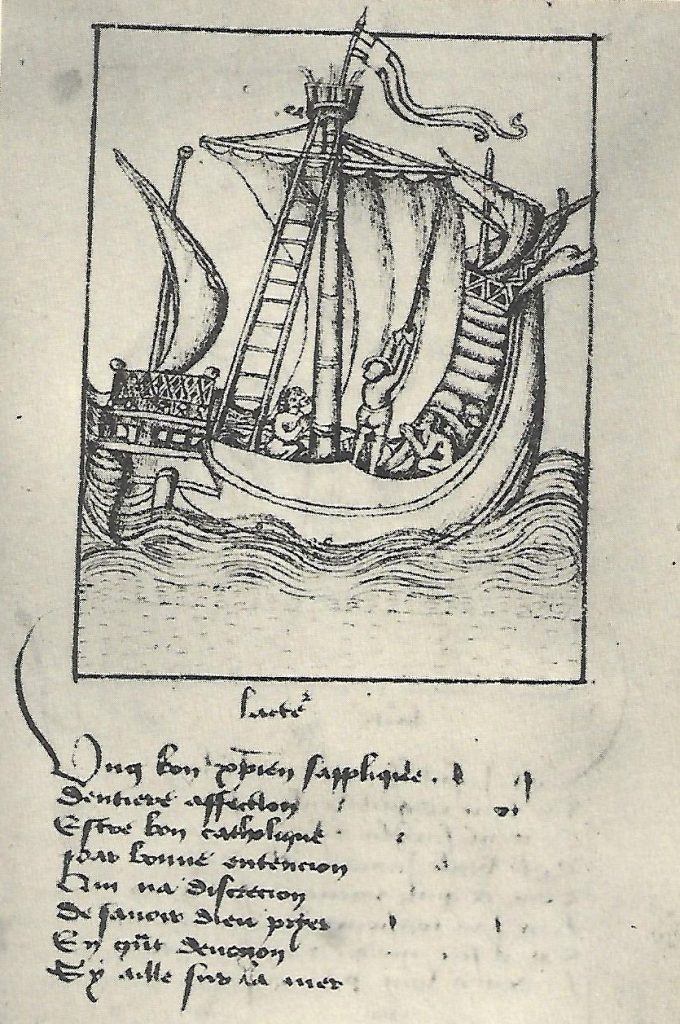
Here it is the last 4 lines that encapsulate our proverb:
Qui n’a discrecion
De savoir Dieu pryer
En grant devocion,
Sy aille sur la mer.
[He who has not the wit to know how to pray to God with great devotion, let him go to sea]
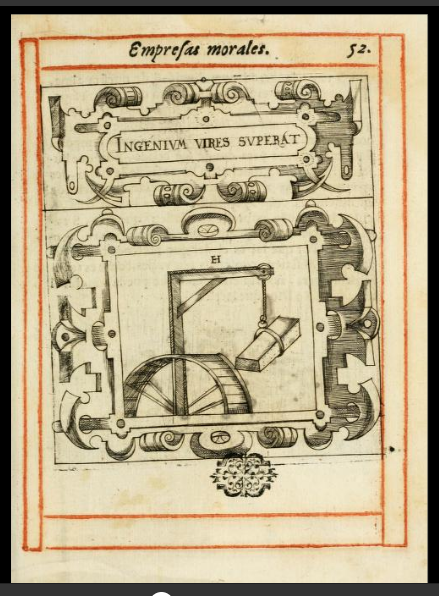
Ingenuity outdoes strength
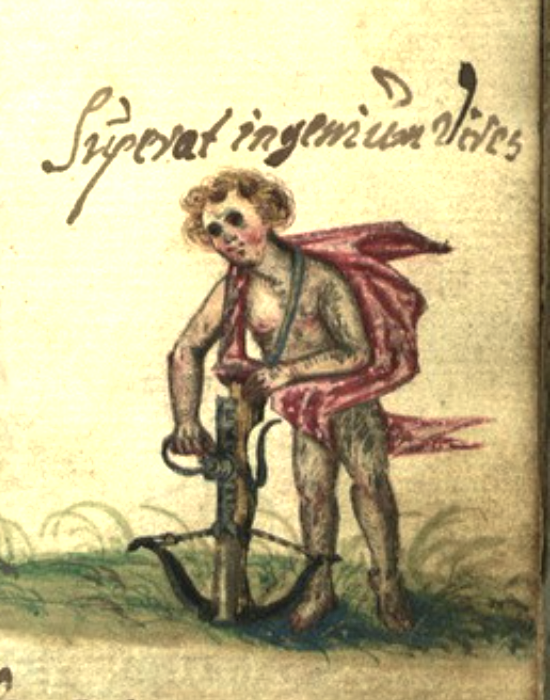
This small illustration of a young boy tensioning a crossbow is labelled with the Latin Superat ingenium vires which I translate as above. The ingeniousness is represented by the windlass, the small machine that makes it easy to wind back the string — which would be almost impossible for a strong man to do, let alone a young boy.
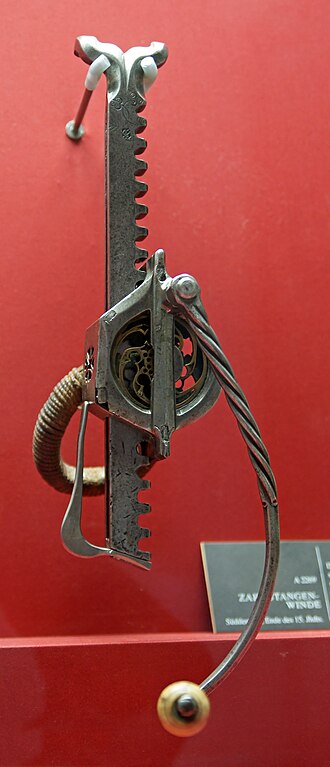
The same motto captions the illustration of another simple machine, the crane, in Borja’s emblem-book, Empresas morales, published in Prague in 1581:
But it was not just ingenious mechanical devices that the motto captioned — simple human ingenuity was also so labelled — as in this illustration of one of the medals awarded in 1583 by the Altdorf Academy, which subsequently appeared as a French jeton during the reign of Louis XIII (1610-43):
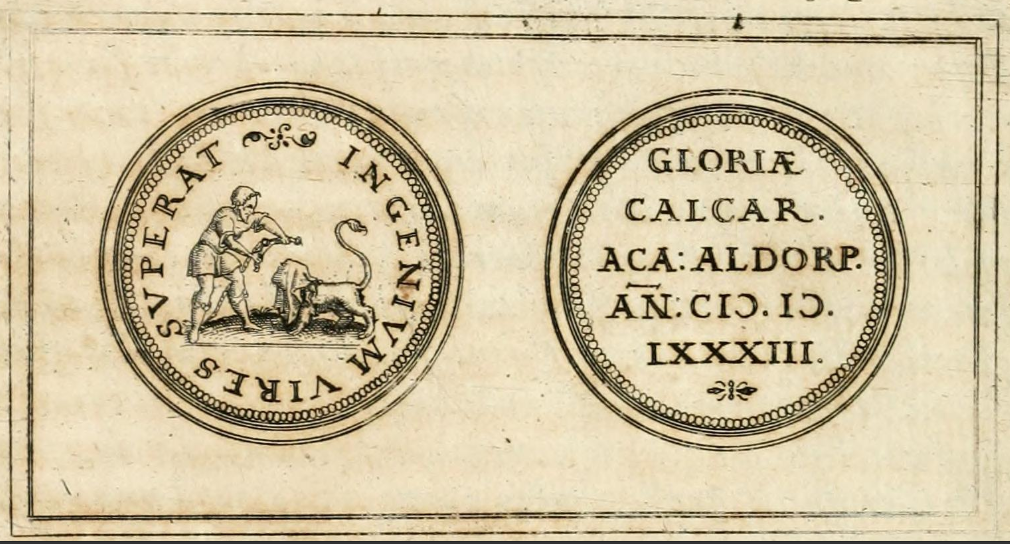
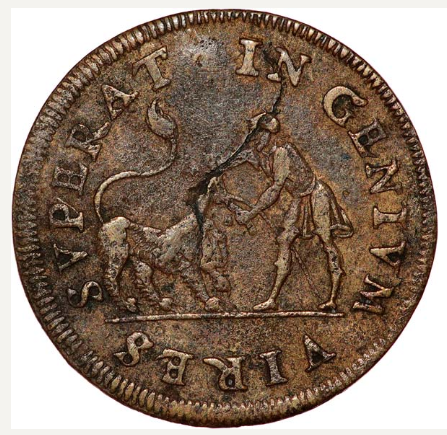
Here the strength of the lion has been overcome by the simple strategy of throwing a cloth over its head, enabling it to be tamed and fitted with a collar and leash.
Interestingly, the same ingenious mechanism is depicted in one of the dozen proverb illustrations after Bruegel engraved by Jan Wierix c.1568. The Miller album-painter has made a close copy, but captioned it in Latin and Italian
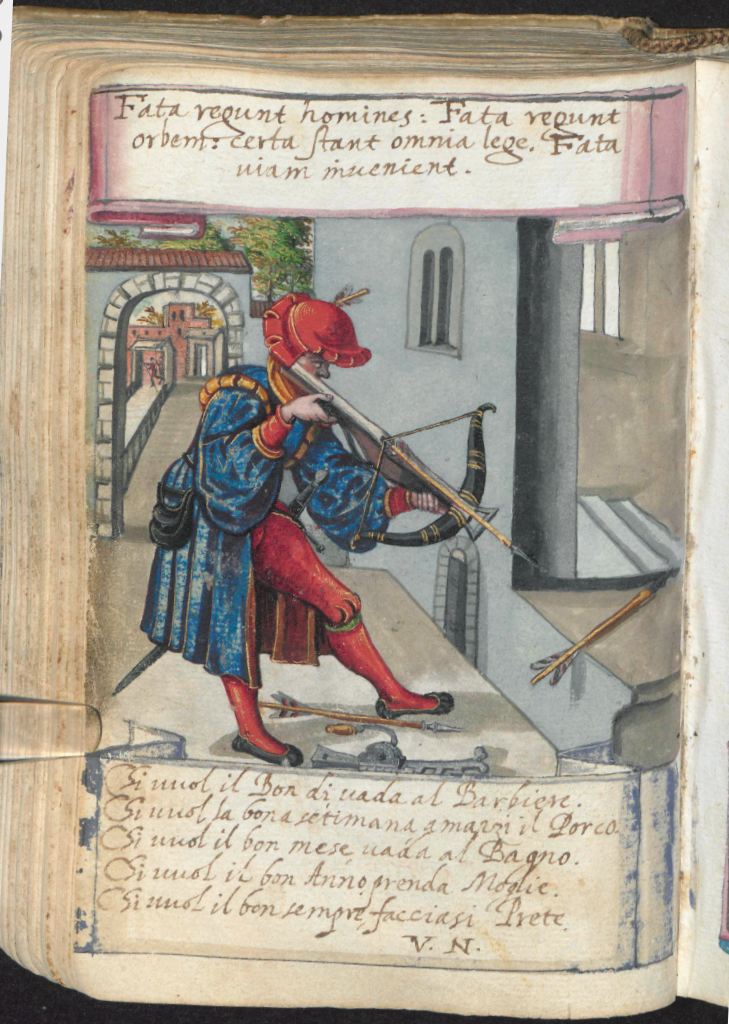
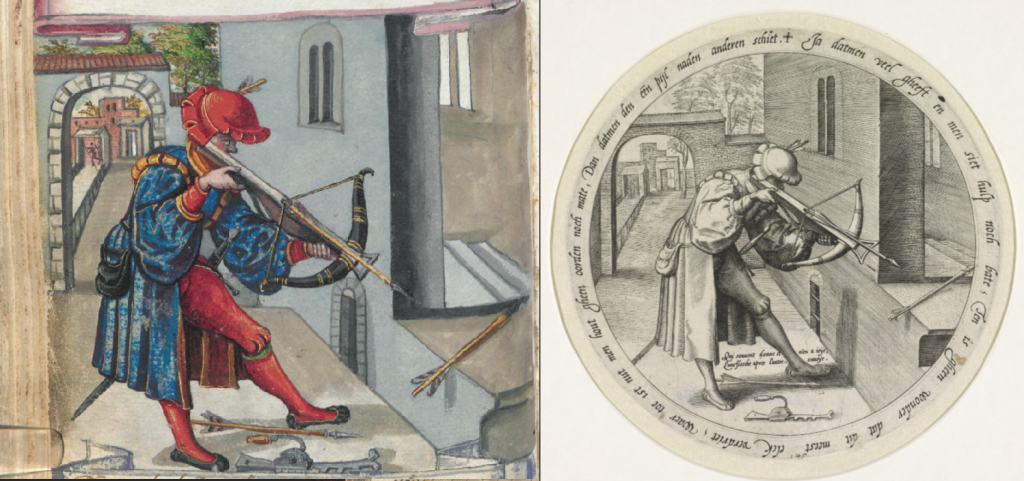
The cumulative Italian ‘caption’ below the image — which has nothing to do with it ! — was doubtless copied from Heinrich Decimator’s Sylva Vocabulorum et Phrasium Octo Linguarum (Leipzig 1606), published the previous year — and is entirely in sympathy with the sort of humour beloved of album contributors, and which also serves to demonstrate one’s familiarity with a foreign language
Chi uuol il Bon di, uada al Barbiere Who wants a good day, go to the barber
Chi uuol la bona setimana, amazzi il Porco who wants a good week, kill the pig
Chi vuol il bon mese, uada al Bagno who wants a good month, go to the baths
Chi uuol il bon Anno, prenda Moglie who wants a good year, take a wife
Chi uuol il bon sempre, facciasi Prete who wants good forever should become a priest.
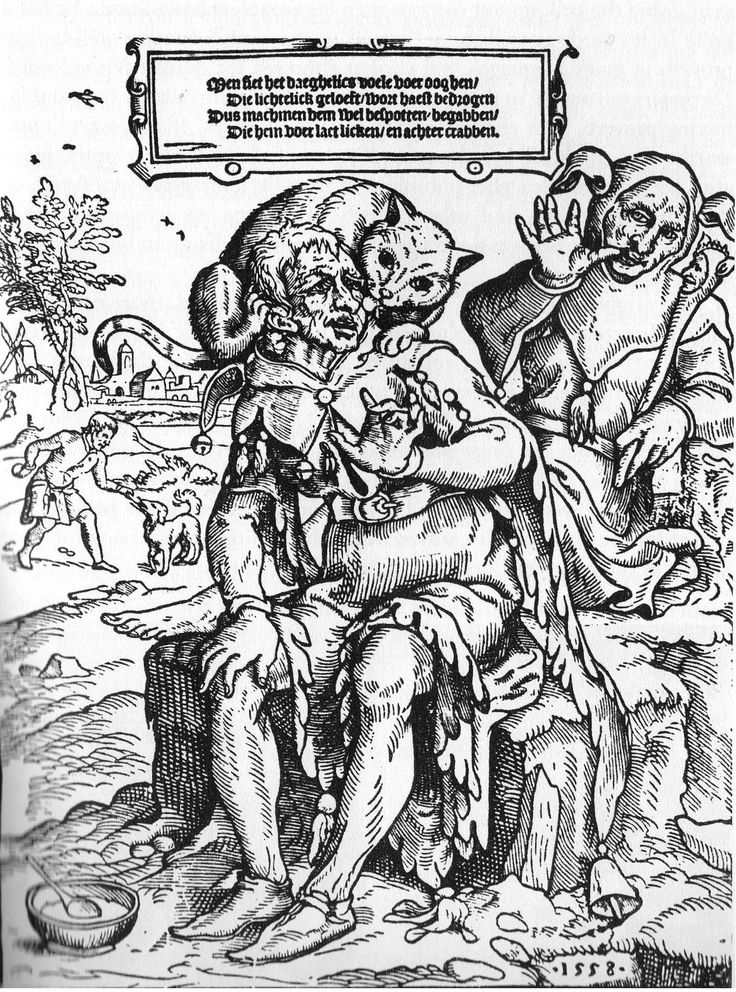
Beware the Cat! (that licks your face but scratches your back)
This was a very popular proverb in the early modern era and depictions of it appear in a variety of media. To date, I’ve only found it pictorialised once in the albums, undated, among the disiecta membra of Paul Jenisch’s album:
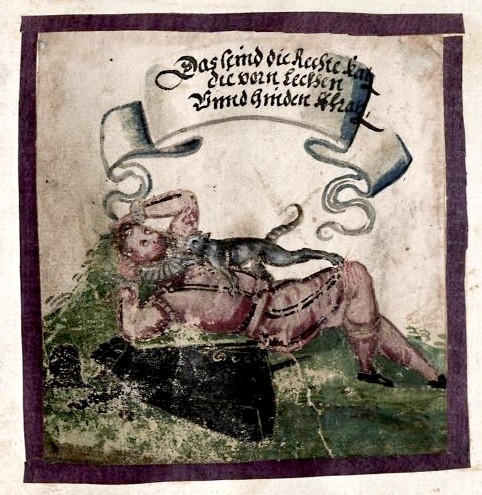
Here the caption reads: Das seind die Rechte katz die vorn lecken Vnnd hinden kratz [That’s a cat for you, that licks you in front and scratches you behind]. According to Georg Schmidt, however [(1907),no.1020], on 22nd March 1614, Andreas von Mandelsloh, inscribed it in an album in the form
Man hüte sich vor den Katzen die vorne lecken und hinten kratzen.
Marx Walther had the proverb painted on his horse’s trapper when he entered the lists in 1479, but if the recording artist has rendered the device faithfully, it was simply a cat ‘speaking’ the proverb:
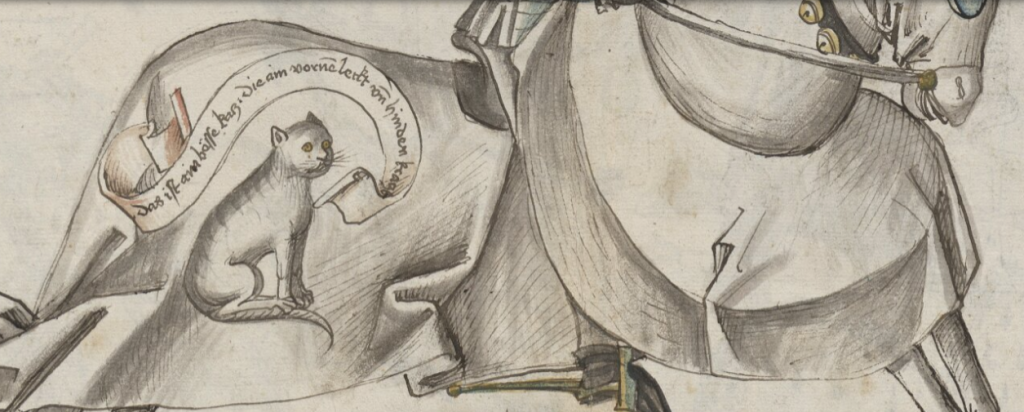
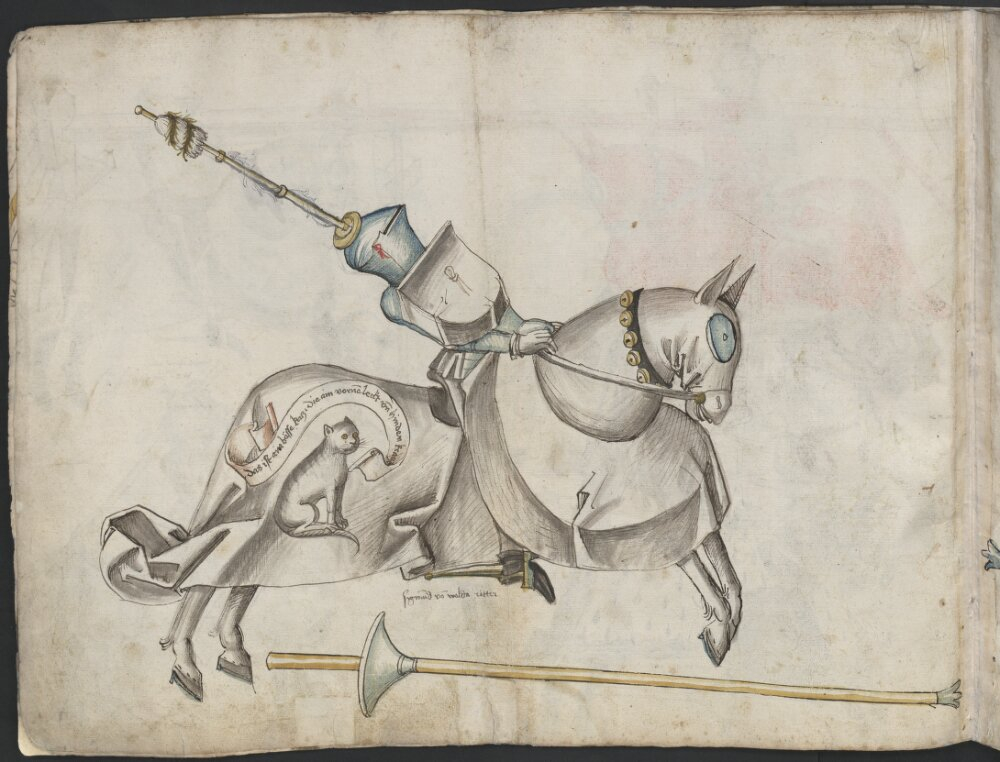
Banderole reads: Das ist ain bösse katz die am vorne[n] leckt vn[d] hinden kratzt [It’s a bad cat that licks you in front and scratches you behind]
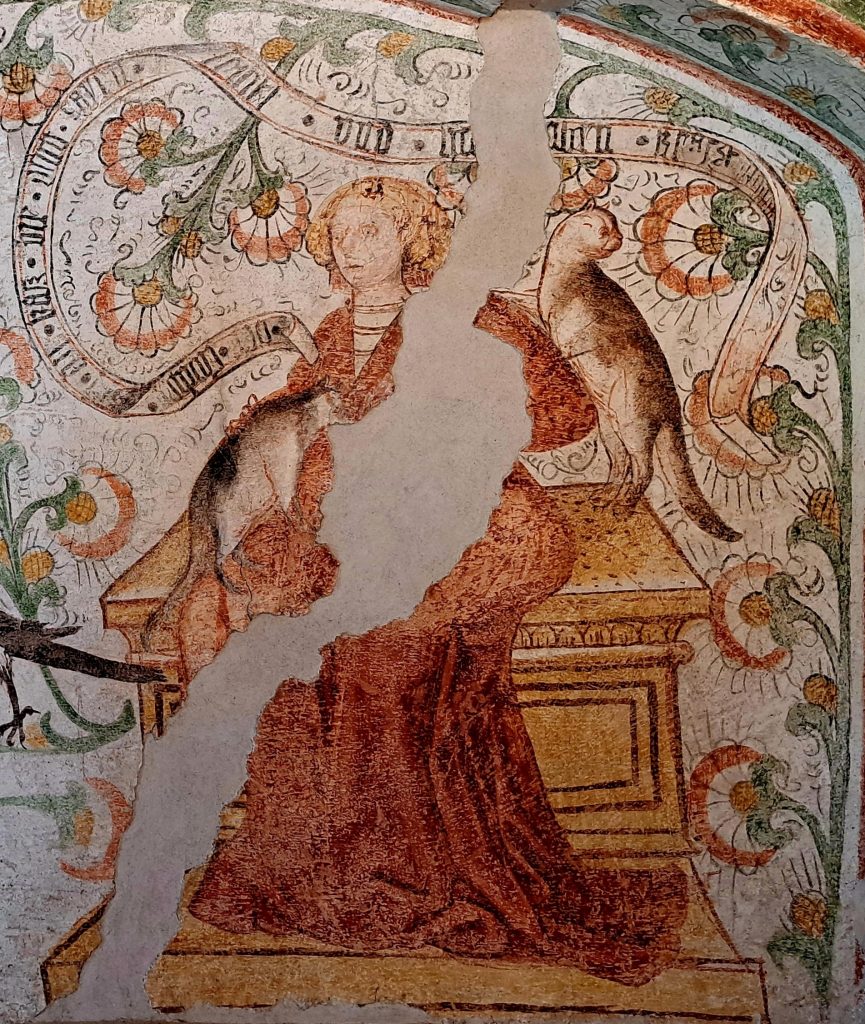
A few years earlier (1468×78) it is found fully illustrated among the wonderful wall-paintings in Castel Pietra in Calliano in the Trentino, which I was fortunate enough to see in 2023. The banderole quotes the proverb, and — uniquely — the proverb is here illustrated by two cats, one in the lady’s lap, the other at her back.
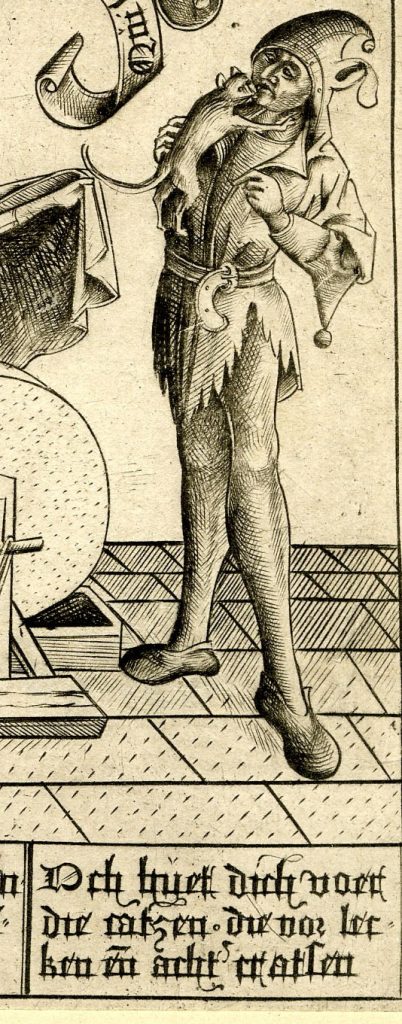
A decade or so later as one of Four Biblical Proverbs, the cat appears licking the face of a fool in an engraving by Israhel Van Meckenem who was working in Bocholt (d.1503).
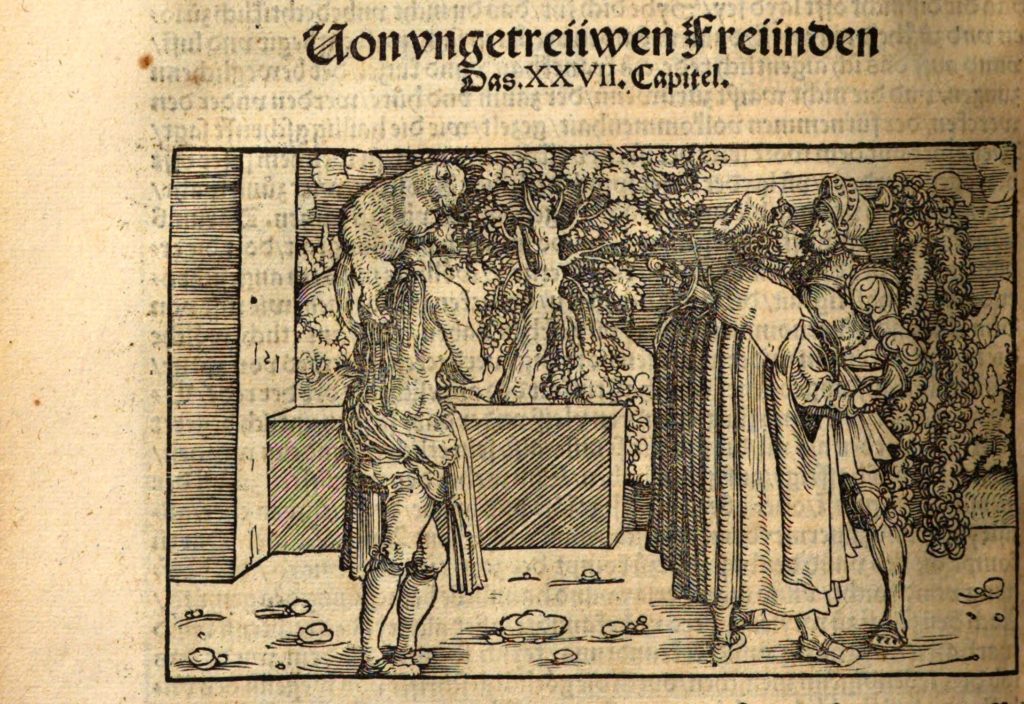
Next, a woodcut made by the so-called Petrarch-Master, Hans Weiditz, made in 1521 to illustrate the chapter, Von Ungetreuen Freunden, in Von der arznei beider Gluck (Augsburg, 1532), juxtaposes the cat on the naked shoulders of a man with a knight who embraces a scholar and simultaneously stabs him in the back. The blood from the cat’s scratches is visible, running down the poor man’s back.
Coming nearer in time to the date of our album miniature, are two engravings from the second half of the sixteenth century. The first is a Dutch woodcut print dated 1558 with the cat perched on the shoulders of a seated fool behind his head and licking his face, but ready to scratch his back,
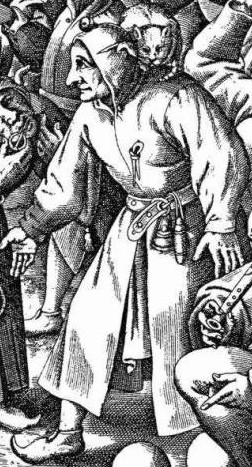
the second — also in a fools context — a detail of the print, after Bruegel’s design, of the ‘Festival of Fools’, the proverb not spelled out textually, but implicit visually, the cat again perched on the fool’s shoulders, behind his head. The print is undated, the British Museum suggests 1570×85.
I add that in my essay on the very early collection of prints assembled by Ferdinand Columbus (d.1539), is listed an Italian print illustrating the proverb – though no longer extant. According to the detailed description of it in the extraordinary taxonomic inventory of his prints (where it is no. 1617), it depicted a man sitting on a three-legged stool holding a cat in his hands, with another cat behind him which scratches him, and a boy holding a banderole reading, Orguns si guardi di la mala gata/ che dinanzi talifasa y de dreto grafa (Beware the wicked cat which licks your face and scratches your back) — and is all the more interesting in that, at this date, the proverb in question seems otherwise only to be recorded from the German-speaking regions [ essay available at https://www.academia.edu/42200157/_Washing_the_ass_s_head_exploring_the_non_religious_prints_ ]
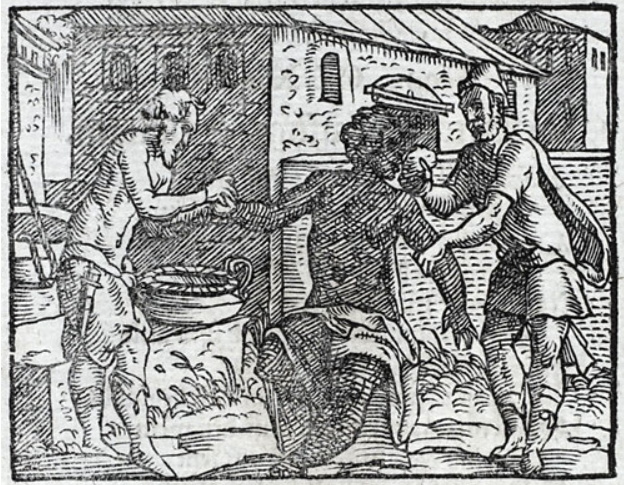
washing the black man white
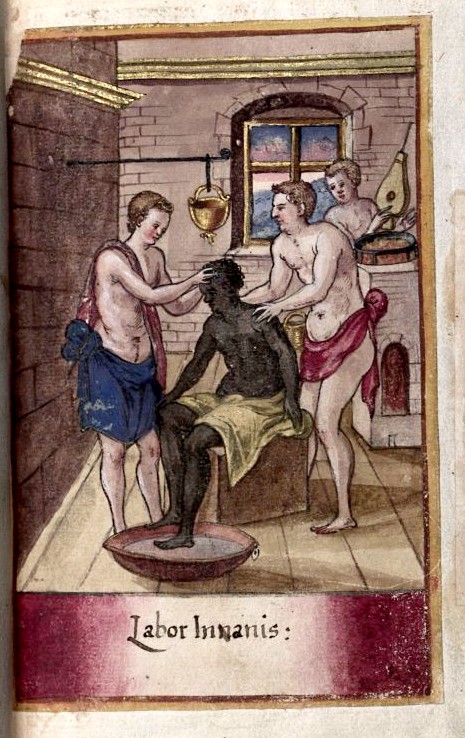
Labelled Labor Innanis [foolish labour] is another miniature in the Jenisch album illustrating the folly of thinking that washing a black man will make him white. In the album of Menold Hillebrand van Harsens, painted in 1607, the same folly is headed Impossibile.
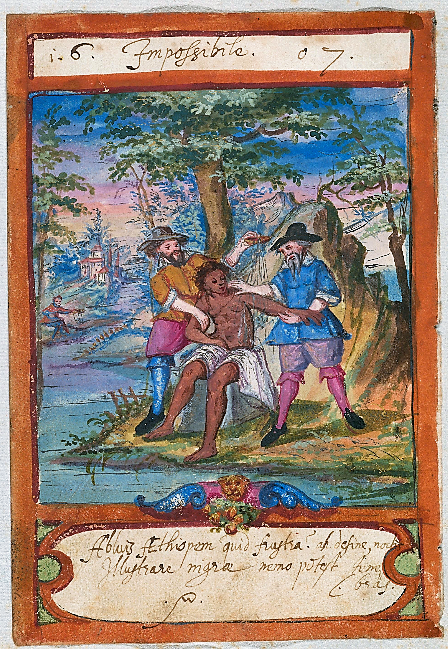
But the title, and caption below — Abluis Aethiopiem; quid frustra? Ah desine. Noctis illustrare nigrae nemo potest tenebras. (You wash an Ethiopian; why (labour) in vain? Desist. No-one can lighten the darkness of black night.) — are taken from Alciato’s Emblematum Liber (1531 etc.), the first and easily the most popular emblem-book of all time. This is the illustration in question to the Frankfurt 1567 edition.
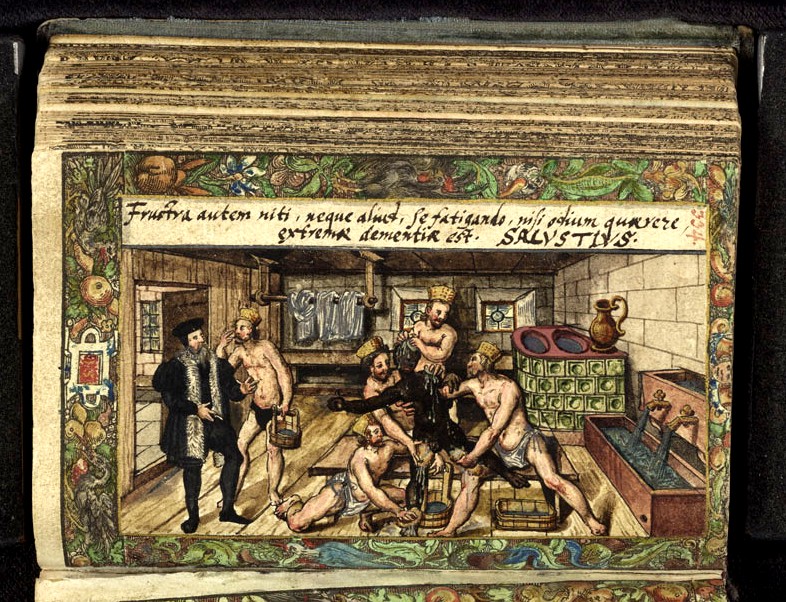
This next image is at least interesting for the detailed glimpse into a bath-house. The quotation from Sallust, Jugurthine 3. 3, means “To strive in vain and to seek nothing other than hatred, from the exhausting of self, is the extreme of folly”.
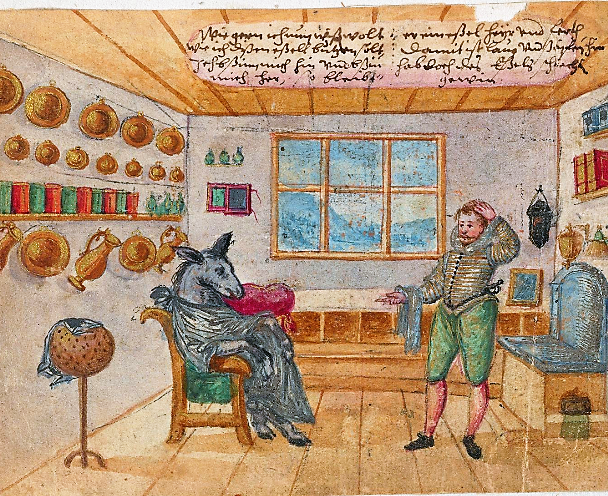
Washing the ass’s head
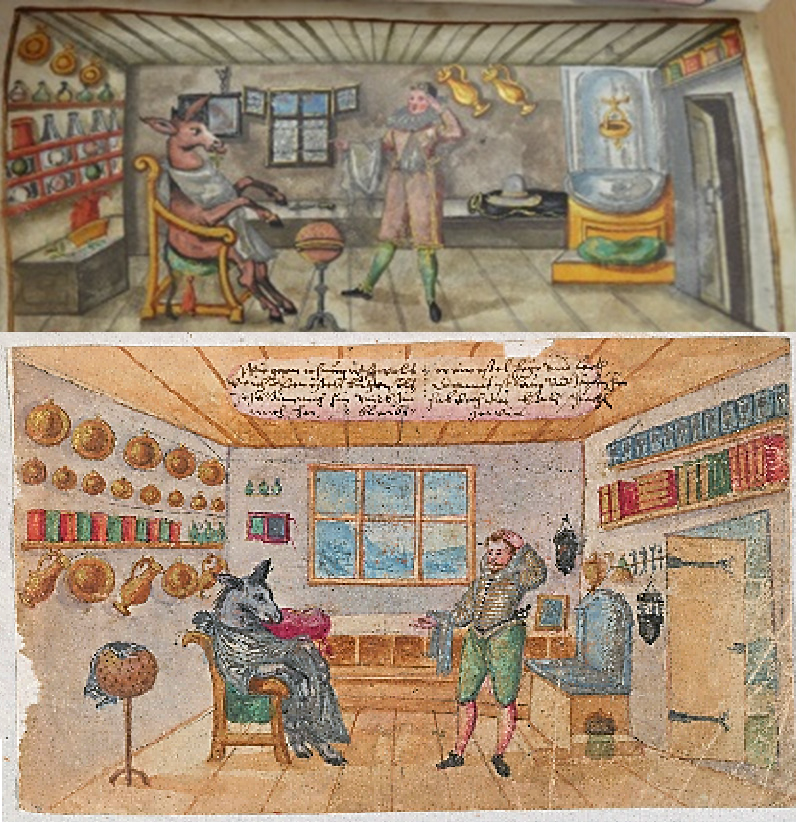
Another proverbially foolish washing. I have come across two examples in the albums, to date, but have only a poor quality reproduction of this first one
Below is a much better quality image from an unknown album [detail] — and putting the two together for the purpose of comparison, it seems to me likely that both are following the same model — a lost print perhaps?
For the earliest depiction of this proverbial folly we are again indebted to the French Proverbes en Rimes, c.1490:
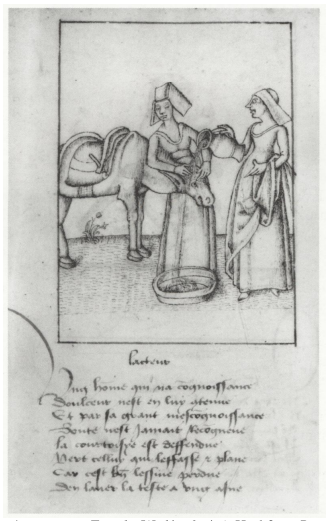
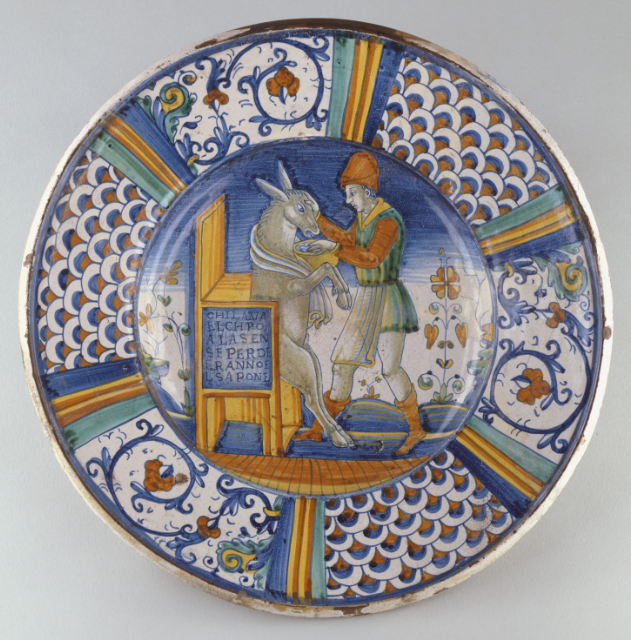
The final lines of the verse spell out the moral: Car c’est bien lessive perdue / D’en laver la teste a ung asne [for it is certainly a waste of soap to wash the head of an ass with it]. Once again, we know that Ferdinand Columbus (d.1539) had a (lost) Italian print of the subject in his collection, described thus: ” A man is washing the head of an ass which holds a basin between its legs …”, but the cataloguer goes on to quote the inscription, Chi lava il capo al asino perde il ranno e il sapone (He who washes the head of an ass loses his lye and his soap). This sadly lost print must have been the model for the mid-16C Italian maiolica dishes of the motif, on which this inscription can be seen on the side of the barber’s chair the ass sits in.
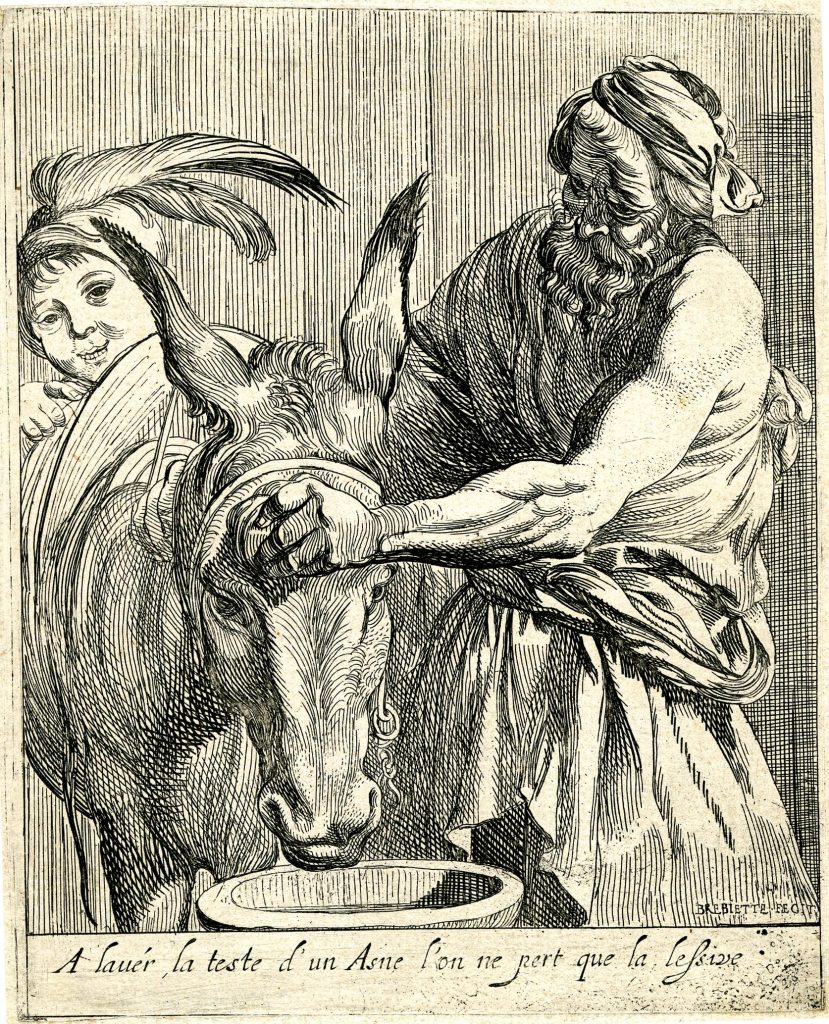
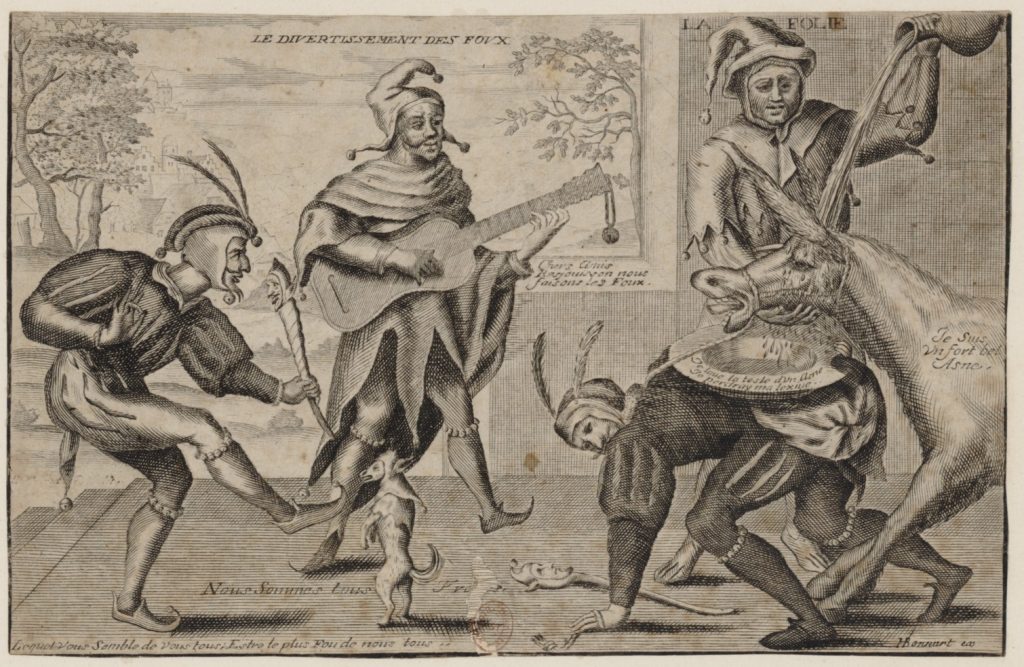
Brebiette’s etching is entitled A lavér, la teste d’un Asne l’on ne pert que la lessive (In washing the head of a donkey one only wastes soap). A later 17C French print entitled Le Divertissement des Foux [The diversion of fools] places the motif firmly in a fool context
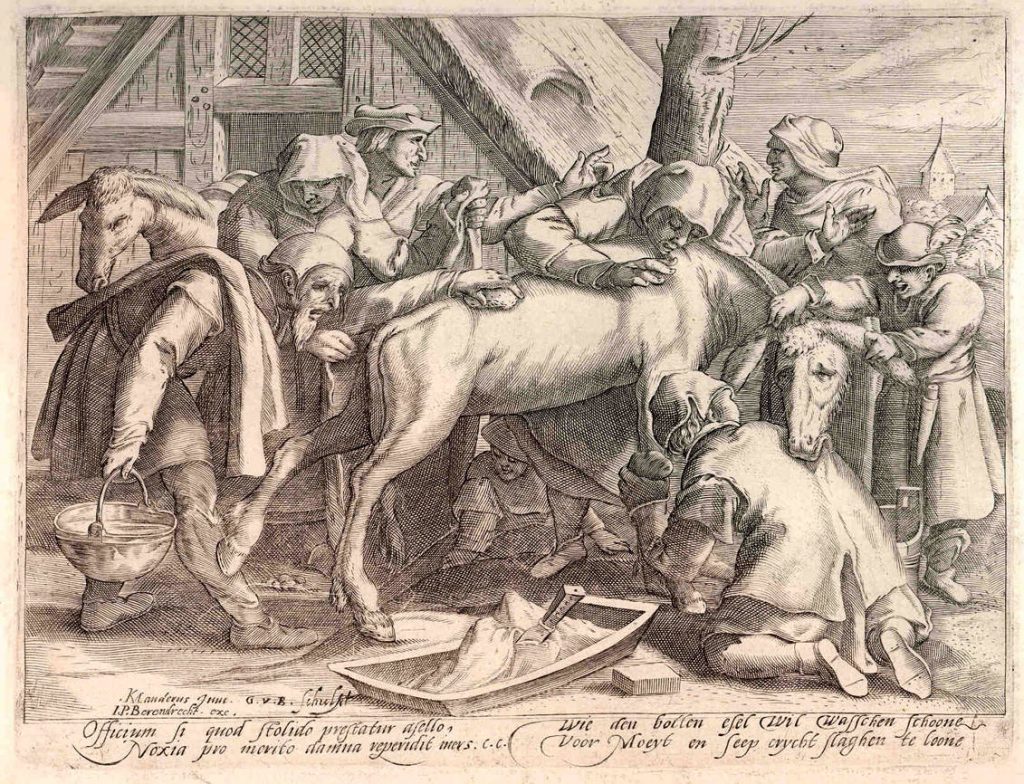
Gillis van Breen’s early 17C etching devotes the entire composition to our motif as we watch an entire team of Dutch men and women busily sponging the beast!
Earlier, sixteenth-century print-makers had included our motif as merely one detail in larger compositions:
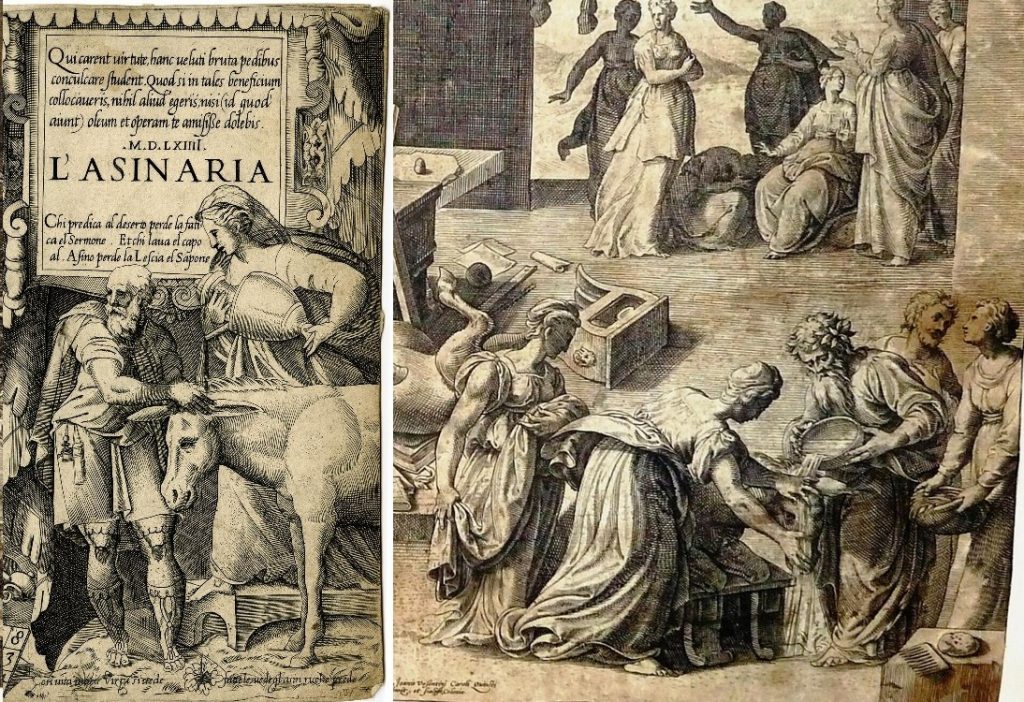
[For a detailed discussion, see Jean Michel Massing, ” ‘Washing the Ass’s Head’: Proverbial and Allegorical prints of the Sixteenth Century” in Print Quarterly 28 (2011), 298-305]
Catching the Wind in a Net
— or at least, trying to! Another proverbial folly.
I have a notional end-date for this blog of 1650, so that I’m dealing roughly with a century of album imagery, from c.1550 to c.1650. This topic is something of an exception, in that I only know it from an album page dated 1674:
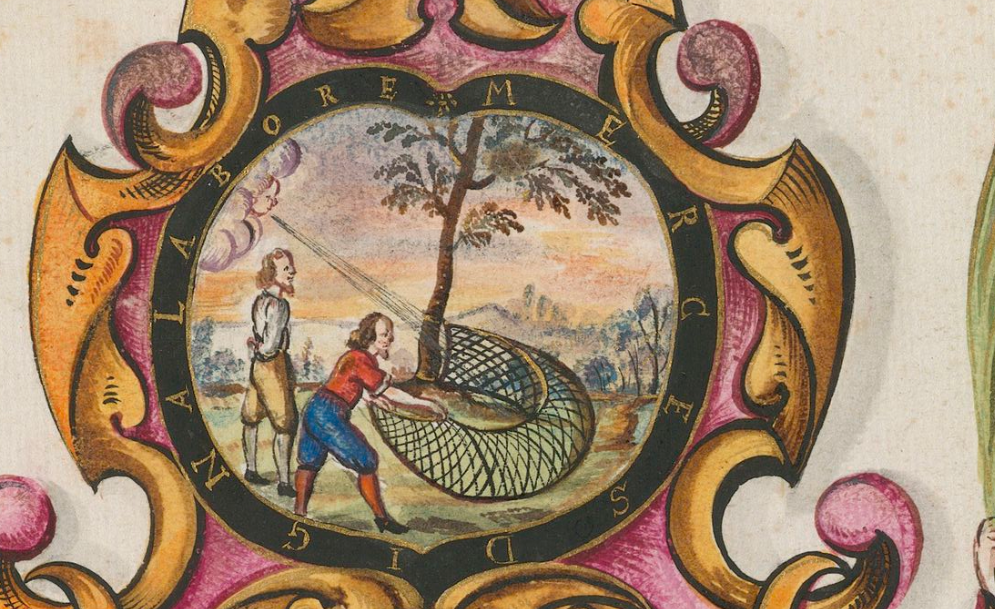
MERCES DIGNA LABORE [reward worthy of the labour] is the ironic motto that surrounds this image of a man trying to catch the wind blowing out of the cloud above in a net. As so often, this is not an original creation of the painter, however, but copied fairly closely from Bruck’s emblem-book, Emblemata Politica (Strasbourg, Köln, 1618)
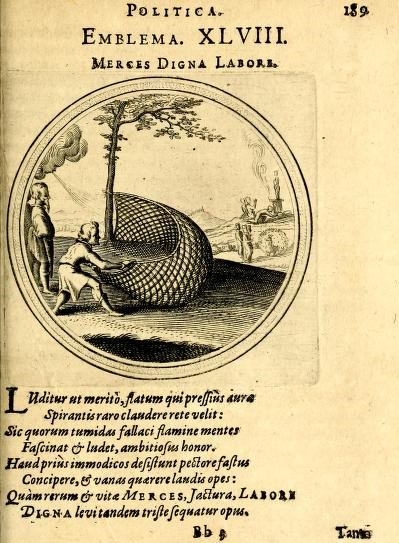
But even by 1618, this traditional impossibilium had been part of the emblem-repertoire for some 80 years, appearing first in the earliest French emblem-book, Guillaume de la Perrière’s Theatre des bons engins, published in 1540, four years after completion.
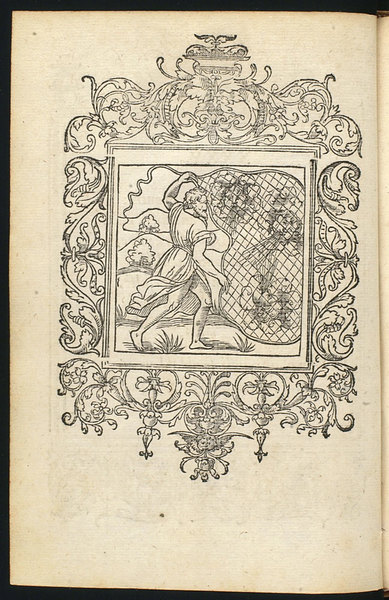
One of the futile and impossible occupations of the officers of the Quintessence in Rabelais’s Cinquième Livre, written a.1553, but published only in 1564, was similarly to hunt the wind with nets [chassoient aux vents avec des rets].
The phrase is familiar to students of English literature via Wyatt’s sonnet,Whoso list to hunt I know where is an hind, which can be dated to 1527, and includes the line, Sithens in a net I seek to hold the wind. Though his sonnet is based on Petrarch’s Una candida cerva [a white hind], the Italian poet does not there use the idiom. It does, however, occur in Ecloga VIII of the Arcadia, a poem written by Jacopo Sannazaro and published in Naples in 1504, and it is his lines which label the curious image in the album of Gervasius Fabricius (below), of a man aiming a crossbow at a woman with bared breasts who sits outside a tent.
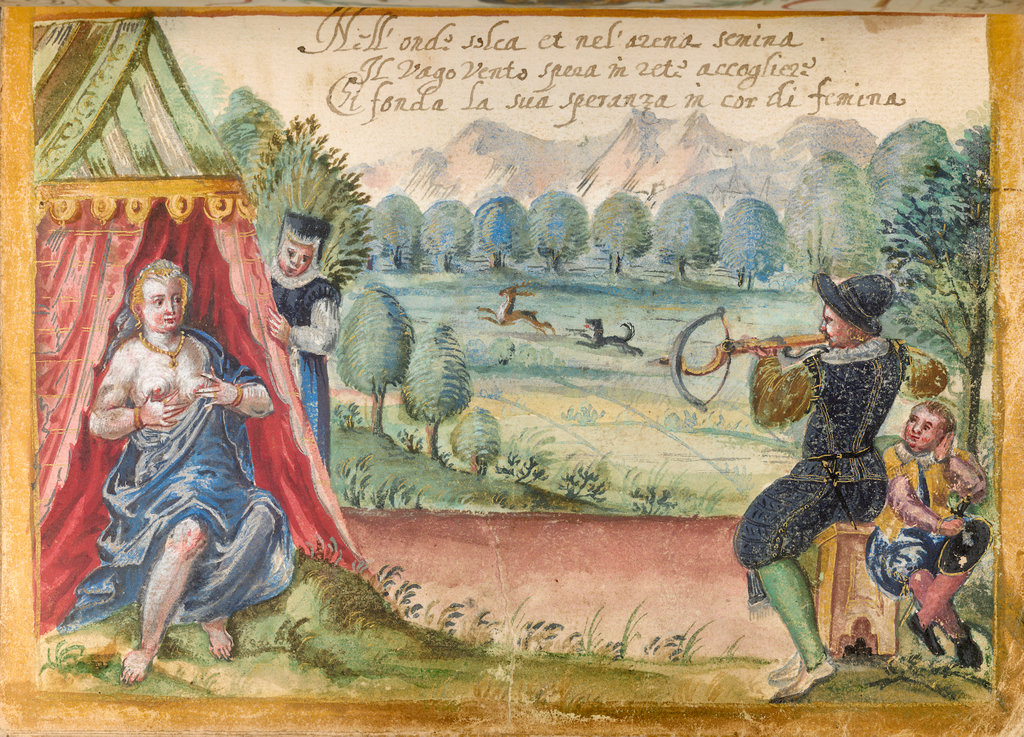
Nell’ onde solca et nel’arena semina He ploughs the waves and sows the sand
Il vago vento spera in rete accogliere and hopes to gather the wind in a net
Chi fonda la sua speranza in cor di femina who places his hopes in the heart of
a woman
Perhaps the crossbowman is some jilted lover who aims at the heart of his inamorata ? (though there seems to be a strange absence of bolt — neither loaded in the bow, nor lodged in the lady’s person! )
Glück kommt von oben
Luck comes from above — the proverb is here illustrated by the fall of manna from heaven to feed the Israelites in the desert, as reported in Exodus 16.
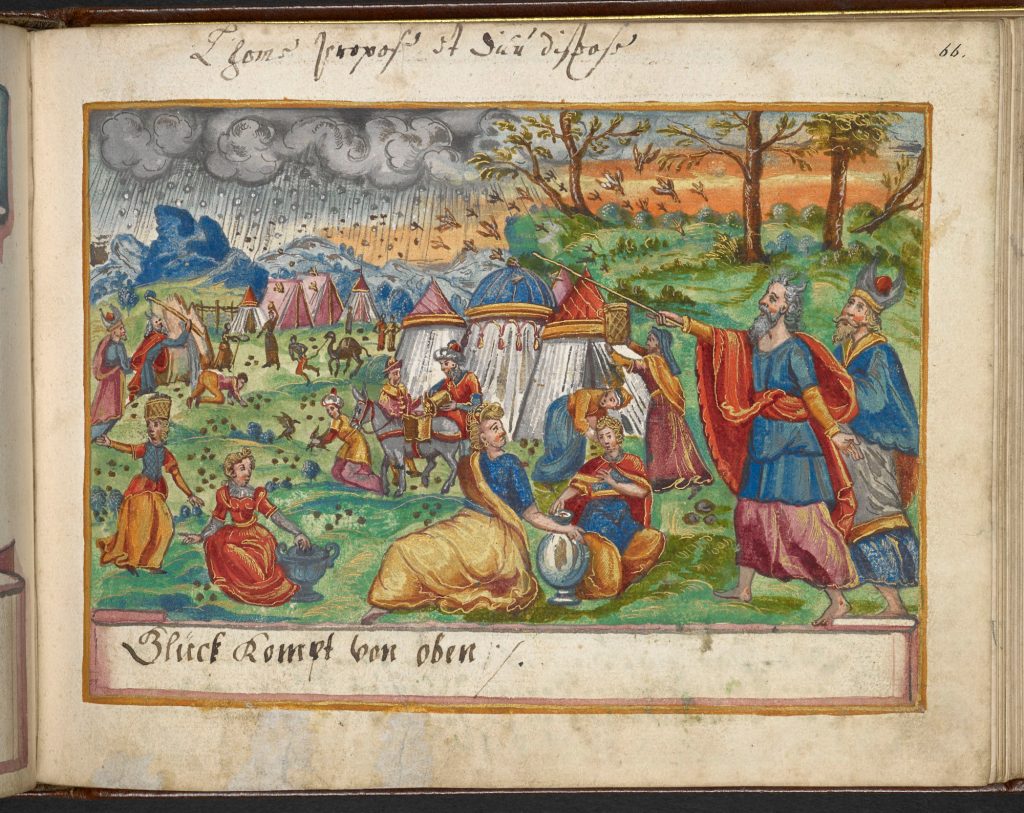
The other proverb ‘man proposes, God disposes’ — in French, and in a different hand — was probably added later, and does not seem particularly appropriate.
Glück hat Neid [Good fortune is envied]
That good fortune incites the envy of others is a commonplace — and in the above form is the title of a song published in 1535 (see below)
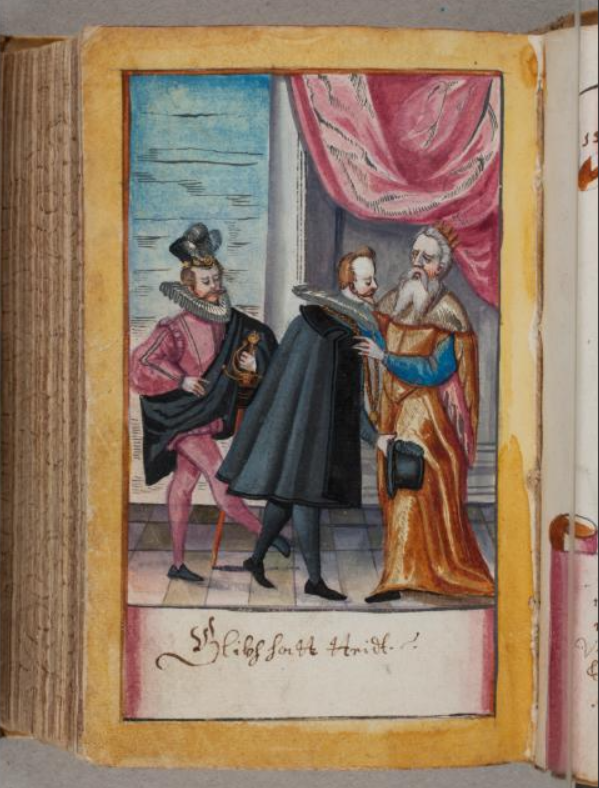
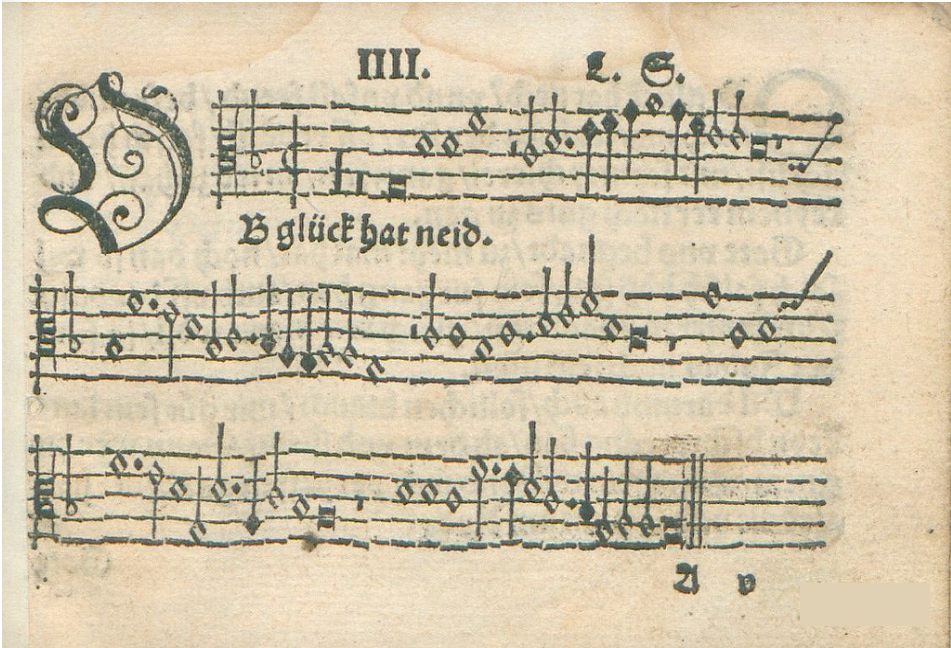
The caption to the Rembold album miniature, however, seems to read Glickh hatt ttridt not Neidt — ttridt would mean ‘kick’ which is clearly appropriate to the tripping foot movement of the man in red, perhaps envious of the man in black who seems about to receive some honour from the king. In his Altdeutsche Sinnsprüche (Halle 1883), 103, Max Löbe recorded the inscription Glück hat Neid Ich warte der Zeit [Good fortune is envied, I bide my time] from an album entry dated 1583.
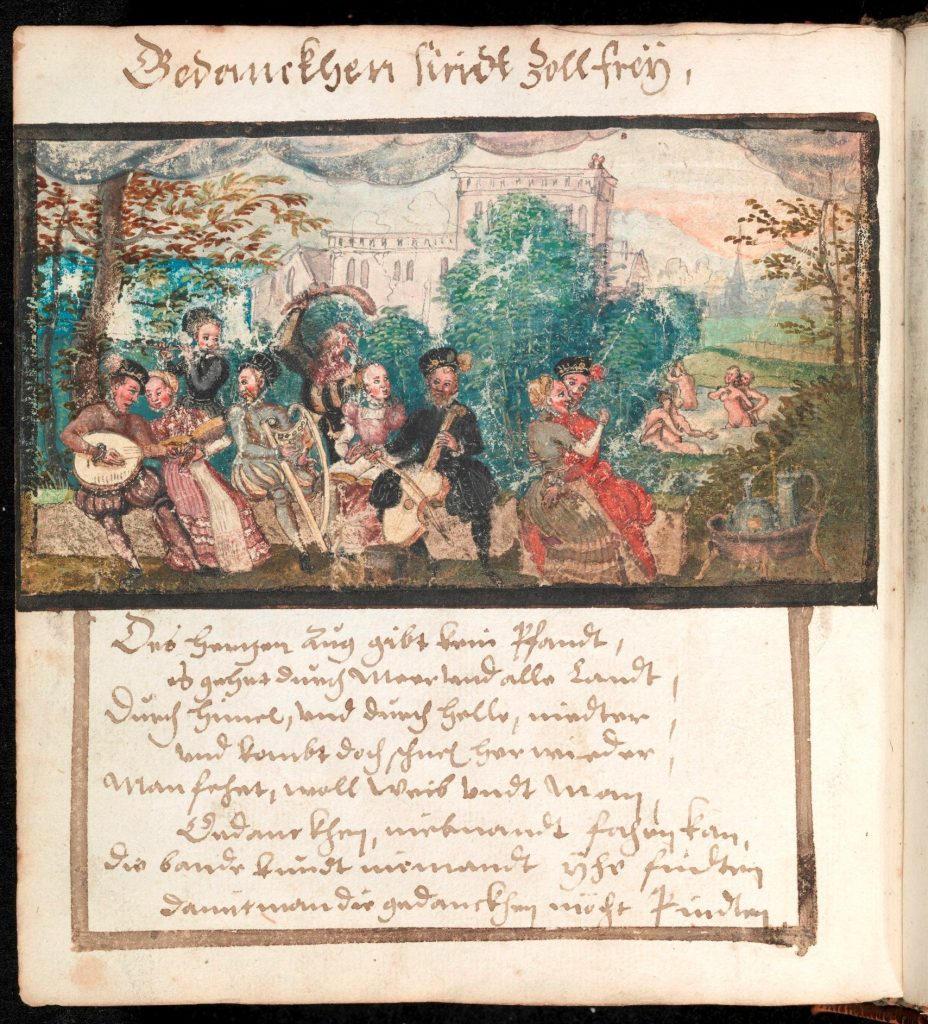
Gedanckhen sindt zollfrey [Thought is free]
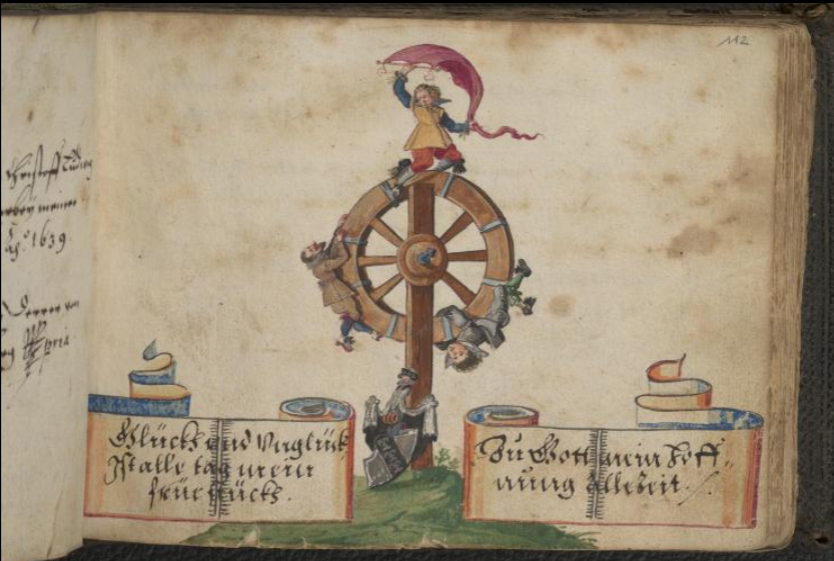
Glück und Unglück ist alle Morgen mein Frühstück
literally, “Good Luck and Bad Luck is my breakfast every morning” — a somewhat desperate rhyme, but a popular Spruch written in the albums [e.g. Schmidt (1906), nos. 120,292,320,470 from 1613 to 1622]! In the miniature below it accompanies the image of Fortune’s Wheel with the man on top holding Fortuna’s sail, while the fortunes of the others are rising and falling:
Duck dich lass voruber gahn / Das wetter wil sein willen han
“Duck, and let it blow over / the weather will have its way”
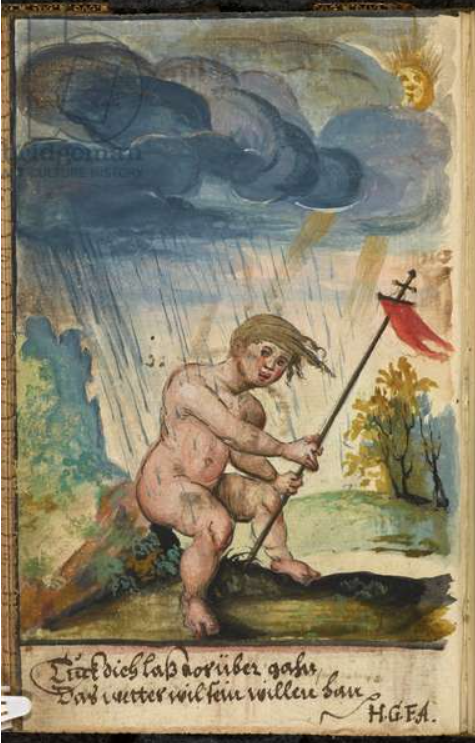
Schmidt [(1907) no.1628] records the same proverb (unillustrated) written in an album in 1595, and here is another example, inscribed on a leaf from the dismembered album of Georg von der Lühe by one Barnim Glasenapp in 1614, beginning half way along line 4, and prefaced by Wind und Reg[en] A nicht entgegen [not against wind and rain].
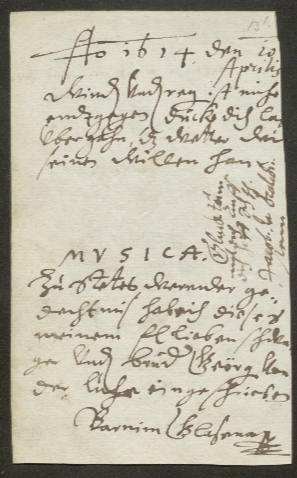
This slightly fuller version,Wind und Regen ist mir oft entgegen. Ducke dich laß übergan, das Wetter will seinen Willen han, was also entered in the album of Johann Christoph Voit in 1607 [Weimar, Herzogin Anna Amalia Bibliothek: Stb 336].
mas vale aquin Dios ayuta …
The first of two proverbs illustrated in the album of Jacob Freund — this one Spanish, labelling a cockerel perched on top of a column.
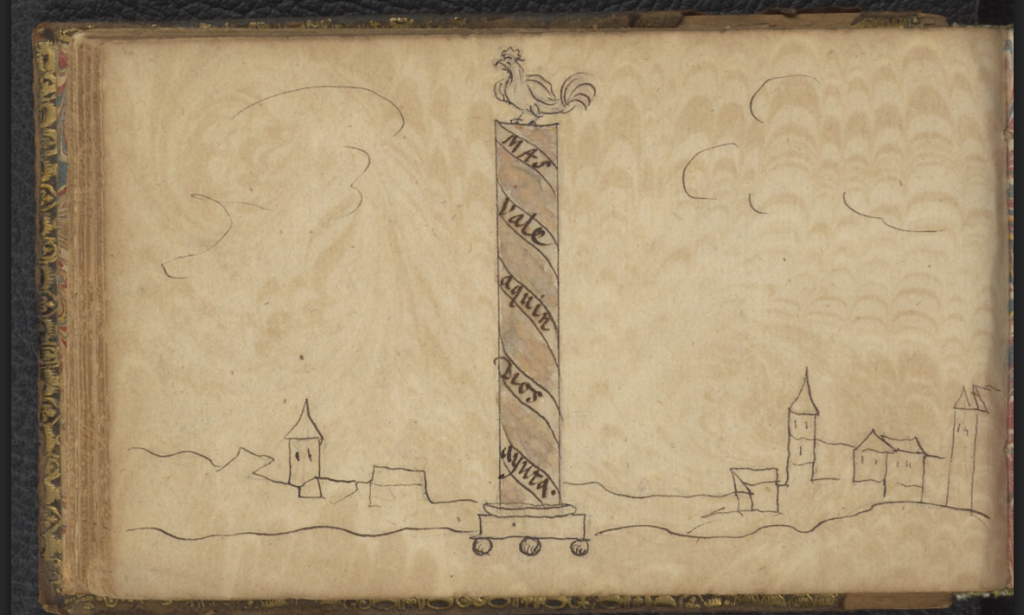
The full proverb is mas vale a quien Dios ayuda, que quien mucho madruga [It is better to have God’s help than to get up early] — and now the presence of the cockerel is explained — itself the proverbial early riser that wakes the sleeper up ‘at cock-crow’ !
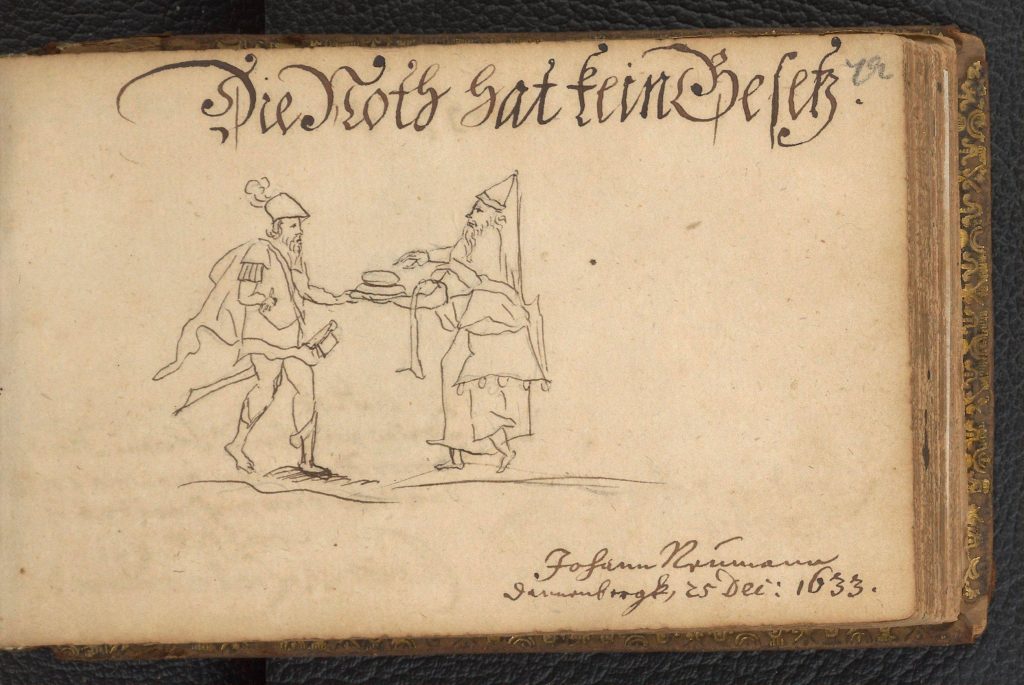
Die Noth hat kein Gesetz [Need/necessity knows no law]
The other proverb is perhaps more familiar, more universal, but the illustration is unclear — is the armed man forcing the old man to give him food/treasure ?
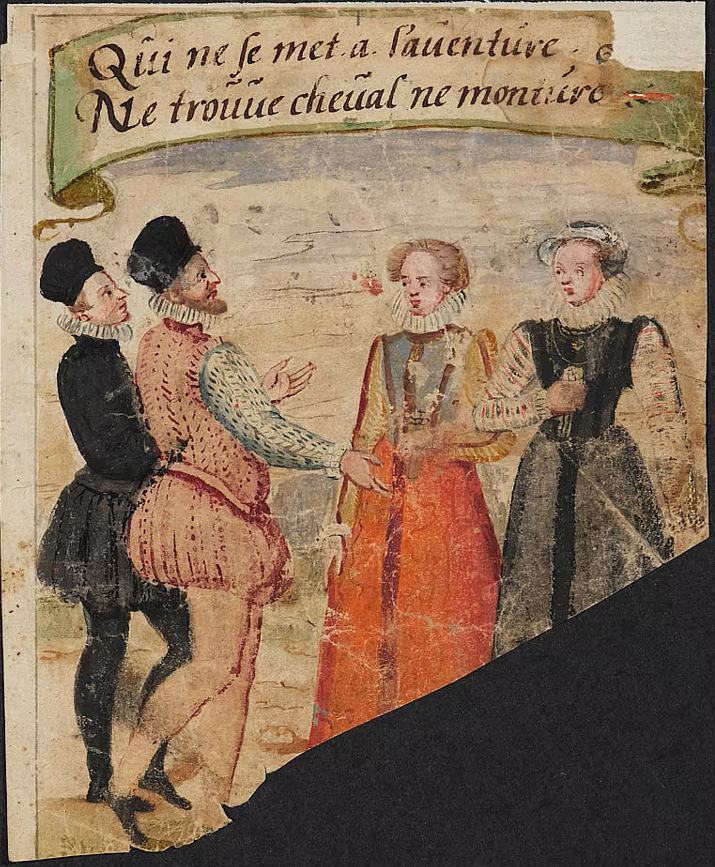
Qui ne se met a l’aventure / Ne trouve cheval ne monture [He who does not take a risk / finds neither horse nor mount]
In the context of the scene represented in the miniature, the French proverb seems equivalent to the English ‘Faint heart never won fair lady’, but also perhaps, in this particular application, to the sexual innuendo that compares intercourse to the act of riding a horse, which we have discussed as exemplified in the albums here
https://albumamicorumear-e4qvahs764.live-website.com/woman-horse-both-dangerous-acquisitions/
Leave a Reply to witches, devils, etc – Album Amicorum: Early Modern Stammbuch Iconography & related Cancel reply