According to Greek and Roman historians (Herodotus, Diodorus Siculus, Pliny, Lucan) the Egyptian king Sesostris harnessed his chariot with the monarchs he had conquered to draw him to the temple — in similar vein, in Marlowe’s Tamburlaine the Great, Part II (1587), Tamburlaine comes on stage with his chariot drawn by the conquered kings of Trebizond and Soria with bits in their mouths.
I’m aware of two album miniatures of the subject within our time-frame, and one outside. The iconographically generous album of Paul Jenisch furnishes the undated miniature below
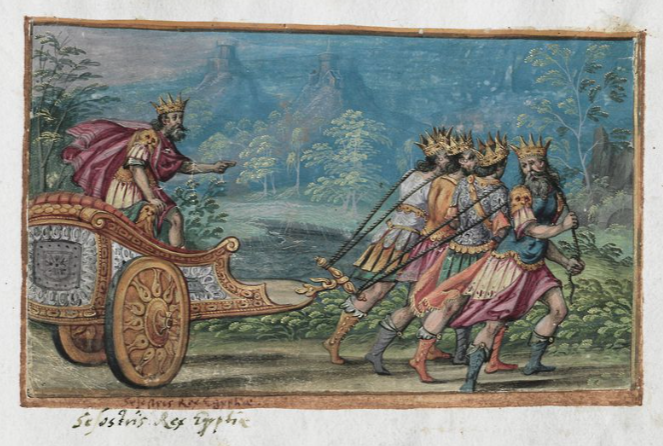
I’m not able to reproduce the miniature in the Chemnitius album — which I only know of via its description in the RAA — but it is securely dated to 1597, before the rash of engraved images dependent on the celebrated Nurnberg Rathaus emblems which were picked up both in the prize medals of the Altdorf Academy and in Peter Isselburg’s emblem-book, Emblemata politica In aula magna Curiae Noribergensis depicta (Nurnberg 1617).
The miniature in the album of Gottfried Burgel painted c.1730 clearly copies Isselburg’s engraving, both image and motto:
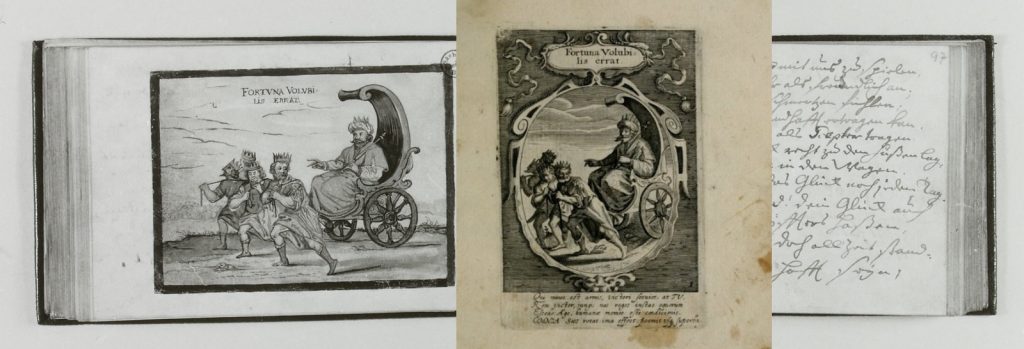
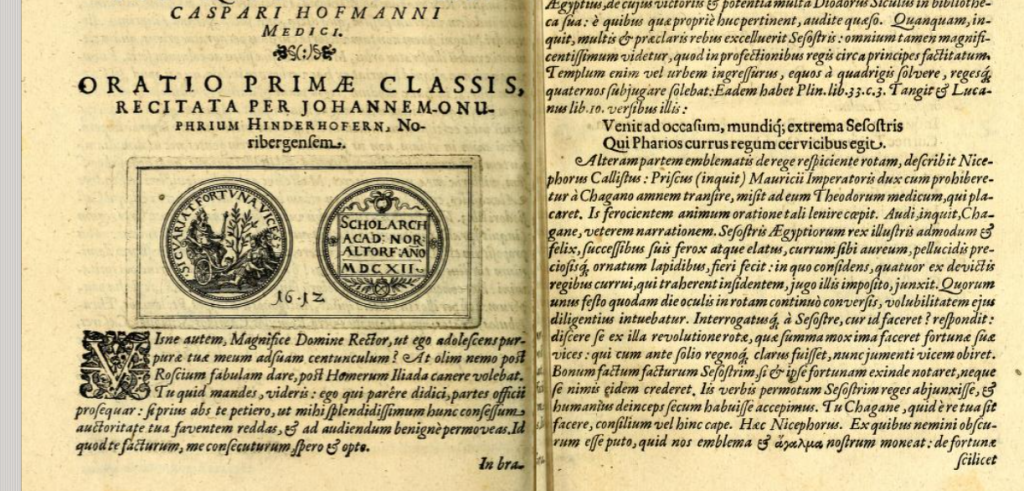
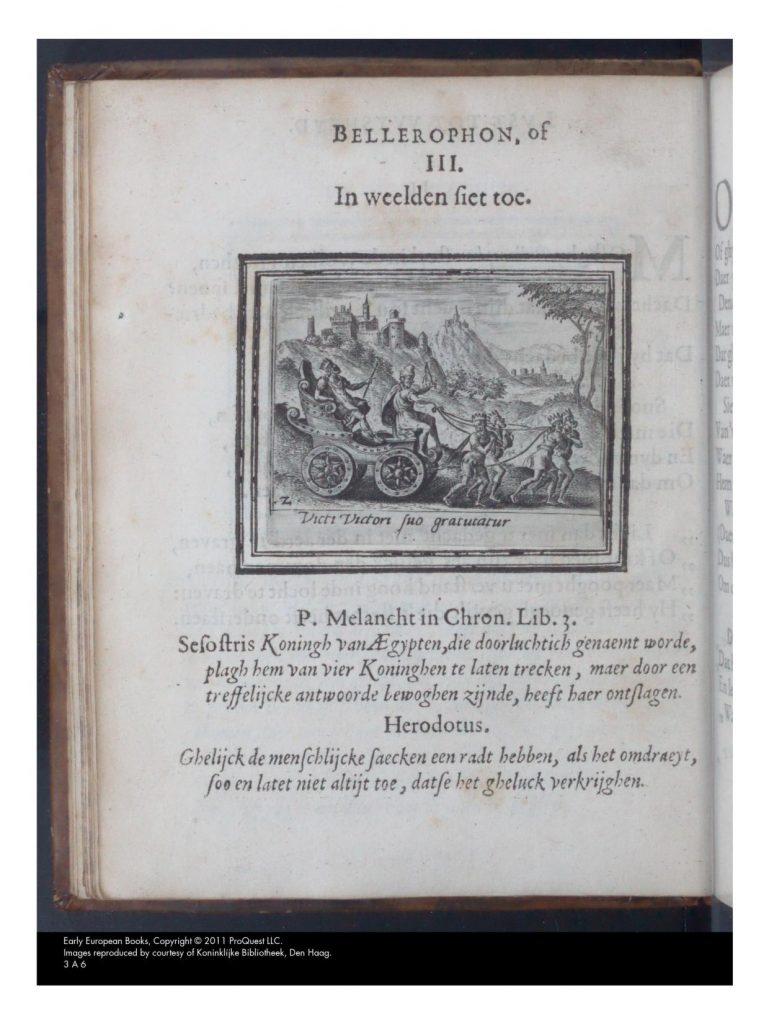
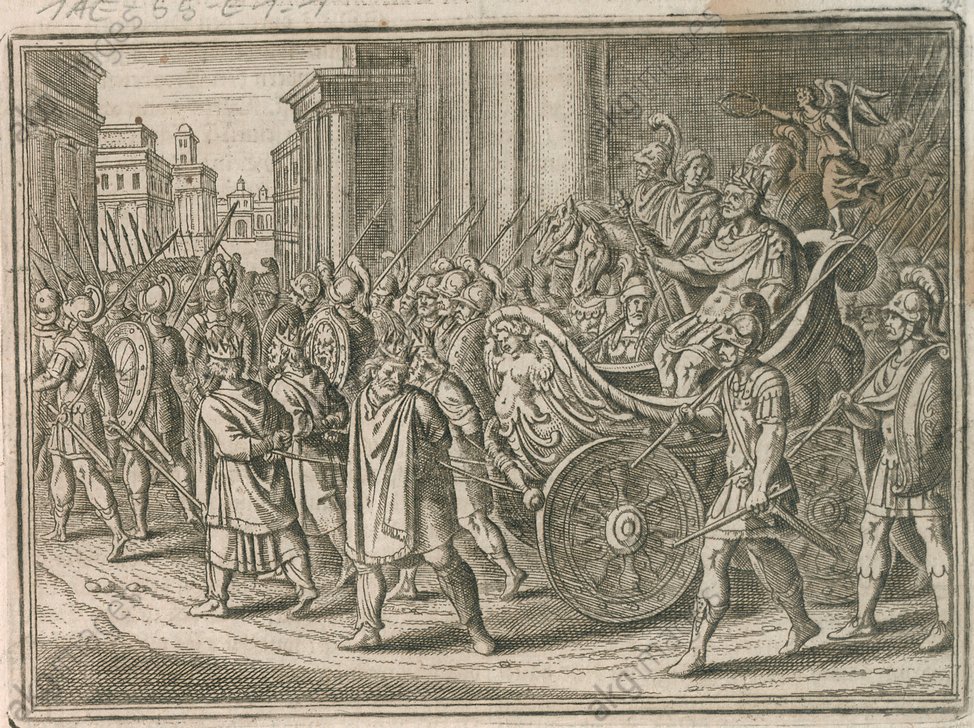
The emblematists use the legend to illustrate the nature of Fortune, one day a king, the next used as a draught-animal.
Leave a Reply