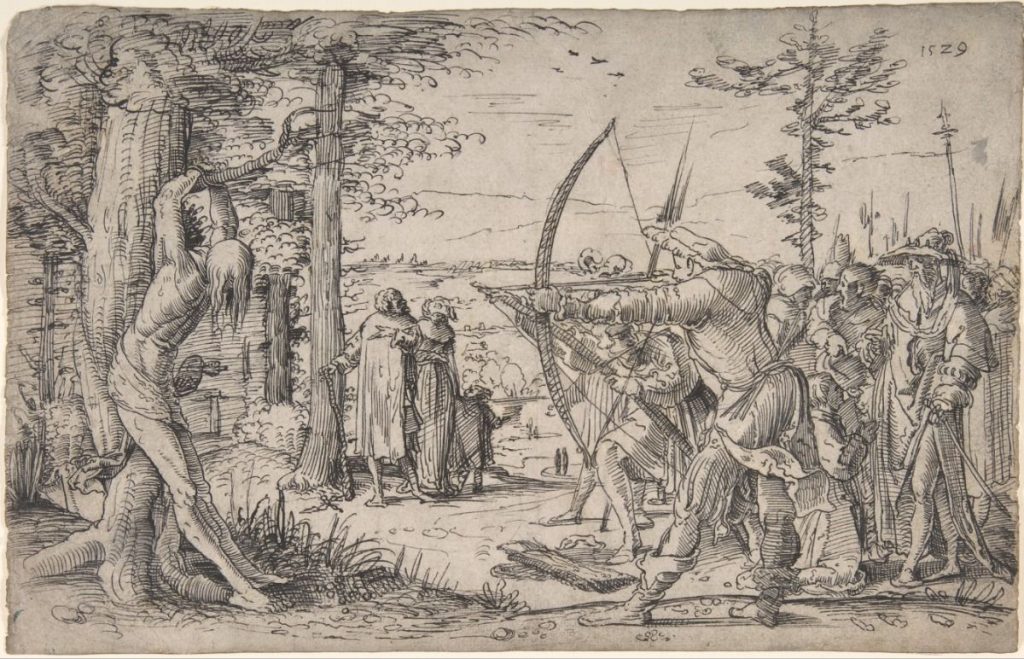
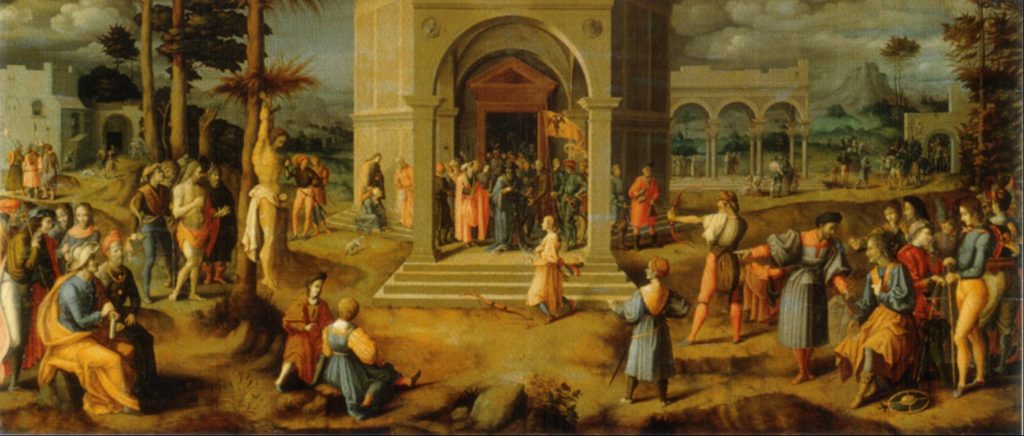
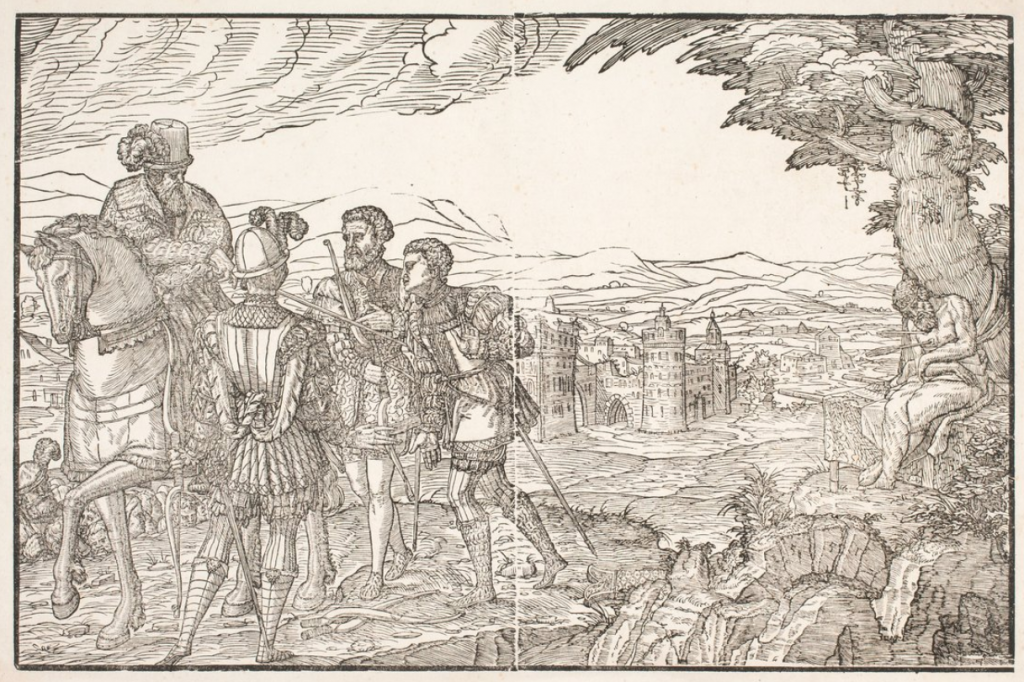
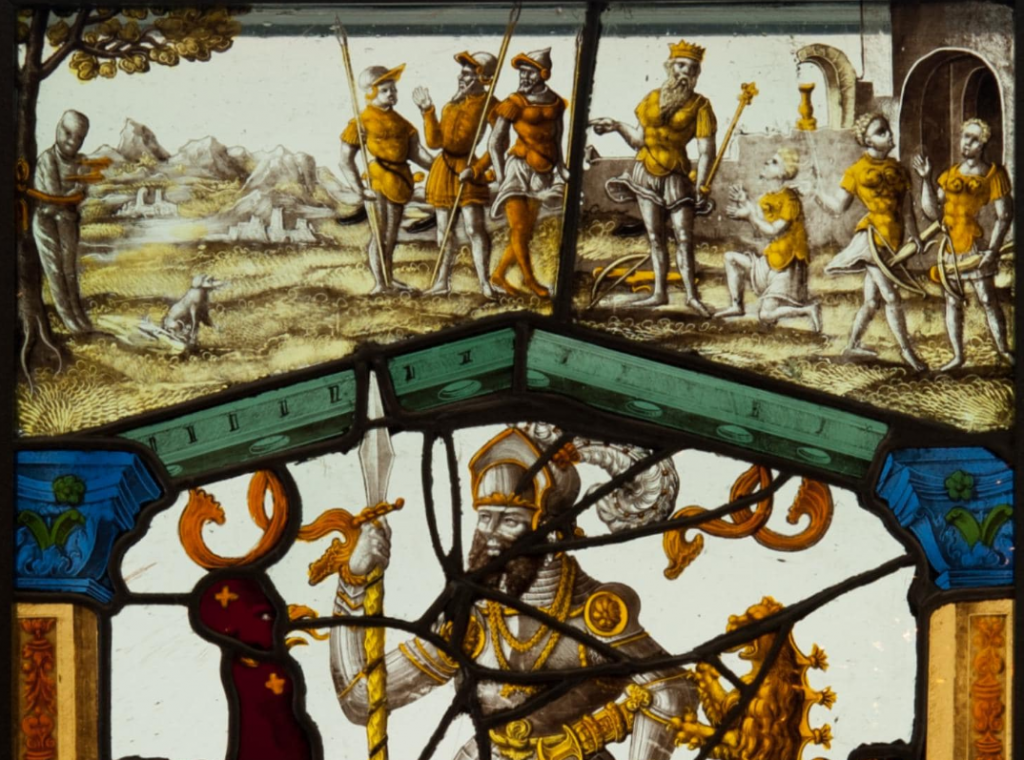
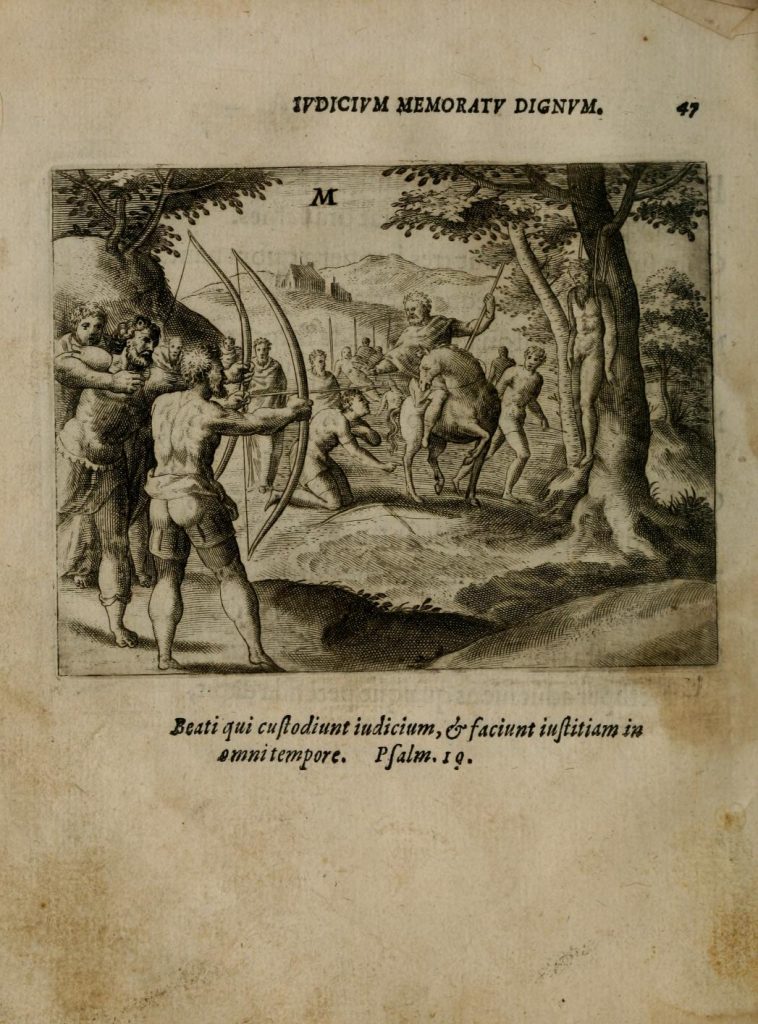
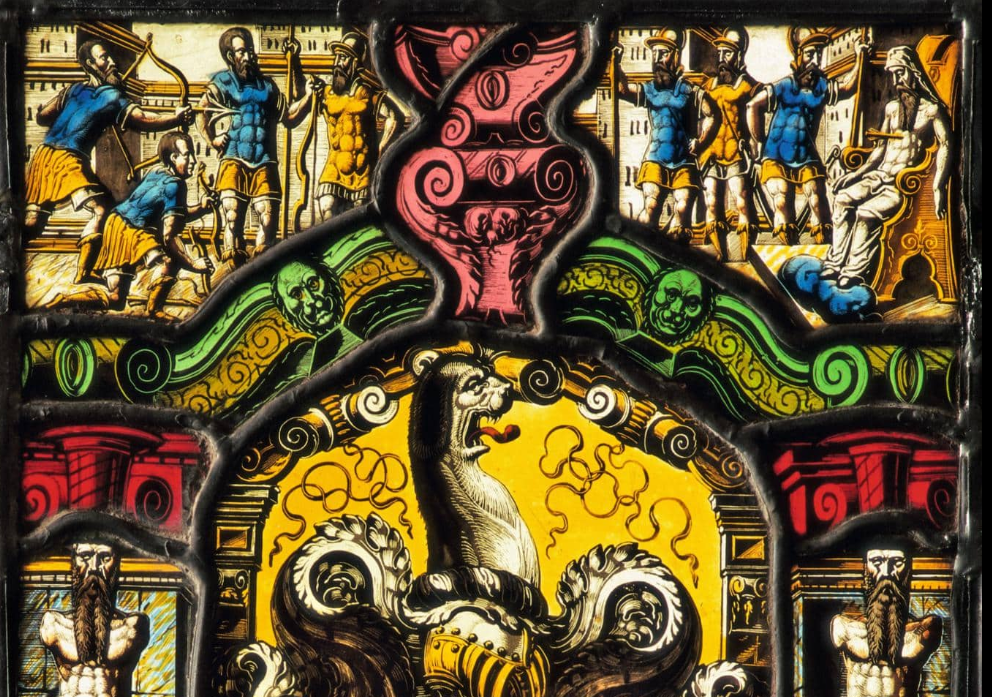
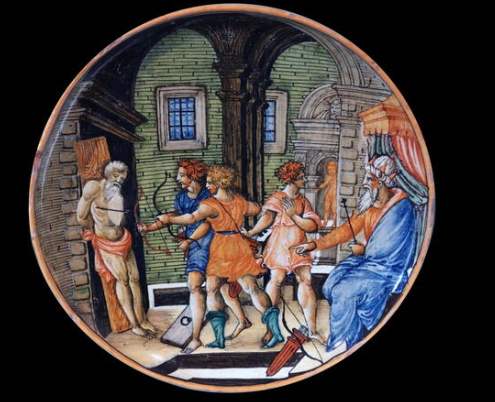
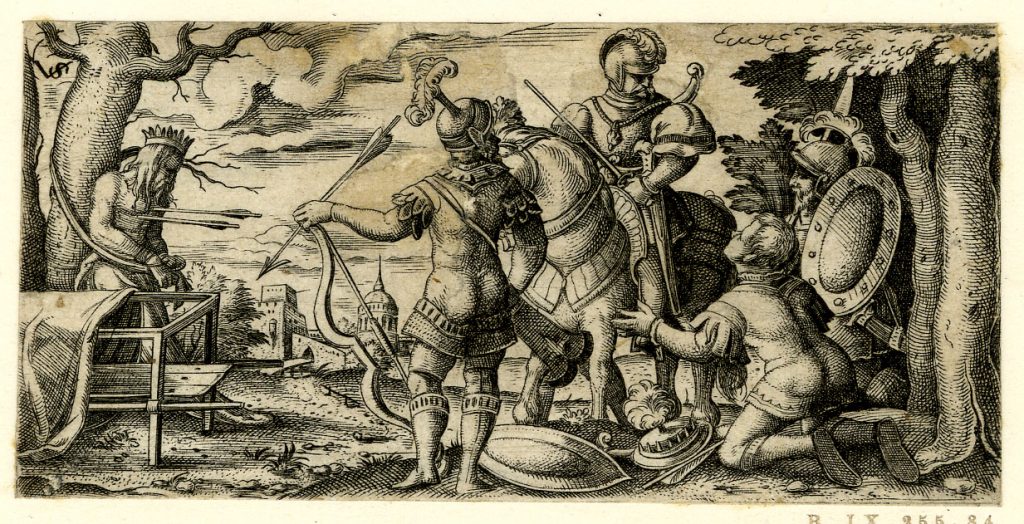
A popular exemplum. In order to determine which of the three sons is the deserving heir, they are instructed to shoot at their father’s corpse — only the true son refuses to do so. The earliest representations show it as one of the Judgements of Solomon, but it appears shortly thereafter in illustrated manuscripts of the Gesta Romanorum. The classic discussion was by Walter Stechow in The Art Bulletin 24 (1942), 213-25. And for those who like that sort of thing, this is Iconclass no. 42B53.
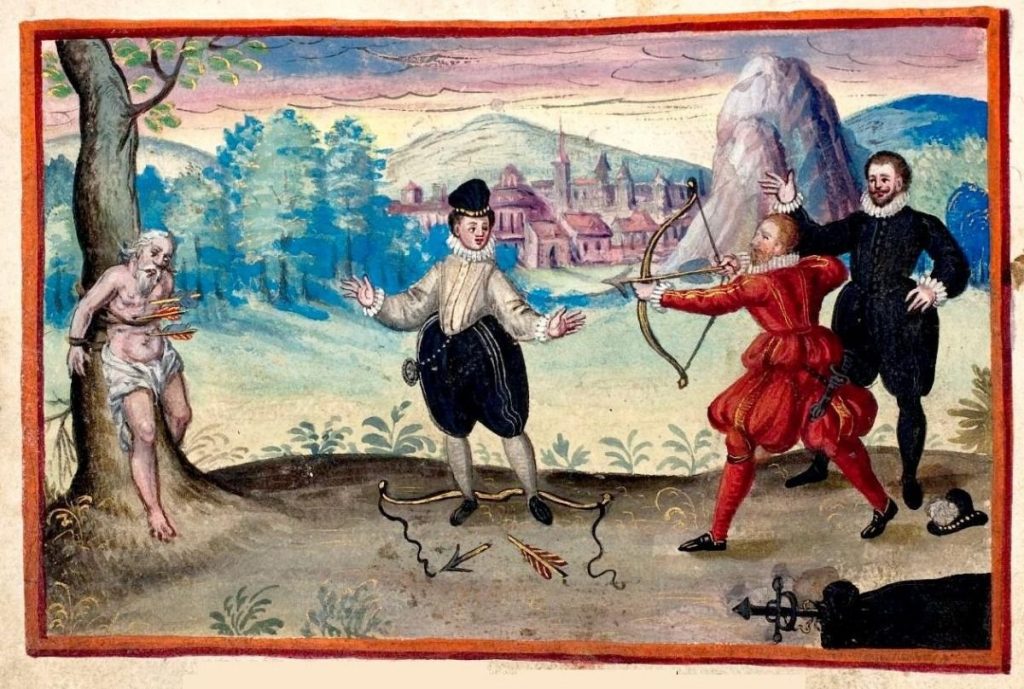
I’ve only noticed two such illustrations in the albums to date: in that of Andreas Huber, which he kept from 1587 to 1609 — here the legitimate son who refuses to shoot has broken his arrow and snapped his bow-string —
and in the album belonging to Matthäus Miller — here the scene seems to be set in Turkey, and again the legitimate heir has thrown his bow and arrow on the ground:
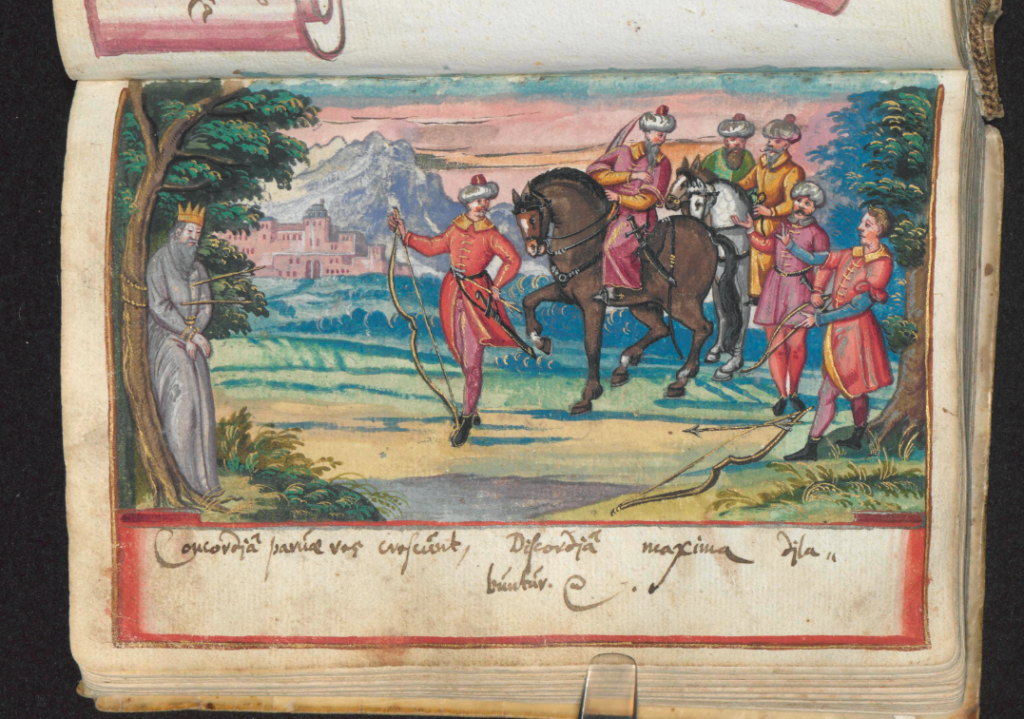
The Latin — which looks as if meant to caption the scene — Concordia parvae res crescunt, Discordia maximae dilabuntur, means “In harmony, small things grow; in discord, great things decay” and is a quotation from Sallust, but I cannot see how it is appropriate!
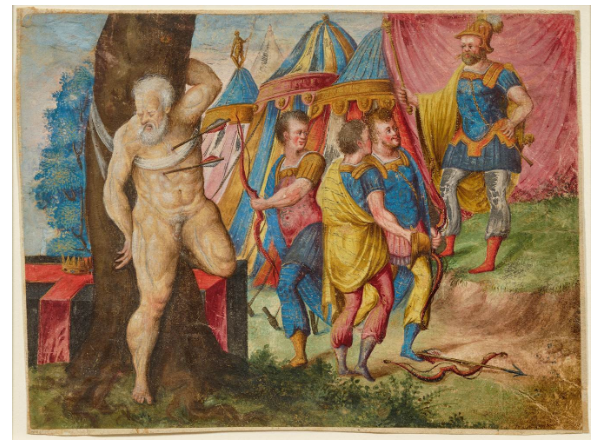
Just noticed this today — for sale at auction in 10 days’ time! Lot 3447* in Koller auction A216, Old Master Drawings, etc .. where currently misdescribed as “army camp with their leader pierced by arrows”. As usual, the legitimate son has cast his bow and arrow to the ground after the two illegitimate sons have fired their arrows at the corpse!
Before noticing the Miller album example, I made a Pinterest board on which I collected some 40+ examples at
https://uk.pinterest.com/malcmjones/shooting-at-the-fathers-corpse/
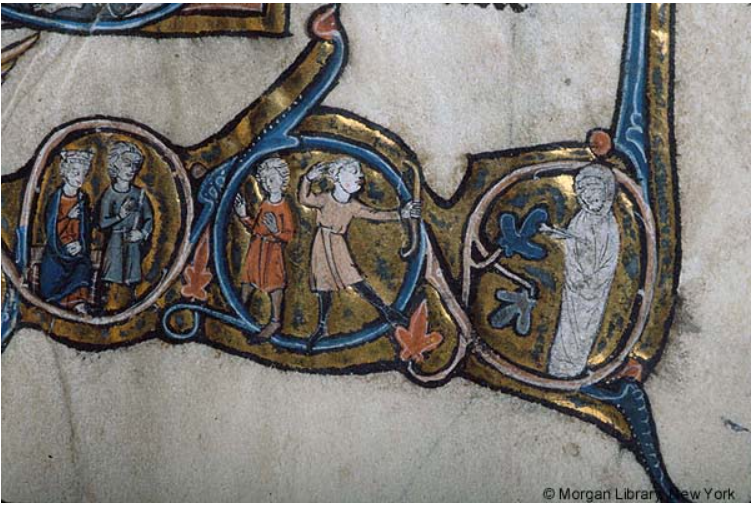
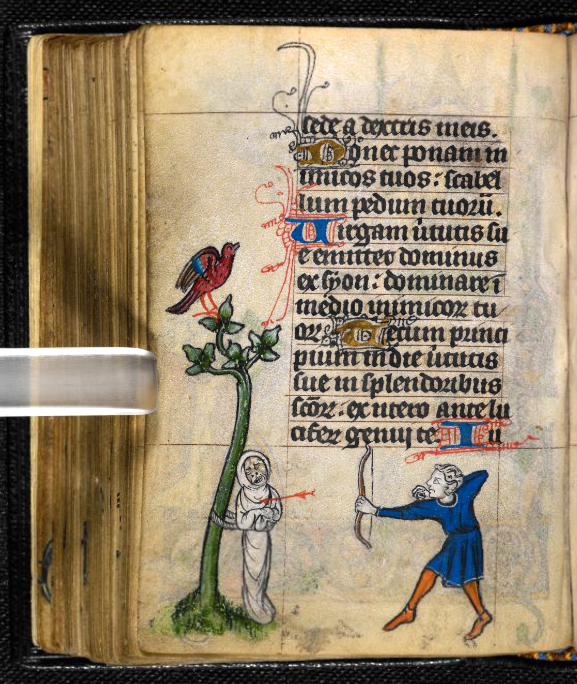
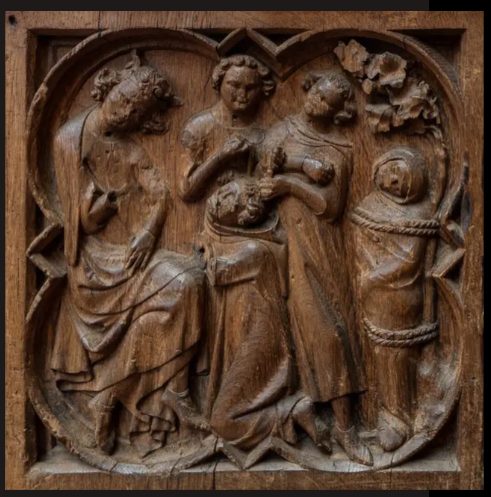
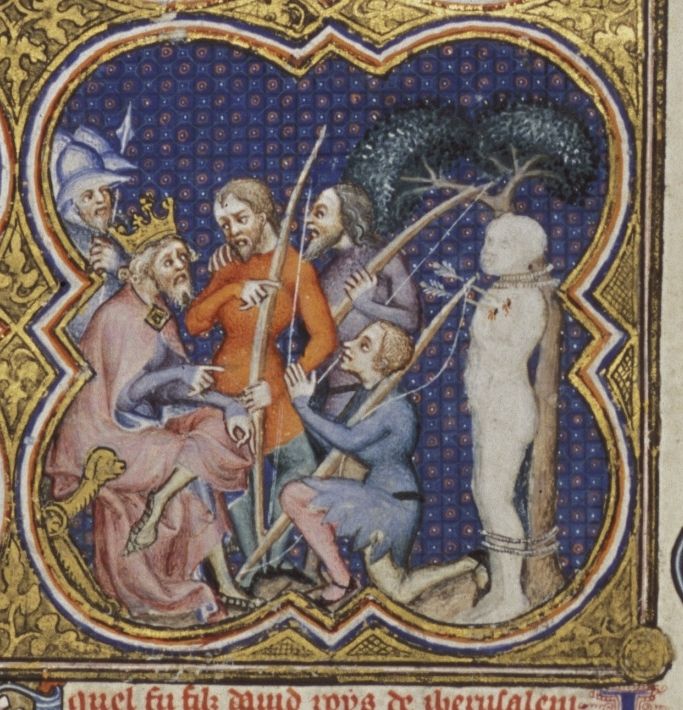
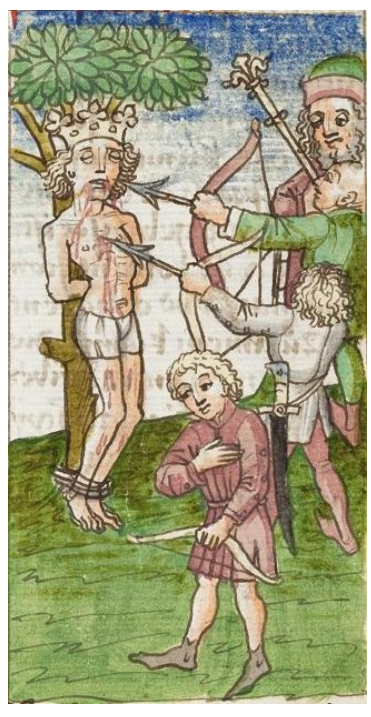
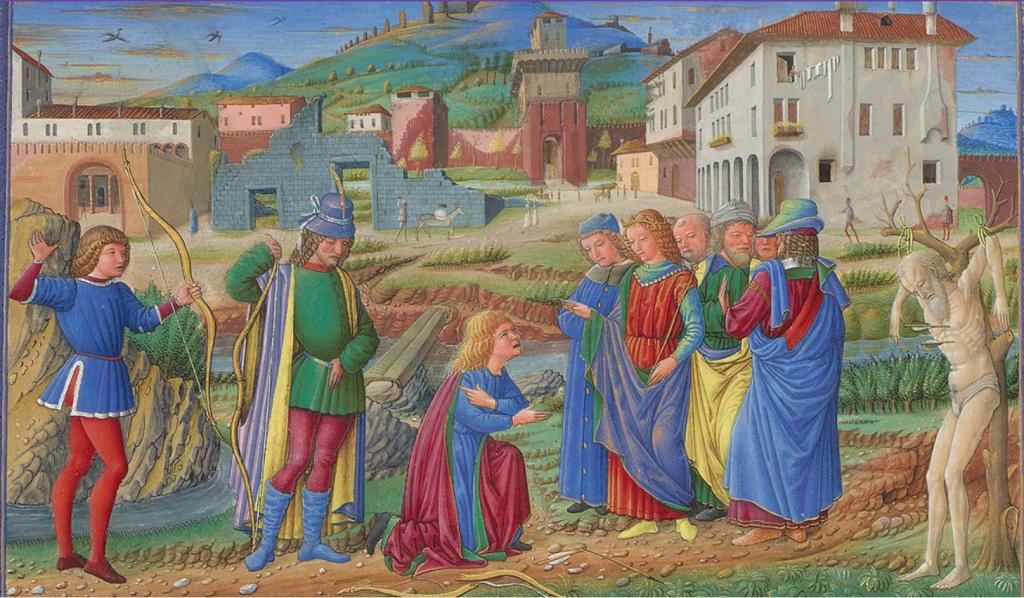
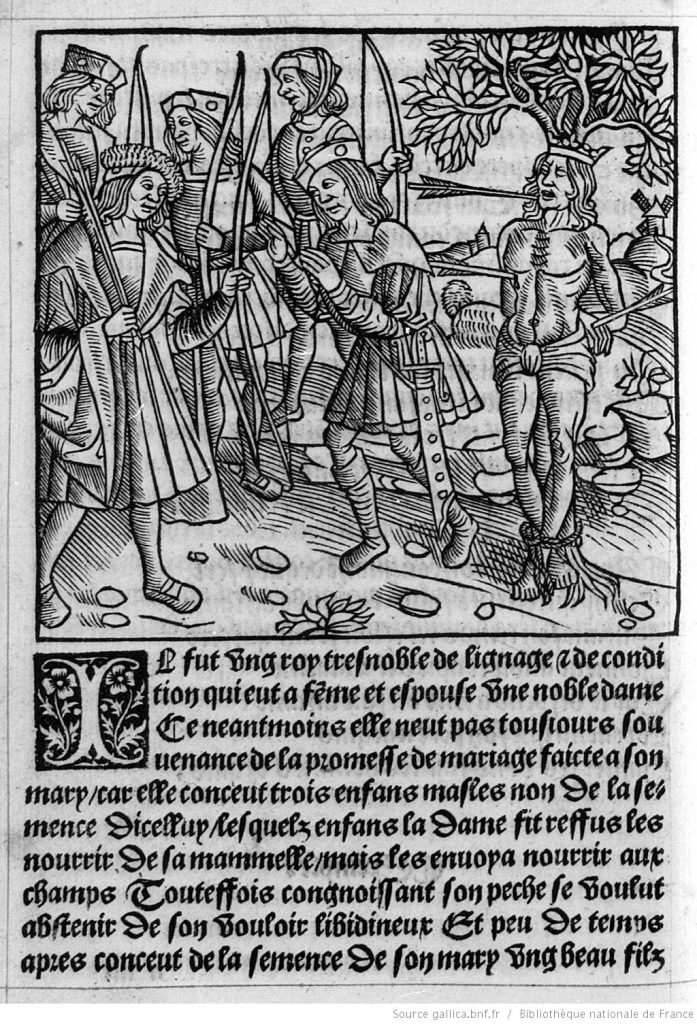
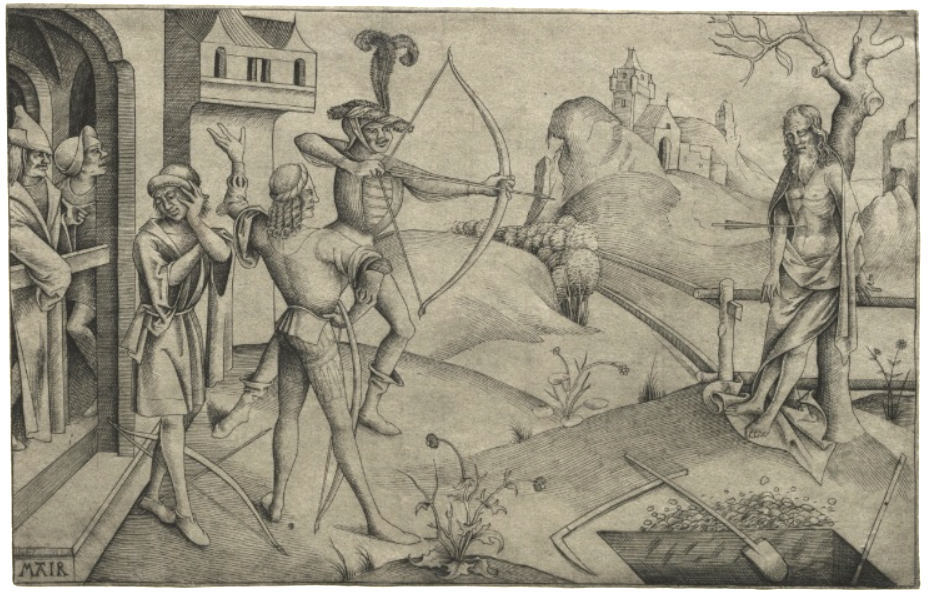
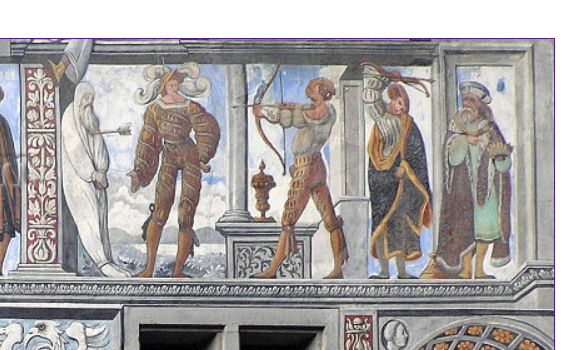
I copy just a few of these below, the earliest examples being found in illuminated manuscripts of the second half of the 13C. Thereafter, it can be found in a variety of media and was particularly popular in the 16C; the above album miniatures are some of the latest examples.
Before the albums
Leave a Reply