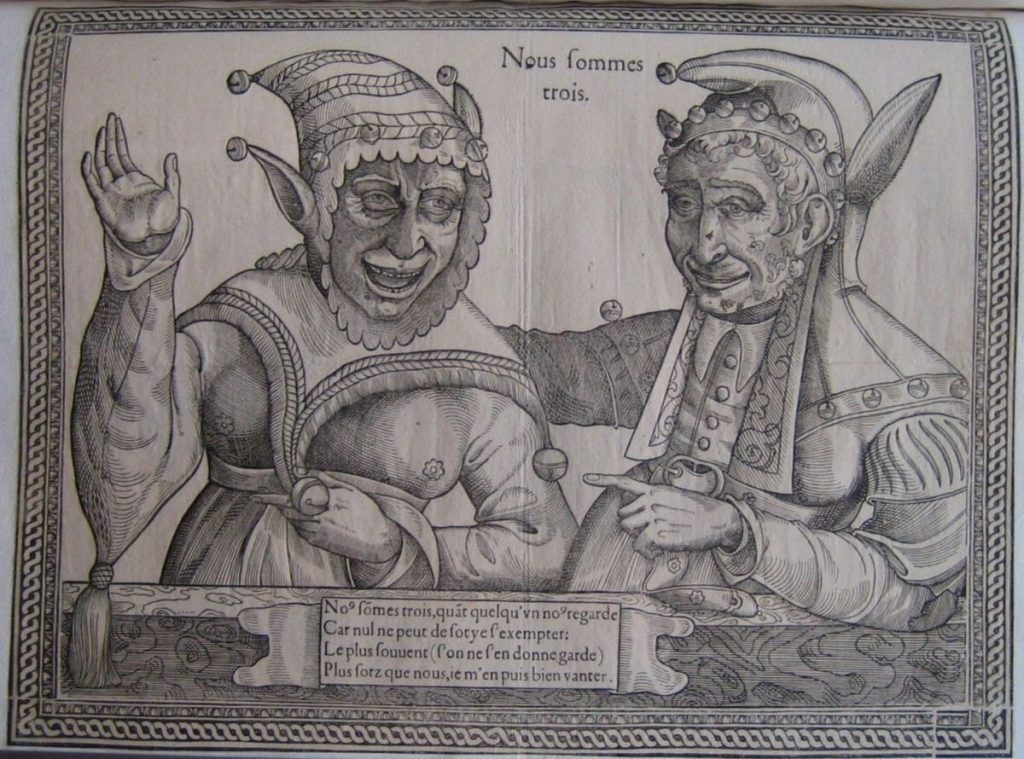
This mischievous motif seems to have originated in 16C Germany. The commonest type of this trick numeration shows 2 fools but is captioned “(now) there’s 3 of us” — making the viewer by his/her puzzled inquiry, the 3rd! In the albums to date I have noticed only “3” and “4” — but larger numbers are found in the following centuries. In England the motif is famously referred to as “the picture of We Three” in Shakespeare’s Twelfth Night, though surviving English examples are later.
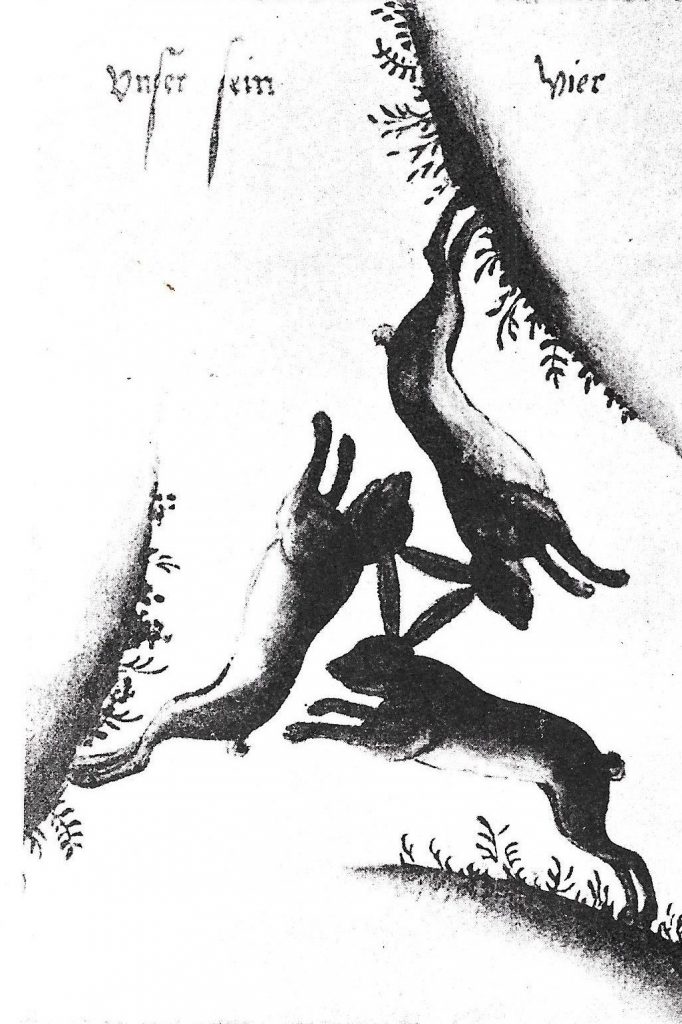
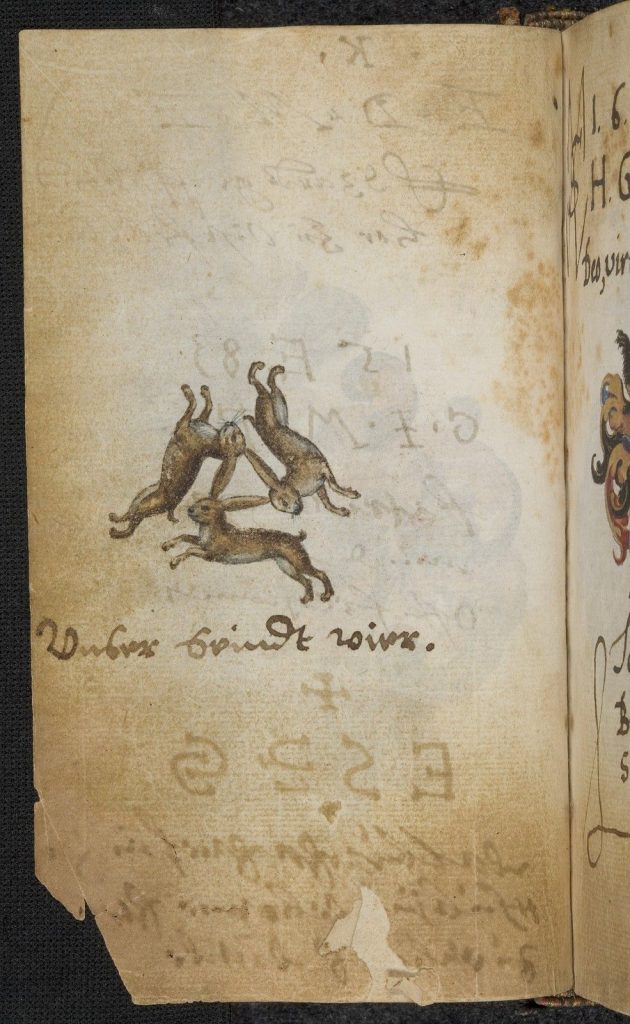
Two of the album examples depict hares — rather than costumed fools — in the venerable design with the conjoined ears known as a ‘Hare Trinity’, or Hasendrei in German, the hare being popularly regarded as foolish in the early modern era — cf. English mad as a March hare.
I sample the larger numbers on my Pinterest board here: https://uk.pinterest.com/malcmjones/the-additional-fool-that-would-be-you/
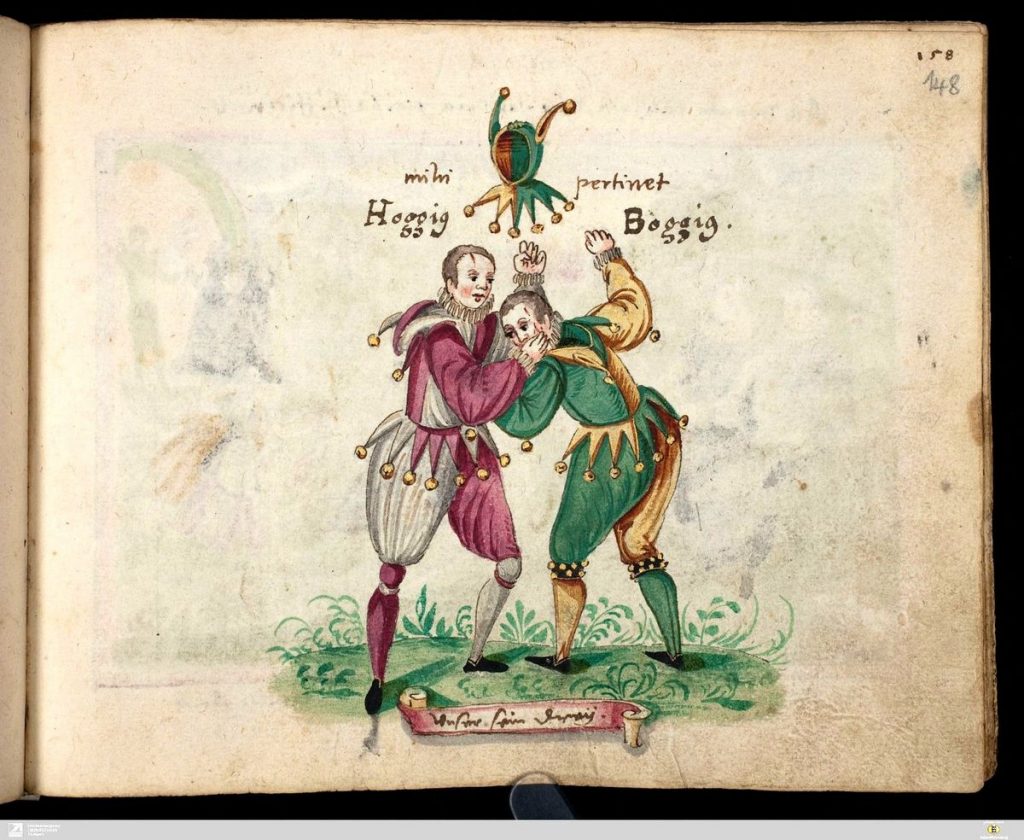
Here the 2 fools — named Hoggig and Boggig — seem to be fighting over a third hood (the Latin inscription means “it belongs to me”/”it’s mine”) — or is it waiting for the 3rd fool, i.e. you, the viewer?
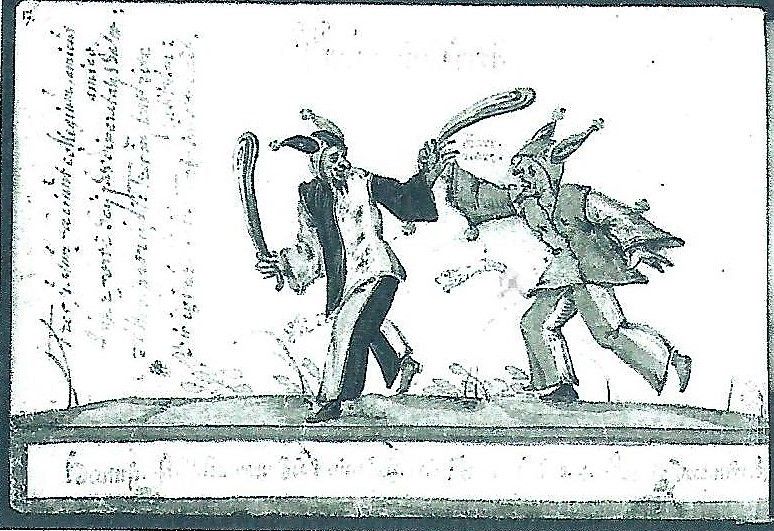
special case
Here the 3 fools are labelled — in strange misspelled Latin, imitating the German usage — Nostrum suunt quaduar [There’s 4 of us]
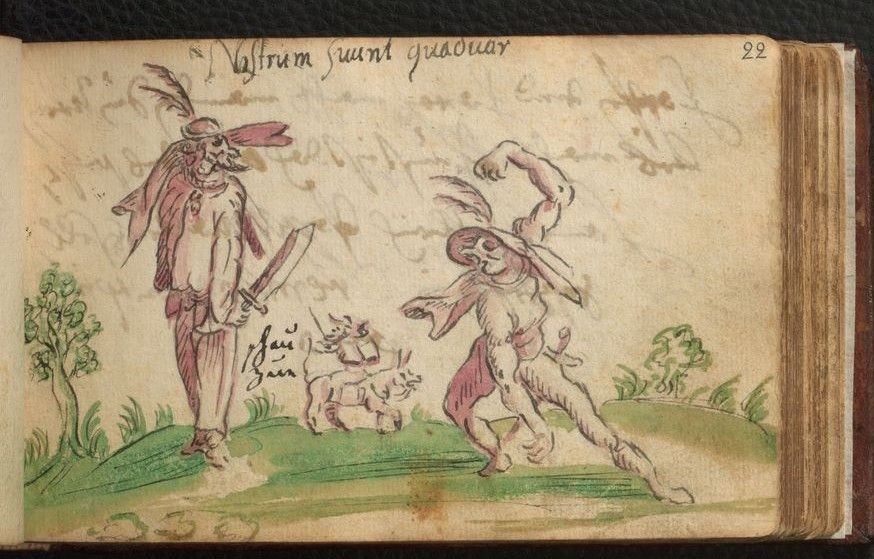
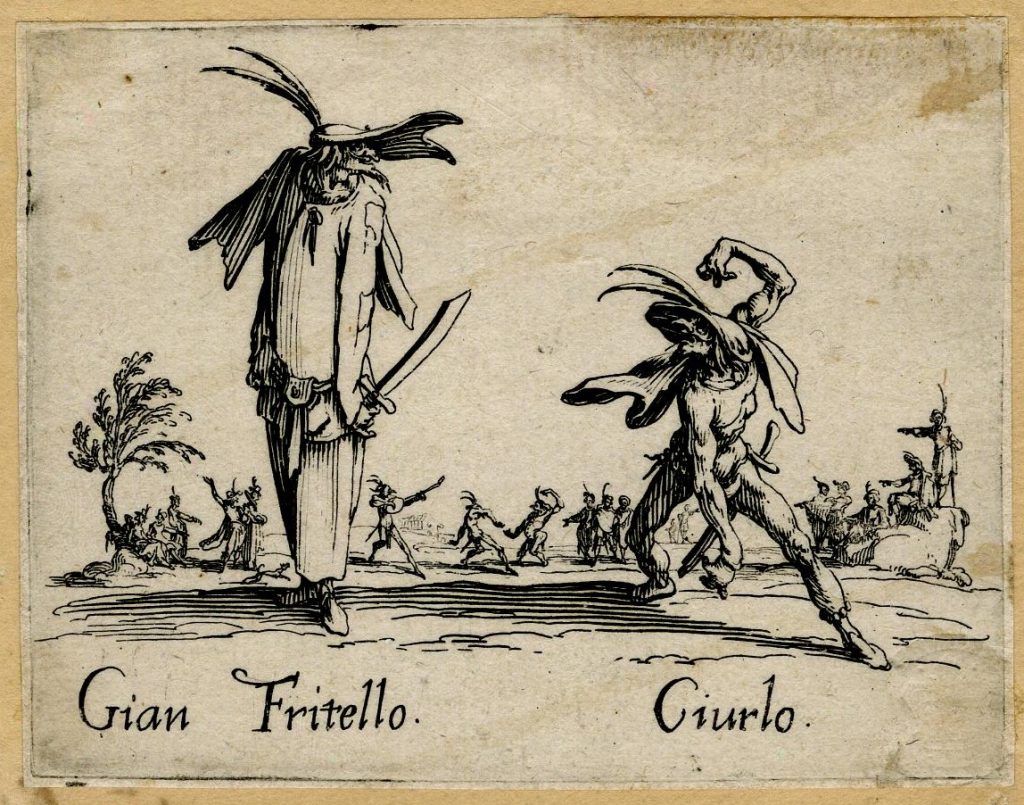
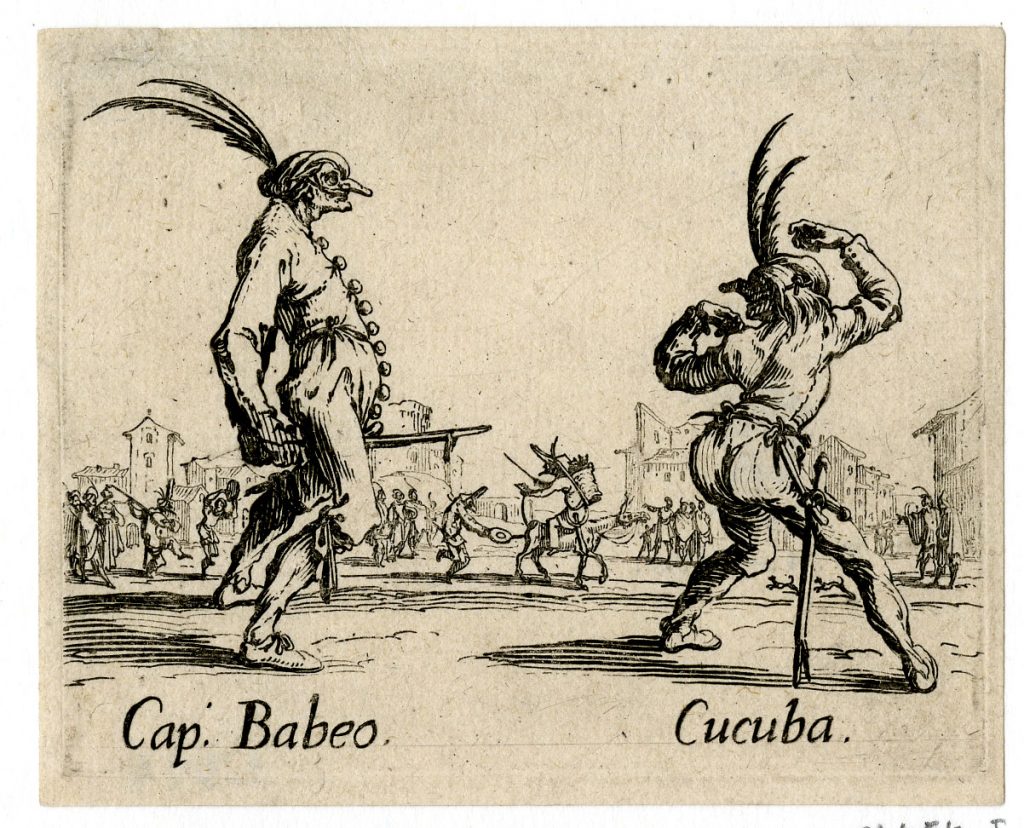
Simmerl has copied one of Callot’s enormously influential etchings, first issued in Nancy c.1622, from a series entitled, Balli di Sfessania, depicting commedia dell’arte-related street-entertainers — here, Gian Fritello and Ciurlo — but taken the background detail of the man riding backwards on the ass from another in the series [both BELOW]
Hare Trinity [Hasendrei] type “Unser sein(dt) vier” [there’s 4 of us]
R.2644
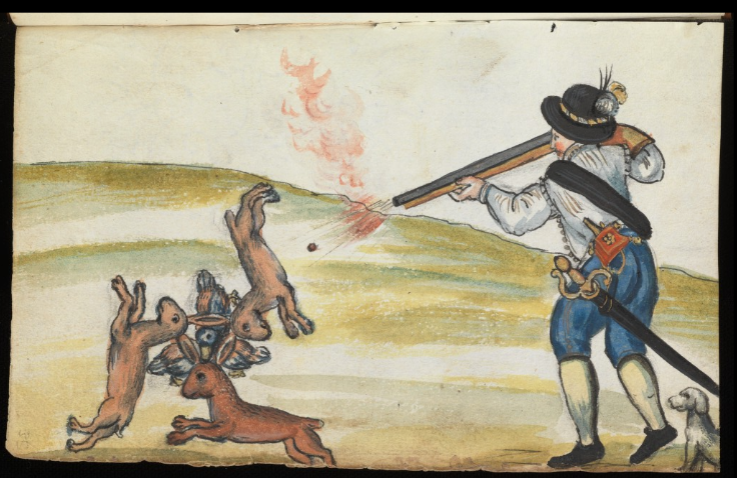
Is there a duck ‘trinity’ here too? No wonder his dog looks bemused!
other early modern examples of this ‘trick numeration’ (for 1=2 and 2=3, only)
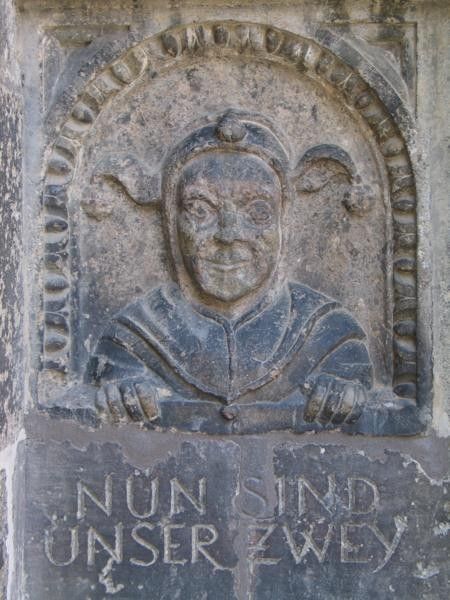
“There’s 3 of us”, showing 2 fools, seems to be the earliest and original type; a single fool saying, “Now there’s 2 of us” — like this low-relief stone carving below — is rare.
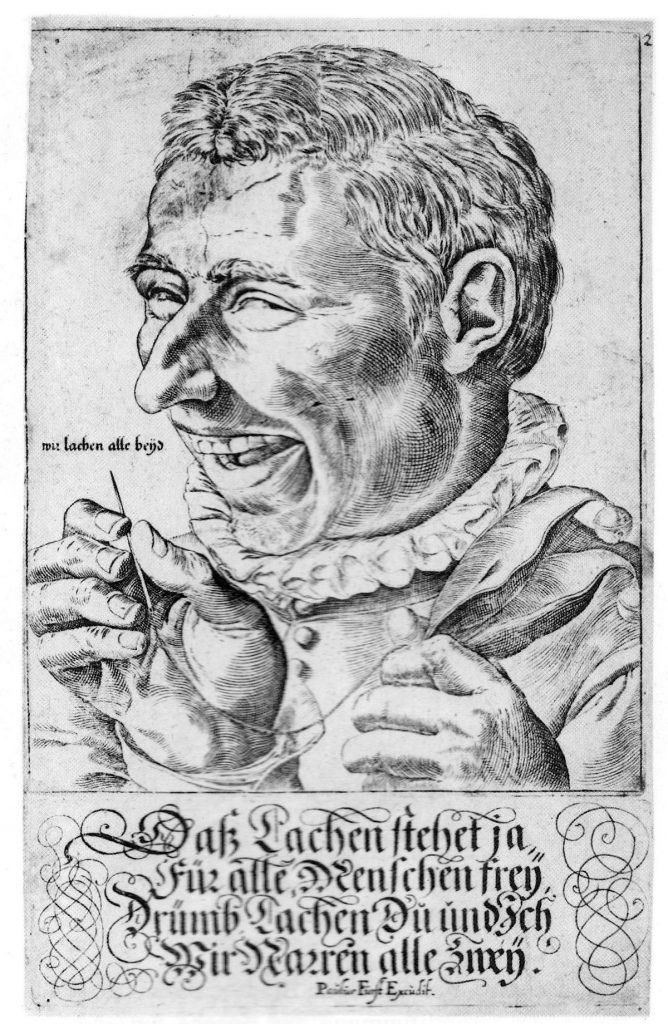
This is the only version of this popular print of the fool with the needle and belled ass’s ears (in his left hand), first engraved by Matthias Quad in 1588, to exploit the present motif — wir lachen alle beyd [both of us are laughing] and — final line of the verse — Wir Narren alle Zwey [we 2 fools]. For earlier and later versions, see my Pinterest board here: https://uk.pinterest.com/malcmjones/a-foolish-face/
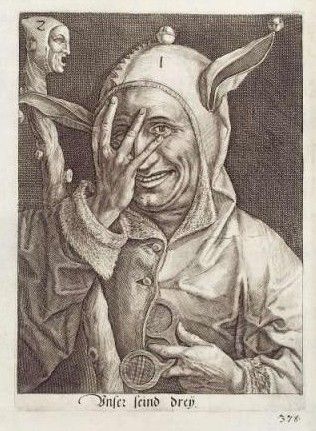
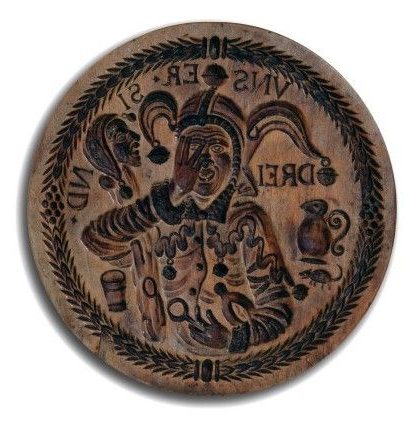
This version of the popular image of the fool who ‘looks through his fingers’ [i.e. condones reprehensible behaviour] has been ‘re-purposed’ as an example of our motif by the simple addition of the title Vnser seind drey and the numerals 1 and 2 being inscribed on the hoods of the fool and his marotte/bauble. It is the model for this 17C carved wooden biscuit-mould in the Historisches Museum, Basel
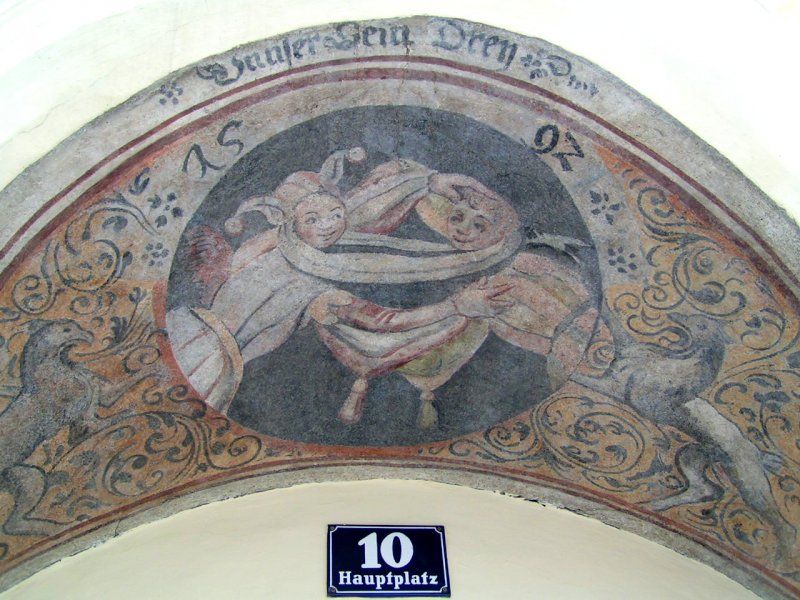
For contemporary and earlier examples of the game of strebkatz, see my Pinterest board: https://uk.pinterest.com/malcmjones/strebkatz-a-very-individual-tug-of-war/
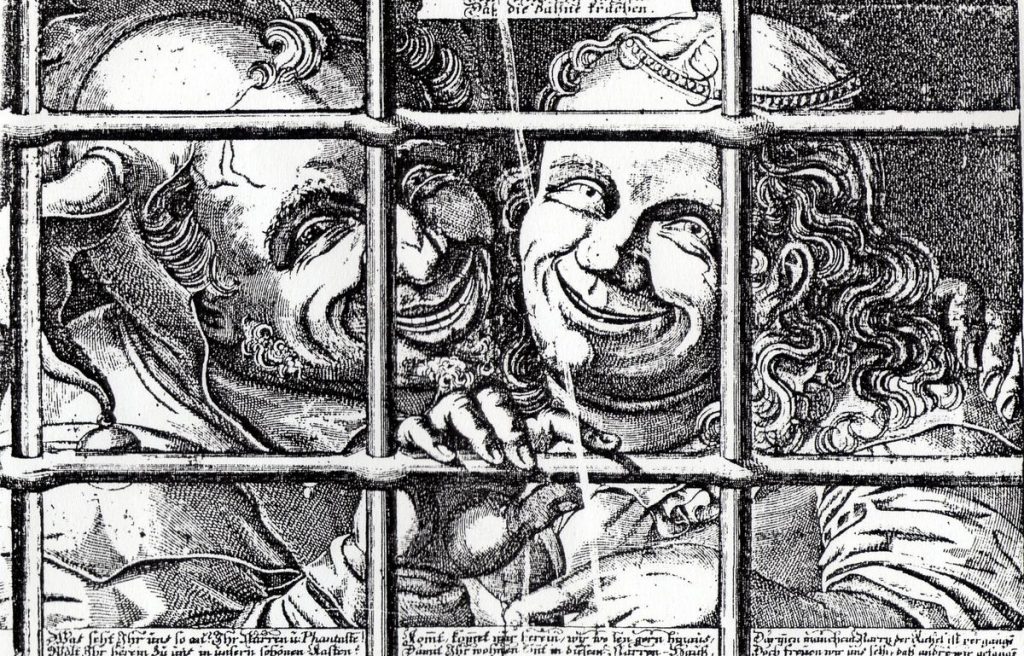
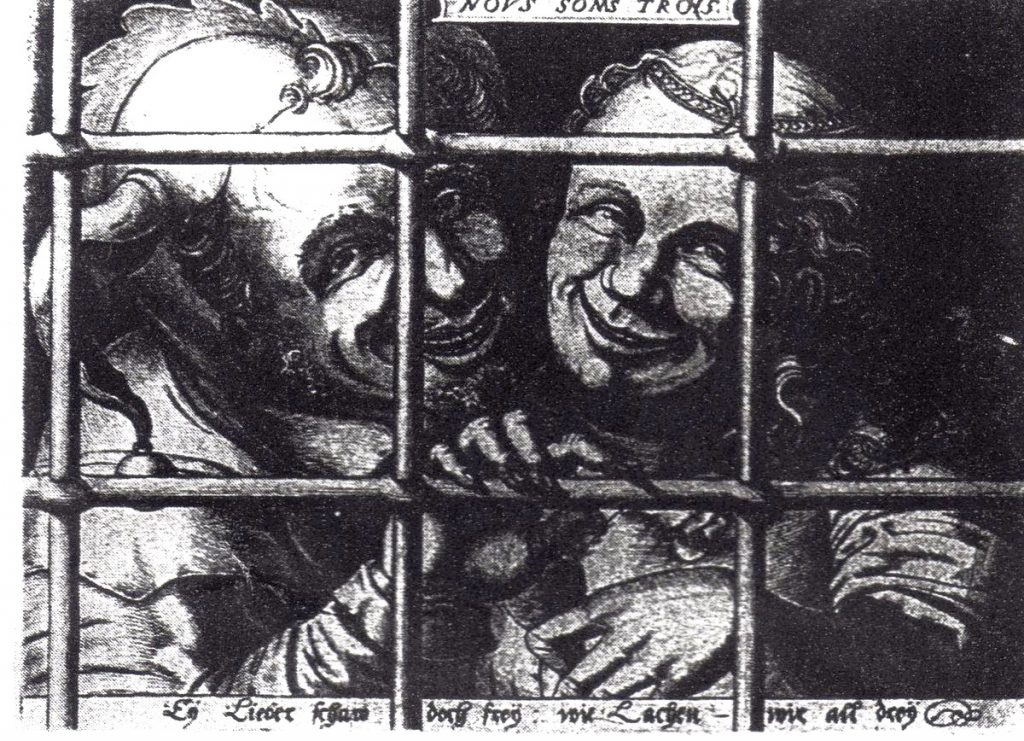
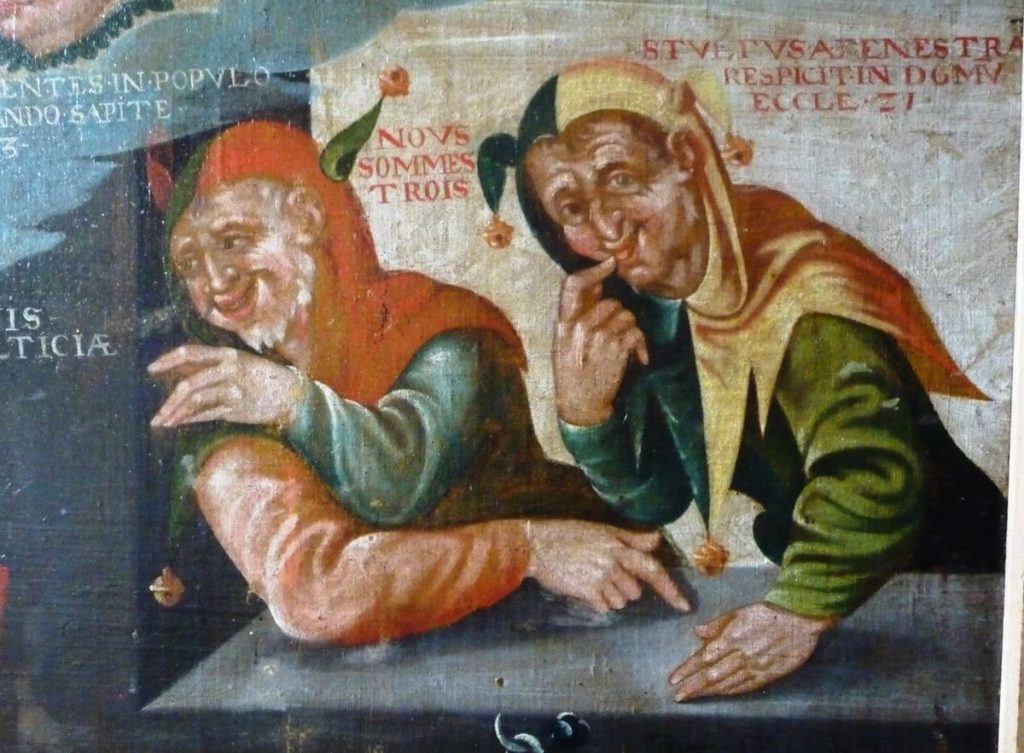
NOVS SOMMES TROIS — detail from a remarkable French fool painting (?c.1600) reproduced and discussed in my article available here https://www.academia.edu/42193491/_Paycockes_rich_Allegory_of_Folly_
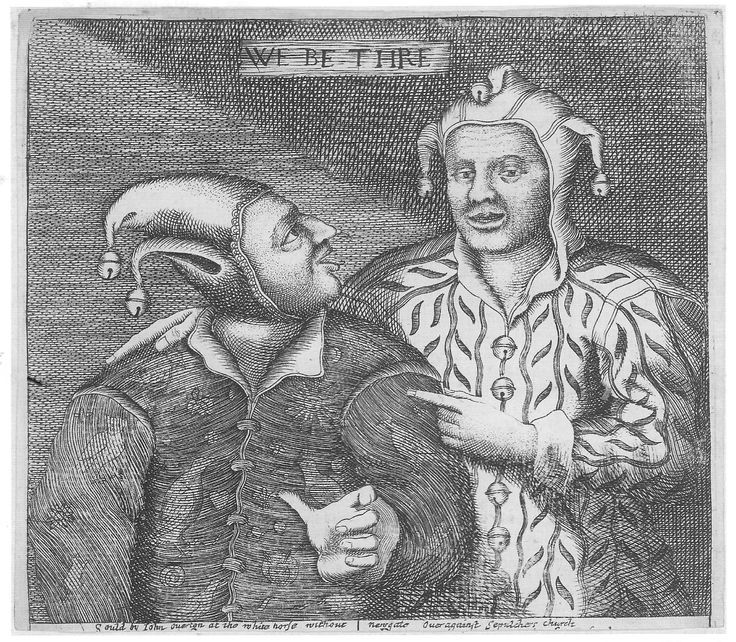
This previously unknown print is now the earliest known English example of our motif, which I discuss fully here: https://www.academia.edu/47731627/Early_Modern_English_prints_in_the_Joseph_Ames_album_at_the_Morgan_Library
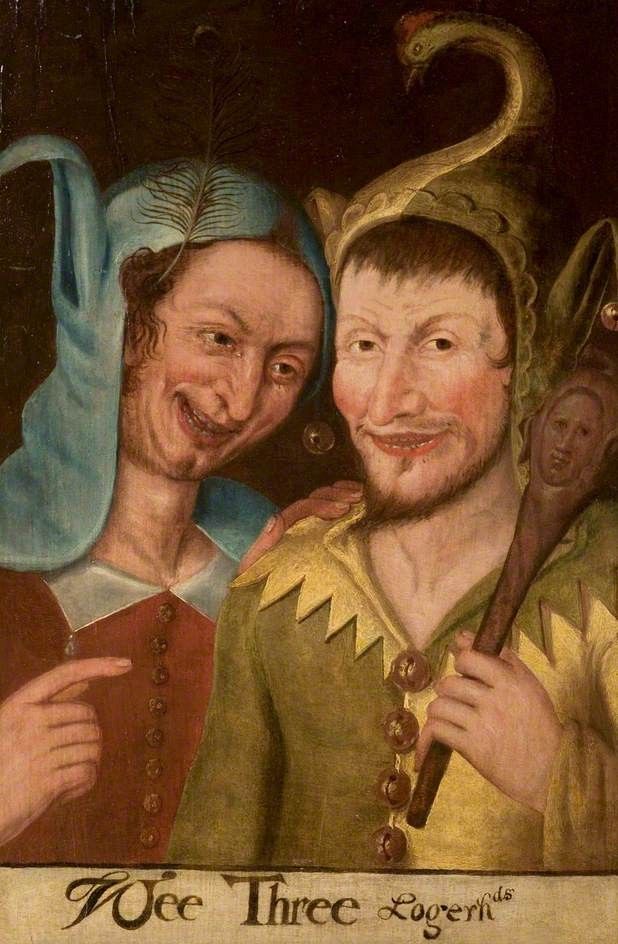
And, finally, an oddity — in more senses than one
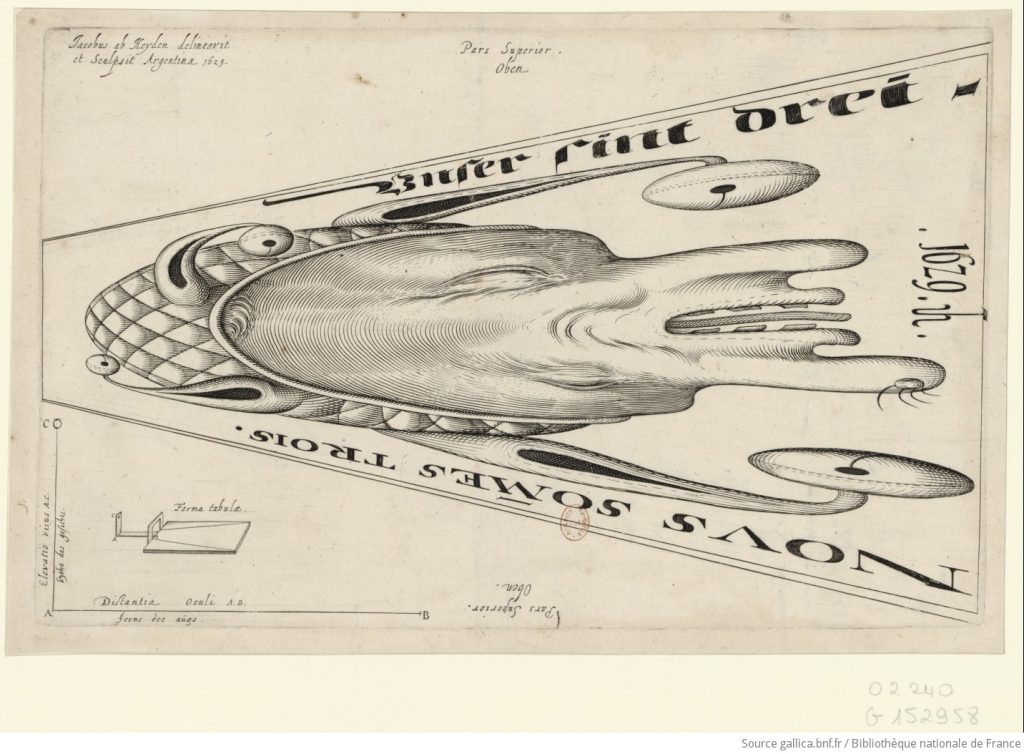
This anamorphic print was issued — and probably engraved — by Jacob von der Heyden in Strasbourg in 1629 — hence the bilingual title: Unser sint drei and NOVS SOM[M]ES TROIS. The diagram (bottom left) shows how it should be viewed. BUT! in order for the title to make sense — in accordance with the tradition — the image should depict 2 fools, not 1 ! The laugh here would seem to be on von der Heyden!

Leave a Reply to Hazing — Early Modern Student Initiation Rituals – Album Amicorum: Early Modern Stammbuch Iconography & related Cancel reply