as intellectuals have long liked to believe.
The appearance of the forceful encounter of the representatives of both sides of the proposition was fixed in 1608, with the publication of thePugillus Facetiarum print-book:
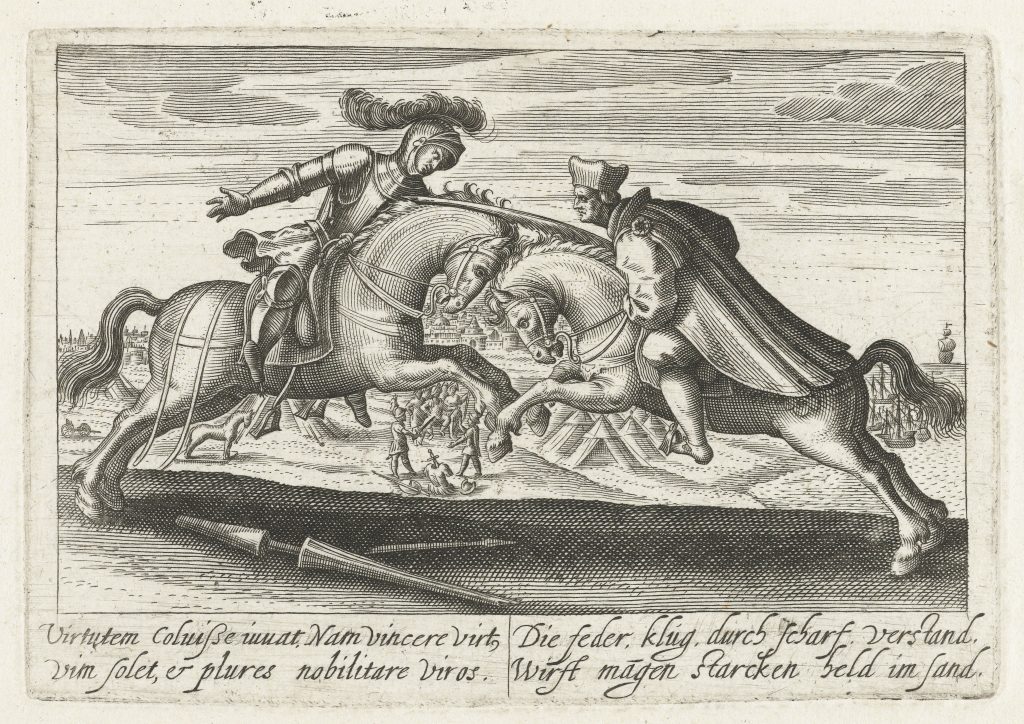
The miniature in the Freund album, for example, dated 1617, shows its dependence on the print-book plate (above) in such telltale details as the triangular tents outlined beneath the righthand horse, and the shattered lance on the ground beneath the other:
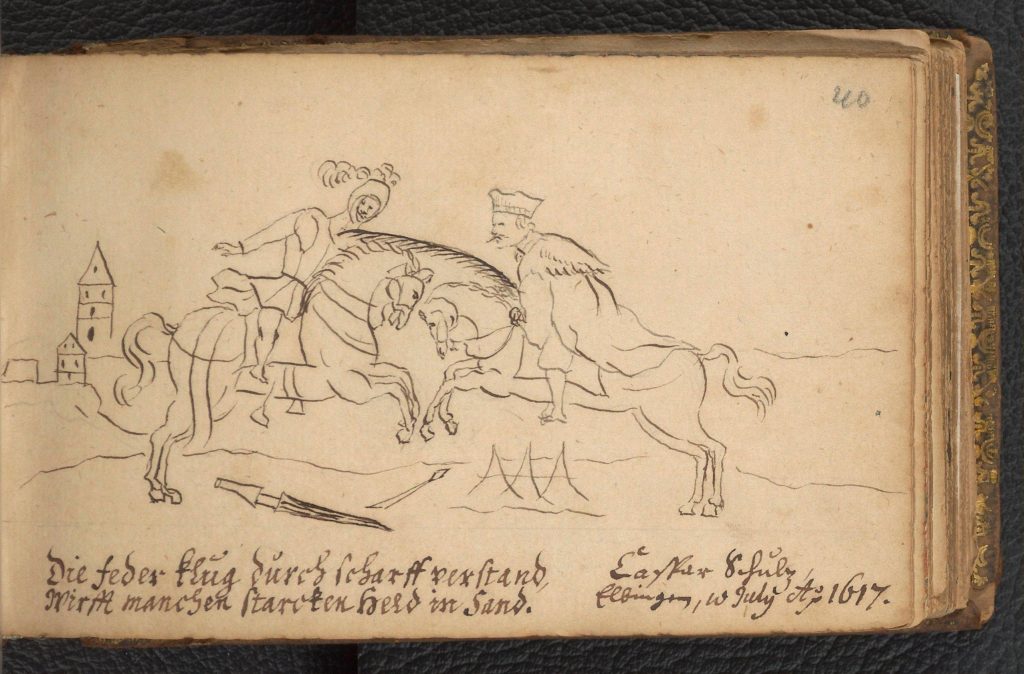
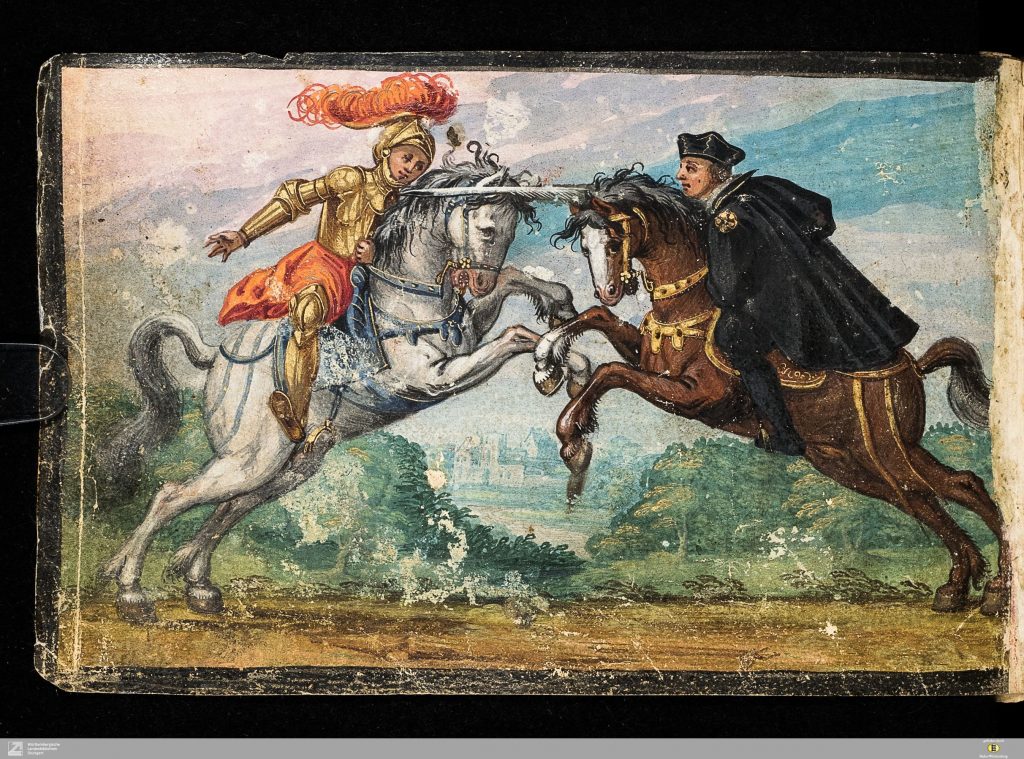
But it is clear from the Helbig and (lost) von Rietheim albums, that the design existed before the print-book, and both these 16C examples seem to show dependence on the same model — even though the von Rietheim painting only survives in the form of a 19C sketch, before the album itself was lost in the Louvre fire of 1871.
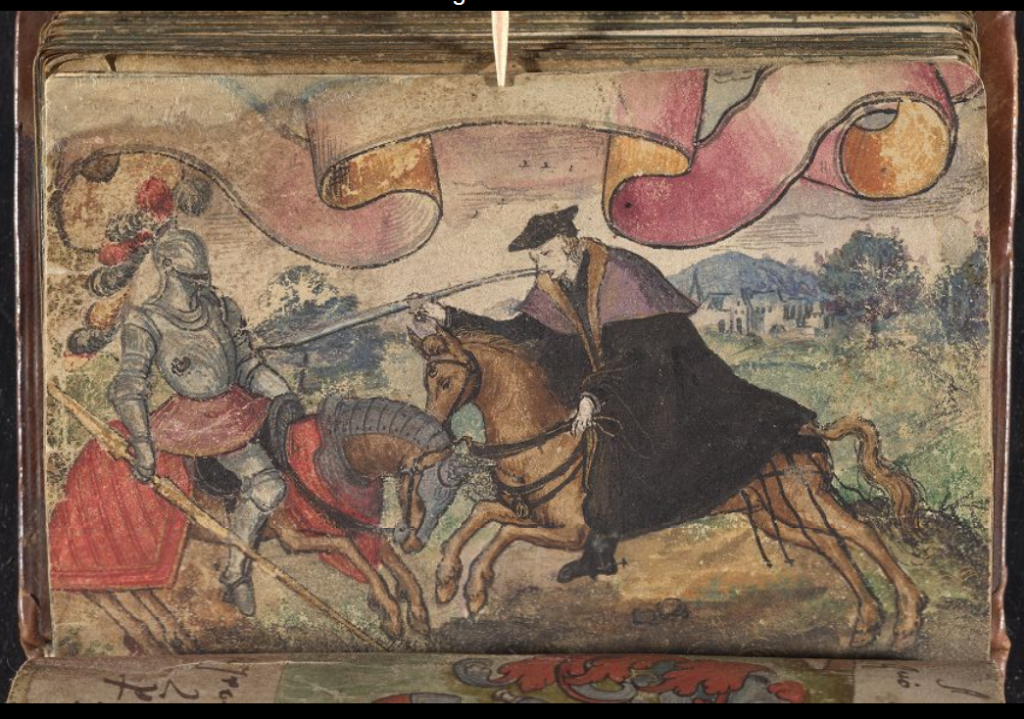
The lost image in the von Rietheim album was painted c.1565 by Fulgentius Bertz whose initial was visible in the bottom righthand corner of the miniature:
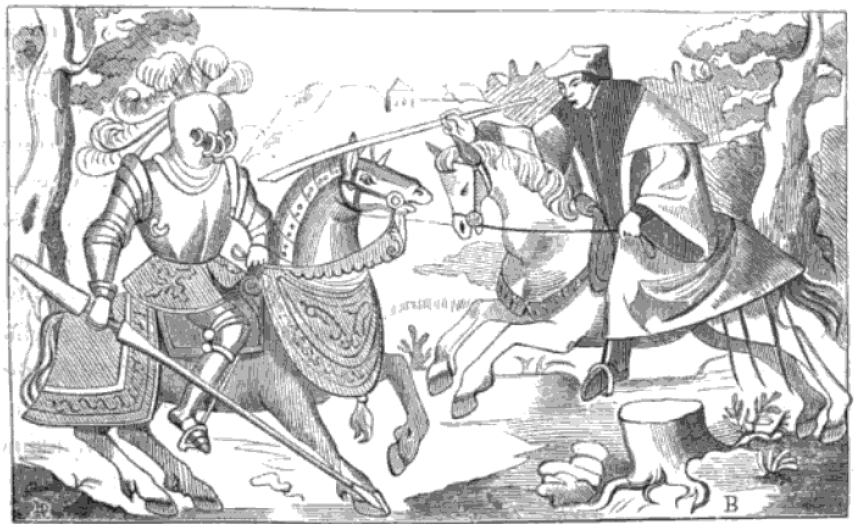
in literis et armis
The desirability of proficiency with both pen and sword is frequently expressed in the albums via the mottoes, arte aut marte and in literis et armis, whether illustrated or not. When there is illustration it is often in the form of one of the bifid figures which were the subject of our post
https://albumamicorumear-e4qvahs764.live-website.com/bifids-bi-partite-figures/
The bifid figure below, painted in 1597, is half-scholar/half-soldier, labelled Literis Et Armis [by letters and arms]
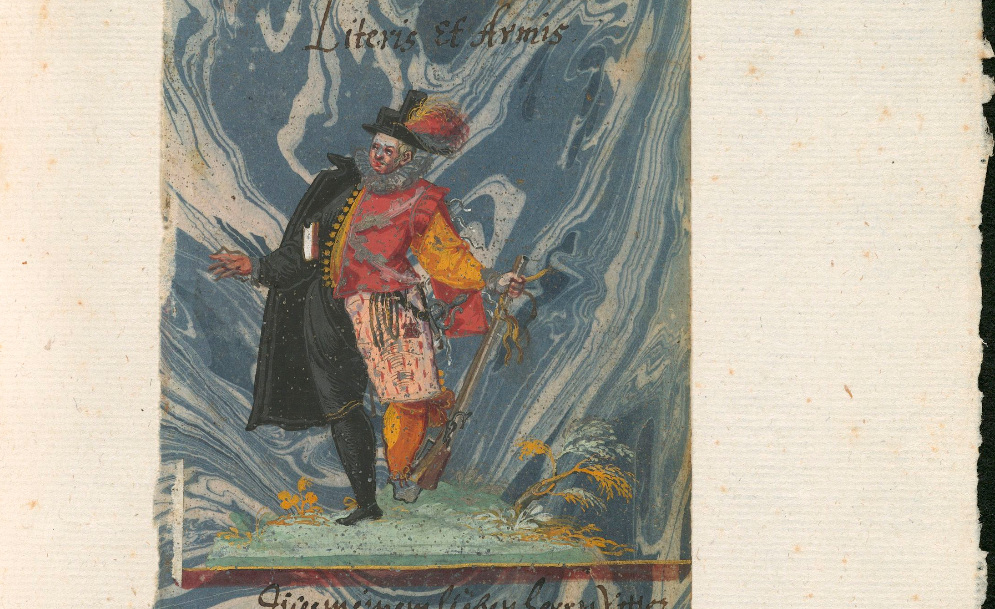
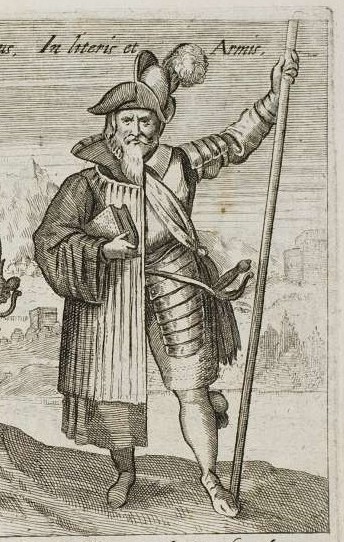
pre-dating the similarly labelled figure from the trio engraved on one of the plates of the Pugillus facetiarum (1608):
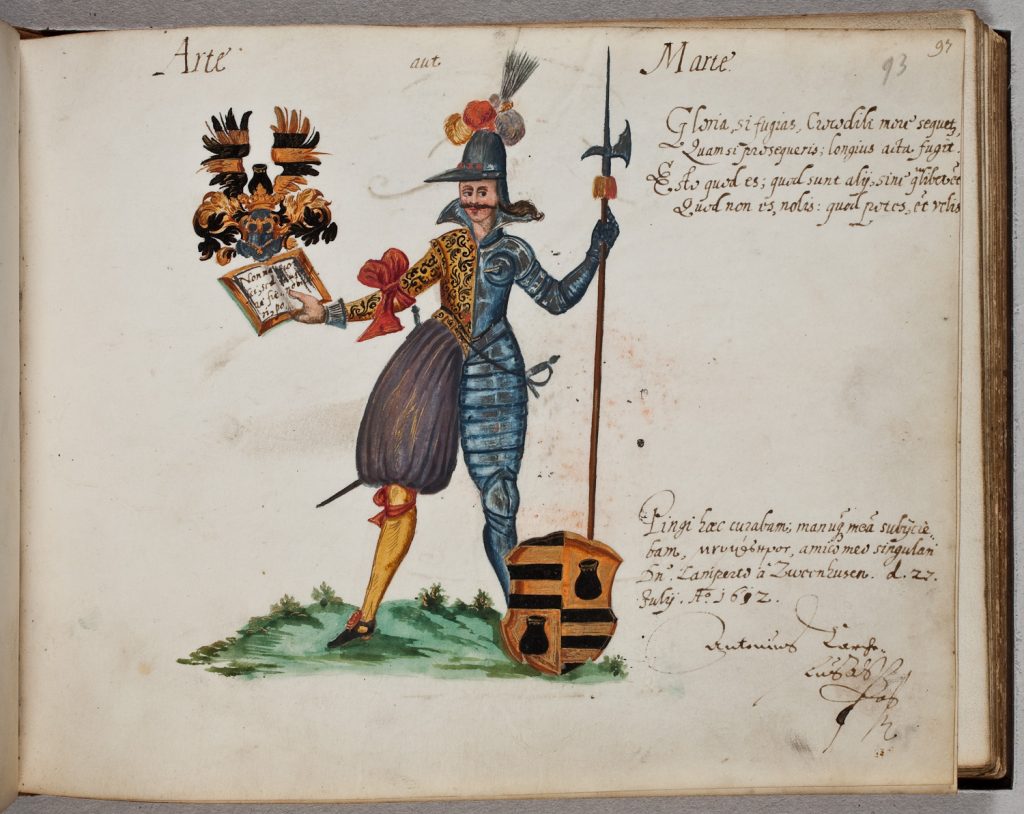
The bifid painted in the Twenhuysen album in 1612 is labelled Arte aut Marte [by art or war]
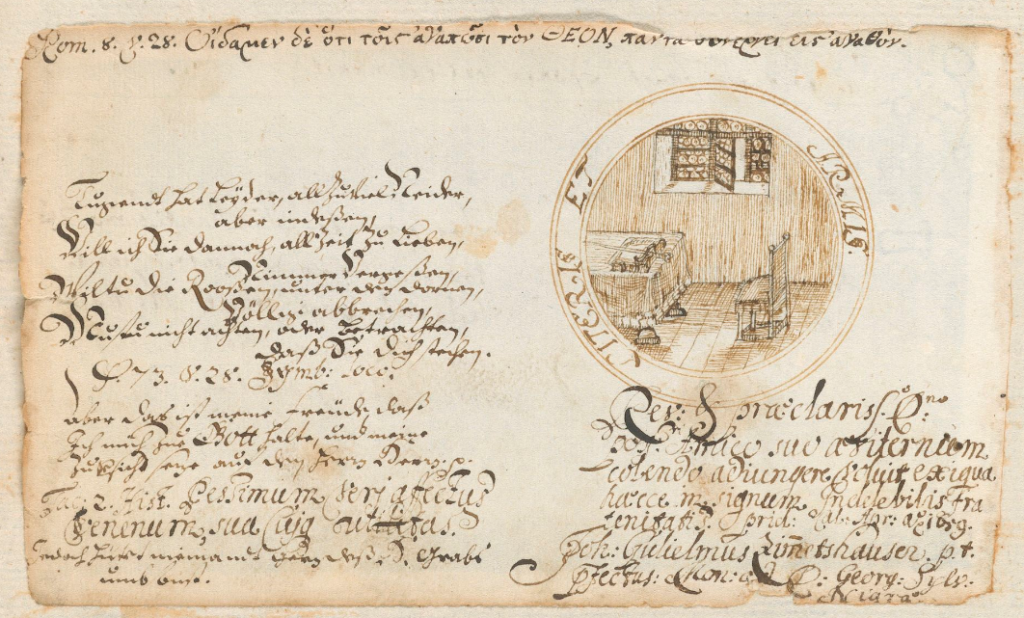
This emblem-like image of book and sword on a table within a roundel labelled LITERIS ET ARMIS was drawn in the album of
Leave a Reply