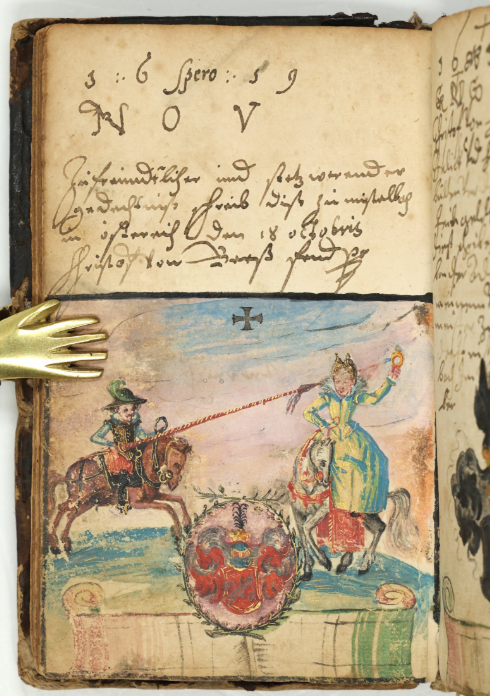
As we have seen already, the albums abound in images of thinly-veiled erotic metaphors — here is another. To date I have noticed 6 such miniatures in the albums, only two of which certainly predate the appearance of the Philotheca Corneliana print-book in 1619 — and in the later of the two (immediately below) the horseman’s target is a circular garland rather than an outsize finger-ring.
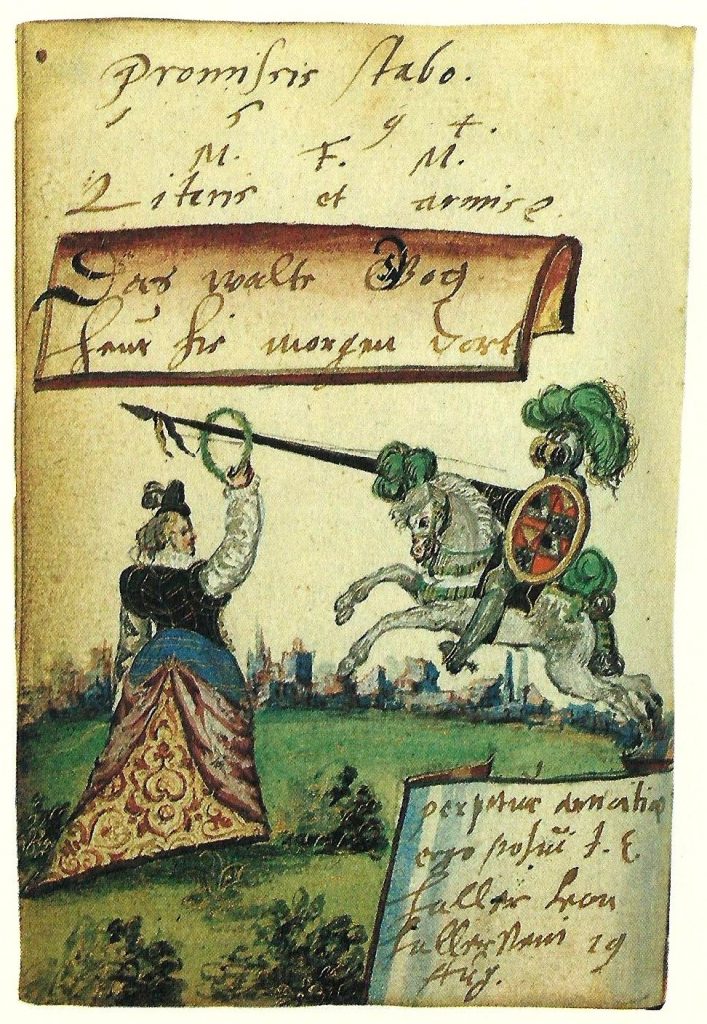
The earliest example I have noted to date is in the album of Balthasar von Nostitz, dated 1583 (below). The Latin motto, meaning “After darkness, I hope for light”, has no immediate relevance to our miniature, it is the following lines in French and German which summarise the action. The import of the scene is summarised first in French: A bague d’amie, l’amant puiss[e] sa vie [for the ring of the loved one, the lover spends his life] and then in German, Fur der Liebchen ring s…. der buhler sein Wunsch [For the ring of his darling the lover has his wish]
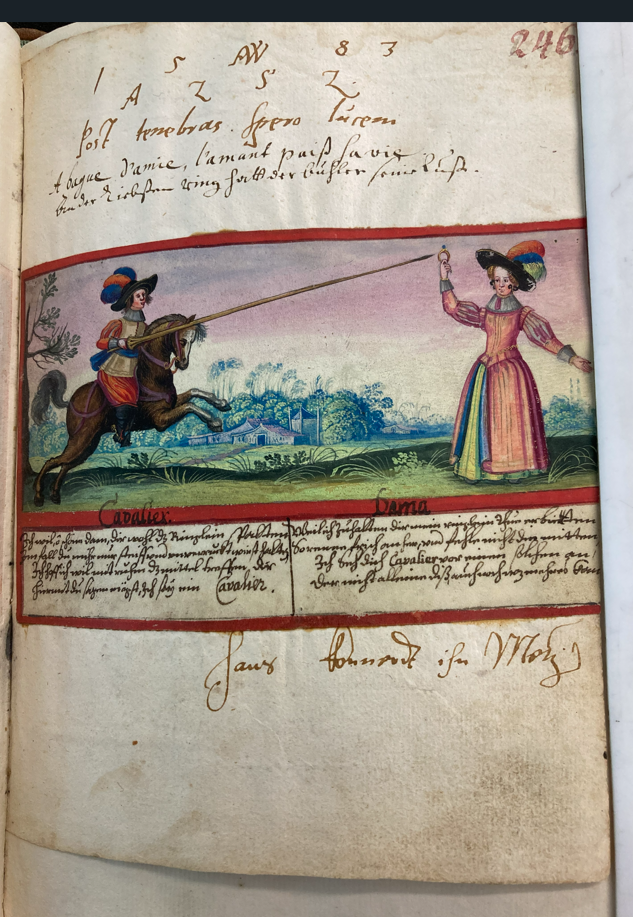
Thanks to contributors to the Reddit/Kurrent forum I am able to offer the following translation of the German dialogue:
Cavalier
I want, oh beautiful lady, to split that little ring for you
In which case hold it firm and steady for me
I hope to win this means to you with glory
so that you may say, I am a cavalier.
Lady
Because I ask you to hold my little ring
run briskly here, and don’t miss the middle I see you, cavalier, looking at one such as this,
who can do not only this, but also something more.
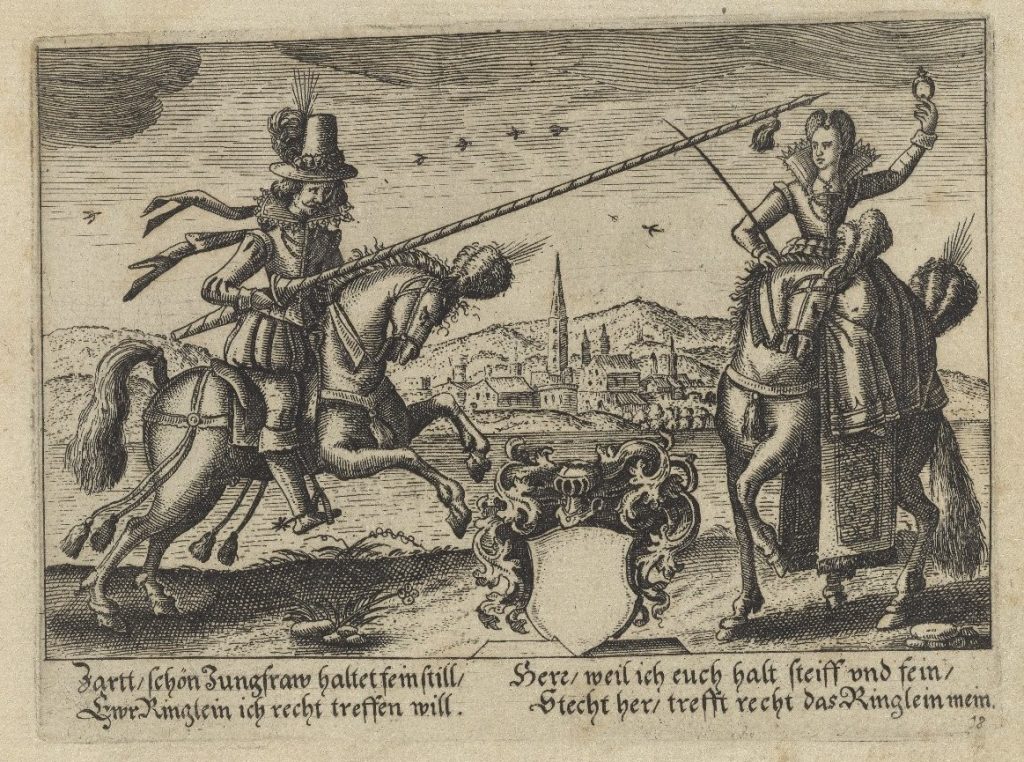
In the Philotheca Corneliana the speeches of the two participants are heavy with innuendo, of course!
Zartt, schon Jungfraw haltet fein still Tender fair maiden hold very still
Ewr Ringlein ich recht treffen will I want to hit your little ring right
Herr, weil ich euch halt steiff und fein Sir, while I hold very still for you
Stecht her, trefft recht das Ringlein mein prick here, hit my little ring right.
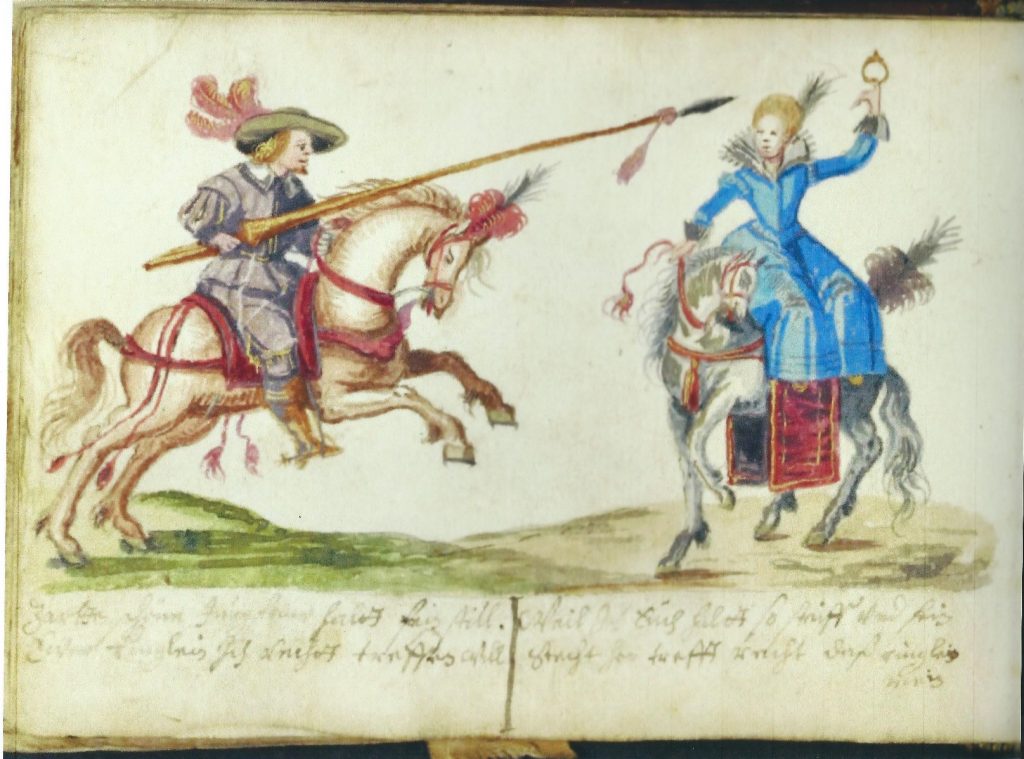
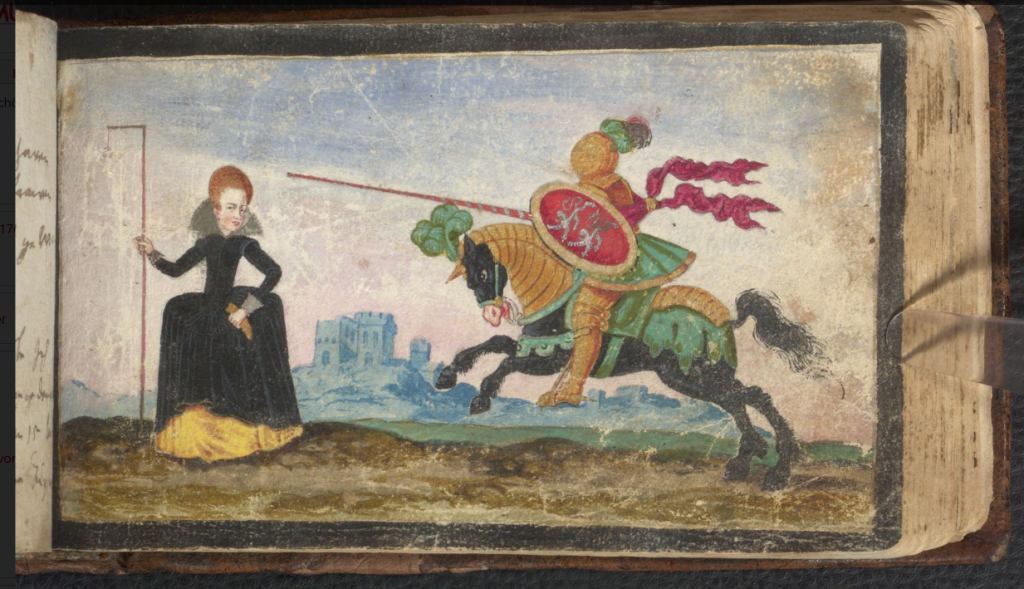
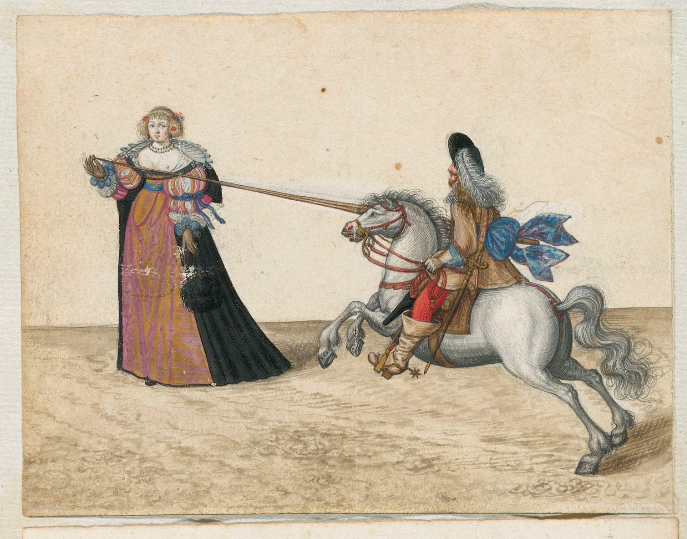
There is another example in the album of Nathaniel Schmidt (dated entries 1618-23) — I have not seen this miniature, but as it uses the 4 captioning lines of the Philotheca Corneliana verbatim, the image is doubtless similar too.
Other media
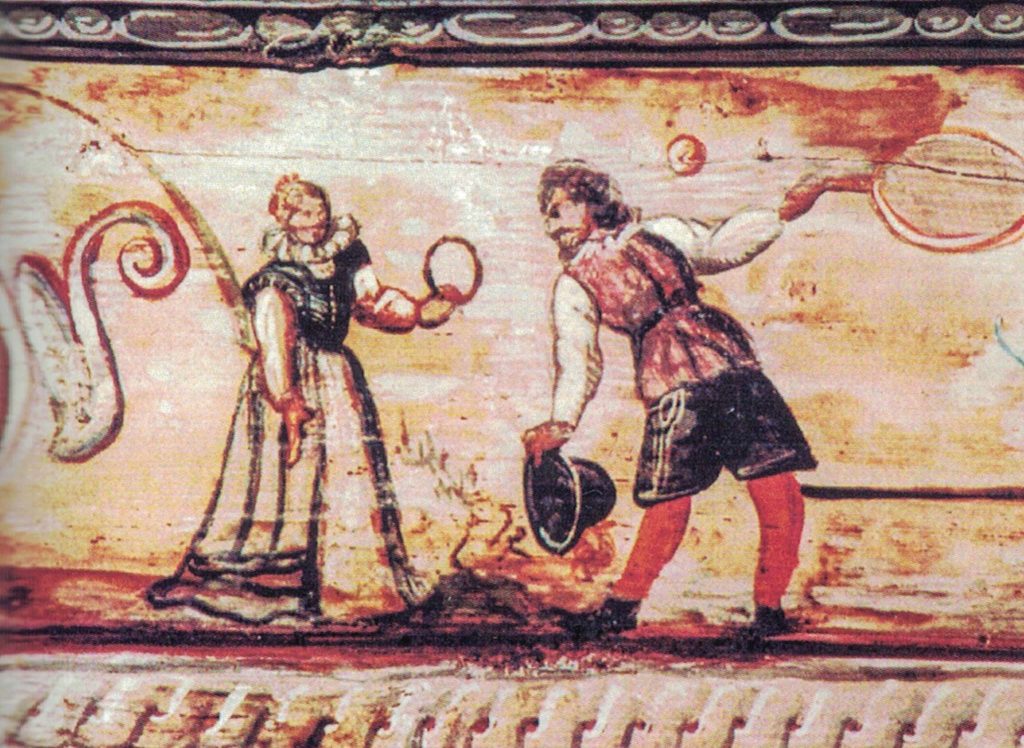
The motif was too good to be limited to manuscript paintings only! Here on the painted ceiling of the ‘Under the Golden Sun’ house in Wroclaw, a gentleman aims to hit his ball through the lady’s hoop
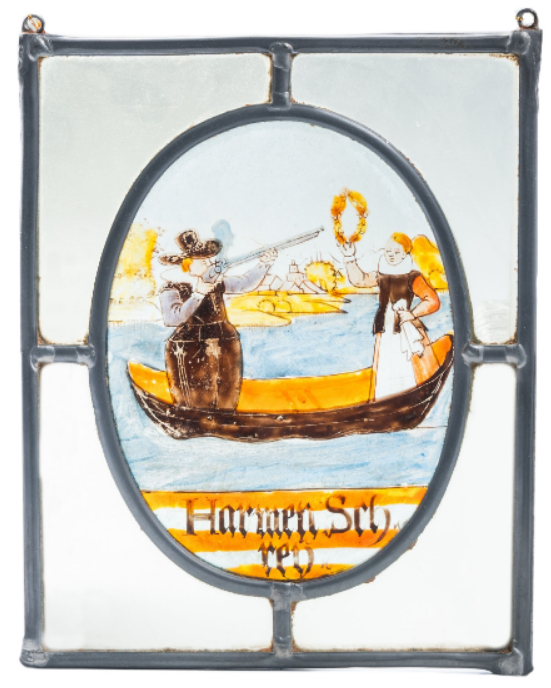
And here — with the technology updated — are a later 17C Dutch couple in a huwelijksbootje [little wedding-boat], the groom, Harmen Schrey, firing his rifle through the bride’s garland.
Shooting
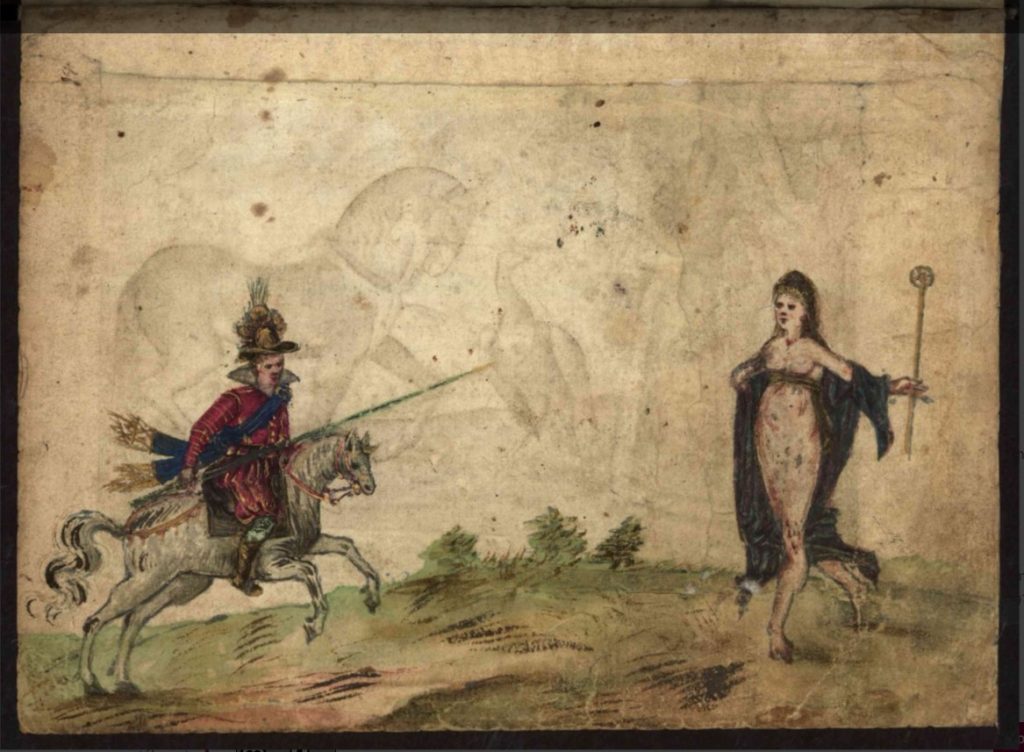
Thanks to anonymous contributors to the Reddit r/Kurrent site, I am able to transcribe the conversation between the shooter and the naked lady who is his target in the lower portion of this miniature painted in 1606 in the album of Carl Viechter:
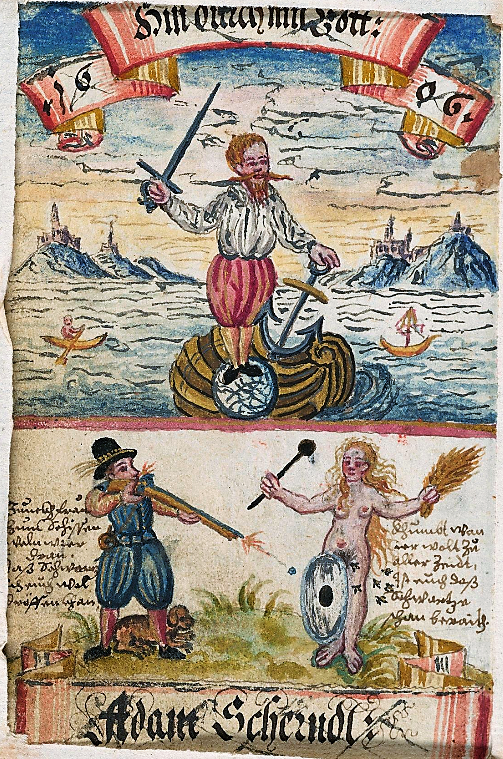
Junckhfrau Zum Schissen woln wier dran. Daß Schwarz ich euch wol dröffen khan
Girl, let’s get on with the shooting I’m sure I can hit your black.
Khumbt wan ier wolt zu aller Zeidt, ist nuch daß Schwartze schon beraith.
Come whenever you want, the Black is already prepared.
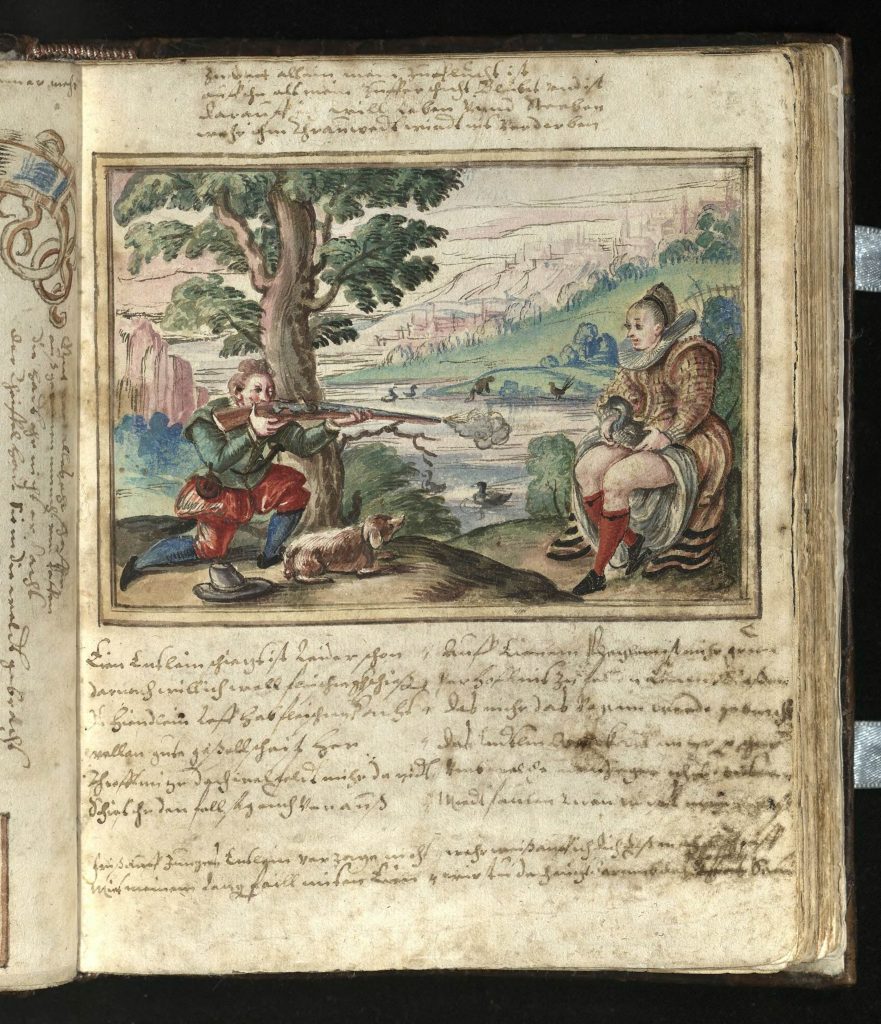
A rather less slapdash miniature also involving a shooting innuendo was painted — probably by the Gdansk artist Anton Moller —
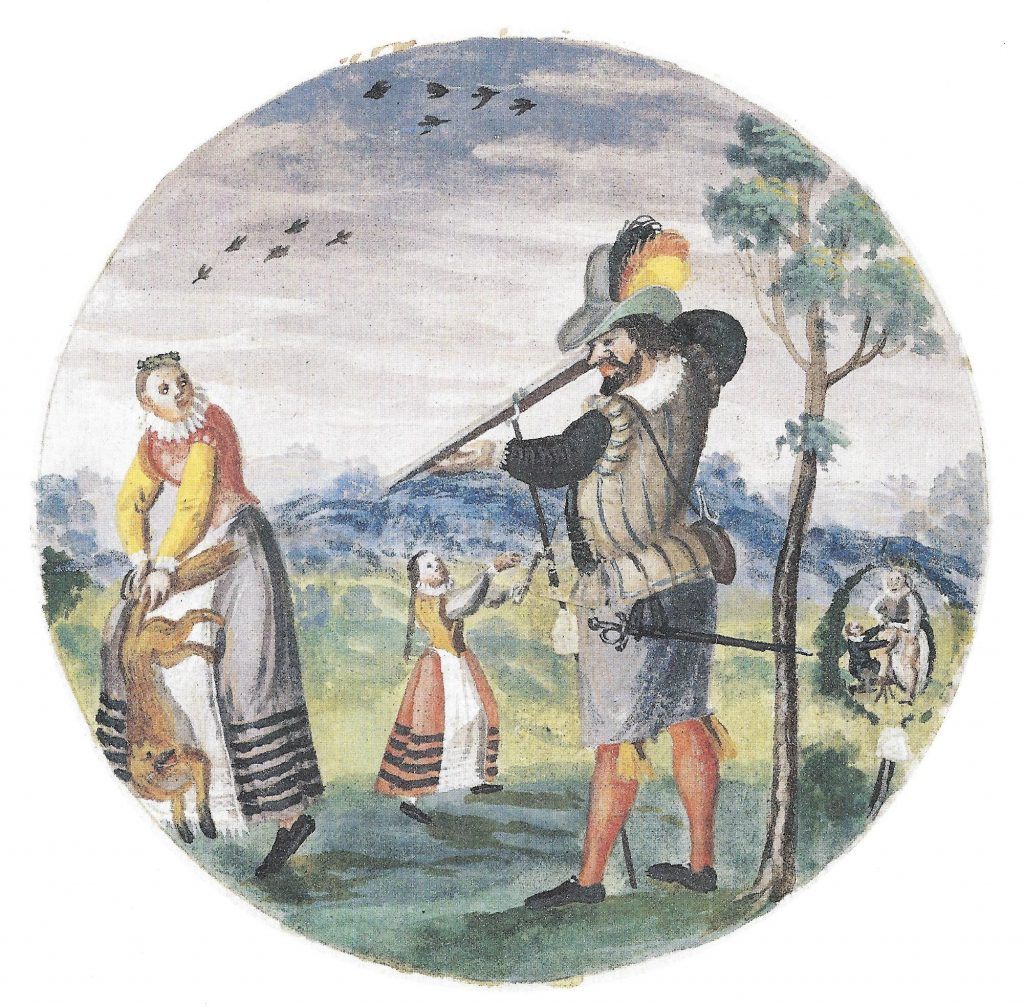
A related contemporary innuendo is this design for a shooting-target painted in 1610 in the Coburger Schebenbuch (it had two liftable flaps originally, now lost, hence the exposure of the small woman within the circle, bottom right) — which also features the foxtail innuendo we have already discussed here:
https://albumamicorumear-e4qvahs764.live-website.com/foxtail-between-womans-legs/
The motif is found on Baroque glassware too; a Silesian engraved glass goblet of c.1690 was engraved with the traditional scene and a shortened version of the familiar dialogue: Halt still du Schönes Jungfräulein / Stich her trieff recht das Rüngelein. On another 18C Bohemian glass goblet engraved with our motif
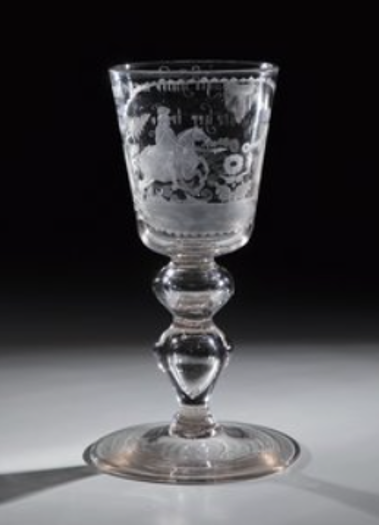
the auction-house transcribed the accompanying inscription as Schöner engel häste meiner Lanzen sticht der her treffe wie ich hästen will — followed, understandably, by (?)
Leave a Reply